

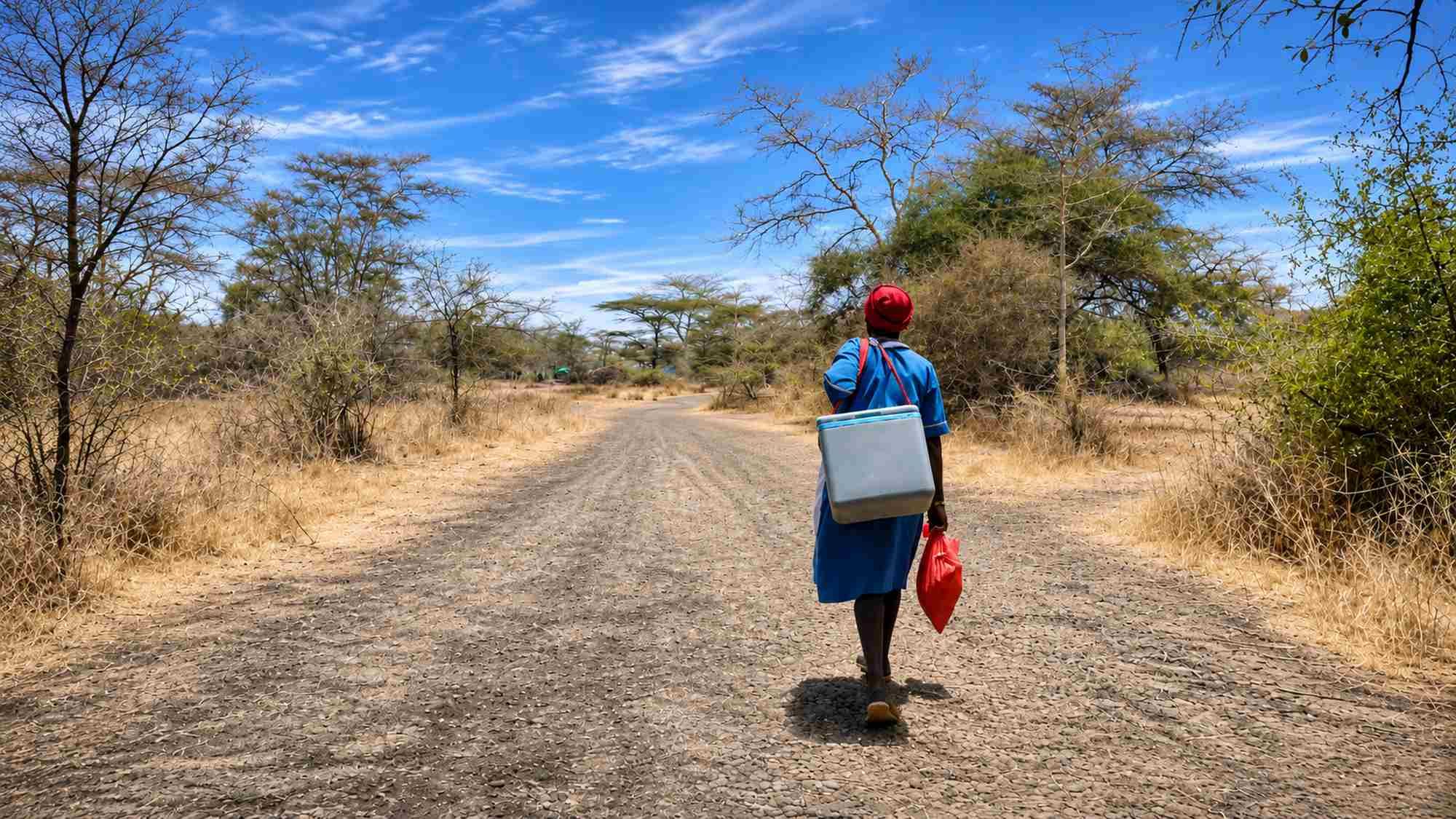
Three days in the wilderness
Uganda’s frontline health workers fight measles among nomad families.
By John Agaba | 27 Nov 2026
After registering thousands of measles cases, Uganda’s Ministry of Health launched a nationwide measles-rubella vaccination campaign to close immunity gaps. But reaching the country’s most vulnerable children in Karamoja’s mobile pastoralist communities requires immense resilience.

Martha Loma is a health worker on a mission, to protect children in some of Uganda's most remote nomadic communities against deadly disease.
Martha Loma dreaded the journey to the grazing-lands shared by the nomadic Turkana and Karimojong pastoralists in Uganda’s remote northeast. This was unforgiving terrain – dry, dusty and devoid of water, shelter, or cellular connectivity.
But the region also harboured some of Uganda’s most vulnerable children – children who had received either no or too few vaccines – and alarmingly, it had recently reported multiple measles infections. Measles is the most contagious virus known to humankind, and it can cause deadly complications.
So, when the Ministry of Health launched a nationwide measles-rubella (MR) vaccination campaign on 1 October, Loma – a nursing officer at St Pius Kidepo Health Centre III in Moroto – knew she had to take the journey.

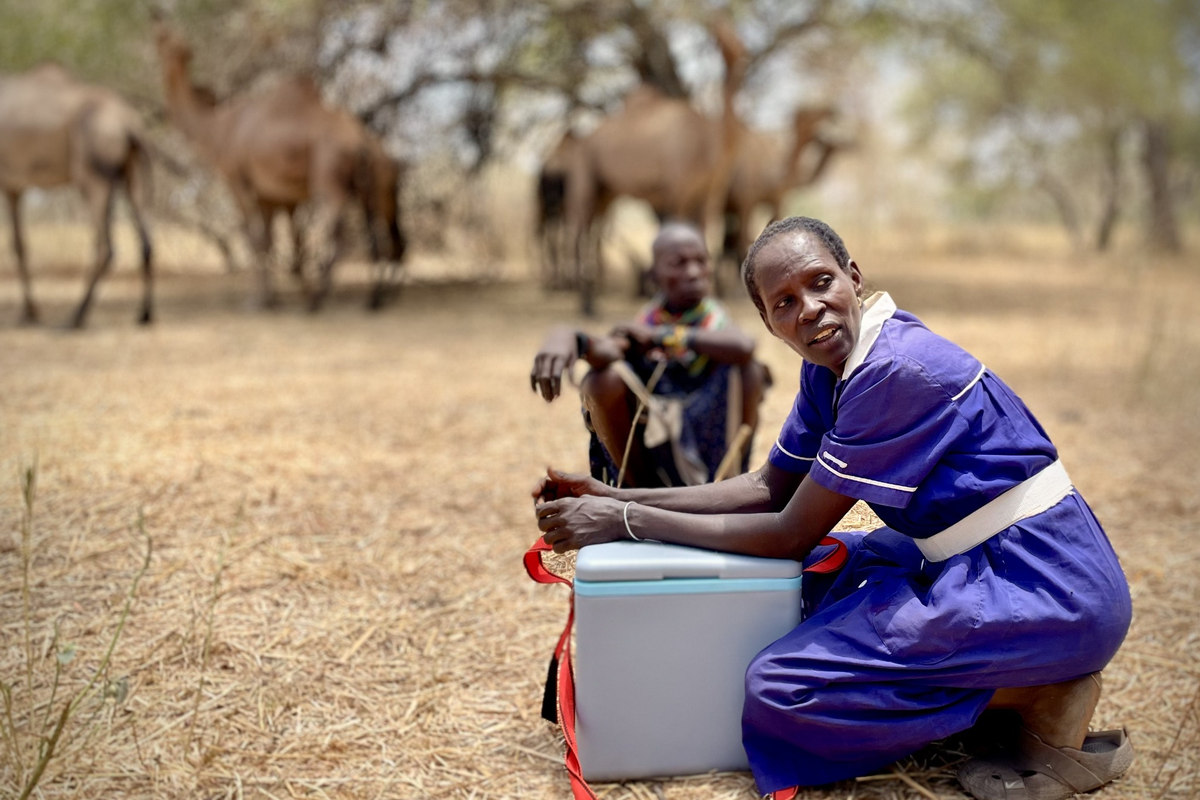
She packed her backpack and helped her team, including the all-important immunisation officer, load up their essential supplies; a vaccine refrigerator was secured in the back of a beaten-up 4x4 Land Cruiser ambulance. They set off for wilder country.
“We have to do this,” said Loma, from the back of the truck. “The supplementary [MR] dose will help close immunity gaps and protect the children from the viral infections. Apart from St Pius, we don’t have any other health facility near [the pastoralist communities]. If we do not go, no one will.”
The sun was hanging directly overhead, and the temperatures were at their maximum of 36°C when Loma and the team reached the first community: a compound of some 100 or so circular grass huts at Nakidong village in Nadunget.
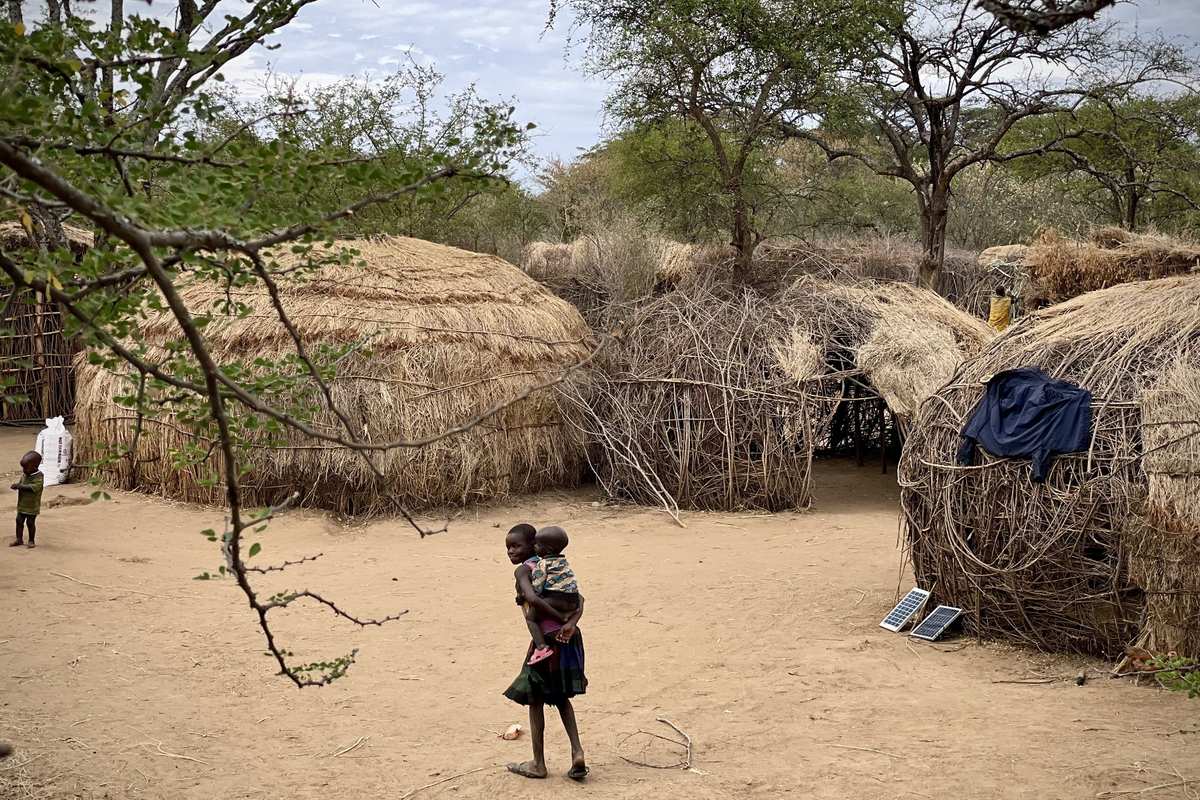
After driving for about two hours, Loma and team reached the first community, a compound of about 100 circular grass hats at Nakidong village in Nadunget.
Loma and her team unloaded the ambulance, and packed their bags, vaccine fridge and other supplies into one of the grass huts, and then set up a makeshift vaccination centre under a tree on the edge of the compound. The local Village Health Team (VHT) representative went to gather the women pastoralists.
When they assembled, Loma explained why the Ministry of Health was conducting an MR vaccination campaign. And then Loma and her team vaccinated children until the cows came home – literally.
It was past 18:00, and darkness was dropping by that point, so Loma and her team decided to camp out in the village for the night. They lit a fire and prepared rice and silver fish for dinner. At nightfall, they crawled inside the grass hut a friend had loaned them and unfolded their blue sleeping bags – emblazoned with the words Gavi, The Vaccine Alliance – and slipped off to sleep. At 04:00 the deepening cold woke them; they stirred the fire back to life and huddled for warmth.
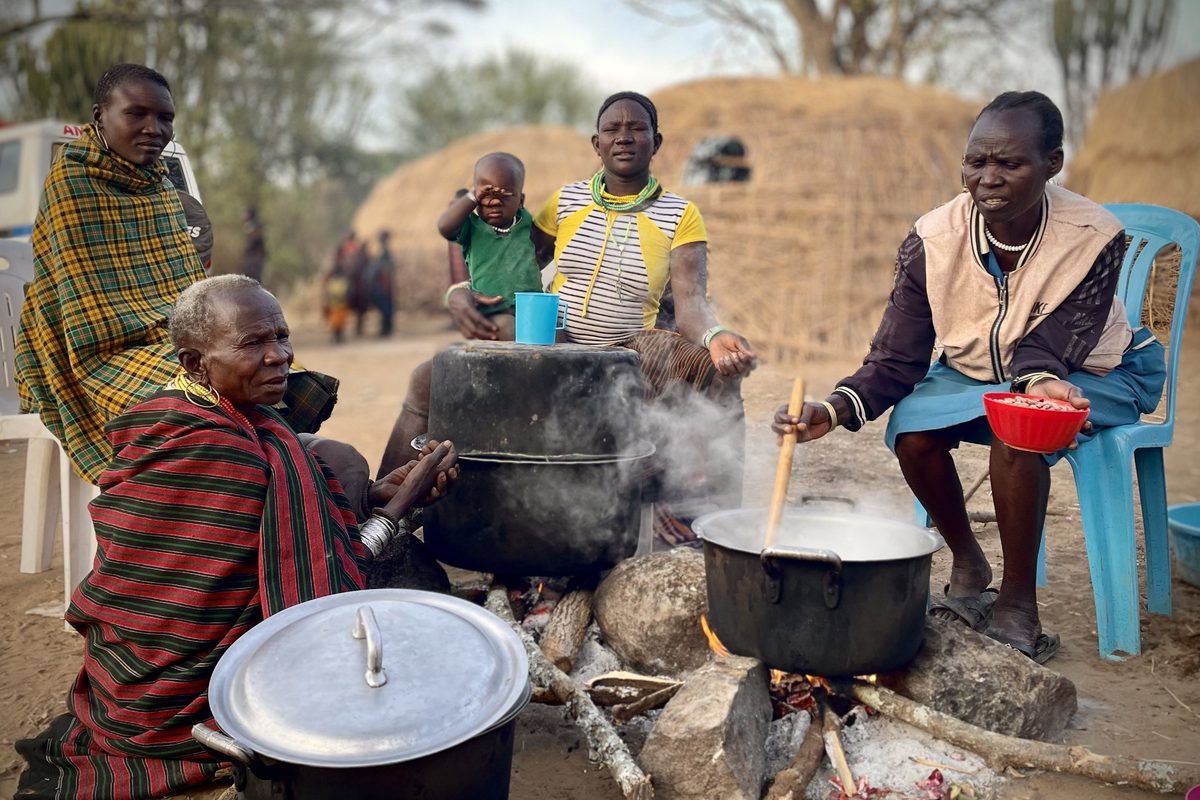
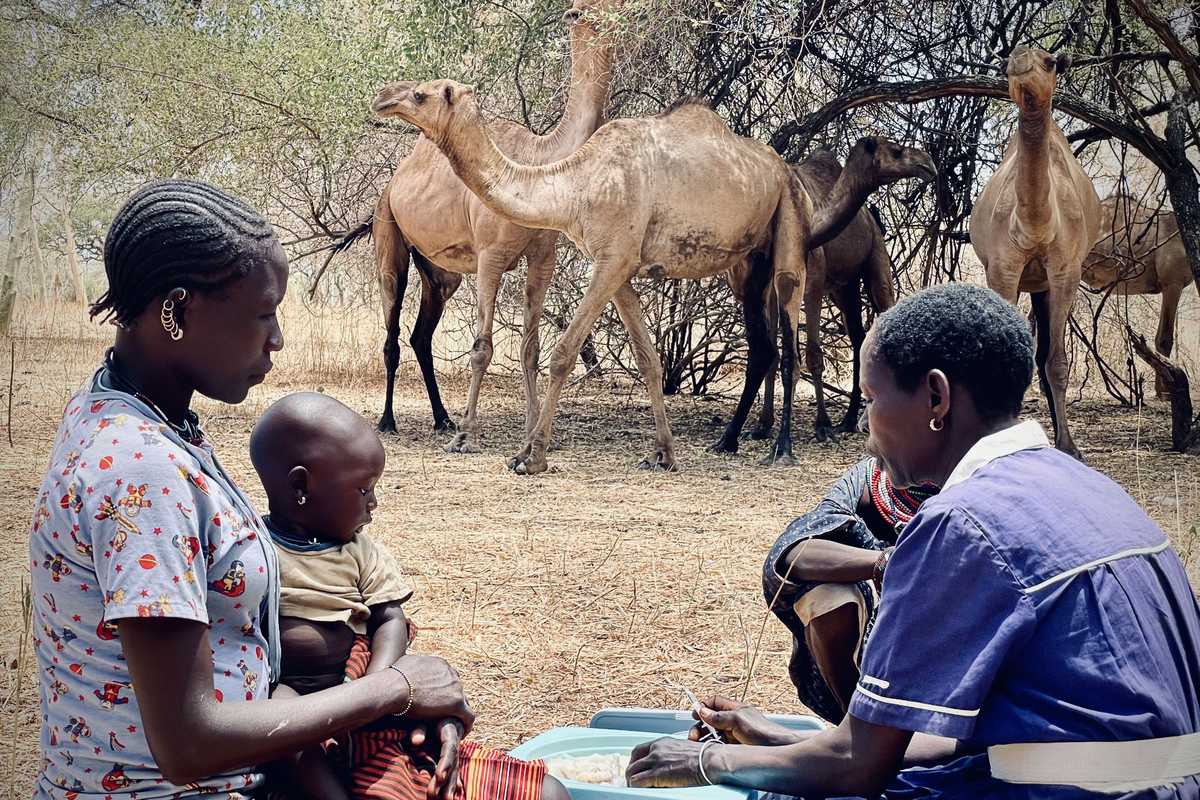
Loma’s colleague Maritina Longoli [right] preparing dinner with pastoralist women at Nakidong village.
At sunrise, the team prepared maize porridge for breakfast, while their driver wandered into the bush in search of water.
There were mop-up vaccinations to be done – children they had not managed to get to the previous evening – and then it was off towards Kobebe, to the next community. The heat was sweltering, the grassland vast and studded with thickets, acacia trees, and dry thorn scrub.
Closing gaps
The Ministry of Health launched the nationwide MR vaccination campaign in the wake of multiple measles outbreaks and deaths in children aged 9– 59 months, with more than 10,000 cases recorded in 2025 alone.
Experts attributed the resurgence of the disease to low coverage with the second dose of the MR vaccine and limited last-mile distribution of vaccines, especially in hard-to-reach areas and refugee communities.
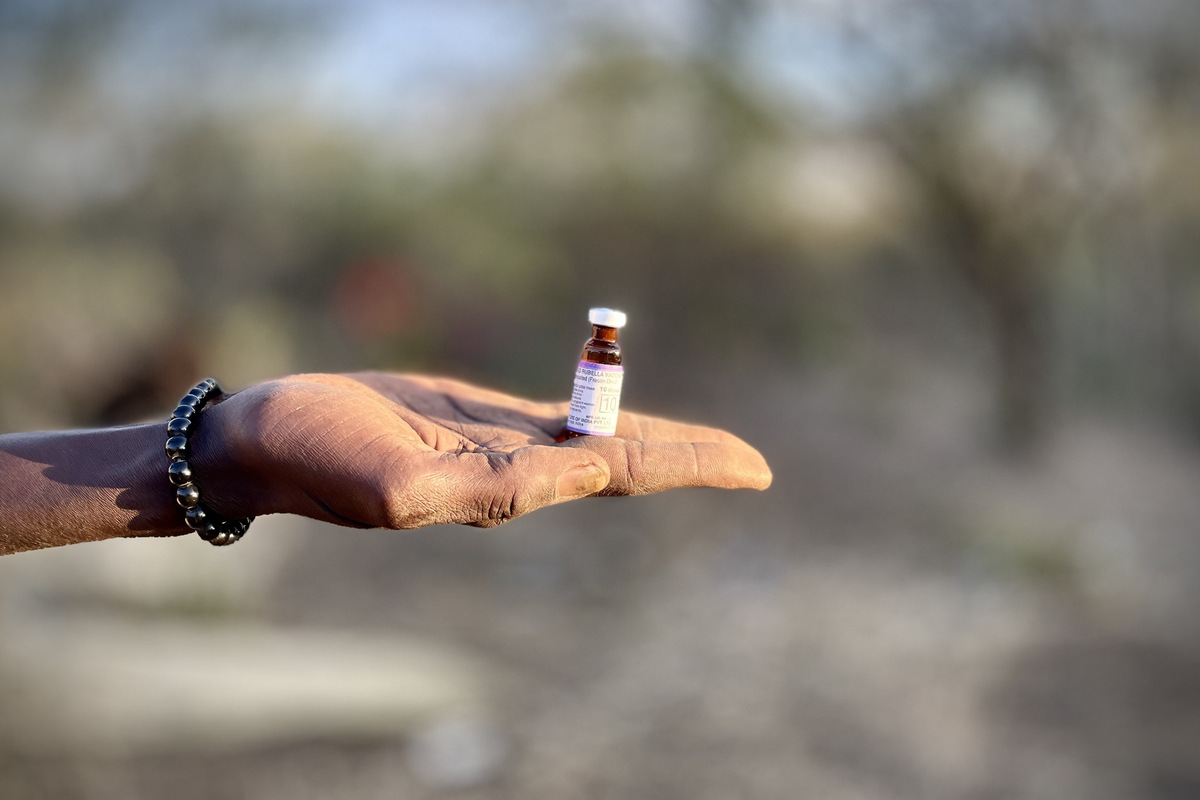
A vial of the measles-rubella vaccine. The Ugandan Ministry of Health launched a nationwide MR vaccination campaign after the east African country registered multiple measles outbreaks in children aged nine to 59 months.
But because measles is so contagious and requires high, robust immune defences, the World Health Organization says a 95% vaccination rate with both recommended doses is the threshold for herd immunity. Uganda has come close on coverage with the first dose of the vaccine, reaching 92% of eligible children. But second-dose coverage languishes at 61%.
So, the ministry partnered with Gavi to conduct a non-selective MR vaccination campaign, to reach 7.6 million children in that vulnerable age group, and bring the outbreaks to a halt.
“[As soon as] we procured the vaccines and developed a plan to distribute them, we engaged cultural, political and other religious leaders to mobilise communities for the campaign,” said Dr Fred Nsubuga, the measles vaccine focal person at the Uganda National Expanded Programme on Immunization (UNEPI). “We engaged schools, civil society, and the media to call parents to take their children for the vaccination. We knew different districts had different challenges and levels of hesitancy. So, we also deployed social behavioural change [SBC] experts to support the districts develop SBC plans and generate demand for the vaccines.”
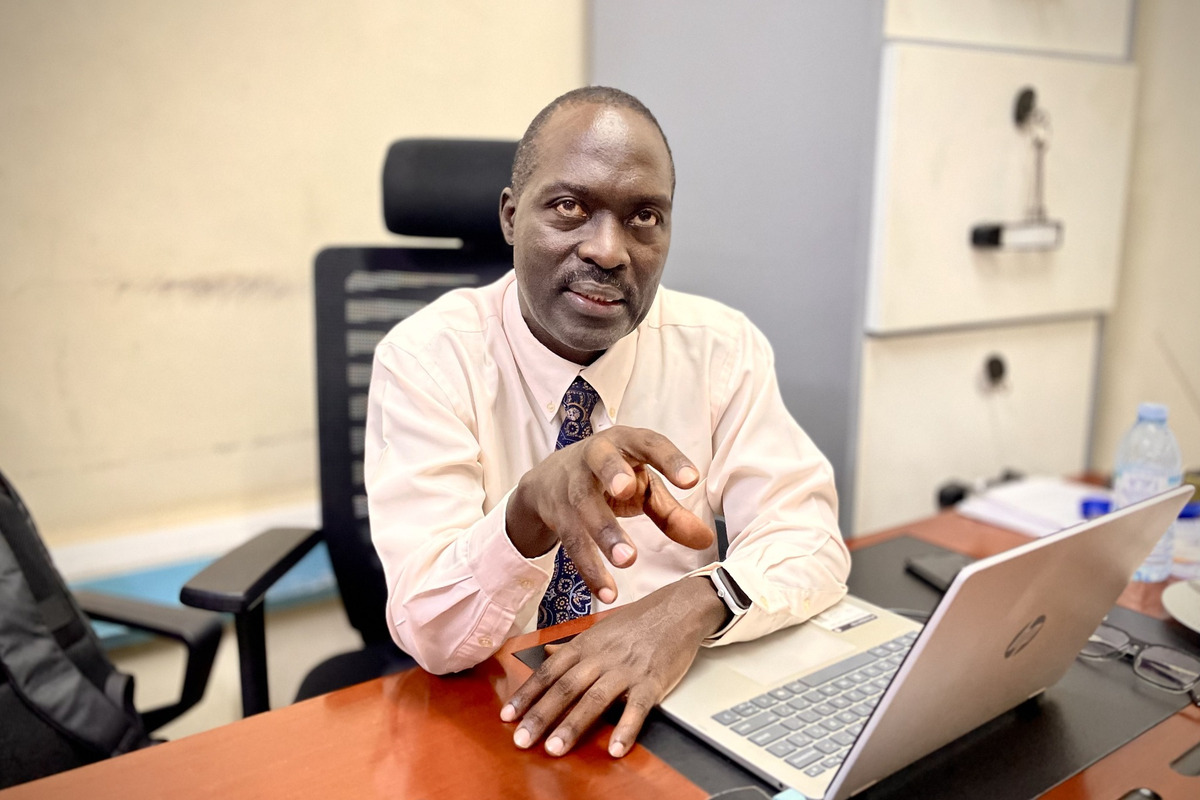
Dr Fred Nsubuga, the measles vaccine focal person at the Uganda National Expanded Programme on Immunization (UNEPI), said health workers like Martha had helped to make the campaign a resounding success, vaccinating 8.4 million children in total.
After this, the ministry deployed health workers. “We deployed mobile teams in hard-to-reach places, temporary teams in [the capital] Kampala and other urban centres where some people can be so busy, to come to health facilities for vaccination. Then we had static vaccination centres at health facilities across the country,” said Nsubuga in an interview with VaccinesWork.
“We deployed at least four health workers, including a mobiliser, at each of these centres,” he said. “We deployed at least five health workers in urban and refugee areas. Each village had a VHT to mobilise its people for vaccination. We wanted to reach every child [between 9 and 59 months] regardless of their vaccination status, [even] more so children in mobile, under-served and other marginalied and hard-to-reach communities who consistently missed routine services and were registering lots of measles cases.”

Water is scarce in Karamoja. Girls and young women have to wander for kilometers to find a working borehole.
Chasing shadows
Reaching every child in Karamoja’s mobile pastoralist communities demands more than a 4x4 vehicle and a foundation of medical know-how. It requires immense resilience and determination. When Loma and team eventually reached Kobebe after driving in the wilderness for almost two hours, they found that the majority of the pastoralists they were here to help had moved on.
“This is the challenge with mobile pastoralists,” said Loma, visibly agitated. “They are always moving. They are here, today. You come and they have left. It is one of the reasons vaccination rates in these communities are low [compared to national averages]. People are always moving.”
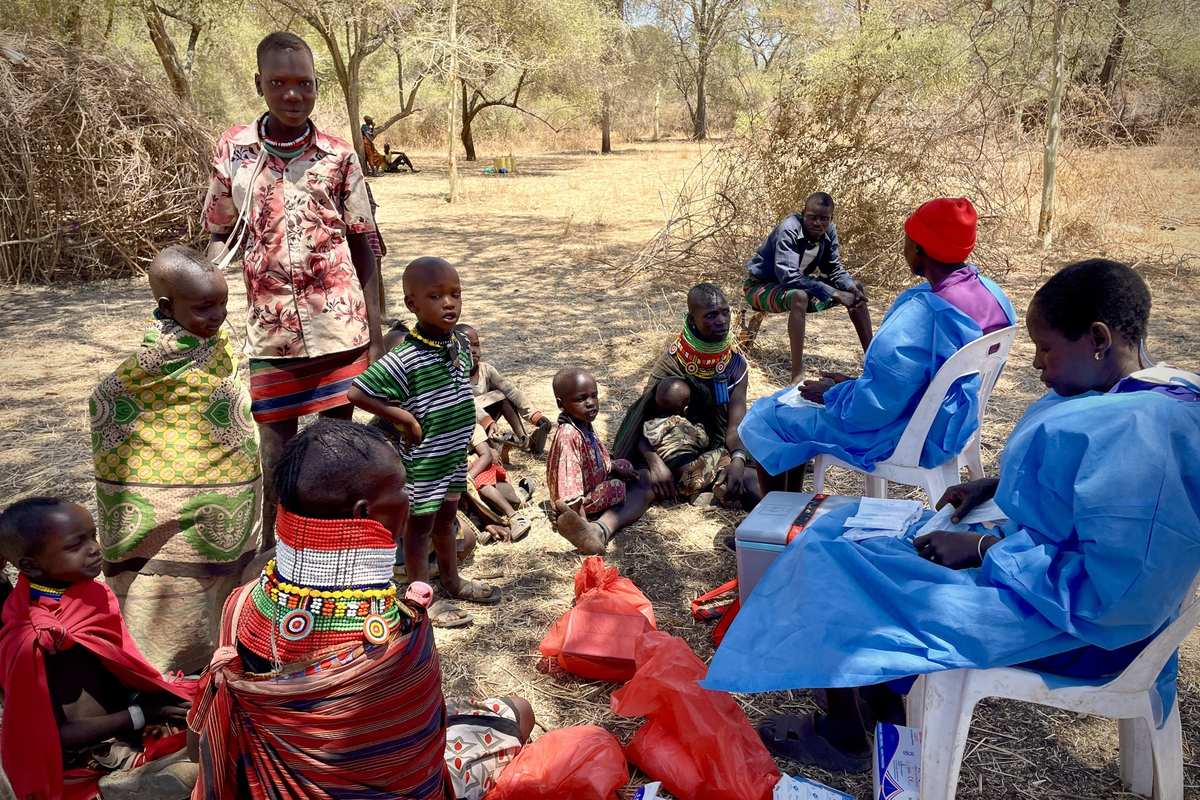
As well as vaccinating children, Loma and her team screened children within the communities for trachoma and other tropical diseases.
One frail-looking old man explained that most of the pastoralists had moved west to Lopeei, near Napak district, in search of water after the dam in the territory had dried up. “Now we have to follow them,” said Loma. “If they enter Napak, we shall leave them for health workers in Napak.”
Loma and her team vaccinated the handful of kids they found still there, and then set off again for Lopeei, hoping to trace the nomad pastoralists. It was slow going, and not just because the terrain was tough. They stopped occasionally to vaccinate eligible kids they met on the way herding goats, ferrying water, or guiding donkeys.
It was coming to 15:00 when Loma and team reached Lopeei, another sun-scorched rangeland, but with taller acacia trees and denser bits of woodland. That meant the Land Cruiser couldn’t pass. They parked the vehicle, got out the vaccines and supplies, and followed a cattle path to the community – another compound of makeshift circular grass huts in the vast landscape. Again, they set up shop. They prescribed simple medications to children with colds and fevers; screened kids for trachoma and other diseases; administered critical first aid to a newborn who hadn’t fed since birth two days previously, before referring the child’s parents to a hospital in Moroto. They vaccinated children until close to sundown.
But the community leader explained that several other kids were scattered across the vast bushes. He would mobilise them for vaccination if the team could spend the night. However, Loma and team preferred to take the herd path back to the Land Cruiser and drive back to Nadunget. They would return the next day.
Abura Rehema, a VHT member at Nakidong village in Nadunget, commended Loma and team for bringing the vaccines to the community. “We had a case of measles here [at Nadunget] three or four days ago,” she said. “We referred it to Moroto [hospital]. In a congested place like this,” the VHT said, gesturing at the compound, “measles can swiftly spread if children are not vaccinated.”

Abura Rehema, a member of the local Village Health Team (VHT) at Nakidong village, commended Loma and team for bringing vaccines to her community.
Powered by determination
UNEPI’s Nsubuga said Loma and team were good representatives of the large number of selfless health workers who’ve battled the elements to vaccinate children across some of Uganda’s hardest-to-reach corners.
“We had health workers who took boats to vaccinate children in Kalangala district [a territory of some 84 islands in Lake Victoria],” said Nsubuga. “One team would take a boat, vaccinate kids at one island, finish, and move to the next. When they stop at around 5 or 6pm, they sleep. They wake up the next day and move.”
“We had health teams in Kampala and other urban areas who targeted schools and markets,” he continued. “The team would vaccinate one school, finish, go to the next. One team could vaccinate ten schools a day.”
Nsubuga said the health workers had helped to vaccinate 8.4 million children, surpassing the 7.6 million target, and achieved 110% coverage. “They [health workers] helped us achieve coverage of more than 100% in Kampala, which we had never achieved before,” he said.
Nsubuga said UNEPI had vaccinated more children than they had targeted because they were deliberate and deployed a “rapid convenience monitoring tool” that enabled supervisors to conduct real-time monitoring in slums, refugee settlements, and other hard-to-reach areas where health workers could easily miss children. This meant they were flexible enough to adjust their denominator on the move.
“We had a few challenges related to logistics, especially after the cost of fuel rose from 5,000 shillings [US$ 1.22] in 2025 when we made our applications, to 7,000 shillings [US$ 1.70] at the time of campaign. But, overall, our health workers and partners helped,” he said.

Dr Diana Atwine, Permanent Secretary at the Ministry of Health, said her Ministry implemented the campaign with an “equity lens” so that geographical location or social circumstances didn’t prevent children from accessing the vaccines. “We wanted to ensure that every resource entrusted to us translated into a child being reached,” she said.
Beyond the campaign, Dr Chris Baryomunsi, Uganda’s Minister of Health, said the country would continue to strengthen routine immunisation, so children can receive vaccines when they are supposed to.
“The campaign gives us an opportunity to reach children who may have missed their vaccines, but it is not a substitute for routine immunisation,” said Baryomunsi, at the launch of the campaign at Wakiso in central Uganda. “So, our responsibility must continue after these five days. Parents must continue to take children to health facilities to receive vaccines according to the national immunisation schedule. This includes the two doses of the measles-rubella vaccine given at 9 and 18 months.”
Back in Karamoja, Loma and team rattled across the sun-scorched landscape. They badly needed a proper shower after spending three days and nights on the go.
But the team had one more task to do before they could return to Moroto. So, after breakfast, their driver turned the ignition key to start the Land Cruiser, and the team set off for Lopeei to vaccinate the remaining children. They returned to Moroto just before dusk.