
Amid pay disputes, Lesotho’s village health workers keep the immunisation machine running
The work is hard and unglamorous, and the pay often falls short. But Puleng Leeto and her colleagues are proud of their contribution to frontline healthcare.
- 19 November 2026
- 6 min read
- by Nyasha Bhobo
At a glance
- With fewer than 21 doctors, nurses and midwives per 10,000 population, Lesotho has only about half of the health workers it needs, making village health workers and other community health workers critical to the viability of the country’s healthcare system.
- In mid-2025, village health workers temporarily stopped work over delays in implementing an agreed pay rise. But their commitment to the communities they serve eventually brought them back to work.
- Door-to-door visits by village health workers have helped Lesotho achieve national vaccination coverage of 88% for a third dose of the combined diphtheria, tetanus, and pertussis-containing (DPT3) vaccine, and 80% for the first dose of a measles containing vaccine (MCV1).
“We have to brave it,” says Puleng Leeto, 30, referring to the steep pony trail she’s striding down. It’s just after daybreak in the windswept mountain village of Ha Rameno. “Our clients – babies, the elderly – depend on us.”
Toting a digital tablet and a worn-out notebook, the village health worker (VHW) walks briskly. VHWs like Leeto serve even the remotest corners of Lesotho, and that means covering a great deal of rugged ground, often with too few resources.
First line of defence
With an average 20.7 doctors, nurses and midwives per 10,000 population, the country has only about half of the health workers it needs, according to a 2022 study. Community health workers including VHWs like Leeto make up 69% of the total health workforce and provide the bulk of rural primary healthcare.
“This is why the nearly 5,000 VHWs dotted across the nation are critical to the very viability of the entire healthcare system – not just immunisations,” says Hlalefang Seoaholimo, leader of the Lesotho Workers Association.
The VHWs don’t just bring pills, injections and pamphlets to vulnerable clients’ homes, but generate the village-level data that informs national vaccination coverage statistics. These, in turn, are what the Ministry of Health and its partners, like the World Health Organization and UNICEF, need to devise immunisation strategies, he added.
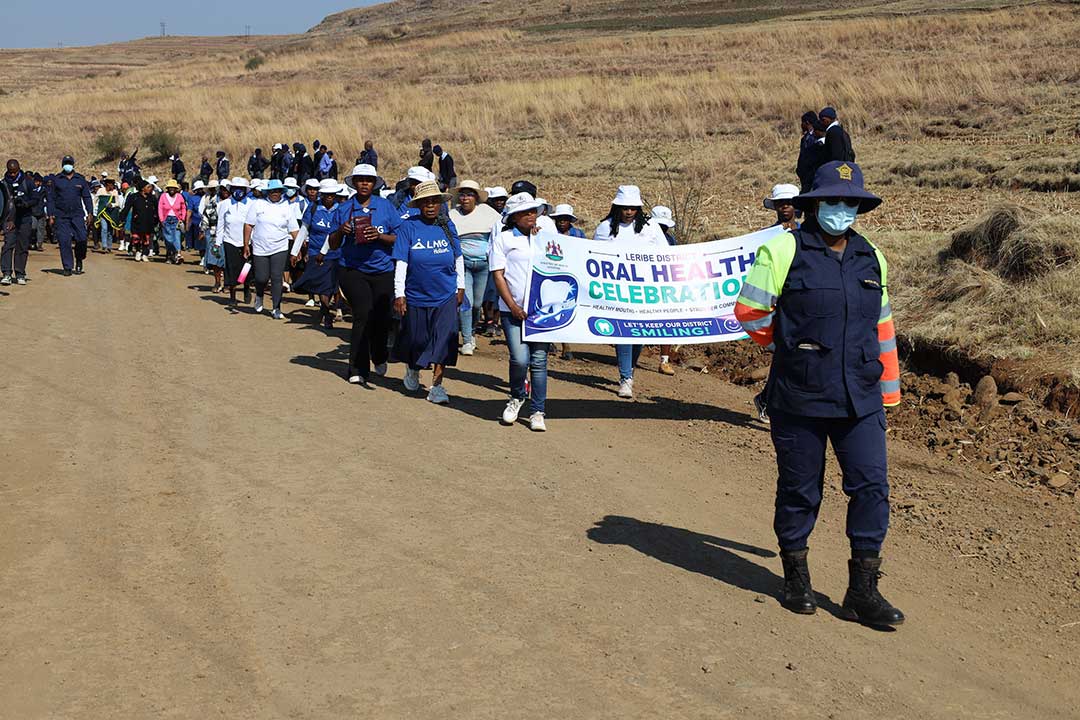
So, when the VHWs, whom Health Minister Selibe Mochoboroane has called “The Ministry of Health’s first line of defence”, temporarily stopped work in mid-2025 over stipend arrears, this amounted to a system-level worry.
Credit: WHO Lesotho
The Minister’s description was a fair assessment, says Leeto, who took part in the brief job stay-away, which was triggered by delays in paying out a higher agreed-upon VHW salary threshold for the year 2026–2027. When VHWs like her abandon their posts, the country’s entire immunisation infrastructure grinds to a halt too. That pressure cuts two ways, as it turns out. The community’s needs won out: the intrinsic importance of their work brought Leeto and her colleagues back to their posts.
“We would rather work penniless for a while as long as every child gets their measles and polio vaccines,” she says.
Day in the life of a mountain VHW
A typical VHW’s day in rural Lesotho involves walking from remote mountain community to remote mountain community. In village after village, Leeto peruses health booklets to spot gaps in babies' vaccination histories, examining baseline health markers such as weight to catch malnutrition early, and gently encouraging parents to be strict about the scheduled immunisation call-ups.
“We live the lives of our rural clients – we are not drop-in celebrity ‘humanitarian’ doctors coming to do once-off healthcare checks with cameras in tow. We are deeply integrated in the remote locations where lots of kids live,” she says.
That integration directly means that more kids get protected. When a local mother didn’t bring her four-year-old daughter to a recent measles-rubella immunisation campaign, Leeto knew it without consulting her data book.
“Top of my head – I remembered – went to her home to make sure we fetch both mum and child,” she says. Household hunger had been the reason the family could not come to the measles appointment. Nurses at the clinic gave a food hamper to the family – who were “very poor,” she says – so they could face the walk and the vaccine on full stomachs.
Mpho Kekana, 31, a mum of two, says she sometimes misses a vaccine appointment because her husband is 600 km away working in the informal gold mines of Johannesburg, South Africa, and custom dictates that she must verbally seek his permission via phone call each time.
“It’s stressful being alone as a parent in rural Lesotho – and sometimes I forget upcoming immunisation schedules if permission from my husband takes long to come via phone call,” she says. “But VHWs knows our family situation and name – and they always call two days before immunisation, slipping reminders like ‘hey, your days are near’. Without these heroes, our kids could miss protection.”
A lifeline and a bridge
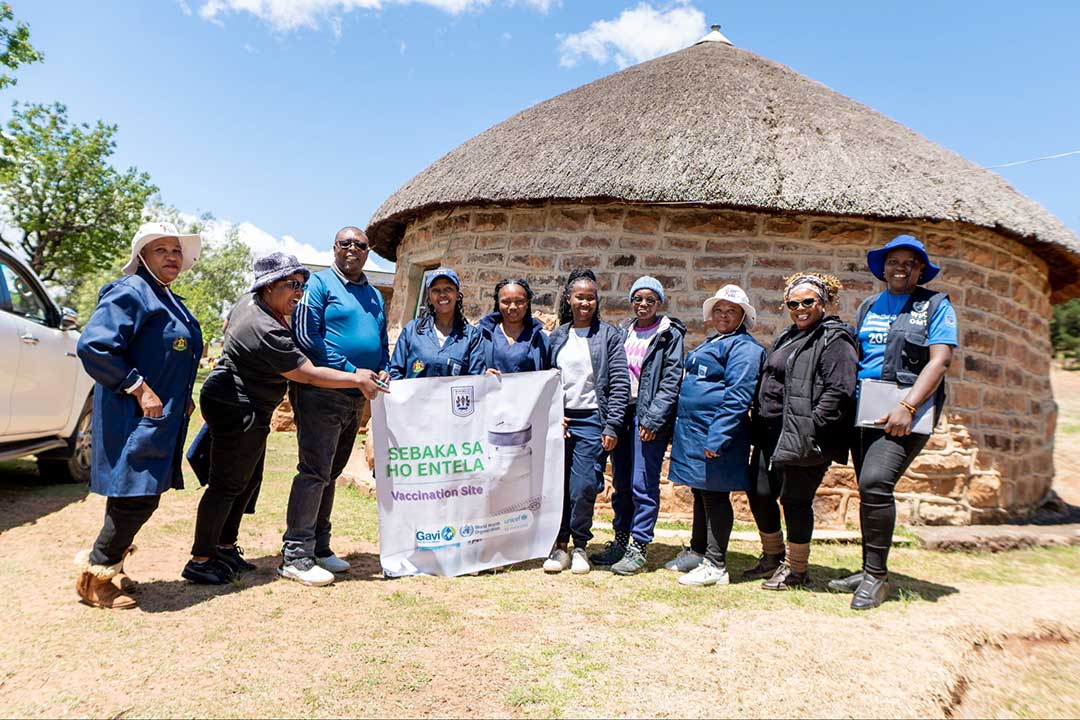
Tsepo Mabunda, a nurse at Queen ’Mamohato Memorial Hospital in the capital, says VHWs are both a lifeline and a bridge between doctors and nurses in towns and rural communities. They do the unglamorous work that nurses can’t abandon their posts to see to, she explains.
Credit: WHO Lesotho
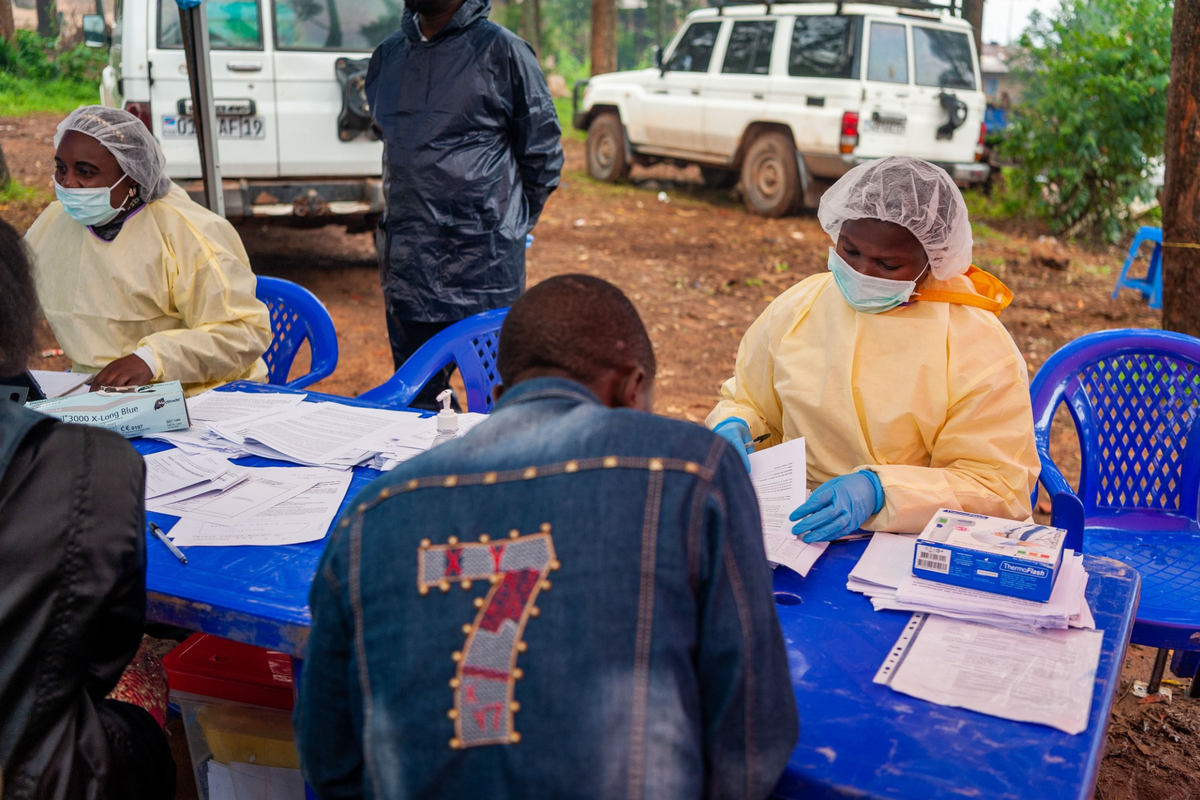
“The VHWs go into the field, to verify vaccine doses, enter details into their tablets and come back to the clinic to tally and reconcile the data. Our district nurse supervisors then feed the reports onward to the District Health Information System (DHIS2),” she says.
This helps keep nurses at their clinic post, freeing their time to attend emergencies.
“They are the human face of the human immunisation journey from the day a child is born in Lesotho, to adulthood,” she says, adding that she thinks all negotiations over nurses’ salaries should include VHWs pay demands, to avoid the perception that “perhaps a doctor, nurse is more important than a rural VHW”.
Door-to-door patrols by VHWs recently helped Lesotho drive national vaccine coverage to 88% for third dose of the combined diphtheria, tetanus, and pertussis-containing (DPT3) vaccine and 80% for the first dose of a measles-containing vaccine (MCV1).
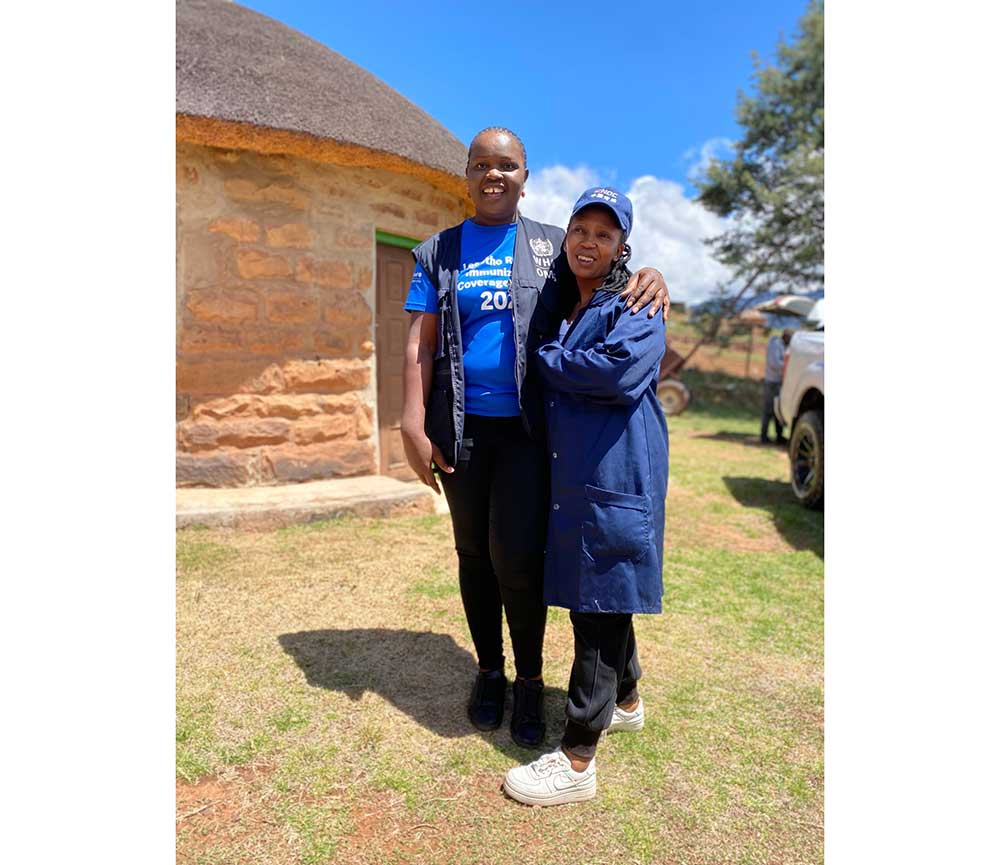
Credit: WHO Lesotho
“Our members are not stop-gaps, minor expenses at the bottom of the rewards and priority food chain. We are the oil in the cog of immunisation,” Seoaholimo, the trade unionist, underscores.
Her morning rounds completed, Leeto folds her paper notebooks and puts her data tablet to sleep. She is hopeful the stipend issue will soon be reviewed, and confident that somehow, she’ll still be there to help protect every child against preventable childhood illnesses.