
The quest to understand a tick-borne allergy to red meat
When alpha-gal syndrome first emerged, it was a baffling medical mystery. Today, diagnoses are rising, yet much about this potentially life-threatening condition remains unexplained.
- 19 November 2026
- 9 min read
- by Knowable magazine
Sandra Tiguila, an adventurous eater, enjoyed a bison sausage breakfast sandwich while dining out in August of 2025. On the drive home, she noticed a rash appearing on her wrist. The burning sensation spread to her arms and legs, making it nearly impossible to sleep. In the days to come, she tried creams, pills, injections; nothing helped.
Ten days later, Tiguila ate out again, ordering a steak. When her face swelled up, her boyfriend drove her to the emergency room. A doctor tested her for diseases carried by ticks. Tiguila, who lives in Carbondale, Illinois, had been bitten twice that June.
Tiguila went home and the next morning, as she was drinking coffee with her usual supplement of bovine collagen for joint, hair and nail health, the test results came in. She had developed a red meat allergy that’s activated by tick bites. “I immediately dumped that coffee down the sink,” says Tiguila. She started avoiding all mammal products — the main way to manage this rising and occasionally life-threatening allergy.
Known as alpha-gal syndrome, the condition arises when the immune system reacts to a certain sugar molecule, called alpha-gal, that’s found in red meat. Symptoms range from a mild rash or stomach upset to anaphylactic shock; in 2025, alpha-gal syndrome was blamed for the death of an otherwise healthy 47-year-old man. The syndrome has only recently been characterized and is still not fully understood. Though Tiguila, who is a nurse, was aware of the allergy, she says she still failed to connect her rash to her meaty meals and earlier tick bites.
As ticks have spread northward, so too have alpha-gal diagnoses. Up to 450,000 people in the United States may have been affected since 2010, the Centers for Disease Control and Prevention estimates.
“It’s emerging as one of the top adult-onset food allergies,” says Onyinye Iweala, an allergist and immunologist at the University of North Carolina at Chapel Hill.
Odd, even for an allergy
Allergies are often mysterious, but this one is extra weird. “Alpha-gal follows none of the rules that I was taught in training about how a food allergy behaves,” says Maya Jerath, an allergist and immunologist at Washington University in St. Louis and one of Tiguila’s physicians. For example, unlike with other food allergies, where reactions are immediate, alpha-gal symptoms often show up hours after eating meat.
And, strangely, the allergy often arises after a tick bite. In the early 2000s, Jerath recalls, Australian allergist and clinician Sheryl van Nunen first shared tales on the scientific-conference circuit of patients with a delayed allergic reaction to red meat after tick bites. “Nobody believed her,” Jerath says.
The eventual unraveling of the mystery would happen on the other side of the world, where immunologist Thomas Platts-Mills, unaware of van Nunen’s findings, was pursuing two parallel projects in his lab at the University of Virginia in Charlottesville. In one, his group was collecting blood samples from people claiming weird meat sensitivities. In the other, they were investigating patients’ strange reactions to the cancer drug cetuximab. It would take both projects to crack the case, recalls Scott Commins, an allergist who was then part of the lab and now works at the University of North Carolina.
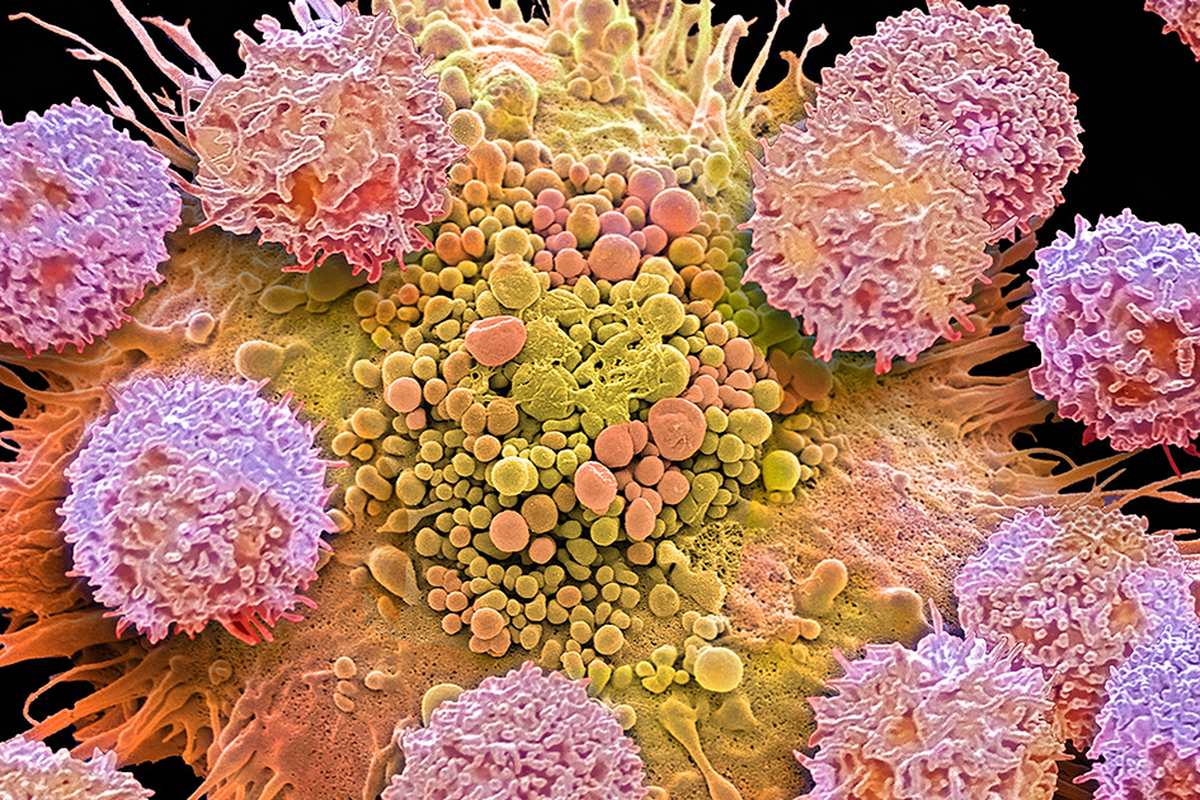
First, the cancer strand. Cetuximab is a drug designed to stick to cancer cells and block their overzealous growth. It was first approved to treat colorectal cancer in 2004, but as its testing and use spread, an odd pattern appeared. In the Southeastern United States, more than one in five patients had allergic reactions to the drug — hives, difficulty breathing and even anaphylaxis.
It took about a year and a half, Commins recalls, but Platts-Mills’ group found the culprit. People who reacted badly to cetuximab, they discovered, had blood loaded with proteins called IgE antibodies. When activated inappropriately, IgE causes allergies. The cancer patients with the allergic reactions to cetuximab had IgE antibodies that were reacting specifically to the sugar alpha-gal, the researchers reported in 2008.
Now, humans (and many other primates) don’t make alpha-gal. But most mammals do. It’s one of several sugars that cells attach to proteins to regulate their final structure and function. And cetuximab, like many drugs, is manufactured in lab-grown mouse cells. These cells had attached alpha-gal molecules to the cetuximab. That’s what triggered the allergic reactions in the cancer patients.
But it only happened in some of the people taking the drug. Why them? And why only in the Southeastern United States?
The next clues came from the lab’s other work, on meat sensitivities. This puzzle, of course, also involved exposure to tissues from non-primate mammals — so the researchers hypothesized that this allergy had the same cause as the drug reactions. Sure enough, they found that people with meat sensitivity also had elevated IgE antibodies to alpha-gal, causing a “novel and severe food allergy,” the team reported in 2009.
The allergy is bizarre for several reasons. There’s the delay that van Nunen had noticed. And food allergies are typically triggered by protein: egg protein, nut protein, etc. While some carbohydrates have been linked to mild allergies, a sugar causing such severe reactions was unheard of, says Jeffrey Wilson, an allergist and immunologist at UVA Health in Charlottesville, Virginia.
Plus, food allergies were supposed to be all-or-nothing: A person allergic to peanuts will always react to peanuts. Not so with alpha-gal. For example, some people react to meat alone; others might be bothered by dairy or other mammal products, such as gelatin in cosmetics or medications.
Because those products are common, people are exposed to alpha-gal all the time. The sugar can even be made by natural gut bacteria. In other words, most people have no problem with alpha-gal. Platts-Mills, Commins and colleagues were still missing an explanation for why only some people developed this odd sensitivity.
So Commins led a study of people with and without meat allergy to see what the allergic ones had in common. Might they have been exposed to some kind of fungus, or maybe a worm? No, and no.
Then, a key clue emerged from a colleague down the hall. He’d had the meat allergy and joined the study, but had been doing well, so he dared to eat a sausage. Big mistake: He had a bad reaction. Testing showed his alpha-gal IgE had risen to “freakishly high levels,” Commins recalls.
The colleague also had itchy spots — from recent tick bites. That got the team thinking. Commins went back to his meat-sensitive subjects to ask if they’d had tick bites. Most of the nearly 200 people answered yes. The team then learned of van Nunen’s work, published in 2009, bolstering confidence that they were on the right track. Everything pointed to a tick link: The regions where people had alpha-gal antibodies overlapped with the range of the lone star tick; people who got bitten developed more alpha-gal antibodies, and people with those antibodies often also had antibodies to other lone star tick proteins, the team reported in 2011.
Later, biologist Shahid Karim of the University of Southern Mississippi in Hattiesburg and colleagues found alpha-gal in lone star tick salivary glands. The final clincher implicating ticks came in 2023: Commins and collaborators at the CDC reported that people with alpha-gal syndrome were more than 11 times more likely to recall finding a tick on their body than those who didn’t have the allergy.
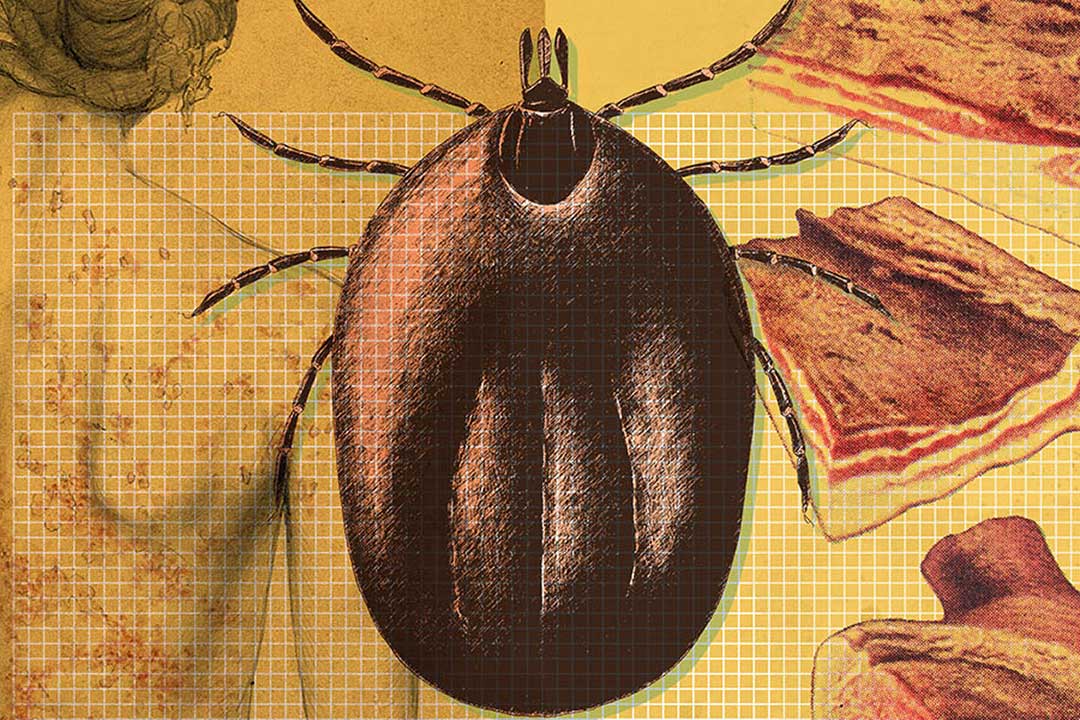
Around the world, about a dozen tick species are now associated with alpha-gal allergy. In the United States, the lone star tick is the major player, and it’s spreading northward, helped by warmer temperatures and exploding populations of deer that the tick feeds on.
Mysteries remain
Given the expanding health concerns, the CDC has pledged $10 million to support alpha-gal surveillance and awareness among health providers and the public. Scientists, meanwhile, have lingering questions about how the mysterious allergy works.
The pathway from tick bite to meat allergy remains murky. Commins, who hosts a podcast about alpha-gal syndrome, speculates that the body can treat alpha-gal as either something to tolerate or something to react to. The route of exposure seems to be key: Alpha-gal in the gut, from food or bacteria, seems to promote tolerance. But exposure via the skin is a great way to trigger an allergic reaction. That reaction can overshadow the tolerance, often temporarily, Commins says. This hypothesis fits some of the allergy’s features: A strong reaction to the initial bite, or getting lots of bites, boosts risk. Fresh tick bites can also exacerbate or reactivate the sensitivity.
Researchers don’t really know why certain ticks cause the allergy and others don’t. One possibility: Perhaps the lone star tick’s taste for human blood, combined with, as Commins notes, its wickedly long skin-piercing mouthparts, underlie this species’ proclivity to incite allergy.
Also puzzling: Some people get tick bites and don’t develop the allergy, and some alpha-gal patients don’t report any history of tick bites. Some people have high levels of IgE antibodies to alpha-gal but can enjoy cheeseburgers freely. Others are sensitive to meats but have low concentrations of the allergic IgE.
Karim, for his part, is trying to figure out what causes some tick victims’ immune reactions to flip from alpha-gal tolerance to allergy. Some research suggests that blood type is a risk factor. Type B blood proteins contain a structure similar to the alpha-gal sugar, and this could promote tolerance, making people with type B or AB blood less likely to develop IgE antibodies to alpha-gal.
Another unresolved question is the odd symptom delay. Wilson speculates that it could be explained if the alpha-gal sugar is hooked to meat fats, rather than meat proteins. Fats take longer for the body to digest and transmit into the bloodstream, so only then would the alpha-gal sugar gain the notice of immune cells.
For some people, their elevated IgE levels will drop and the allergy will go away. In others, it lingers. And sometimes it seems to morph into a generalized disorder where people have allergy-like symptoms even when they avoid meat, says Iweala.
For now, there are no specific therapies for alpha-gal. Allergists can suggest antihistamines and offer EpiPens to thwart a reaction. Some prescribe Xolair (omalizumab), a general allergy treatment that can minimize symptoms if a person encounters alpha-gal. To avoid activating or exacerbating alpha-gal syndrome, the best approach is to avoid tick-ridden areas or use insect repellents like picaridin on skin and permethrin on clothing.
And Commins hopes to create a better treatment. It’s known that an immune signaling molecule called IL-4 is key to the allergic response. He’s in discussions with pharmaceutical companies to test a treatment that would interrupt this IL-4 messaging.
Better therapeutics would certainly be welcome. Alpha-gal syndrome can cause anxiety, since mammal-derived products are ubiquitous and hard to avoid. Tiguila, when she was first diagnosed, went into a label-checking frenzy; she almost threw a bag of prunes across the room because it contained a possibly mammal-derived additive.
After visiting the Washington University clinic and being advised to relax around foods that didn’t bother her, Tiguila calmed down. She still enjoys the great outdoors but is careful to slather on insect repellent first.
She recently received more good news: In August of 2026, her blood tested negative for IgE antibodies against alpha-gal, suggesting that her allergy might be gone. Her physicians prescribed a reintroduction protocol they had developed for patients who hit this milestone. She started with an ounce of filet mignon, a low-fat cut, and amped up the exposure from there. “I’ve successfully returned many people to eating meat again,” Jerath says. In one study, her protocol worked for all 19 participants.
Add Tiguila to that total: As of late September, she is back to her usual diet. “I’m very grateful to be cleared and not have to be so cautious,” she says.
More from Knowable magazine