
The neighbour who talks vaccines: how Nigeria's health entrepreneurs are closing immunisation gaps
A women’s economic empowerment project in Kaduna State, Nigeria, is turning local health entrepreneurs into vaccine champions.
- 3 November 2026
- 5 min read
- by Nirosha Beck
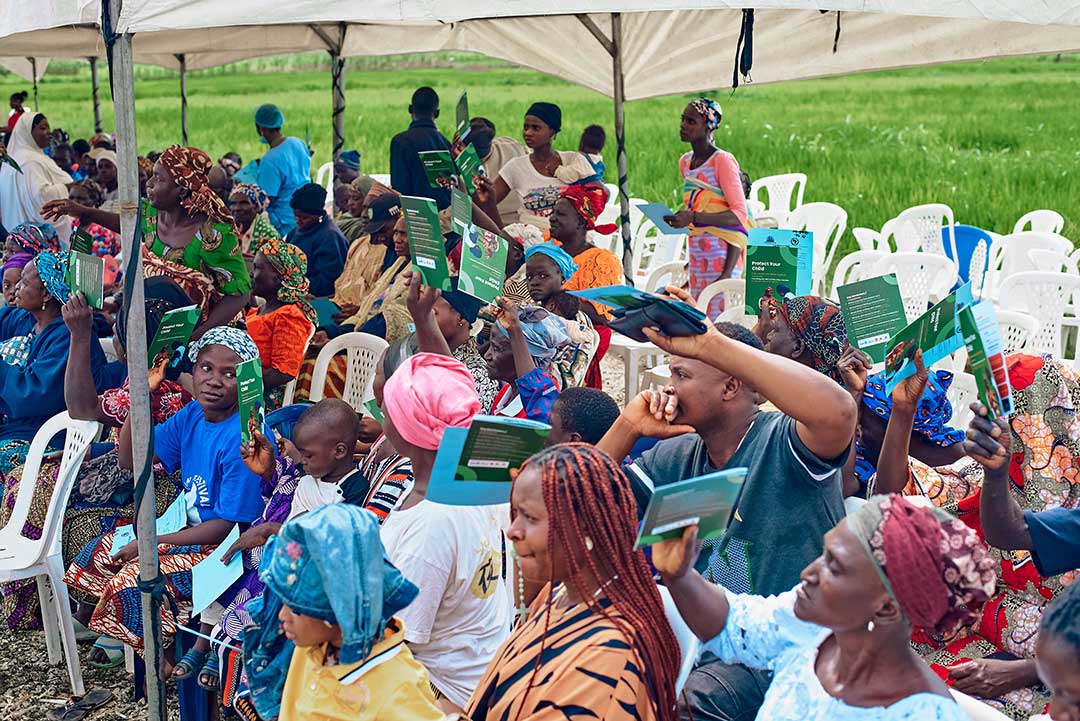
In many communities in Kaduna State, the first stop for a family health question is not a clinic. It is a local seller of basic medicines, or a neighbour with a reputation for giving good advice. Clinics can be a long walk away, and so questions about vaccines often go unasked.
The Kaduna Women Economic Empowerment (WEE) project takes that reality as its starting point. It supports women to run small health businesses as Community Health Entrepreneurs (CHEs), offering advice close to home and selling essential products such as female hygiene products, antimalarials, contraceptives and simple pain medications.
Since July 2025, those same entrepreneurs have taken on a new role: talking to their neighbours about vaccines, and connecting women, girls and children to the nearest primary health centre .
Where the gaps are widest
Nigeria has more zero-dose children – children who have not received a single routine vaccine – than almost any other country. Kaduna State is home to a large share of them.
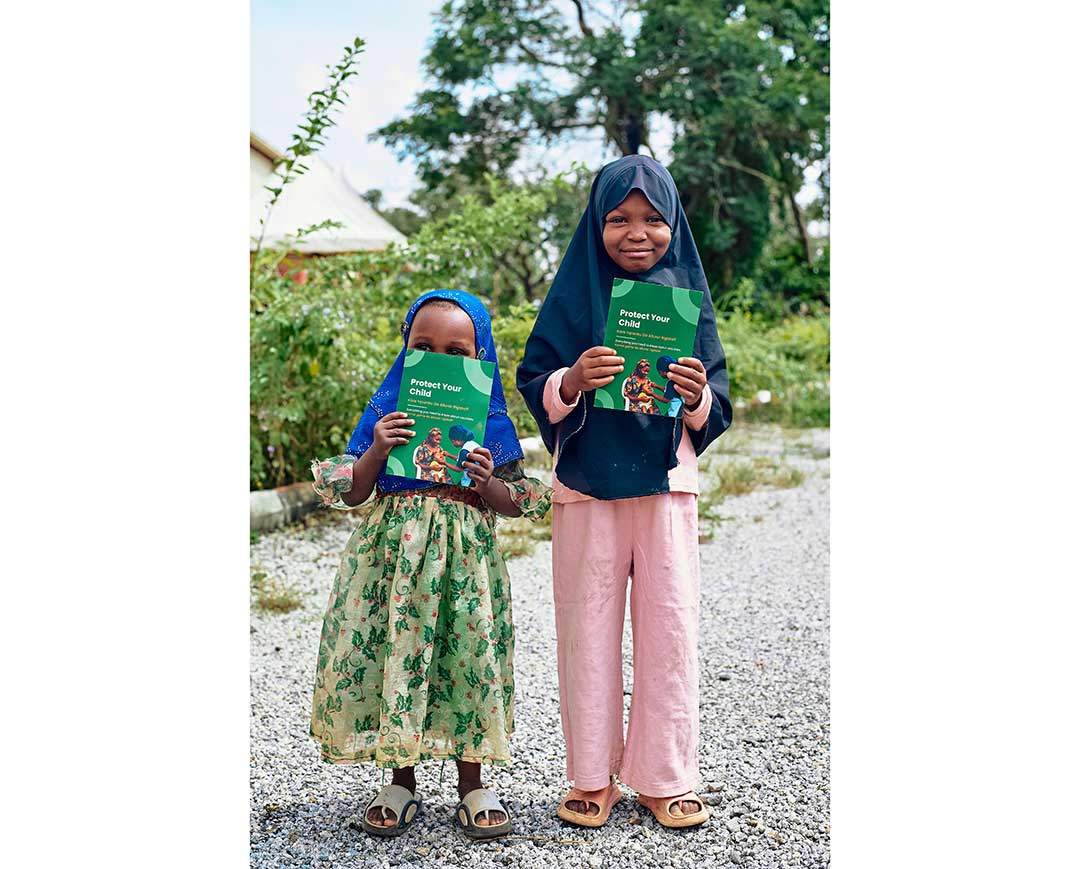
The project is working in six Local Government Areas (LGAs): Igabi, Kaura, Jema’a, Zaria, Sabon Gari and Makarfi. Three of them – Igabi, Zaria and Makarfi – are listed by Nigeria’s National Primary Health Care Development Agency (NPHCDA) among the LGAs with the highest numbers of zero-dose children in the state.
Credit: Nirosha Beck
The obstacles are not only about distance or supply. Low awareness of vaccines and cultural barriers have long held back uptake in northern Nigeria. That is especially true for newer vaccines such as HPV, which protects girls against the virus that causes most cases of cervical cancer. Nigeria introduced the HPV vaccine into its routine programme in 2023 with Gavi support, and reaching every eligible girl depends on families understanding and trusting it.
This is where a trusted local voice can make the difference.
Building trust from the top down
The project’s vaccine workstream is implemented by Advantage Health Africa (AHA), working with Healthy Entrepreneurs and the Jennifer Etuh Foundation. It is co-financed by the Bayer Foundation and the Gavi Matching Fund, which matches private-sector contributions to immunisation.
Before a single conversation took place at community level, the AHA team set out to win the backing of the people communities listen to:
- State government. In August and September 2026, the team met directors-general, executive secretaries, health secretaries, state immunisation officers and other senior officials.
- Traditional leaders. A sensitisation meeting with the Emir of Zaria and all district heads brought the endorsement of the leaders whose word carries weight in every household.
- The health system. In October 2026, an alignment meeting with the Executive Secretary of the Kaduna State Primary Health Care Board set out how vaccine supply, access to primary health centres and reporting would work together.
With that support in place, the CHEs do what they do best. They talk to families they already know, answer questions in their own languages, and refer women, girls and children to the nearest primary health centre for vaccination.
Across the three LGAs with the most reported activity, 1,148 vaccine doses have been given and close to 7,500 people have been reached with vaccine information.
“What makes this project different is that we are bridging the gap between vaccine awareness and actual vaccination. We are not just educating communities; we are mobilising families, connecting eligible children and girls to vaccination services, and working with the health system to turn awareness into action,” said Abimbola Adebakin, AHA project executive.
“By leveraging trusted Community Health Entrepreneurs, empowering women economically and engaging pharmacies as vaccination education and referral points, we are building a community-driven pathway that makes vaccination more accessible.
“For us at Advantage Health Africa, success is not simply how many people hear about vaccines, but how many are enabled to receive them. We believe this model is scalable and can help close immunisation gaps across more terrains while demonstrating how women’s economic empowerment and private-sector innovation can deliver measurable public health impact.”
Early results
The first numbers are encouraging. Across the three LGAs with the most reported activity, 1,148 vaccine doses have been given and close to 7,500 people have been reached with vaccine information.
Human papillomavirus (HPV) vaccination – which protects adolescent girls from developing cervical cancer later on in life – is leading the way, accounting for more than nine in ten doses so far. That matters in a region where the vaccine is still new and where girls’ health has often been a difficult subject to raise.
“These first results show what happens when local trust is backed by the right partners,” said Kyra Pauly, Vice President and Head of Societal Engagement and Foundations at Bayer AG, and the Managing Director of Bayer Foundation. “Families are choosing to protect their daughters with the HPV vaccine, and we are reaching children who have never been vaccinated. Working with Gavi, Advantage Health Africa and the Kaduna State authorities, we want to grow this into a model that reaches 90,000 people and vaccinates 40,000 by mid-2027.”
The LGAs Kaura and Makari stand out. Kaura leads on outreach: CHEs there have reached more than 6,100 people. Makari has recorded the most vaccine doses administered to previously zero-dose children.
Pharmacies join the effort
The next step brings vaccine conversations to the high street. Ten pharmacies from AHA’s licensed network have been recruited as vaccination education points, starting in October 2026. They are trusted, busy places where people can get reliable information and a referral to the nearest primary health centre.
In the coming months, the project will scale up vaccination in Igabi, Jema’a and Sabon Gari, and give more attention to vaccination with the basic diphtheria, pertussis and tetanus-containing vaccine for zero-dose children, alongside HPV. As the network of entrepreneurs grows, it will expand to four more LGAs: Soba, Lere, Chikun and Kaduna South.
The lesson from Kaduna is a simple one. When women earn a living from looking after their community’s health, they also become some of its most persuasive advocates for vaccination.