
Meeting girls where they are: increasing HPV vaccination starts at school
Findings from 11 countries point to practical ways of protecting more adolescents from cervical cancer.
- 5 November 2026
- 6 min read
- by Koki Nzomo , Pooja Sripad , Sonali Patel
In 2020, the World Health Assembly set out a global strategy for eliminating cervical cancer by 2030. It called for getting 90% of girls fully vaccinated against HPV by age 15; 70% of woman screened; and 90% of women with cervical disease treated. For countries working toward the ambitious 90% vaccination goal, classrooms are one of the most logical places to start. Schools are where most adolescent girls spend most days. The built infrastructure is already in place, and in many cases, trust between the system and the girls is, too.
Many teachers did not initially know the connection between HPV and cervical cancer. Once trained, many volunteered to become HPV champions in their own schools and communities, going beyond what the training asked of them.
Researchers in 11 countries in Africa and Asia have spent the last two years testing whether that logic is borne out in practice. Eight of 12 studies resulting from that research used schools as a delivery point in some way, and the results have been compelling.
What the research looked like on the ground
All projects in this portfolio of research studied different ways of integrating the HPV vaccine with other adolescent health services, so the integration model looked different in different contexts. But there were two broad approaches to bringing HPV vaccination into schools.
In several countries, schools served as the venue for broader service delivery. Rather than building new infrastructure, these projects optimised a platform that already existed by extending vaccination hours, adding delivery sites, and pairing HPV vaccination with pre-existing at-school health services like vision screening, nutrition checks and health education. Because schools already gather the target population in one place, this approach made it easier to identify and mobilise adolescents at scale, and to fold HPV vaccination into a system that was already running.
In other countries, projects worked with education officials to deliberately embed HPV content into school curricula and teacher training. Compared to a single outreach visit, embedding HPV vaccination into the curriculum offers adolescent students ongoing exposure to the concept that immunisation against a virus can protect them from the development of a common and deadly cancer later in life. Teachers are also often among the most trusted adults in a young person’s life, and once trained on the relevant information, they can become effective ambassadors for HPV vaccination. This approach works alongside and complements existing vaccine delivery rather than replacing it. Girls still receive the vaccine through school-based outreach or at their local health facility, and classroom lessons help them and their families understand what the vaccine is and why it matters.
What we found
Across the portfolio, integrating HPV vaccination with other adolescent health services, whether in schools or elsewhere, was associated with higher HPV vaccine uptake in most studies.
The studies that took the second approach, building HPV education into school curricula and teacher training, generally found strong knowledge gains. They also achieved cost savings through economies of scale once training and curricula were in place.
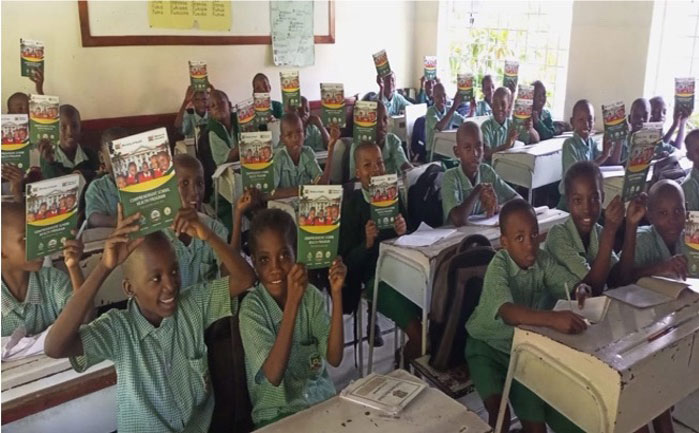
In Kenya, the Clinton Health Access Initiative (CHAI), a global health nonprofit that works with governments to strengthen health systems, added HPV content into existing school health programming for grades 4 through 8 (roughly ages 10 to 14). The team adapted a school health guide that Nairobi County had developed, covering life skills and values, puberty and physical development, children’s rights, water, sanitation and hygiene (WASH), nutrition, special needs, and disease prevention.
During implementation, the team observed that many teachers did not initially know the connection between HPV and cervical cancer. Once trained, many volunteered to become HPV champions in their own schools and communities, going beyond what the training asked of them. Student outcomes in intervention schools looked similar to those in comparison schools.
Integration works best when vaccination is added to programmes and routines that already exist, rather than set up as a separate, standalone effort.
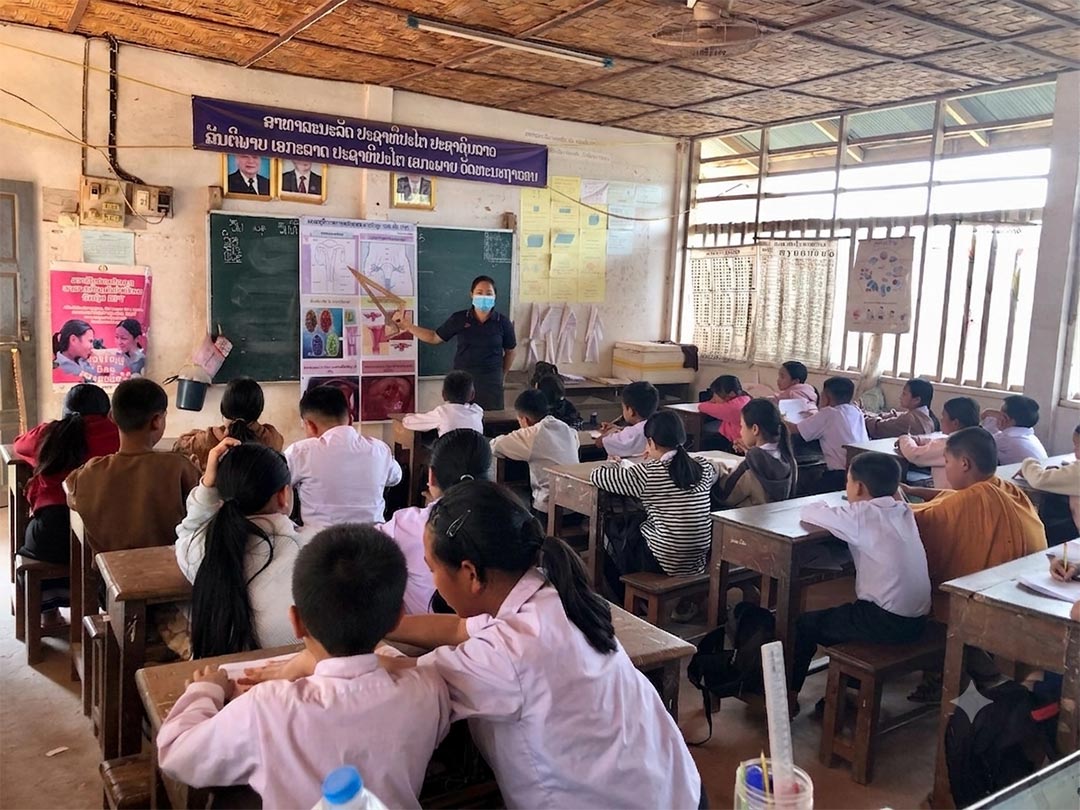
In Lao PDR, Health Poverty Action (HPA), an international nonprofit that works with marginalised communities to address root causes of poor health, focused on education rather than changing how the vaccine was delivered. Girls and boys ages 10 to 13 still received the vaccine through the national school-based campaign and local health centres. In schools, HPA added HPV lessons to the comprehensive sexuality education curriculum already taught in parts of the country. Teachers were trained on a module covering puberty, menstruation, anatomy, and the HPV-cervical cancer connection.
Surveys of students before, during, and after the intervention showed significantly greater gains in knowledge and attitudes about HPV and the vaccine in intervention areas than in comparison areas. Researchers noted that the school lessons worked best as part of a wider package, in which health centre staff received refresher training and materials to counsel adolescents and caregivers, and village volunteers ran HPV sessions for adolescents not in school.
Caveats and challenges
These studies unearthed some challenges. Sexual and reproductive health content sometimes raised concerns from parents, particularly for those whose children were in younger grades. Researchers found ways to navigate this.
In Kenya, for example, some parents called the number on the study consent form to ask what their 10-year-olds would be taught. The team walked them through the lessons and explained how the content had been adapted for young learners. CHAI also added sessions to the teacher training on how to deliver sensitive topics in age-appropriate ways. It produced short pamphlets so teachers and caregivers could respond confidently to common questions.
Teachers are worth investing in for the long-term. Teachers who understand the importance of the HPV vaccine will carry that message forward long after any project ends.
In Cambodia, roughly a third of schools did not reliably keep their own vaccination records, leaving the study with gaps in its baseline data. To address this, the project added a session to the teacher training on how to fill in the national vaccination recording forms and keep those records on file at the school.
Importantly, institutionalising the link between education and health sectors is critical to sustaining these gains, but that link remains underdeveloped in many of the countries in this portfolio.
Lessons learned and future considerations
Four key lessons stand out for those considering introducing and/or scaling up these approaches.
First, integration works best when vaccination is added to programmes and routines that already exist, rather than set up as a separate, standalone effort. In Kenya, Cambodia, and Lao PDR, HPV lessons went into school health and sexuality education curricula that teachers were already delivering, and in other countries vaccination was added to health services already offered at school. This is part of what makes schools a strong platform for vaccine delivery, as they are cost-effective, reach adolescents at scale, and come with trusted relationships with teachers.
Second, teachers are worth investing in for the long-term. Teachers who understand the importance of the HPV vaccine will carry that message forward long after any project ends.
Third, cross-ministerial coordination between health and education sectors requires joint planning and budgeting across sectors that do not always collaborate on their own.
Finally, schools alone will not get any country to 90% vaccine coverage, no matter how well-designed the programme may be. Reaching out-of-school adolescents requires a targeted set of strategies, which will be covered in a subsequent article.
The portfolio of studies contributes to the evidence base on what thoughtful, strategic integration approaches can look like in practice. For the girls already in the classroom, schools are a proven place to start.
More from Koki Nzomo