
In Pakistan, repairing the damage done by false vaccine rumours is slow, worthwhile work
Misinformation can rupture trust in vaccines in an instant but health workers are proving it can be rebuilt, family by family.
- 7 August 2026
- 5 min read
- by Zakia Malik , Dr Mishal Shahid , Olivier Konan
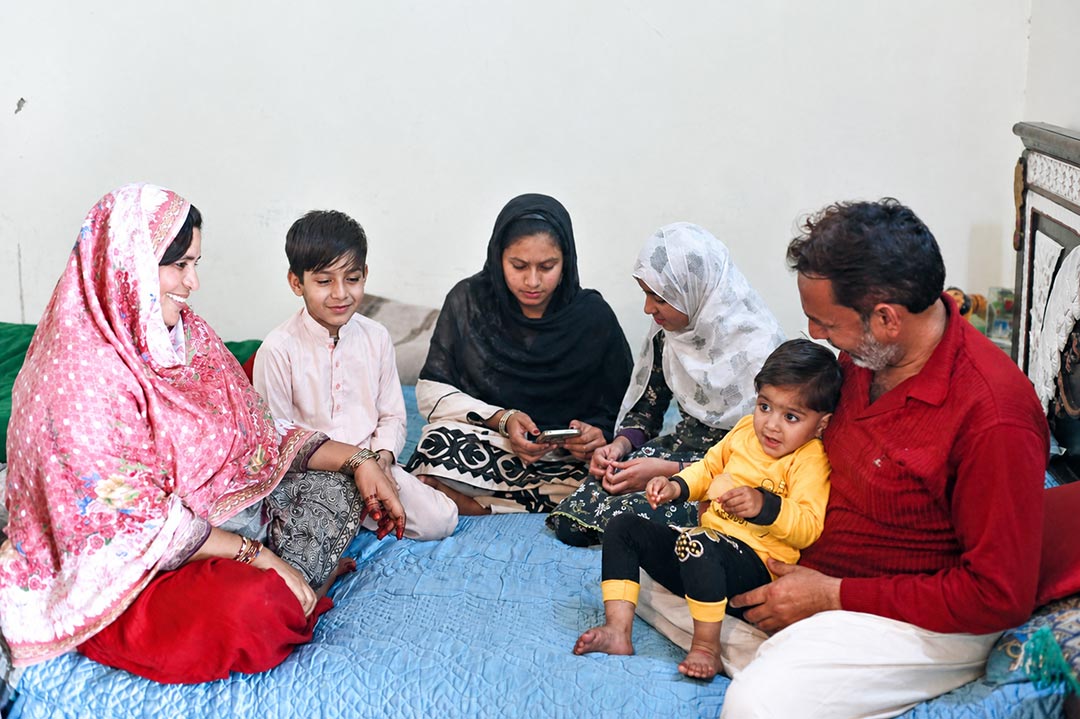
In Zikriya Town, Multan district, Siraj Ahmed and his wife, Humaira, trusted vaccines enough to get their older children protected. Their three eldest, now aged 18, 14 and 11 years, received all the vaccines recommended in Pakistan’s immunisation schedule.
By the time their youngest daughter, Ayesha, was born in early 2024, that trust had eroded. Ayesha received no vaccines at all, leaving her vulnerable to preventable diseases such as measles, polio, diphtheria, pertussis and tetanus, each of which can kill or disable a young child. Her parents never even took her to the community-based healthcare centre.
The turning point was a spurious rumour. In a nearby community, a child had sadly died not long after receiving a vaccination. Medical investigations showed that there was no link between the immunisation and the death, but coincidence of timing was suggestive enough to spur talk.
Ahmed, the head of the family, is a roadside golgappe snack seller. He earns 25,000 to 30,000 rupees (US$ 90–108) a month – a scant income to support his wife and five children. But it wasn’t a downturn in the family’s fortunes that meant Ayesha remained unimmunised – routine vaccines are available for free in Pakistan. Instead, it was misinformation.
The turning point was a spurious rumour. In a nearby community, a child had sadly died not long after receiving a vaccination. Medical investigations showed that there was no link between the immunisation and the death, but coincidence of timing was suggestive enough to spur talk. A cascade of baseless allegations spread through neighbourhoods and social media.
The wall of mistrust built by these rumours slowed vaccine work in the area: “Many caregivers had fears and misunderstandings about vaccines, and we did not always know how to respond properly,” said District Coordinator Asma Naz.
Ahmed was among them. He kept Ayesha away from the immunisation system altogether. Ayesha became what is called in the immunisation field a ‘zero-dose’ child.
A plan to dissipate rumours
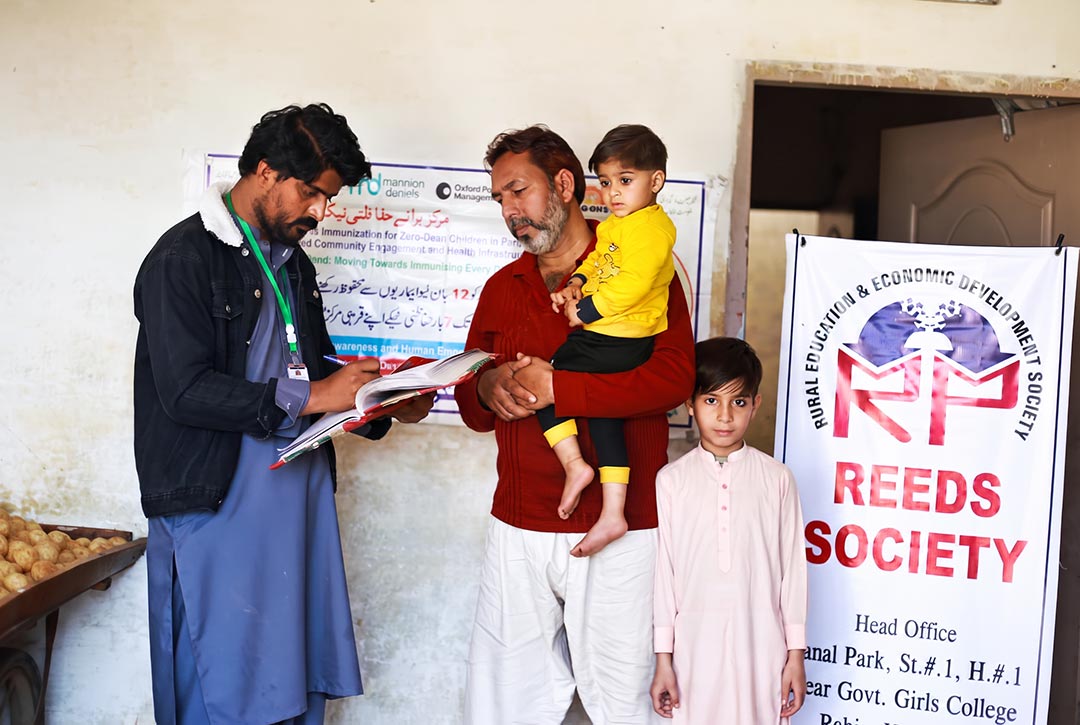
Rural Education and Economic Development Society (REEDS), a CSO working on community development, understood that the community’s trust needed to be rebuilt.
Before implementing their activities in the field, REEDS staff received training from health authorities on how to talk to hesitant parents – including listening with empathy, explaining vaccine risks clearly and building community trust. The training was part of a broader project push to improve the factual quality of conversations about immunisation.
Ayesha Rehman, a Community Engagement Specialist (CES) who leads community engagement during household visits, noticed a difference.
“We became more confident in answering [community members’] questions with respect and correct information,” said Rehman. “It helped us build trust with families and improve community acceptance of vaccination.”
© REEDS, Pakistan
When fear shifts
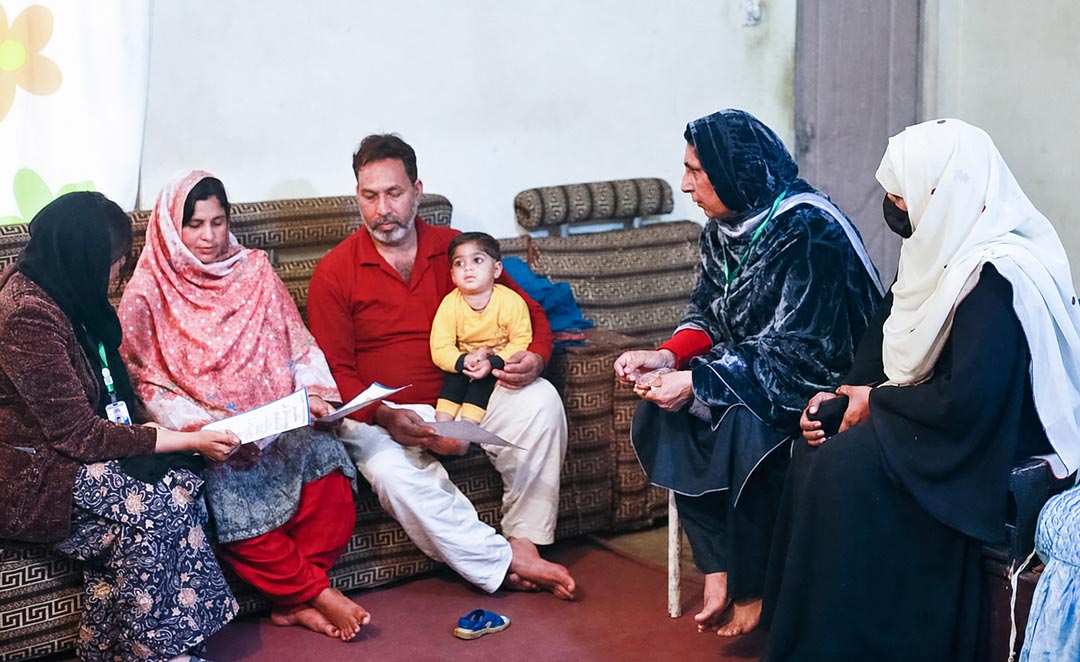
After the training, during a routine household micro-mapping in Zikriya Town, the REEDS field team identified baby Ayesha.
When District Coordinator Naz and Community Engagement Specialist Rehman knocked on the family’s door, Ahmed answered and invited the visitors to sit in the living room. Holding little Ayesha on his lap, Siraj explained why he had never had his daughter vaccinated.
“I lost trust in vaccines,” he said. “My confidence had decreased. The idea that it could pose a risk to my kids worried her mother and me.”
Experience has shown that directly arguing with families or rejecting their fears can increase resistance. Instead, REEDS staff first listen carefully to people’s concerns, acknowledge their feelings and create a safe space for discussion.
“Once trust is built, we gradually provide clear and accurate information calmly and respectfully, including addressing concerns related to infertility and vaccine safety,” explained Rehman.
Faith and advocacy unite
Qari Muhammad Rab Nawaz is a respected local imam and trusted religious figure in Zikriya Town, who regularly interacts with Ahmed’s family through the local mosque.
He received training and engagement from the REEDS team and now raises immunisation awareness by sharing positive and culturally appropriate messages during prayers and community gatherings.
Nawaz spoke to the family to further build their trust. His message to them was a strong encouragement rather than a reprimand. He told them, “By vaccinating your kids, you are giving them the chance for a healthy future. This is not pressure. It is support for you as caring parents.”
A tide starts to turn
The family's shift was not sudden, but the outcome of a methodical engagement process. Through repeated visits, empathetic counselling, the backing of a local religious leader, and consistent follow-up, trust was built and vaccination concerns were addressed step by step.
Thanks to the comforting words and respectful approach from REEDS and Nawaz, the family were reassured that vaccination was not a risk – it was protection.
Credit: REEDS, Pakistan
‘‘I am very thankful to the REEDS team for visiting our home, for their guidance and motivation,” explained Humaira, baby Ayesha’s mother.
Ayesha, now two years old and active, alert and healthy, has now received all the vaccines due for a child her age, in line with the national immunisation schedule.
Her parents no longer turn vaccinators away. In Zikriya Town, they tell their story to neighbours who are still nervous of vaccination. “We were afraid,” Ahmed says. “Now we know.”
Reaching the hesitant, family by family
During the last quarter of 2025, Ahmed accompanied Community Engagement Specialist Rehman to speak to 17 families in the daily-wage worker community in Zikriya. He told them his relatable story of his concerns about immunisation. He explained how, after receiving correct information and understanding the benefits of vaccination, he chose to vaccinate his daughter Ayesha.
As a result of his efforts, 14 additional children in the neighbourhood have been vaccinated. The grandmother of Haleema Naveed, a newly vaccinated child in the neighbourhood, says, “We were afraid of vaccines because of what we had heard, but Siraj explained everything with personal experience and trust. When we saw his own child vaccinated, we felt confident to do the same for our children.”