
In Southern Nigeria, ambulance boats rescue communities from preventable disease
In Nigeria’s Bayelsa State, water ambulances deliver routine vaccines to underserved riverine communities.
- 12 November 2026
- 5 min read
- by Afeez Bolaji
At a glance
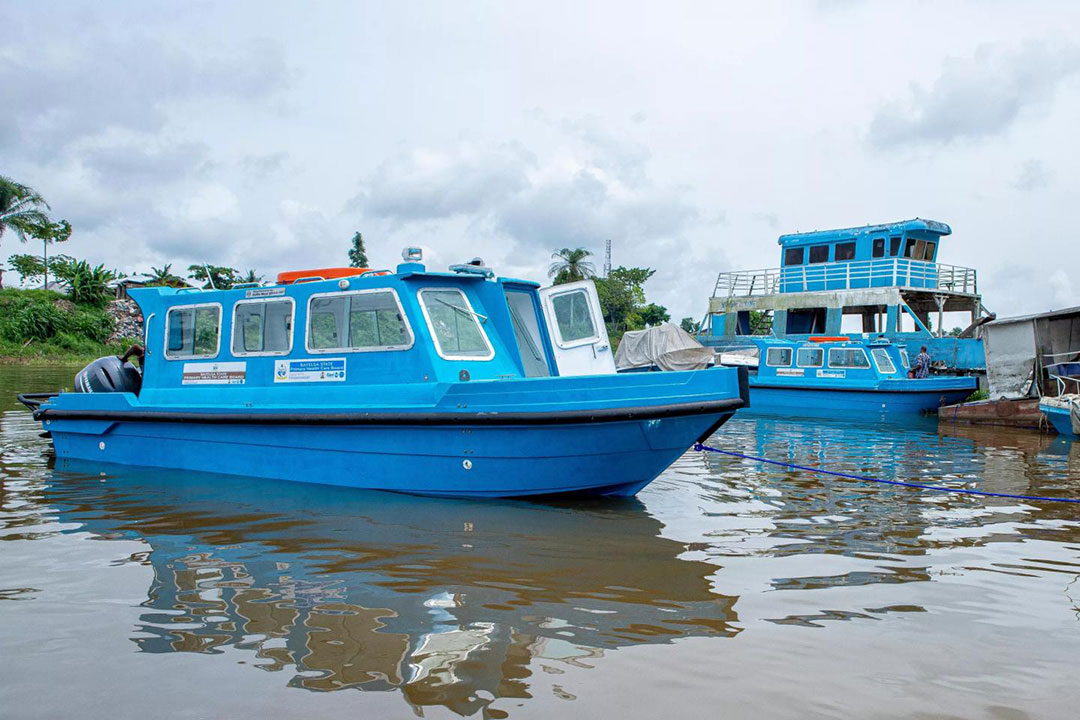
- In 2024, UNICEF and Gavi donated 10 ambulance boats to Nigeria’s river-flushed Bayelsa state.
- One of those boats now serves Sagbama Local Government area, where it ferries vaccines to isolated riverbank communities, when it’s not rushing accident victims to hospital.
- Since the water ambulance arrived in Bayelsa, the state has seen tens of thousands of previously unimmunised children protected from preventable illness, raising the threshold of safety from outbreak diseases for everyone.
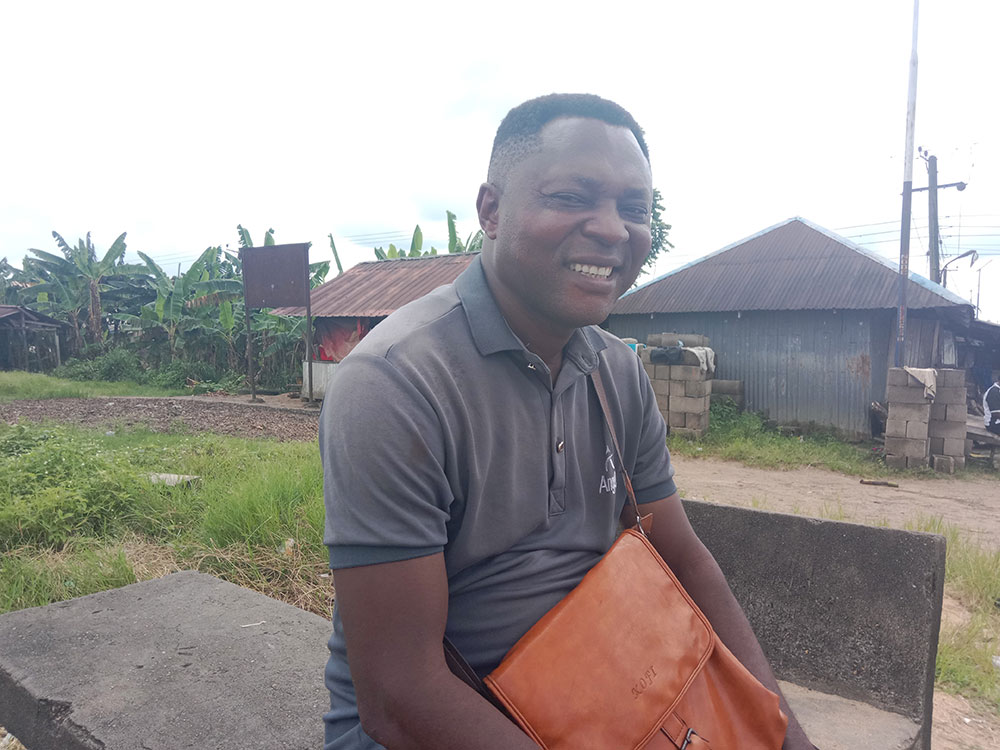
If you were judging by the local reception, you could mistake the arrival of the ambulance boat for the long-anticipated homecoming of an illustrious son of the soil, says Korofu James, chief immunisation officer for the riverine Sagbama Local Government Area in Bayelsa State.
Credit: Afeez Bolaji
Located in southern Nigeria, Bayelsa covers an area of about 10,773 square kilometres with its eight LGAs surrounded by rivers, creeks and wetlands. The state’s difficult terrain often limits access to health services to underserved communities across waters.
In 2024, UNICEF estimated that over 20,000 children, mostly from the riverine areas of the state, had never been reached with vaccines. To close this zero-dose gap, UNICEF, in partnership with Gavi, the Vaccine Alliance, donated ten ambulance boats to the government.
All aboard
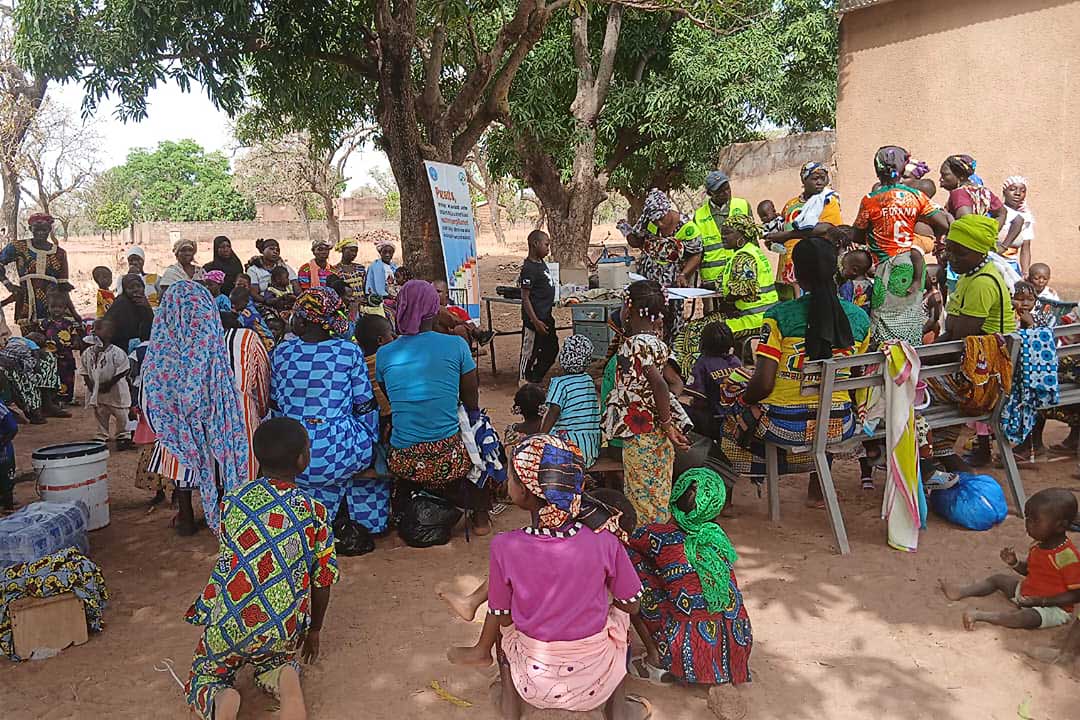
James has seen the difference that one of those boats has made to the communities in its catchment area. “Whenever we go out for immunisation outreaches, we feel the joy in people’s faces. The boat has a siren and microphone that alerts them to our arrival and they gather at the designated centre in the community with their children for immunisation.
“It transports some essential drugs and consumables, especially during outbreaks, to various health facilities across rivers. We also use it for the rescue of boat accident victims to a nearest hospital for treatment,” he said.
The boat houses a first aid kit and a convertible chair that can be transformed into a bed to facilitate emergency response and basic patient care, James revealed.
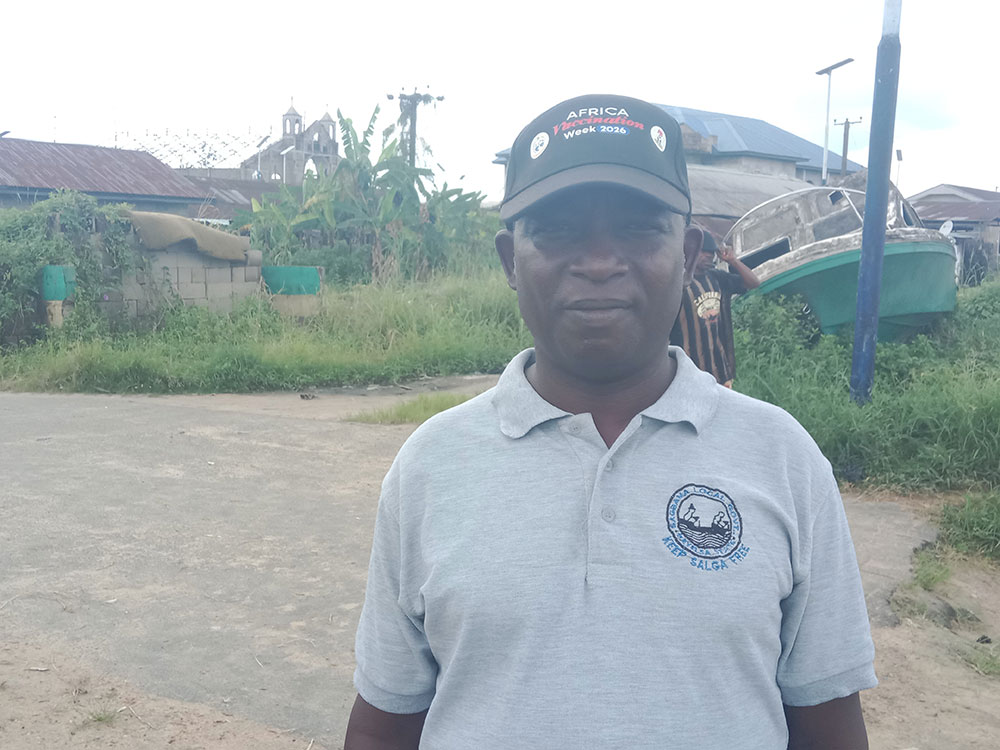
“It is our saving grace to reach many unimmunised children in riverine communities,” Henry Ogbu, health promotion officer in Sagbama, told VaccinesWork.
Credit: Afeez Bolaji
“Most families in those areas are several miles from primary healthcare centres where their children can receive immunisation and can’t afford transport costs. So, they always come out massively during immunisation outreaches,” he added.
Bridging the zero-dose gap
Director of Disease Control and Immunisation at the Bayelsa State Primary Health Care Board Dr Gbanaibolou Orukari said the deployment of water ambulances has improved access to immunisation services in riverine settlements across the state.
“Since the commencement of ambulance boat operations, access to hard-to-reach settlements has significantly improved, alongside increased community awareness and sensitisation on immunisation activities.
Have you read?
“This has also fostered greater acceptance and uptake of vaccination services, contributing to improved immunisation coverage across under-served communities in the state. About 14,684 zero-dose children have been reached in riverine areas since the commencement of ambulance boat operations in May 2024,” she said.
Orukari explained that coverage with the third dose of the five-part pentavalent vaccine, conventionally referred to as ‘Penta 3’, has risen in the time since. According to the Nigeria Demographic and Health Surveys, it stood at 73.4% in 2023–2024, rising to 791%, in 2025–2026.
Operating the boats is not without hurdles, among which are high cost of fuel and maintenance. They are also currently not best placed to serve all the communities that could benefit from them.
“The state is exploring sustainable funding mechanisms for boat fuelling, routine servicing and maintenance to ensure uninterrupted operations, and also exploring opportunities to hire and deploy additional boats, while optimising the use of existing boats through improved route planning, prioritisation of hard-to-reach settlements, and coordinated scheduling of immunisation outreaches to maximise geographical coverage and operational efficiency,” Orukari said.
Relief for locals
Philomena Welson from Asambiri community recalled that pregnant women who could not afford the transport fare to Sagbama General Hospital used to rely on traditional birth attendants for care before, after and during delivery.
“With the ambulance boat, more women now deliver at the hospital. It takes people to the hospital for free. Sometimes, we call for emergency cases and they (health workers) often come for vaccinations,” Welson added.
Another resident, Edesemi Oturkpo, admitted there has been a remarkable improvement in the health service delivery since the water ambulance began operations.
“Even if we are on the farm far away from our home, we will hear the ambulance microphone announcing that health workers are around and asking us to bring our children for immunisation.
“We always look forward to their coming, unlike when we had to travel through rivers and spend so much to visit health centres outside our community.
“We call them when there are health issues and they respond with the boat quickly. It’s a good thing that the government has done for us and we pray they provide more boats to reach more places,” she said.