

The cold chain relies on technicians. It works better when they can rely on each other
The research told us it was called for, so we built a technician-to-technician lifeline on Telegram. The results have been remarkable.
- 24 March 2026
- 3 min read
- by JSI
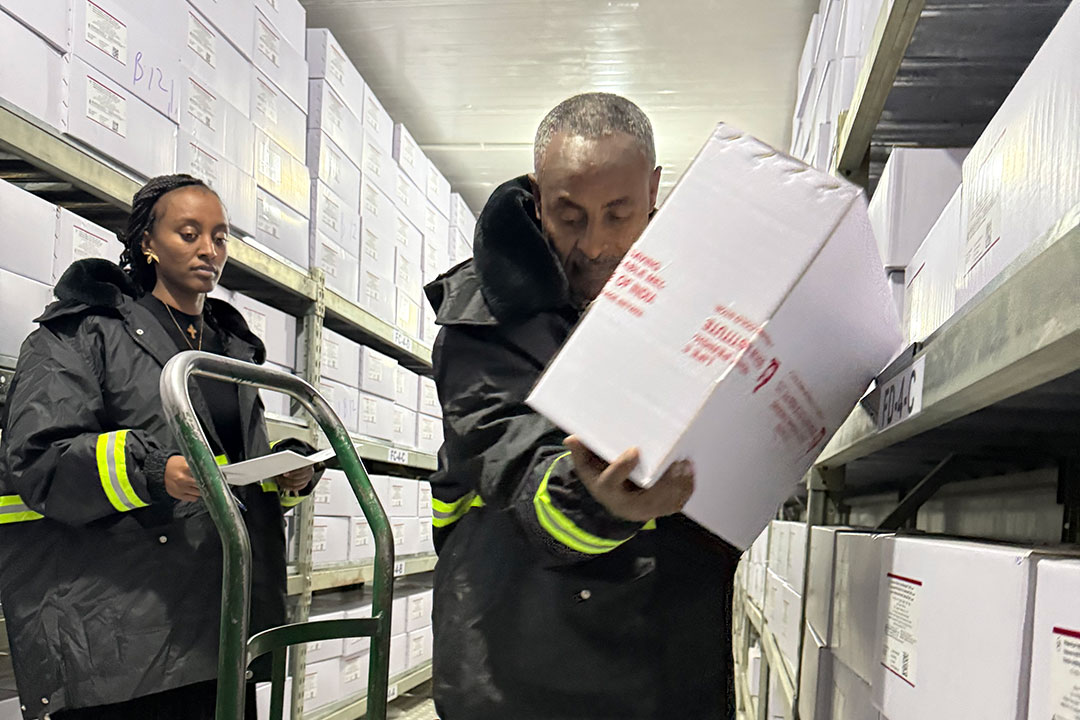
We rely on the cold chain – a vast network of cold rooms, ice-lined and solar refrigerators, cool-boxes, and temperature-controlled vehicles – to deliver life-saving vaccines safely. Vaccines are biological products: if they’re kept at the wrong temperature, they can lose potency.
That also means that vaccination, as a global or national project, depends on an interconnected web of technicians working against the clock and the elements.
These are the unsung heroes of public health, whose expertise keeps the refrigerators running, often in remote and challenging conditions.
From isolation to instant solutions
They might work in isolation, but they’re not alone. JSI has been exploring solutions to make maintenance systems more efficient and reliable, and make sure the technicians have what they need when they head out on a job.
As part of that work, we conducted a human-centred design analysis that explored barriers and facilitators to the work of maintenance technicians in three countries. The findings boiled down to one central tenet: technicians want to be able to connect with other technicians for technical support and problem solving.
Infusing that understanding into our practice, JSI worked with the Ethiopian Ministry of Health to establish a dedicated peer-to-peer support network on Telegram, specifically for maintenance technicians. This was designed as not just another training channel, but a dynamic, technician-to-technician lifeline. And the results have been remarkable.
What the technician-to-technician network has achieved
The Telegram group has become an essential tool, turning unique local problems into shared learning opportunities:
| 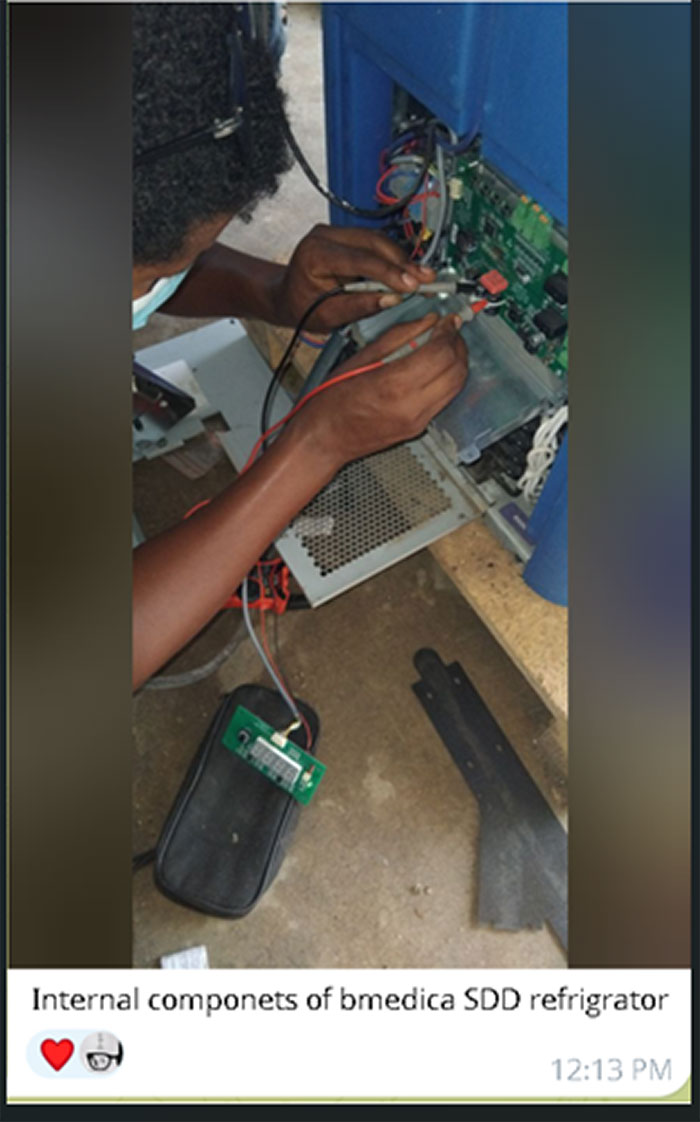 |
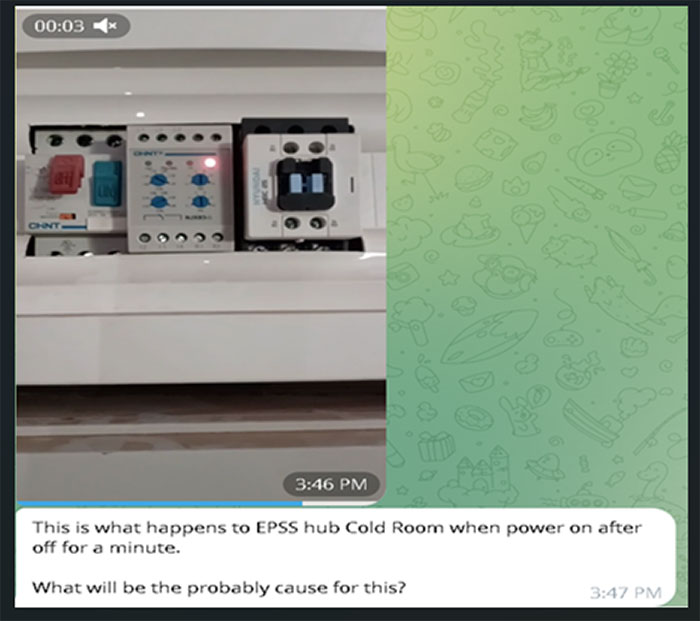
“One of the hub’s cold rooms experienced repeated power fluctuations, switching on and off within minutes,” Gelana Dechassa, a Senior Cold Room Technician at the Adama Ethiopian Pharmaceutical Supply Services (EPSS) Hub told us. “When I posted a video of a failing cold room, technicians across the country diagnosed the issue within minutes. Their advice identified the root cause as a phase sequence relay issue linked to power supply fluctuations. With these insights, I was able to resolve the problem effectively.”
Securing the chain, one fridge at a time
The success of this network proves a simple truth: supporting the technicians secures the cold chain.
The commitment and expertise pooled in the Telegram group directly translate into a quicker response time for repair or maintenance, higher uptime of the equipment, and more empowered and knowledgeable technicians that are better equipped to do their job. This, as a result, contributes to a more reliable availability of vaccines and more consistent immunisation services.
The networking platform is not just a messaging group: it’s a powerful example of how peer support and digital tools can elevate the essential, technical work that saves lives.
How is Gavi helping?
JSI has been partnering with the Ethiopian Ministry of Health for more than three decades to strengthen routine immunisation. That work has taken many forms, including improving the quality of service experience, building up data systems and use, supporting new vaccine introductions and switches, reaching zero-dose children, and fine-tuning the supply chain.
For over eight years, support from Gavi has allowed JSI to be a key support for integrated delivery strategies, bringing primary health care, vaccination across the life course, and health system strengthening together.
Most recently, through the current Gavi-funded project in Ethiopia, JSI has helped shore up the cold chain and its maintenance systems, bridging the gap between supply chain and service delivery.