
Dogs, devils, clams and catfish: When cancer is contagious
In a handful of animals, tumors can be transmitted like infectious diseases or parasites, defying science’s tidy definitions.
- 7 October 2026
- 8 min read
- by Knowable magazine
Human beings — at least for now — have just one world. And the same is true for most cancers, trapped as they are in the body from which they arose and multiplying until their resources run out.
Then, says Joel Brown, an evolutionary ecologist at the Moffitt Cancer Center in Tampa, Florida, “they die with their planet.”
But a few cancers have made the giant leap, colonizing new hosts and spreading through animal populations as contagious parasites. These “transmissible cancers” have been found in Tasmanian devils, dogs, clams and, most recently, catfish.
Researchers once doubted whether transmissible cancers could even exist. Now they are starting to uncover how such entities survive and evolve. And as examples accumulate, many researchers are wondering how rare they really are.
“The discoveries in the bivalves and in the catfish have shown us that it can be kind of right in front of us, and just not recognized,” says geneticist Elizabeth Murchison, who leads the Transmissible Cancer Group at the University of Cambridge in England.
Cancers develop when a cell that is part of a larger creature abandons its cooperative role and starts behaving as “a new little single-cell beastie,” says Brown. It proliferates and evolves, treating the body’s tissues as habitats. The immune system fights back, but it is at a disadvantage because the cancer still resembles the well-behaved cells it descended from.
But things should be different if a cancer cell ends up in a different individual: It should be recognized as foreign and destroyed. Immune systems are good at recognizing foreign cells; that’s why people have to take immune-suppressing drugs to receive organ transplants.
Researchers are learning that transmissible cancers have a plethora of strategies, only partly understood, to foil their hosts’ defenses. For example, a type of clam cancer throttles the activity of many genes involved in immune signaling, hinting at how it evades the host’s immune system, according to research published in 2025. And cancers that infect dogs and Tasmanian devils can suppress their own molecular ID badges, the major histocompatibility complex class I (MHC-1) proteins, that help vertebrates distinguish their own cells from invaders.
The first transmissible cancer ever discovered was that of the dog. It is known as canine transmissible venereal tumor (CTVT), and it grows as cauliflower-like tumors on dog genitals. Researchers realized in the 19th century that it spreads as a sexually transmitted infection.
But many doubted that the cells themselves moved from dog to dog. Skepticism persisted even after scientists found that all the CTVT tumors shared similar abnormal chromosome structures, no matter what dog they were from. Some skeptics suggested that a virus caused the host dog’s cells to become cancerous, the same way human papillomavirus (HPV) causes cervical cancer in humans.
Finally, in 2006, researchers sequenced key sites in CTVT genomes. In a normal cancer, this would have revealed warped and mutated versions of each host animal’s own DNA. Instead, the sequences looked like they belonged to someone else. Later research identified that “someone else” as a husky-like canine that lived some 4,000 to 8,500 years ago. In a sense, that ancient dog is still alive, grafted to the nether regions of dogs across six continents.
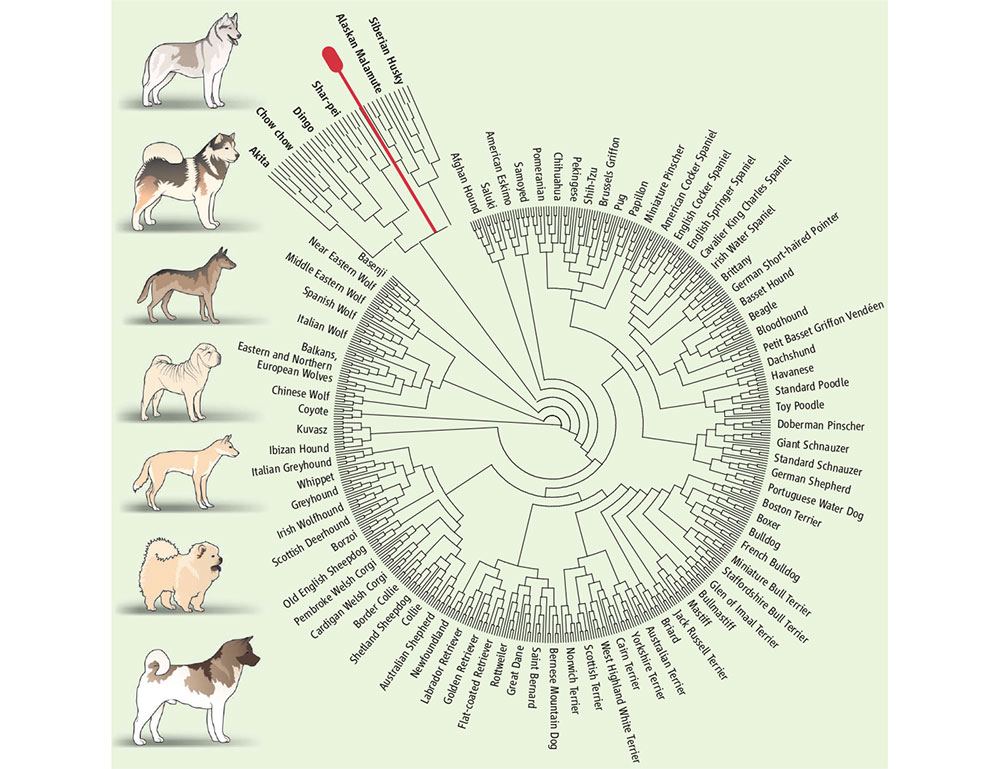
CREDIT: H.G. PARKER & E.A. OSTRANDER / SCIENCE 2014
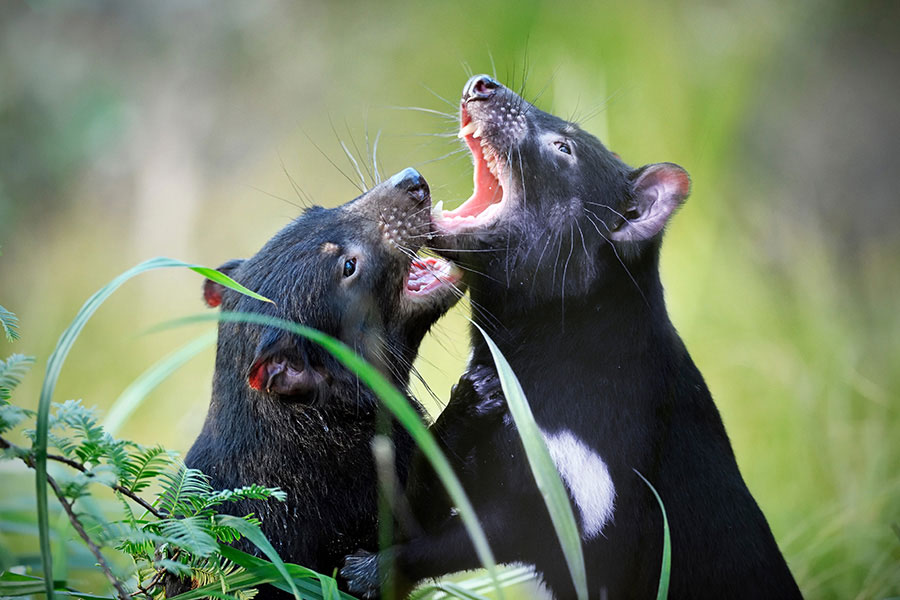
At the same time that DNA evidence was completing the dog cancer puzzle, scientists realized there was another transmissible cancer, this one affecting raccoon-sized carnivorous marsupials known as Tasmanian devils. It was first documented in 1996, when a photographer captured images of devils with grisly tumors on their faces. By 2006, the disease had spread across much of Tasmania, ravaging devil populations and inspiring heroic efforts to save the species.
The facial tumors could all be traced to a female devil that lived sometime in the 1980s. But then, in the 2010s, a completely new version appeared, this one originating in a male devil. Scientists were flabbergasted.
“We thought that the devils were just really, really unlucky to get this type of disease, and it was completely a fluke thing,” says Murchison. The appearance of yet another transmissible cancer seemed to rule that out. “Now,” she says, “we know that there are certain ecological niches which support these transmissible cancers.”
In the case of the devils, one vulnerability is their social system, which seems to require biting rivals and lovers in the face. Tumor cells can pass through the bites.
CREDIT: PETRDOLEJSEK / ADOBE STOCK
Another weak point for the devils is their low genetic diversity, particularly in their MHC-1 genes, those molecular ID badges that transmissible cancers of Tasmanian devils and dogs have evolved to suppress, says Carolyn Hogg, a conservation biologist at the University of Sydney in Australia (Hogg coauthored an article about Tasmanian devil conservation in the 2026 Annual Review of Animal Biosciences).
Devils, like humans, have three classical MHC-1 genes. But we have thousands of variants for each gene, meaning individuals hardly ever have similar sets. Devils, however, have only about 60 known variants across all three genes combined. That makes it much more likely that a foreign cancer could match the host well enough to hide from it.
In new research that is still being peer-reviewed, Hogg and her colleagues have found that the devils are losing one of those three MHC genes, and that’s potentially good news for the animals, for the short term, at least. A broken variant of the gene Saha-UA is spreading through infected devil populations. The broken Saha-UA variant doesn’t match the functional version in the cancer, so it helps devils to recognize and reject tumor cells.
But while this may rescue devils from their current plague, Hogg warns that it could lay them open to future diseases, since it further reduces the genetic diversity that their immune systems rely on.
Is it in the water?
In 2015, biologist Michael Metzger and colleagues discovered a third category of transmissible cancer later dubbed bivalve transmissible neoplasia (BTN). BTN affects shelled mollusks such as clams and mussels, and it is similar to leukemia, derived from cells in the animals’ bloodlike circulatory fluid. Cancers of this type have arisen on at least 10 separate occasions.
Why so many infectious clam cancers? One reason may be that bivalves don’t have MHC-1 genes or other paraphernalia that vertebrates use to recognize and reject foreign cells. Another may be the saltwater environment, which is not so different from clam blood, says Metzger, who is now at the Pacific Northwest Research Institute in Seattle. The cancer cells are thought to float from clam to clam.
A few types of BTN have even floated into new species. One arose in pullet shell clams (Venerupis corrugata) but it has only ever been found in golden carpet shell clams (Polititapes aureus). The original hosts are apparently resistant to the disease they spawned.
In 2025, Metzger’s team reported evidence that softshell clams on the East Coast of North America have evolved their own, still mysterious, defenses against BTN. And in a paper published in June, the team revealed that the same cancer lineage that infected these East Coast clams recently jumped to the West Coast, sparking a new outbreak among softshell clams in Puget Sound.
The Puget Sound outbreak could be a golden opportunity to identify new cancer-fighting mechanisms, says Metzger. By comparing the same population of clams before and after their leukemia epidemic, Metzger hopes to pinpoint gene variants that distinguish survivors from those that perished. “Eighty percent of the animals are being killed by this right now,” he says. “We’ll be able to see … the evolution of resistance.”
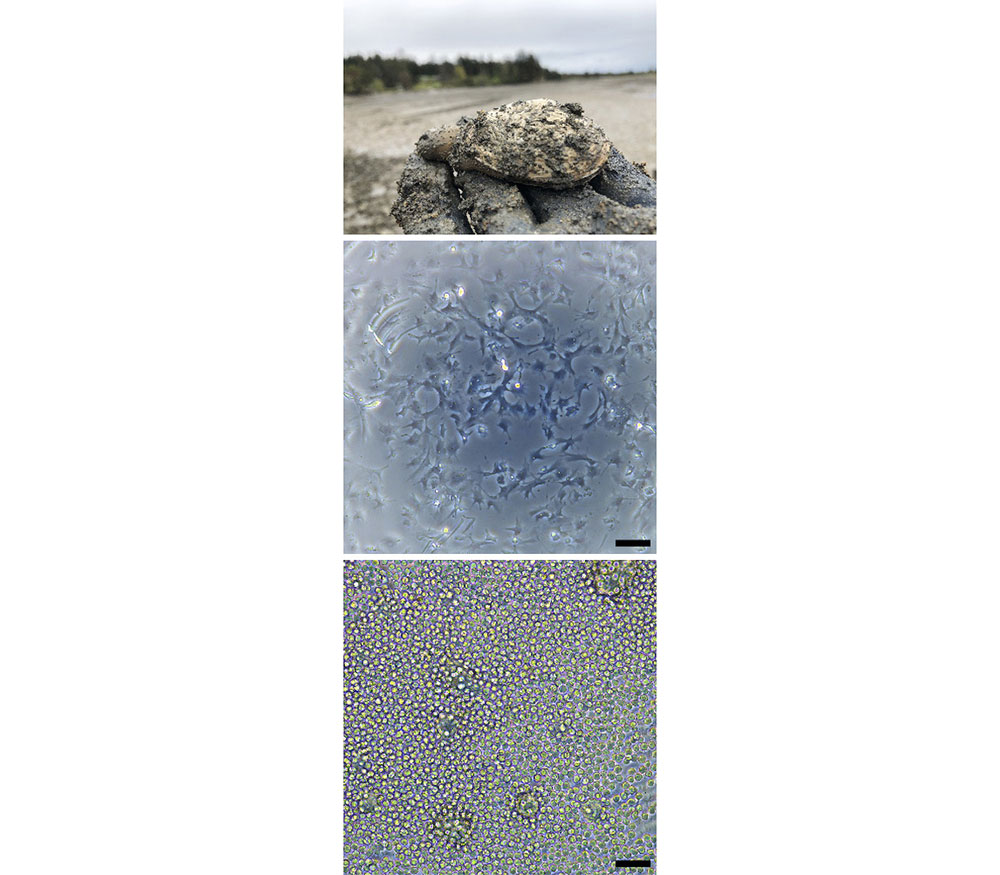
CREDIT: S.A. WEINANDT ET AL / PNAS 2026
Melanoma spreads in catfish
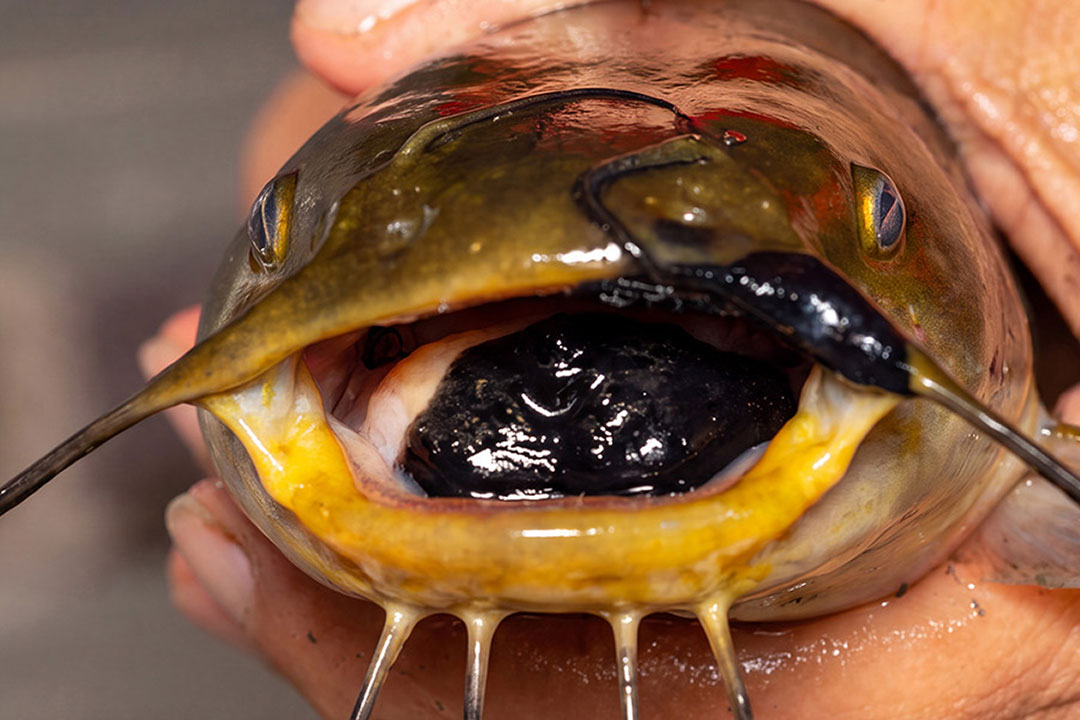
The only other animals known to get transmissible cancer in natural settings are brown bullhead catfish. In 2012, anglers began reporting strange black growths on catfish they caught in Lake Memphremagog, which spans the border between Vermont and Quebec.
Researchers from state wildlife agencies identified the growths as melanoma and sought help from data scientist Julie A. Dragon at the University of Vermont to sequence and analyze the tumor genomes. Dragon and her colleagues found, to their surprise, that the tumor genomes all looked like one another, the hallmark of a transmissible cancer, the team reported in Nature in July.
It’s not yet clear how the melanoma spreads. Catfish don’t seem to catch it until they reach breeding age, so one possibility is that they are rubbing cancer cells on each other when they spawn. “They get into these big aggregate clusters and sort of fall all over each other,” says Dragon. “We think possibly they’re scratching each other.”
The infectious melanoma is newly discovered, but it may not be truly new. It is genetically more similar to that in catfish from New Hampshire and Maine than to that in fish from the lake where it was found. That suggests it arose in a different population and was later transported to Lake Memphremagog, triggering a new outbreak, says Dragon. In fact, Henry David Thoreau described similar “velvet-black” lesions on catfish in the Concord River in Massachusetts in the 1850s.
With four examples of transmissible cancers now known, some researchers are rethinking their assumptions about how anomalous these oddities truly are.
“There are probably still some more out there that we don’t realize are transmissible cancers,” says bioinformatician Dylan Gallinson, a PhD candidate studying Tasmanian devil cancer at the University of South Florida in Tampa. “They might be hiding in plain sight.”
And they are provoking some existential questions. After genetic evidence demonstrated the one-dog origin of the canine genital tumors, developmental biologist Uri Frank of the University of Galway in Ireland proposed that the cancer itself should be viewed as a new species of parasitic dog. Many researchers now talk about the emergence of transmissible cancers as speciation events, although they don’t always agree on terminology.
“These transmissible cancers show us the imperfections in our models of the world in which things are cleanly separated into species and non-species, or even individuals and not-individuals,” says Metzger. “Transmissible cancers blur a lot of the lines, blur a lot of definitions, and make us realize that more things can happen than we think can happen.”
More from Knowable magazine