
Measles vaccine push urged in Americas after World Cup
The Americas reports record levels of measles as vaccination coverage declines and football World Cup fuels transmission.
- 21 September 2026
- 5 min read
- by SciDev.Net
At a glance
- Measles cases in the Americas reach highest levels in 22 years
- Guatemala, Mexico, the US, Peru account for 95 per cent of confirmed cases
- Outbreaks fuelled by low vaccination coverage, FIFA World Cup travel
Countries in Latin America are being urged to strengthen vaccination and surveillance to fight measles as the region records the highest number of cases in more than two decades, disease experts say.
Low levels of vaccination coupled with travel during the FIFA World Cup have fuelled the resurgence of the highly contagious disease, which spreads easily through the air and mostly affects children.
Measles is preventable through vaccination but immunisation coverage for the disease in the Americas is below the level needed to protect the population.
So far in 2026 the Americas have recorded the highest number of confirmed measles cases in the last 22 years, according to the Pan American Health Organization (PAHO), the regional office of the World Health Organization.
Between January and August, more than 51,000 cases of the disease were reported, almost triple the number recorded during all of 2025, when 15,152 confirmed cases were reported and the region lost its measles-free status.
In an August advisory, PAHO urged countries in the region to strengthen vaccination, epidemiological surveillance and rapid response to measles outbreaks because the public health risk associated with the disease was “very high”.
Daniel Salas, executive manager of the special programme for comprehensive immunisation at PAHO, told SciDev.Net: “Measles leaves no room for complacency. Each outbreak highlights immunity gaps that must be addressed urgently.”
World Cup fever
Case numbers are particularly high in Guatemala, Mexico, the United States, and Peru, which together, account for 95 per cent of all cases registered in the Americas so far this year, according to PAHO.
The US has reported 39 new outbreaks so far this year and 3,471 confirmed cases up to mid-September, the US Centers for Disease Control and Prevention (CDC) said in an update last week (18 September).
Public health experts say the resurgence of the disease is being driven largely by declining vaccination rates, compounded by the high volume of people traveling across the region for the June-July World Cup, held in Mexico, the US, and Canada.
Bianca de Oliveira Cata Preta, a professor in the department of public health at the Federal University of Paraná, Brazil, told SciDev.Net: “The combination of these factors is what seems to have favoured the spread of the virus, giving rise to the scenario we have now.”
Measles is the most contagious disease affecting humans. It is estimated that one infected person can infect 12 to 18 other people,
“The high mobility associated with international travel and mass events are factors that can favour the spread of the virus within and between countries,” Cata Preta added.
PAHO says it is closely monitoring the situation in all countries with sustained measles transmission, supporting affected countries to strengthen surveillance, detect and respond quickly to cases, and close gaps in vaccine coverage.
Low vaccination cover
Of the measles cases registered in the Americas this year, almost three quarters (73 per cent) were people not vaccinated against the measles virus, according to the PAHO report. For most of the remaining cases, information on vaccination status was unknown or unavailable.
The report says most countries and territories in the Americas still have suboptimal vaccination coverage of below 95 per cent, which is needed to protect the population against measles. Only 85 per cent of the regional population have received the two required doses of the MMR (measles, mumps and rubella) vaccine.
There are several possible reasons to explain the drop in measles vaccination coverage, from difficulty of access to a growing rejection of vaccinations and lack of awareness of the risks associated with the disease, believes Cata Preta.
“It is important to understand the reasons behind the low vaccination rates in each country in order to then think about strategies to combat the low coverage,” she said.
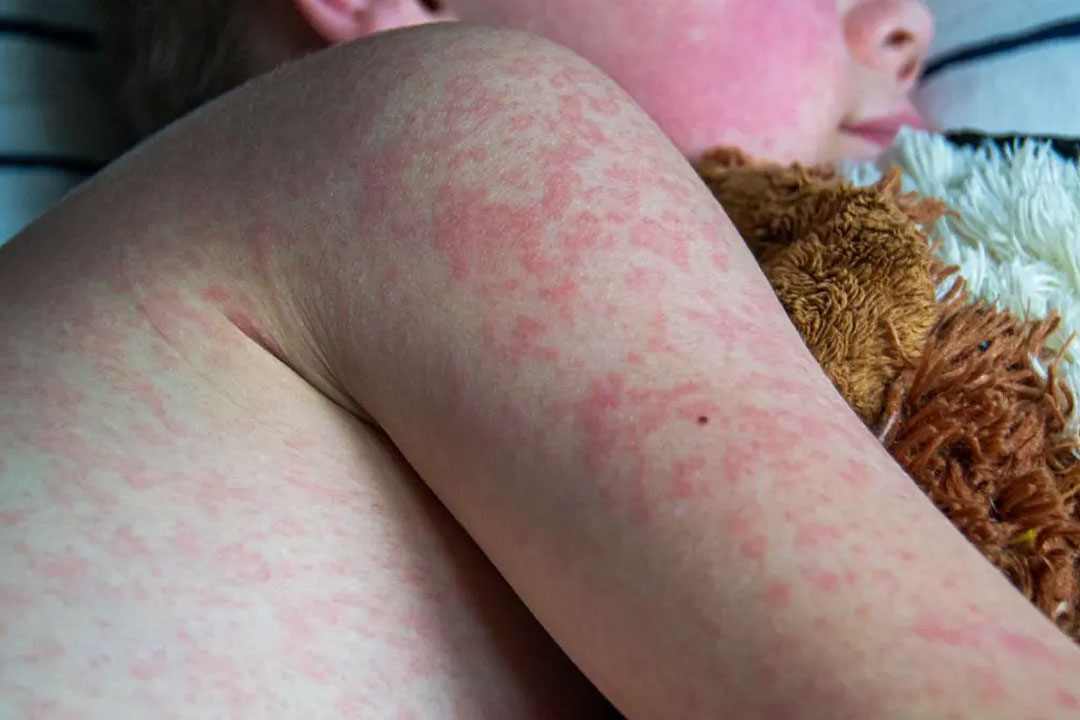
Measles is transmitted through the air or by respiratory droplets when an infected person breathes, coughs, or sneezes. It can cause high fever, cough, runny nose, conjunctivitis, and a rash. In some cases, it can also lead to complications such as pneumonia, encephalitis, blindness, and can be fatal.
Herd immunity
Renato Kfouri, vice president of the Brazilian Society of Vaccination and a paediatric infectious disease specialist, told SciDev.Net: “Vaccination is the most effective way to prevent the disease and stop its spread.
“International health authorities recommend that at least 95 per cent of the population be vaccinated to prevent transmission.”
This is the percentage required to achieve so-called “herd immunity”, when a large percentage of the population becomes immune, making it difficult for a disease to spread.
Kfouri believes the case of Brazil illustrates the importance of maintaining high vaccination coverage rates. The country registered 15 cases of measles in the first 28 weeks of 2026, all of them imported.
This is to be expected, according to Kfouri. But he added: “People travel and can return to the country infected, but the important thing is that these cases, even if they generated secondary cases, were controlled before they could cause outbreaks of the disease.”
Maintaining high vaccination coverage and active surveillance for the early recognition of imported cases is essential, stresses Kfouri, especially when the epidemiological situation in neighbouring countries deteriorates.
More from SciDev.Net