
Our innate immune system protects us more than we knew
It was long deemed the blunt branch of our immunity, while B cells and T cells did the splashy stuff. But that was an underestimation — and now scientists are trying to harness it for therapies.
- 11 November 2026
- 11 min read
- by Knowable magazine
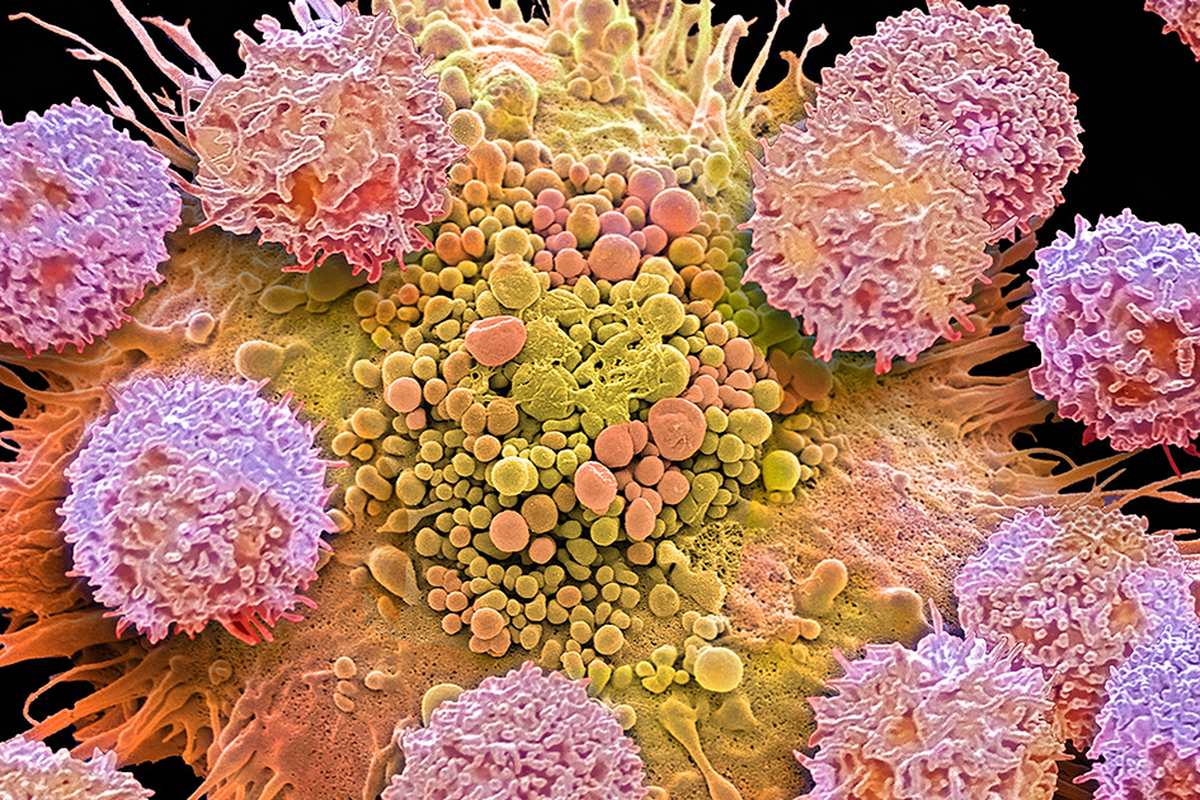
Our immune system has long been described as consisting of two parts. There’s the “innate” part that acts as a first line defense, but is often considered a blunt tool that responds to each threat the same way. And there’s the slow-acting “adaptive” part that remembers the microbes it encounters and builds lasting immunity against them.
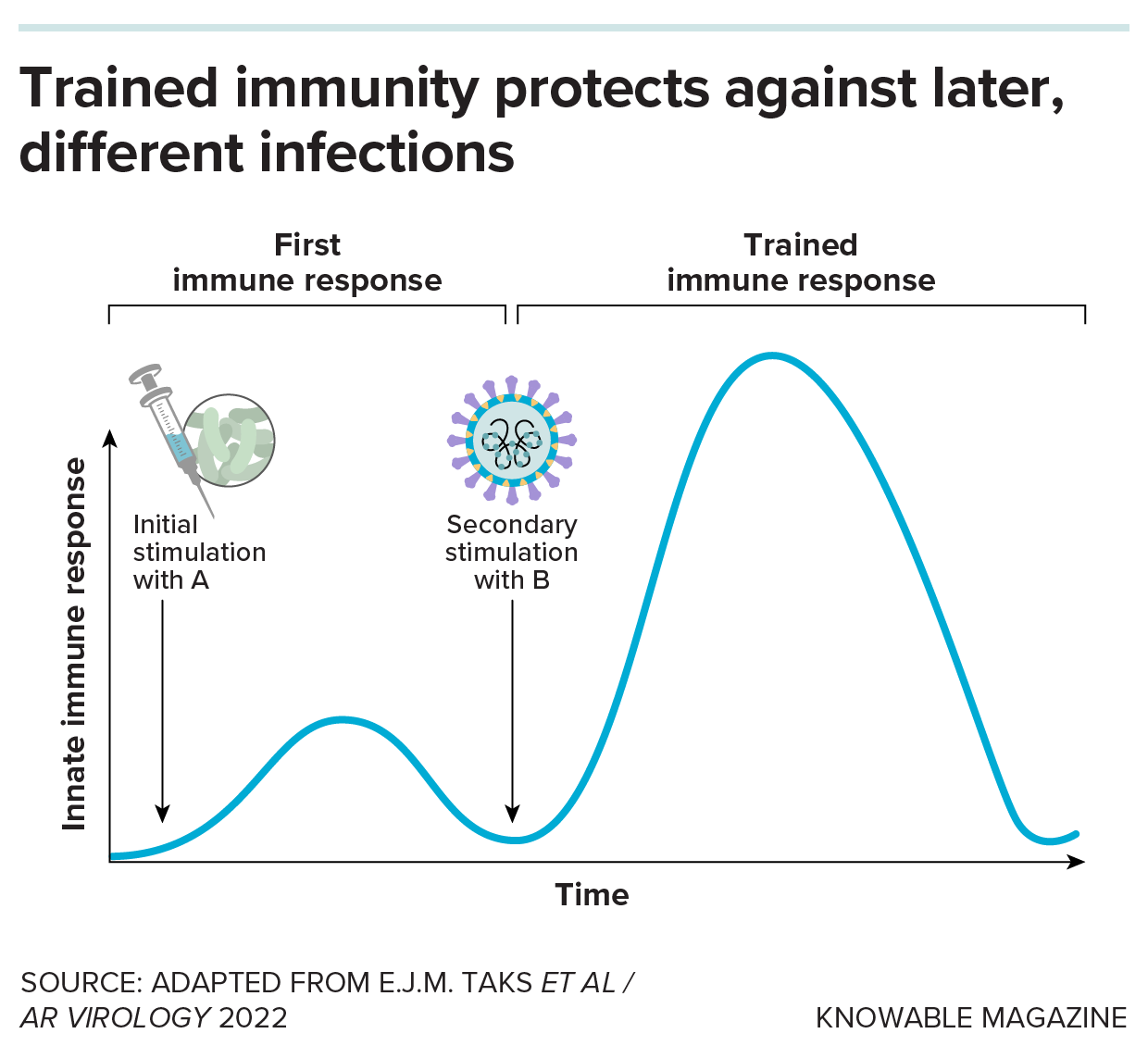
Work by infectious disease specialist Mihai Netea of Radboud University in the Netherlands helped to upend this textbook principle. His team discovered that the innate immune system does in fact learn from past encounters — and mounts a stronger and faster response to the same or similar infections the next time around.
Netea refers to this process as trained immunity. He believes that new ways of modifying this first-line system may help to protect us from infectious diseases, or even cancer. Its discovery also casts light on some conditions caused by hyperactive or misdirected immune responses and suggests how they may be cured. Netea, who coauthored articles about these findings in the 2021 Annual Review of Immunology and the 2022 Annual Review of Virology, spoke with Knowable Magazine about some of the most surprising research he has conducted since.
This interview has been edited for length and clarity.
To start, could you remind us of the textbook story about immunity?
Traditionally, the immune system is divided in two major components. One is called innate immunity, and it acts in more or less the same way every time we encounter an infection. An important part of it is a variety of white blood cells — such as monocytes and natural killer cells — that react very quickly, within minutes and hours after an infection. They travel to the site of the infection, where they try to ingest and kill the pathogen.
In the few situations where infections escape the innate immune defenses and cause symptoms, a second component of the immune system comes into action. These are more specialized white blood cells called lymphocytes: cells like the B cells that make antibodies and T cells that amplify the bioactivity of other immune cells and eliminate cells infected by viruses. They are produced in large numbers and induce a very specific response against that particular infection. This is called an adaptive immune response. But it needs much more time, about seven to 10 days, to properly develop.
For many years, it was known that the adaptive immune system builds immunological memory, to remember the infection that took place. If we are reinfected with the same pathogen, the cells will proliferate very quickly the second time. This is the mechanism that explains why vaccines work.
When did you first realize this was not the whole story?
For a long time, we thought that only the lymphocytes can build immunological memory. But we discovered some 15 years ago that the innate immune system can also do it. Its immunological memory is mediated through a very different type of mechanism than the adaptive immune system’s. It is not specific against only one type of microorganism but is much broader. Its cells are trained to react with an improved response to more types of pathogens.
Our discovery started with a very strange observation that we could not explain. We were studying the adaptive immune response to the BCG vaccine against tuberculosis, and just to check, not expecting anything to be happening, we also looked at innate immune cells. To our surprise, we found that things were changing in those cells — and we could not explain that.
So we started to look in the scientific literature to see whether other researchers had ever observed this. We saw old epidemiological studies in children, for example, that show the BCG vaccine can protect against types of infections other than tuberculosis. We realized this phenomenon had been known about for 100 years, but nobody could explain how it works.
What have you learned about this mechanism since?
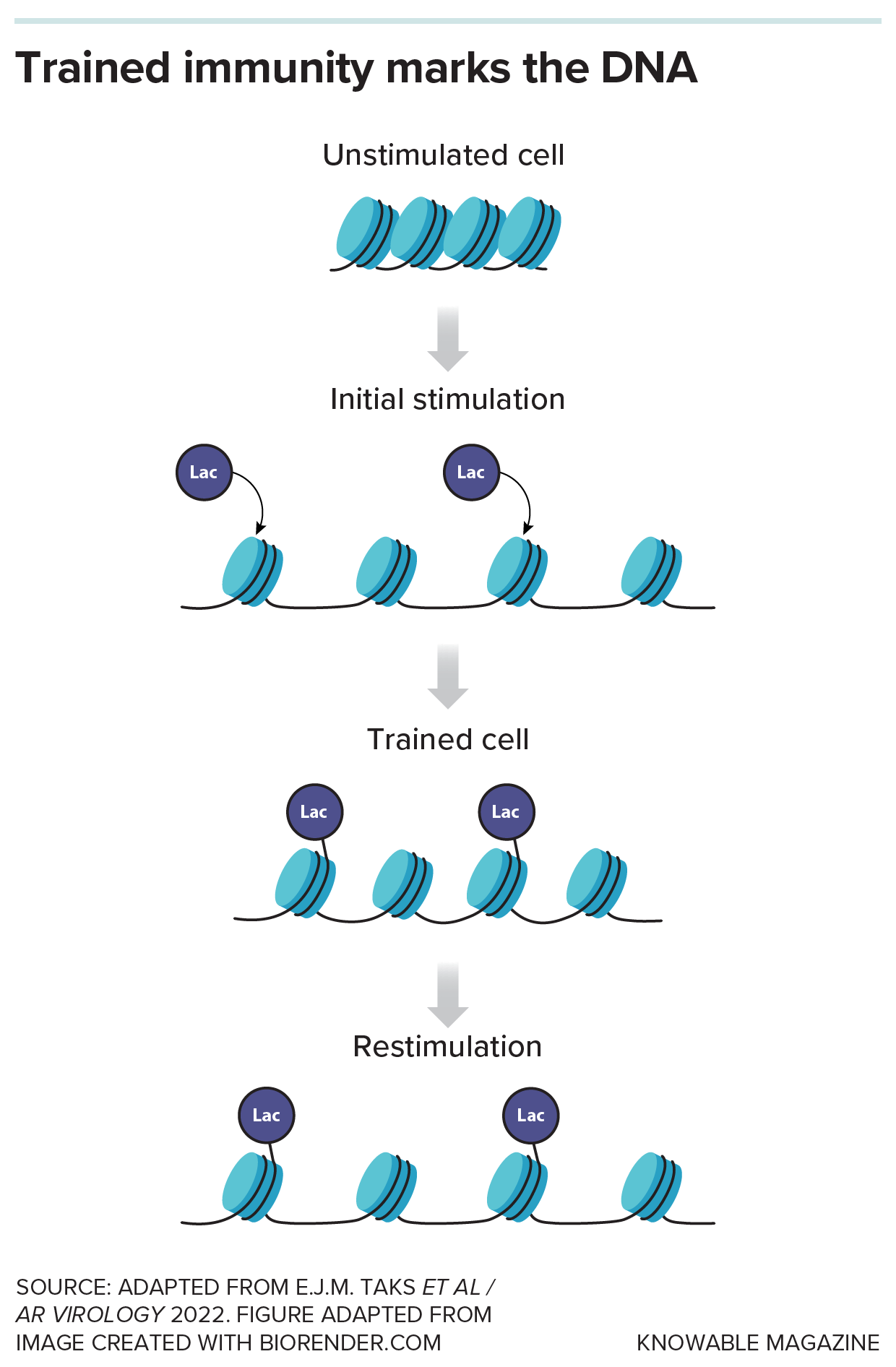
We found that the memory in innate immune responses is based on changes that occur in the DNA of the innate immune cells during the first infection. They activate certain genes, and those genes are chemically bookmarked.
If another, later infection requires activation of the same genes that have been bookmarked, we see an improved activation of those genes, and an improved host defense.
We recently discovered that one specific bookmark is a chemical group called lactate. This is the same molecule that can cause muscle pain after physical exercise. During infections, it forms for a similar reason. Basically, during an infection, the cells need a lot of energy, which they produce in a faster way than usual by consuming glucose, just as with exercise. The end product of that process is lactate.
It appears that the lactate is added to the proteins that our DNA is wrapped around. These proteins, called histones, control the accessibility of our DNA. Because the lactate bookmarks the histones controlling access to the genes that were activated in response to the first infection, they become easier to activate in the future.
One reason researchers didn’t believe innate immune cells can remember things is that they live for only a couple of days in our blood. So how do they do it?
It is true that the innate immune cells in circulation are there for only a few days. But we have seen changes in their activity that remain for months. The only possible explanation is that the cells in the bone marrow from which the innate immune cells in our blood are formed are also changed.
These “mother cells” can persist for a very long time. And we have shown that after vaccination, the genetic bookmarking takes place not only in circulating cells, but also in these progenitor cells.
The vast majority of organisms on Earth, including all plants and invertebrates, don’t have an adaptive immune system. So why do you think we need one?
As far as we know, adaptive immune responses exist only in vertebrates. But I’m not 100 percent convinced, to be honest, because I think immune responses have been studied much more in vertebrates compared with invertebrates. And a number of mechanisms have been described, for example in insects, that allow them to discriminate between different types of pathogens. So I’m not sure about the complete absence of adaptive immune responses in invertebrates.
It’s very unlikely, however, that a potential adaptive immune system in invertebrates would be similar to ours. In fact, even in vertebrates, two different types of adaptive immune responses have been described. It is kind of strange to think that adaptive immune responses have evolved twice in vertebrates, but never in all the other organisms. Therefore, I do think that in the future we will discover other types of adaptive immune responses, including in invertebrates.
How important is adaptive immunity?
For us, the adaptive immune response is crucial. Children that lack an adaptive immune response due to certain genetic defects need a bone marrow transplant to survive. If this can’t be done, they die from infections in the first years of life.
But when people lack the innate immune response, they can also die of infections. That sometimes, unfortunately, happens with very strong chemotherapy that kills the innate immune cells. Those patients need to be protected in special units so that they don’t get infections.
There are also children who have genetic defects that lead to deficiency in innate immune responses. And those children are also in danger of getting very severe infections.
OK, but what can the innate immune system do for us that adaptive immunity can’t?
Every time we scratch our skin, say, it gets warm and red. This is a sign that the blood vessels are more permeable, allowing the cells of the immune system to come to the rescue and try to limit any infections. Most of the time, this resolves so quickly we don’t think about it again. We are encountering infections every day, and our innate immune system eliminates most of them.
If it works well, the innate immune system can prevent some really bad infections. Let’s take the example of tuberculosis. There is a famous case of a Cold War US destroyer that had to stay below the water while going through a TB outbreak. Of the sailors, some became sick, and most others got infected without symptoms. But some 10 percent of the sailors did not show any evidence of infection, and their adaptive immune response showed no signs of exposure to TB, which was quite a mystery.
The hypothesis was that their innate immune system was able to get rid of the bacteria so quickly that the T cells of their adaptive immune system were not even activated. They didn’t need the second step. We wanted to test this possibility, so we recently performed a study of over 1,300 people in Indonesia who had been exposed to TB in their own households.
And we found that approximately 23 percent of that population remained negative-testing for TB exposure, even though they had lived for weeks in the same house and sometimes the same room with a symptomatic TB patient. These people tended to have much better immune responses in their innate immune cells.
We also found that testing negative for TB was twice as high in those who had previously been vaccinated with BCG. Therefore, it seems that BCG can induce this kind of protection, most likely by inducing trained immunity in cells of the innate immune system in the bone marrow.
The broad protection offered by innate immunity seems very attractive, so it seems odd that we first have to encounter an infection to trigger it. Why isn’t it already switched on at birth?
The reason for that is the biological process of pregnancy. In pregnancy, the mother’s body needs to tolerate the child, who is (from the father’s side) genetically different. The immune system of the mother is therefore physiologically suppressed during pregnancy. That’s why pregnant women are more susceptible to infections. A newborn is also immunosuppressed, as it shares modulators of immune responses with the mother. That’s one reason why babies need to train their immune systems to fight infections efficiently.
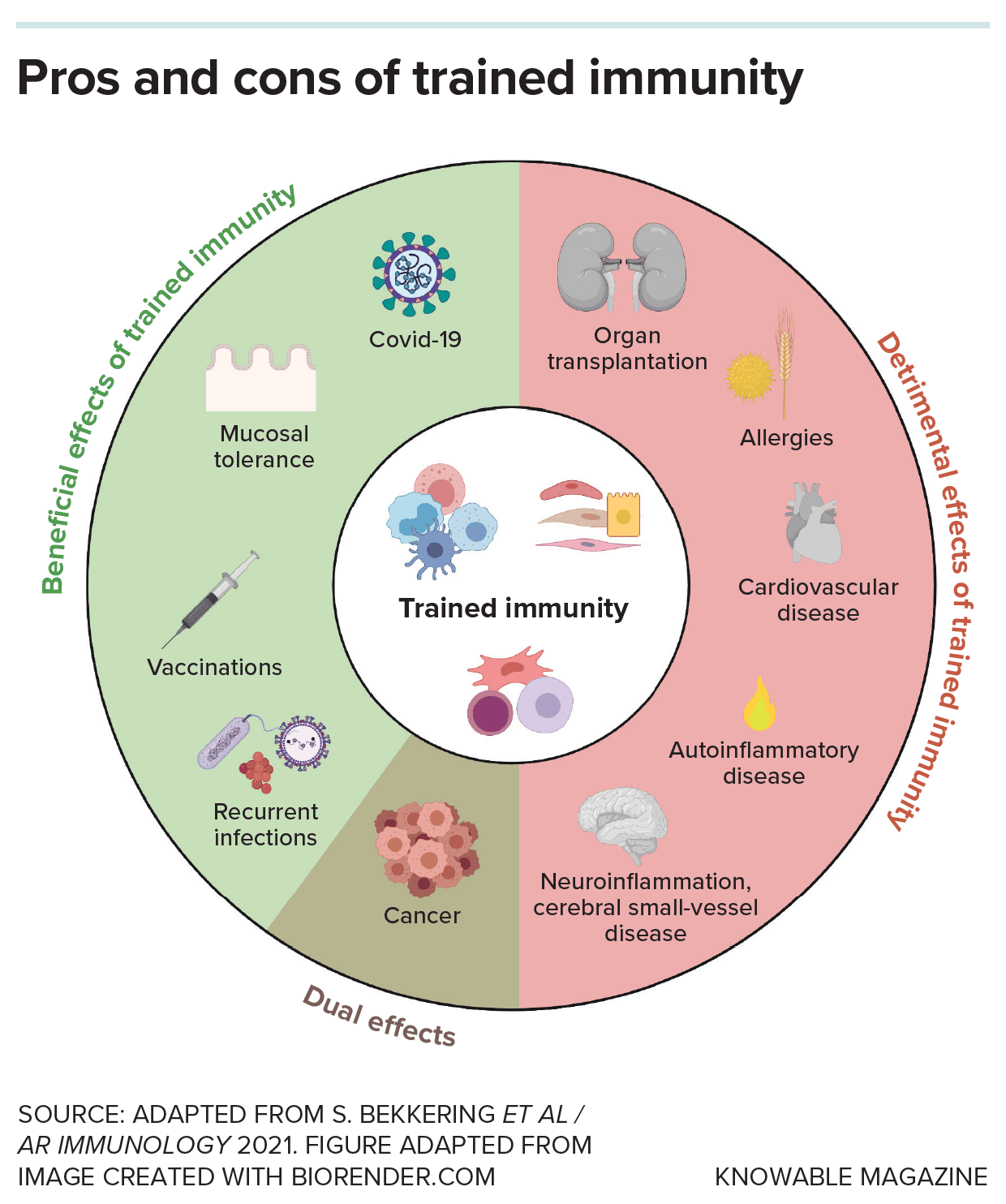
Another reason is that it’s very important — even for innate immunity — to respond only when necessary. A hyperactive innate immune system can do a lot of damage and, in fact, it often does, unfortunately, in patients with inflammatory diseases. These mechanisms have evolved to improve our defense against bacteria, viruses, fungi and parasites. But sometimes, they are inappropriately activated by things that should not be dangerous.
Oxidized lipids in our circulation, for example, from eating too much fat, can activate the innate immune cells, including in the bone marrow, and induce a chronic state of inflammation. This can result in atherosclerosis — fat plaques obstructing the blood vessels — and cardiovascular disease.
Might it be possible to suppress or reverse this kind of mistargeted activation?
Yes, we are working on ways to inhibit these mechanisms in inflammatory diseases like atherosclerosis and autoimmune diseases like Crohn’s disease and certain forms of inflammatory skin diseases. Not to suppress inflammation in the tissue, but to change the bookmarks in the bone marrow directly. For this, we have been developing a nanoparticle that is designed to inhibit the stimulation of innate immune cells.
There are other potential uses, as well. The innate immune activity stimulated by BCG has been observed to be useful not only for the prevention of infections, but also in the treatment of certain malignancies, such as bladder cancer, where it can be very effective and is commonly used.
The problem with BCG is that it consists of weakened live bacteria. To give it in the bladder is not a problem because it’s quite isolated from the blood stream, but for most other cancers, we would need to give it intravenously, which would be much too dangerous in these patients.
So we’ve been developing a safer alternative. The team of our collaborator Willem Mulder at the Eindhoven University of Technology has created lipid particles that contain some of the same bacterial components that induce trained immunity in response to the BCG vaccine. And, at least in mice, these specifically end up in the bone marrow cells.
This approach was tested in a recent mouse study of a very aggressive form of melanoma that cannot be treated with current therapies that boost the adaptive immune system. And we see the animals react to these nanoparticles. We can also transplant this protection by performing a bone marrow transplantation from a treated mouse to a second mouse, which also becomes resistant to the tumor.
When we administer both the therapy to boost the adaptive immune system and our nanoparticles to boost the innate immune system, the tumor no longer grows. We have tested it not only in melanoma, but also in other types of cancer — lung cancer, pancreatic cancer and breast cancer.
And now the nanoparticles are being developed for human use. So hopefully, in the coming years, we will be able to do the first human studies.
The BCG vaccine was also tested during the Covid-19 pandemic to see if it might provide some protection, before there was a specific vaccine. What have we learned from that?
For one thing, we realized that one vaccine that induces trained immunity cannot protect against everything.
We saw that protection against influenza is much better than against Covid-19. However, at the end of the day, when we did summary statistics of all the BCG studies done, we observed that even though the total number of Covid-19 infections was not influenced by BCG, the mortality was approximately 40 percent less.
Now we don’t need BCG for Covid-19 anymore, because we have better vaccines, fortunately. But if it had turned out to be very difficult to develop a specific vaccine against Covid-19, having this as a plan B would have been very valuable.
So in a future pandemic, as soon as possible I would do a large clinical trial that could assess the effect of the BCG vaccine against both infections and mortality. And if there is a positive effect, I would employ it immediately until a specific vaccine is available.
More from Knowable magazine