
Pilot programme massively boosts hepatitis B “birth dose” vaccination in Nigeria’s Delta state
The hepatitis B “birth dose” protects newborns from chronic, liver-killing infection, but the jab’s 24-hour window of opportunity leaves little room for logistical inefficiency. A new project in Delta State may have cracked the timeliness code.
- 19 December 2025
- 7 min read
- by Amarachi Okeh

At a glance
- More than 18 million Nigerians are living with hepatitis B, a virus that is especially likely to cause serious liver disease when it’s contracted by babies and young children.
- The hepatitis B vaccine birth dose, given on day one of life, can shield infants and has been recommended as standard in Nigeria since 2004, but only a little more than half of newborns receive it.
- In Delta state, a programme run by the Hepatitis Advocacy Foundation and the State’s Ministry of Health has taken a new approach to tackling that shortfall in protection. It’s been a success: at the enrolled hospitals, hepatitis B birth dose coverage has soared to 100%.
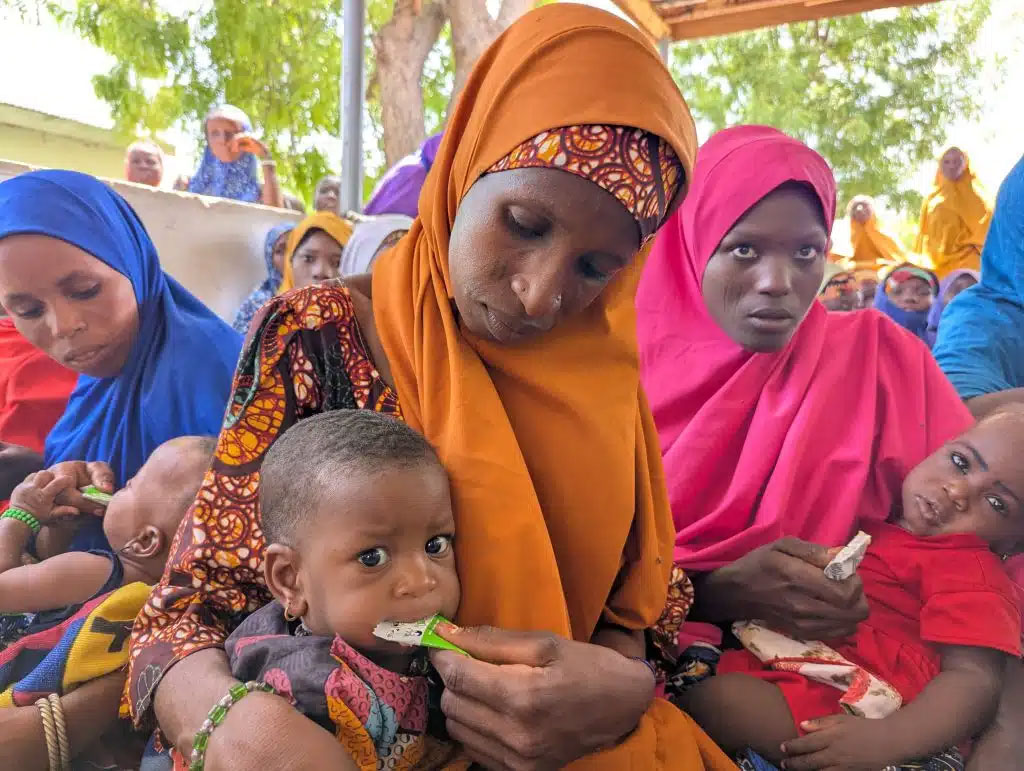
Two-month-old Destiny received a dose of hepatitis B vaccine just hours after he was born at the Central Hospital, Sapele, Delta State, Nigeria.
Until she encountered representatives of the Hepatitis Advocacy Foundation at an atnenatal appointment, his mother, Blessing, a 29-year-old mother of three, had been unaware that she was hepatitis B-positive.
She was immediately started on medication, but the child in her womb was at risk. If he contracted the virus from her during birth – one of the most common routes for transmission of the virus – or at any time in the first five years of his life, he would face a 90% chance of chronic infection, which, in turn, is associated with serious liver disease.
“While in the delivery room after I had him, one of the nurses there took and gave him the hepatitis B vaccine there in the delivery room,” she said. That so called “birth dose” has been shown to be 90% effective in preventing perinatal infection. “But my first two children did not receive anything like that when they were born,” Blessing worried. They are far from the only children in the country to have missed out on that protection.
Why vaccinate on day one?
Hepatitis B can be passed from an infected mother to her baby during childbirth, and 90% of infected newborns will develop chronic hepatitis B, a lifelong infection that can lead to liver scarring, liver failure and liver cancer in later life.
The hepatitis B vaccine is most effective at heading off infection when it’s given within a baby’s first 24 hours of life. Delaying vaccination by days or weeks leaves a window in which infection can occur – not just from contact with the mother’s bodily fluids during childbirth, but also through close contact with infected household members or caregivers in the days after. Follow-up doses build strong and long-lasting immunity. In Nigeria, these are recommended in the 6th, 10th and 14th weeks of a child’s life.
A real-world study in Ethiopia, published in 2024, found that giving babies a hepatitis B vaccine at birth cut mother-to-child transmission from about one in four (24.2%) to fewer than one in ten (8.7%). When the birth dose was combined with hepatitis B immunoglobulin – protective antibodies given to babies born to infected mothers – the infection rate dropped to 1.8%.
Moreover, a recent evidence review by the University of Minnesota’s CIDRAP Vaccine Integrity Project found no safety benefit to delaying the hepatitis B birth dose. Drawing on about four decades of research, primarily in the US, it concluded that giving the vaccine at birth is not associated with an increased risk of serious adverse events or deaths, and that delaying the first dose does not improve safety.
Delays spell danger
According to estimates cited by Professor Muhammad Ali Pate, Nigeria’s Coordinating Minister of Health and Social Welfare, on World Hepatitis Day this year, 18.2 million Nigerians are living with hepatitis B.
Nigeria began recommending the hepatitis B birth dose as standard in 2004.
Apart from all but eliminating the risk of mother-to-child transmission, the birth dose also protects the newborn against any possibility of healthcare-associated infection, explained Prince Okinedo, the founder of the the Delta-based Hepatitis Advocacy Foundation.
Have you read?
But the critical 24-hour birth-shot window is often missed, typically due to a lack of knowledge among health workers and new parents. Indeed, as recently as 2018, just 53% of newborns were receiving it.
For Okinedo, that’s alarming in itself, and a glaring missed opportunity. He describes the birth dose as “a silver bullet”.
Closing the gap in Delta State
To close the dangerous gap in early-life protection, the Hepatitis Advocacy Foundation launched a pilot programme in five public hospitals in the Sapele, Agbor, Ozoro, Asaba and Warri areas of Delta state.
The initiative aimed to educate pregnant women on the importance of the birth dose, ensure the hepatitis B vaccines are always available in the labour wards, and to train up health workers.
The impact has been resounding. In the five pilot hospitals, the hepatitis B birth dose is now administered within an average of three hours after birth, including on weekends, which previously were not vaccination days. In the ten months since the programme’s inception, these facilities have achieved 100% birth dose coverage, Okinedo said, and vaccinated 4,000 infants.
“We have achieved decentralisation of these vaccines,” he said. “Vaccination policy used to be that vaccinations were fixed on certain days of the week, but we worked with the state Ministry of Health to make sure that hepatitis B vaccination is not scheduled. What we have done now is provide refrigerating sets to place the vaccines in the delivery wards of the hospitals so that they are always available. That way, we achieved vaccine decentralisation and vaccine uptake,” Okinedo revealed.
Furthermore, the programme has also become self-sustaining at the pilot hospitals, Okinedo said. “The component of timely birth dose uptake is now integrated into the hospitals, so they run by themselves now.”
“Exponential” improvement
Sebastian Edokpayi, a medical officer who works at Central Hospital, Agbor, one of the hospitals involved in the pilot programme, says that there has been an “exponential” increase in the uptake of the vaccine since the programme began.
For Edokpayi, the satisfaction of seeing that change was deeply felt. His own newborn child missed the 24-hour window for the first dose of the hepatitis B vaccine because the vaccine happened to be unavailable at the hospital on the day his wife – who thankfully tested hepatitis B-negative – gave birth.
Since the programme began, “The cold chain issue they were experiencing was resolved, because a refrigerating set was made available in the labour ward,” he said. On a recent shift on the ward, he saw that every single child received their shot within hours of delivery.
The success of the programme was made possible by a collaboration between the foundation and the State Ministry of Health. Kelvin Igwe, the Delta State Focal Person for Viral Hepatitis, said plans are in place to expand the approach to other public health centres in the state.
In addition to supporting health workers’ training on the importance of the 24-hour timeline for the first vaccination, the state has made it possible for “the vaccines to be available at the facilities at all times. We have also made sure that the test kits are available and free of charge for the mothers at the pilot facilities,” Igwe said.
“We have presented these success stories to the government, and they have seen how important it is that this approach is expanded to all facilities, and right now, it is an ongoing discussion with the National Primary Healthcare Development Agency, which will bear fruit in no time.”