
In Pakistan, a mountain village’s isolation left a group of kids in harm’s way
When local health workers and their civil society allies discovered a group of zero-dose children in a Pakistan village, they made it their mission to get them protected.
- 11 March 2026
- 7 min read
- by Areej Javed
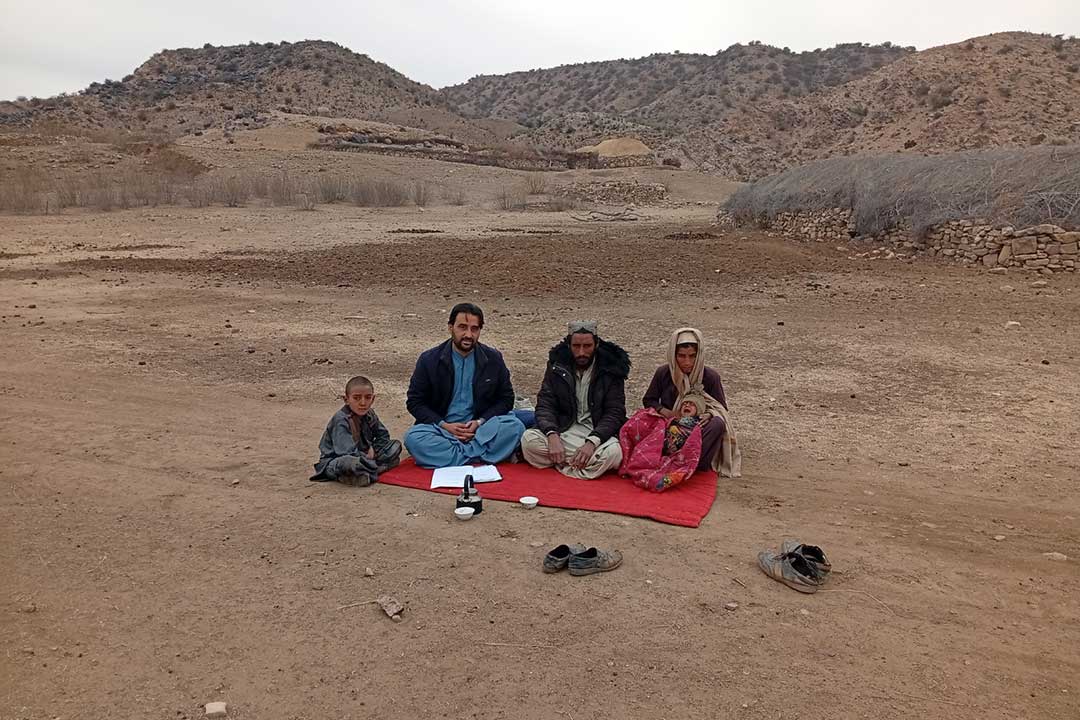
Asif Khan was born into a household in which no children had ever been vaccinated.
Living in the remote settlement of Sharan Sheikhan in Union Council Gharwandi, District Musakhel, and cut off from routine health services, he was on track to remain unprotected like many before him, until a vaccination team from the Indus Hospital and Health Network (IHHN) reached the village for the first time in December 2025.
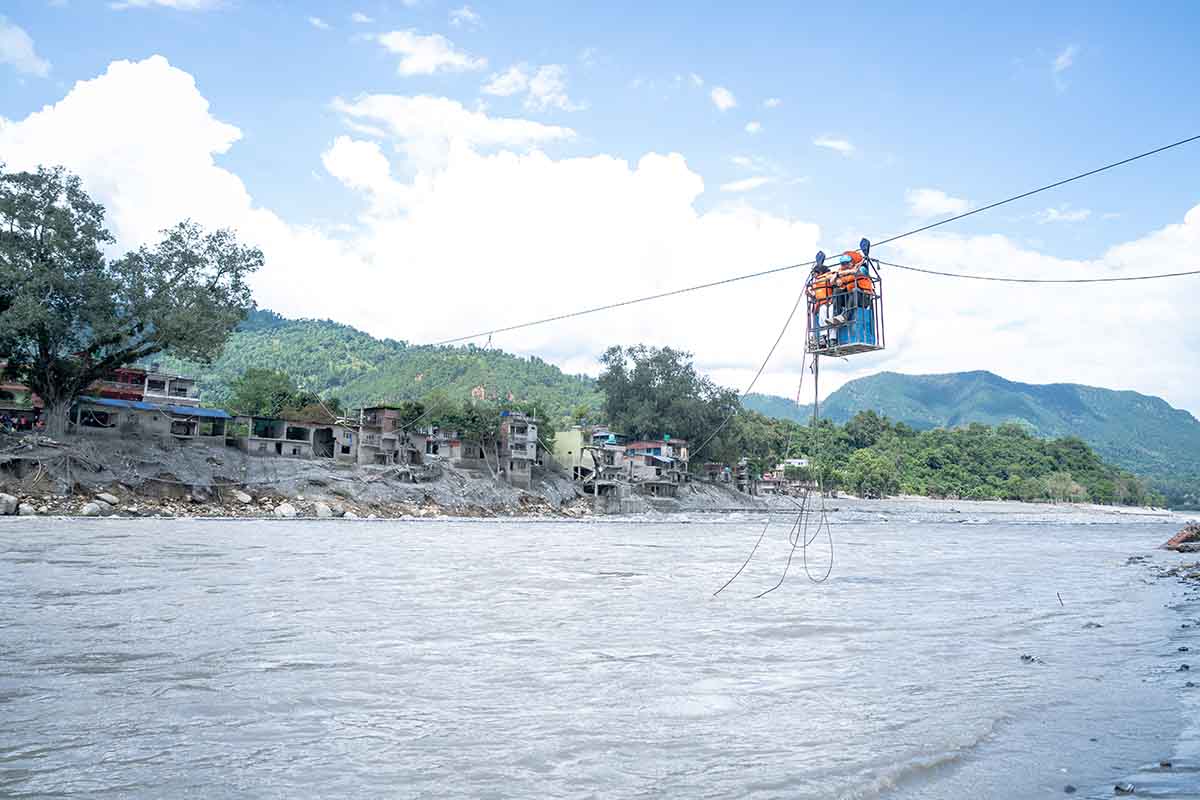
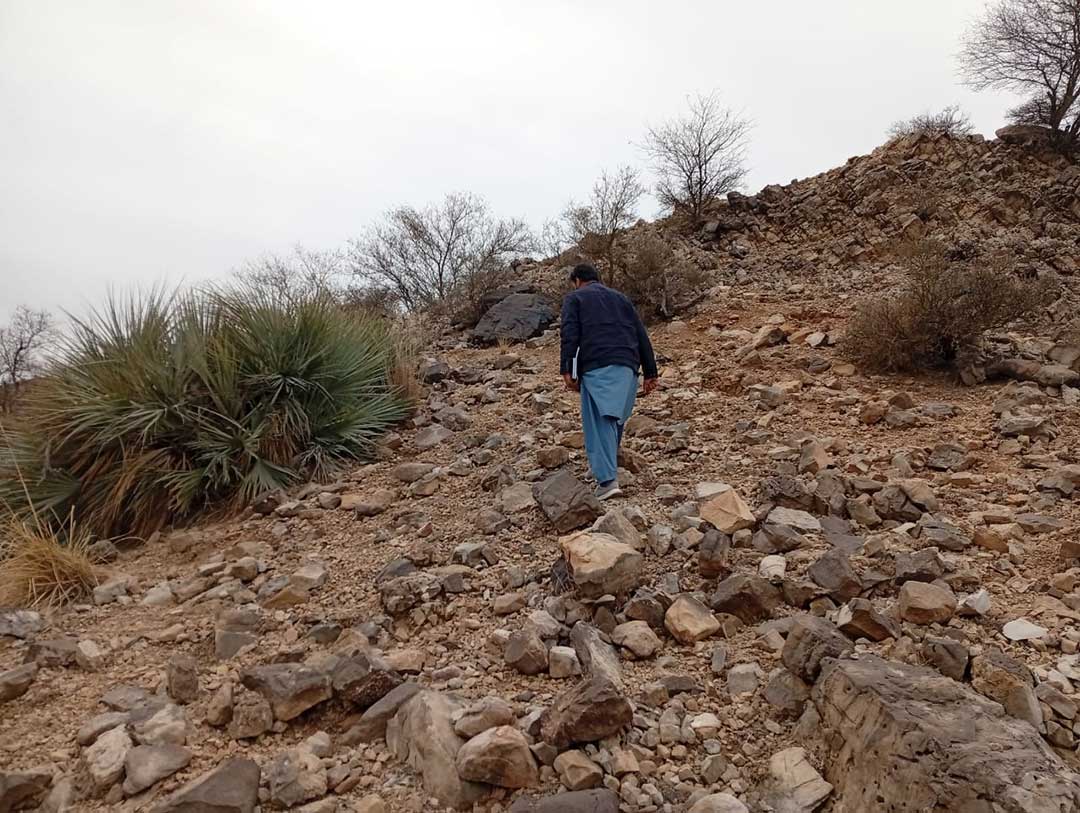
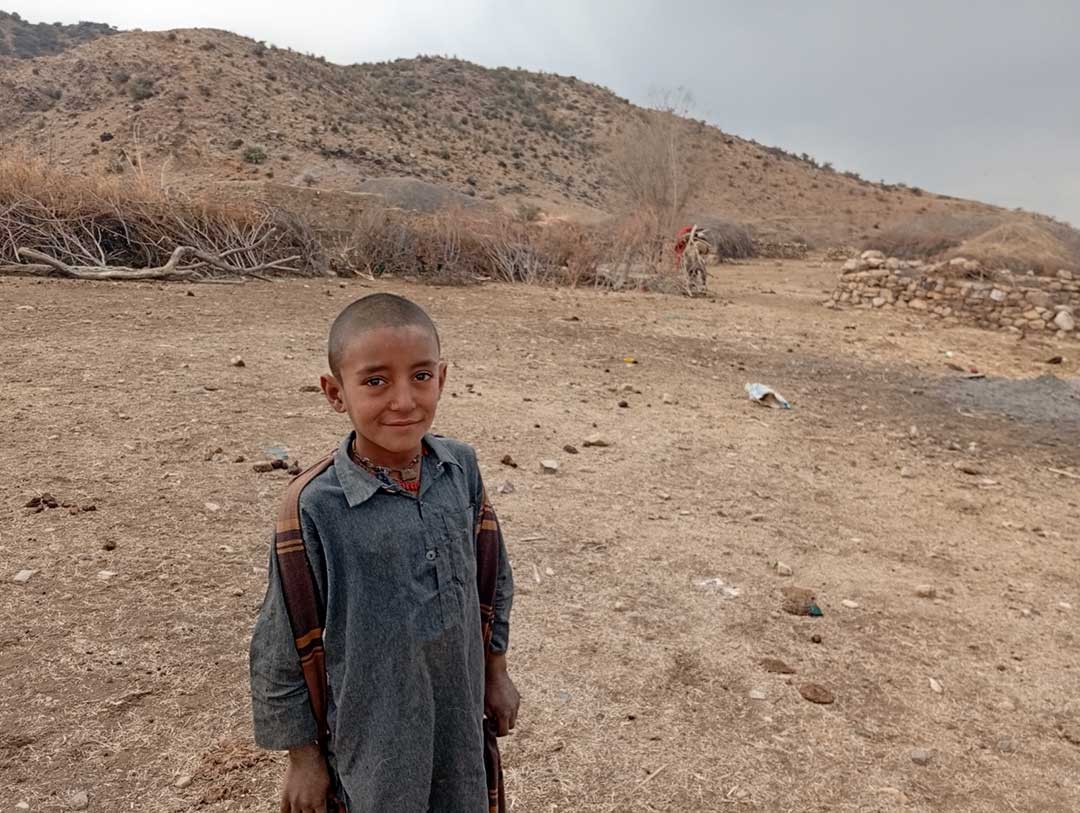
Surrounded by rugged mountains, and disconnected from the road network, Sharan Sheikhan lies nearly 45 kilometres from the district headquarters, a journey that takes more than two and a half hours by motorcycle across rocky, slippery terrain.
For years, this physical isolation kept routine health services out, leaving children like Asif unprotected against vaccine-preventable diseases.
Asif’s parents understood what that meant. When his older children, then around four to five years old, fell ill with measles, Asif’s father, Latif Sheikh, recognised their tell-tale rashes as a sign of danger.
He travelled nearly 25 kilometres with them to the nearest tehsil, Kingri, in search of medical care. There, they visited a private doctor and received treatment. After completing the prescribed course of treatment, the children gradually recovered and regained their health.
“We were always worried about our children,” he said. “After hearing about children dying from measles, I feared the same for my youngest.”
A first visit and a first dose
That changed when the IHHN vaccination team, supported by the District Health Department, and funded by Gavi through its CSO Fund Manager, MannionDaniels, made the difficult journey to Sharan Sheikhan in December 2025.
The village of Sharan Sheikhan had been first identified as a locality in need when Naqeebullah, a vaccinator at IHHN, visited a nearby community. Local leaders informed him that this remote village had never been reached by any vaccinator. Determined to change that, he made the journey to provide children with life-saving vaccines.
Credit: Mujeeb Ur Rehamn
Following the same rugged route that families often take in the opposite direction when forced to seek medical care, the team travelled half the journey by motorcycle and the remaining half on foot.
“There are no proper roads, extreme weather, and scattered households,” Naqeebullah explains. “But when we reached the village and saw children being vaccinated for the first time, it made every challenge worth it.”
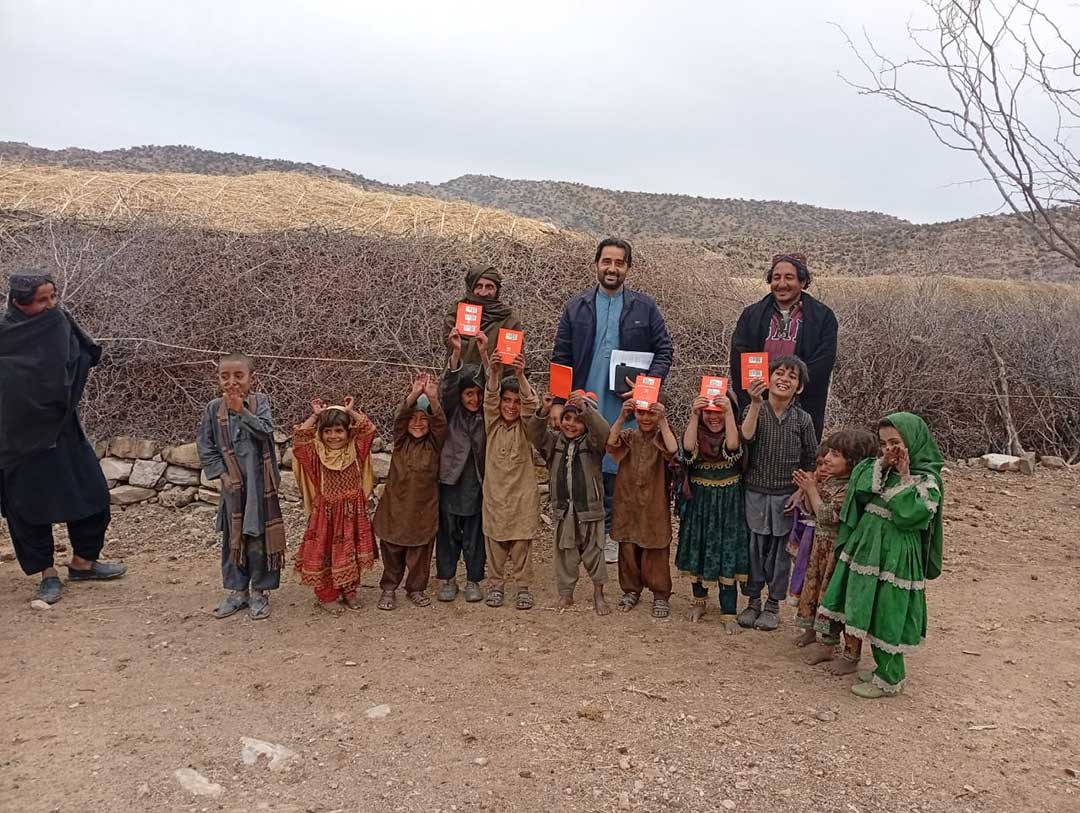
Vaccinations were carried out in an open field. Children arrived with their parents, some carried in arms, others on their own two feet, returning from grazing sheep with their siblings. They watched the vaccinators with curiosity and smiles; moments later, a few cries followed as the first doses were administered, and then vaccination cards were filled out and placed into parents’ hands.
Credit: Mujeeb Ur Rehamn
“When the health workers finally reached our village, I was very happy,” Latif Sheikh said. “I went door to door myself and called other families to bring their children. Now the health services are at our doorstep.”
Reaching the unreached
Though the village had reportedly been reached during ambitious mass measles-rubella and polio campaigns, routine immunisation services had remained beyond reach.
Sharan Sheikhan lies between the catchment areas of two Basic Health Units (BHUs), and routine immunisation requires vaccinators to conduct regular monthly visits to each outreach site. Due to the village’s remote location and the difficulty of making consistent journeys across the mountainous terrain, it was unintentionally missed from both sides.
Credit: Mujeeb Ur Rehamn
The challenge was further compounded by the size of District Musakhel, which spans more than 5,700 square kilometres, and the limited number of vaccinators available to cover such a vast area on a regular basis.
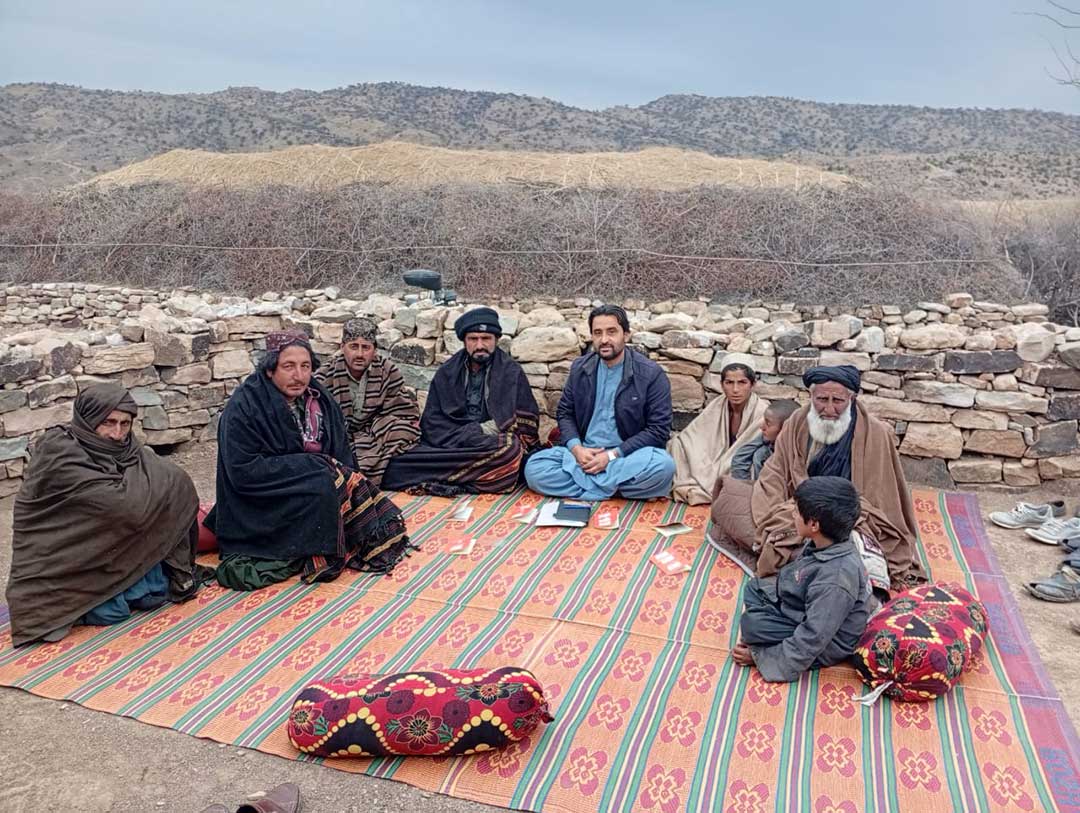
When the IHHN team arrived, the community welcomed the vaccinators with enthusiasm when services finally reached them. Local elders played a key role in identifying the community and mobilising families, helping vaccinators build trust and ensure children were brought forward for vaccination.
Twenty-five zero-dose children resident in the village received routine vaccinations for the first time in their lives, with those vaccinations including the BCG jab against tuberculosis, oral polio drops, rotavirus vaccine, pneumococcal conjugate vaccine, and the basic five-in-one pentavalent vaccine that protects against diphtheria, pertussis, tetanus, hepatitis B and Hib.
Parents were informed about follow-up visits, ensuring that children like Asif are now on track for continued protection.
“Civil society organisations [like IHHN] play a vital role in extending the reach of immunisation services to communities that are often difficult to access,” says Huma Khawar, Strategic Advisor, CSO Engagement at MannionDaniels. “By supporting locally-led efforts and strengthening partnerships at the community level, we can help ensure that children in even the most remote settings are included in routine immunisation services.”
A wider impact across Balochistan
Asif Khan’s first vaccination is part of a much larger effort to close long-standing immunisation gaps across Balochistan.
His village was reached under a project designed to bring routine immunisation to communities that have historically remained beyond the reach of formal health systems. Implemented since May 2025, the project operates across Jaffarabad, Jhal Magsi and Musakhel districts, where difficult terrain, scattered populations and limited infrastructure have left thousands of children unvaccinated.
By integrating vaccination services into existing primary healthcare operations and conducting targeted outreach in hard-to-reach areas, the initiative focuses on identifying zero-dose children and ensuring they are enrolled into routine immunisation schedules.
“This coordinated initiative is being executed in close partnership with provincial and district health authorities to ensure that every outreach intervention is fully consonant with Pakistan’s overarching national immunisation strategy,” said Dr Musa Khan, Director General of the Federal Directorate of Immunisation. “By fostering a unified operational approach, from federal stewardship to the frontline cadre of vaccinators, we are strengthening routine immunisation systems and guaranteeing that children identified through outreach efforts are systematically incorporated into the government’s programme for comprehensive and timely vaccination.”
Credit: Mujeeb Ur Rehamn
“Reaching children in remote and hard-to-access areas requires persistence, partnership, and local trust,” says D. Mah Talat, Executive Director of the Community Health Directorate at the IHHN. “Through this initiative, we are working closely with communities, the government and partners to ensure that every child, regardless of location, has access to life-saving routine immunisation.”
Making a difference, in the tens of thousands
To date, the project has enabled health teams to vaccinate 24,034 children, including 4,885 children who had never received a single routine vaccine before.
Each visit goes beyond the administration of vaccines, linking families to follow-up services, issuing vaccination cards, and building trust within communities that have long been excluded from routine care. Local health workers and community elders play a central role in this approach, helping teams navigate both physical and social barriers to access.
For lies like Asif Khan’s, the impact is the beginning of a sustained connection to the health system and the development of health-seeking behaviours that will place them on a track to greater safety.
With regular follow-up visits now planned, children in Sharan Sheikhan and similar villages are no longer invisible to routine immunisation services.
Just after Asif received his first vaccines, he played, smiling, in the open field alongside other children: a quintessential scene of childhood, from a childhood now less fragile than just moments earlier.
As this effort continues across Balochistan, it demonstrates how targeted investment, local partnerships, and persistent outreach can transform isolation into access, ensuring that even the most remote children are given a fair start at a healthy life.
How is Gavi helping?
Indus Hospital and Health Network (IHHN), who sent a team of vaccinators to Asif’s village, is a not-for-profit healthcare organisation in Pakistan that provides free, high-quality and accessible healthcare services through a nationwide network of hospitals, rehabilitation centres, blood banks, and primary healthcare facilities. IHHN works closely with government partners and development agencies to strengthen health systems and expand access to essential services, particularly for under-served communities.
Through the Gavi Civil Society Organisation (CSO) funding mechanism, managed by MannionDaniels, which channels support to organisations across 14 countries, Gavi supports IHHN to implement projects like this one to strengthen routine immunisation in hard-to-reach areas.