
Blood, poop and carcasses: How feasting bugs are helping map biodiversity
Critters that dine on flesh and waste also consume the animal’s DNA. That genetic material is helping scientists detect and map elusive species and their pathogens.
- 1 June 2026
- 6 min read
- by Knowable magazine
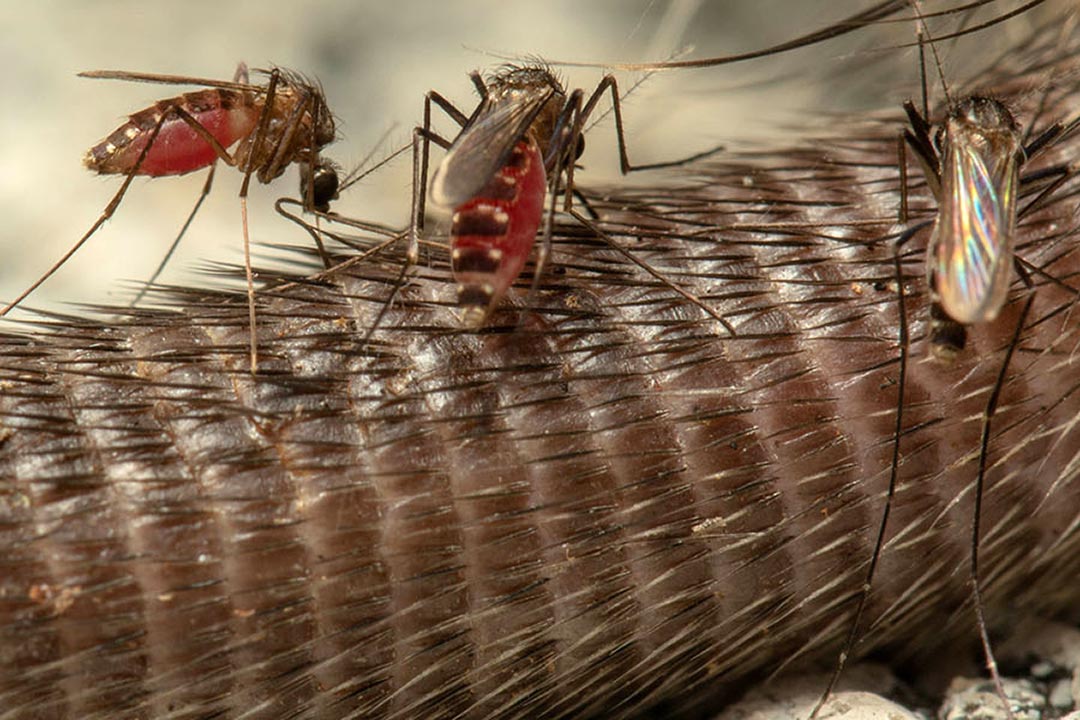
Searching deep in the DeLuca Preserve in central Florida, Lawrence Reeves found eastern diamondback rattlesnakes, hispid cotton rats, eastern narrow-mouthed toads and gopher tortoises. But he didn’t spot these creatures by sight: Reeves and his colleagues detected their DNA within the blood of local mosquitoes.
“We tend to think of mosquitoes as just these annoying pests,” says Reeves, an entomologist at the University of Florida. But their habit of feeding on blood also makes them a treasure trove for science, he adds. With every bite, the nuisance insects pick up traces of mammals, birds, amphibians and sometimes even creatures like earthworms, assembling a profound snapshot of the ecosystems they inhabit.
Reeves’ work is a part of the growing field of iDNA, or invertebrate-derived DNA. It turns out that some invertebrates, including mosquitoes, carrion flies, dung beetles and leeches, collect bits of host genetic material as they suck up blood, nibble on waste or feast on carcasses. And scientists have discovered that extracting and analyzing that DNA can reveal signs of species that are hard to physically observe. Researchers are also starting to use iDNA to track the unseen world of wildlife pathogens that are hidden in the fluids and tissues of hosts.
These obliging creatures are “our field assistants,” says wildlife geneticist Torrey Rodgers of Utah State University, whose research recently showed how carrion flies and dung beetles helped to survey mammals in the Peruvian Amazon. “It’s almost a partnership.”
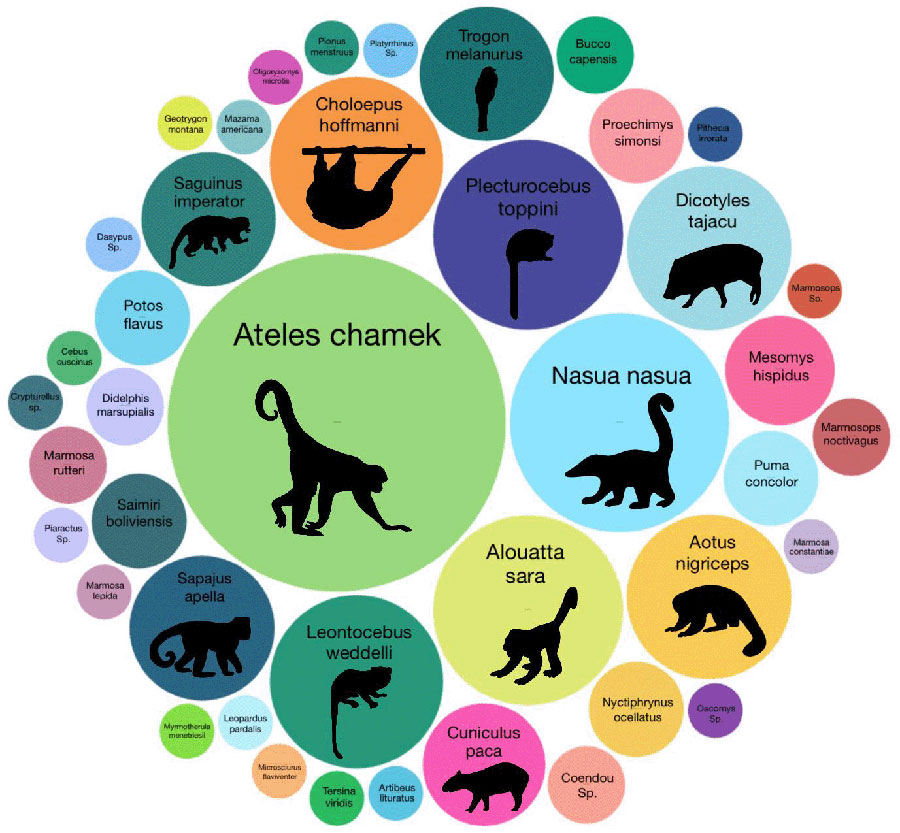
CREDIT: T.W. RODGERS ET AL / BIORXIV 2026. CC BY-NC-ND 4.0
‘Natural samplers’
The field of iDNA research originates from the wider discipline of environmental DNA, or eDNA, in which researchers survey biodiversity using genetic fragments that organisms leave behind in an environment. In eDNA’s early days, researchers mainly scoured water samples for the DNA of various animals. Sampling terrestrial ecosystems like forests was more challenging, says Jan Frederik Gogarten, a wildlife disease ecologist at Helmholtz Institute for One Health in Greifswald, Germany. And so invertebrates were proposed as “natural samplers,” he says, since these creatures are numerous and often feed on a range of animal hosts.
Researchers then began to investigate the details — how long might DNA that was picked up by a flesh-eating fly remain intact, for example, and what kinds of animals could that iDNA reveal? In one 2012 report, scientists established that goat DNA stayed within the guts of blood-sucking leeches from Vietnam for over four months. In another study, scientists collected DNA from carrion flies that fed on rotting meat and dung in Côte d’Ivoire and Madagascar. The flies contained genetic traces of a range of taxa — monkeys, bats, antelopes and rodents — that dwell from the canopy to the forest floor.
Have you read?
This early research typically sampled dozens or hundreds of invertebrates. As laboratory processing techniques have improved, sample sizes have grown well into the thousands. Traps have also been modified. Gogarten says that for carrion flies, for example, the mesh traps placed above rotting meat now resemble a tent-like pyramid, enabling capture of 800 flies in a mere 20 minutes. Reeves, too, has refined his methods. Instead of luring blood-filled female mosquitoes with carbon dioxide, a cue that the insects use to find hosts, he uses waste bins laid on their side combined with air-sucking contraptions called aspirators to vacuum up the insects. “In some cases, we can get hundreds of mosquito blood meals in about 10 or 15 minutes,” Reeves says.
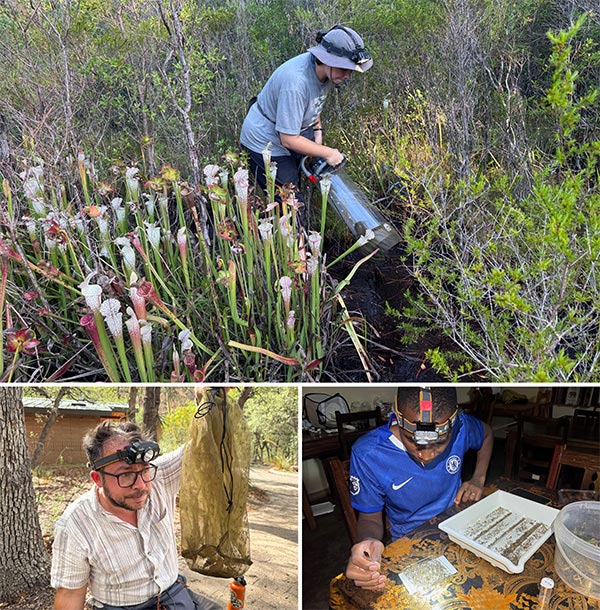
CREDIT: COURTESY OF LAWRENCE REEVES
Contrast this with conventional monitoring, says Rodgers, for which a biologist would need all sorts of tools. Those might include camera traps for mammals, acoustic detectors for bats and birds, and drift fences for smaller reptiles or amphibians. With a molecular approach, researchers can detect just as many fauna with a single analysis, which makes iDNA analyses much more efficient, especially in dense forests or remote, protected areas.
Tracking biodiversity and disease
Researchers recently did a proof-of-concept experiment at China’s Ailaoshan Nature Reserve, in the remote southwest corner of the country, to see if iDNA from leeches could help to assess how effective the reserve was at protecting its biodiversity. “It was, in a sense, like a big scientific stunt, just to see if it’s possible to do,” says ecologist Douglas Yu of the University of East Anglia in the United Kingdom, who led the research. Over two short months, Yu and his team amassed over 30,000 leeches, collected by the reserve’s park rangers, giving the researchers a mountain of tiny residual DNA samples within the leeches’ guts.
The genetic material from the blood-sucking invertebrates accurately mapped the biodiversity of the park. And it revealed areas that were critical for sensitive species: The endangered Yunnan spiny frog, for example, was found across the park, and large mammals like Asiatic black bears frequented higher-elevation areas near the center of the protected area. The study also detected domestic cattle and goats, which were found to wander the reserve’s edges at lower elevations, the team reported in Nature Communications in 2022.
Reeves’ mosquito experiments at Florida’s DeLuca Preserve were also promising, capturing just as much diversity as traditional biodiversity-monitoring methods. His studies, reported in 2025 in Scientific Reports, also showed just how many vertebrate species mosquitoes can feed on, from migratory birds like American woodcocks to aquatic species like American alligators.
And researchers are excited about another advantage of iDNA: It can provide insight into an often-hidden side of ecosystems — diseases.
Gogarten, as a disease ecologist, is investigating how iDNA can be used to detect pathogens in nonhuman primates. In one effort, he and his colleagues used carrion fly iDNA to map out the distribution of sylvatic anthrax, a deadly bacterial disease that frequently kills monkeys, in and around villages surrounding Taï National Park in Côte d'Ivoire. By collecting flies that fed on the carcasses of mammals in the region, the team mapped where the disease-causing bacterium was present, where genetically different versions of it were found, and which mammals, such as the greater spot-nosed monkey and the forest giant squirrel, it was associated with.
The results suggest that iDNA can be used to monitor wildlife diseases, much like wastewater analyses for human populations, Gorgarten says. It’s also a way “to link a pathogen with hosts,” he adds, potentially helping to show where pathogens are distributed and how they are evolving in spots where humans and wildlife coexist.
Reeves, who is scanning mosquito blood from the DeLuca Preserve for viruses in pigs and wild turkeys, says that iDNA could help bring to light the wide diversity of malarias, viruses and other disease-causing agents that can infect an animal. “They’re just out there circulating, like unbeknownst to any of us,” he says.
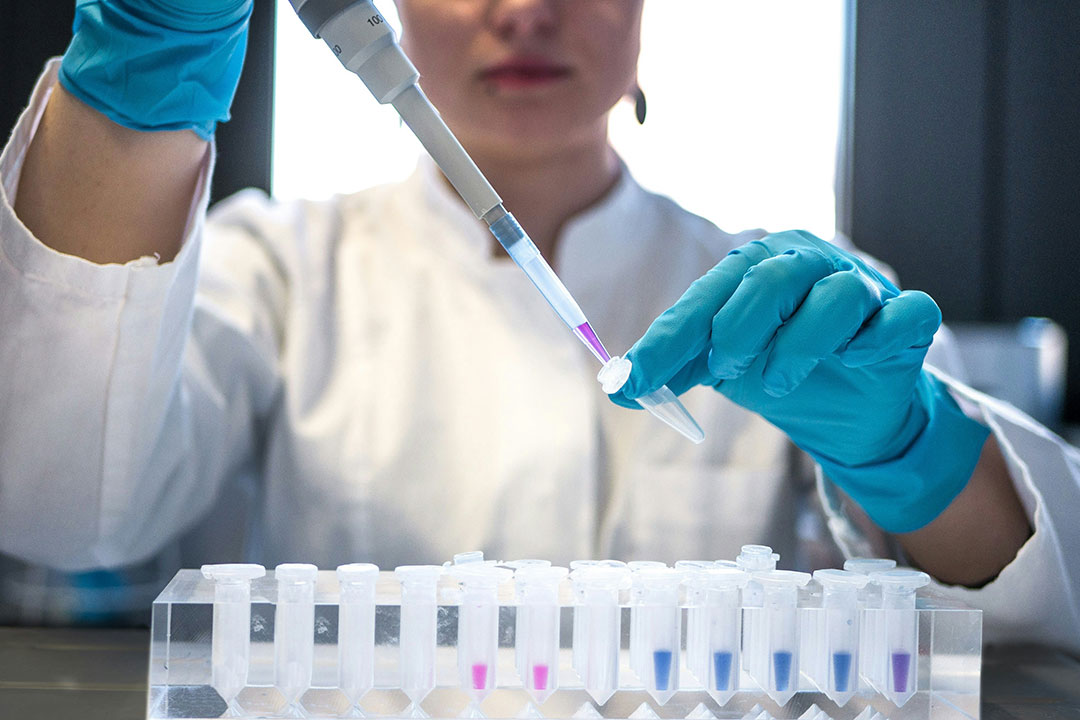
But iDNA methods can be tricky — extracting partially degraded genetic material is a challenge and contamination can be an issue. “The first time you do anything, it takes you forever,” Yu says. A focus on training, especially in the Global South, could make iDNA efforts more commonplace and accessible in biodiversity hotspots, says Rodgers.
And that, researchers hope, will shed light on the lives of a multitude of both large and tiny creatures, one well-fed mosquito, leech or carrion fly at a time.
More from Knowable magazine