
Separating vaccine fact from fiction in rural Madagascar
A worried young mother gets the information and the confidence she needs to make a life-changing decision.
- 10 August 2026
- 6 min read
- by Olivier Konan
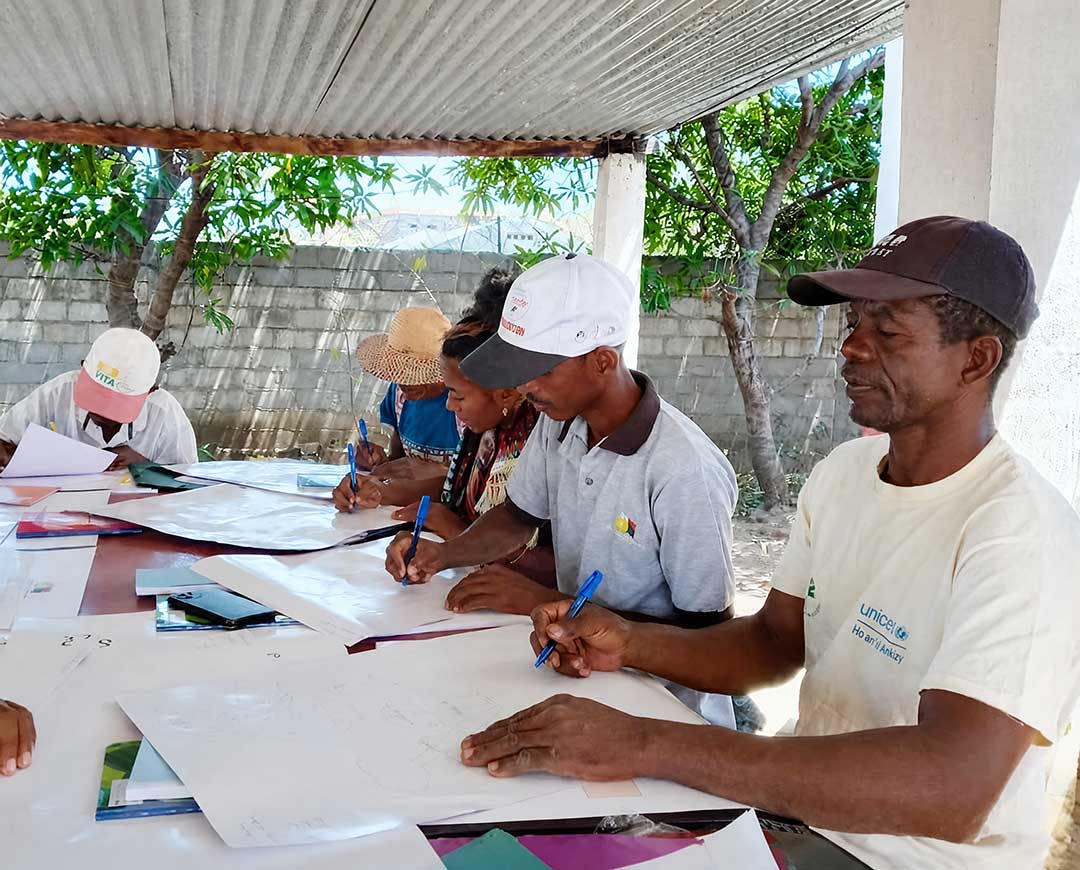
It is about 11:30 in the village square in Ambodisatrana 2, a village in the urban municipality of Sambava, Northern Madagascar. A community meeting has just ended, after two hours of discussion. Conversations continue in small groups while a few people stack away chairs.
Under the tin-roofed shelter that hosted the meeting, most women are gathering their belongings and preparing to leave. But one young mother stays seated.
“I thought vaccines were paid for,” she explains – she hadn’t realised that the government provides them to children free of charge.
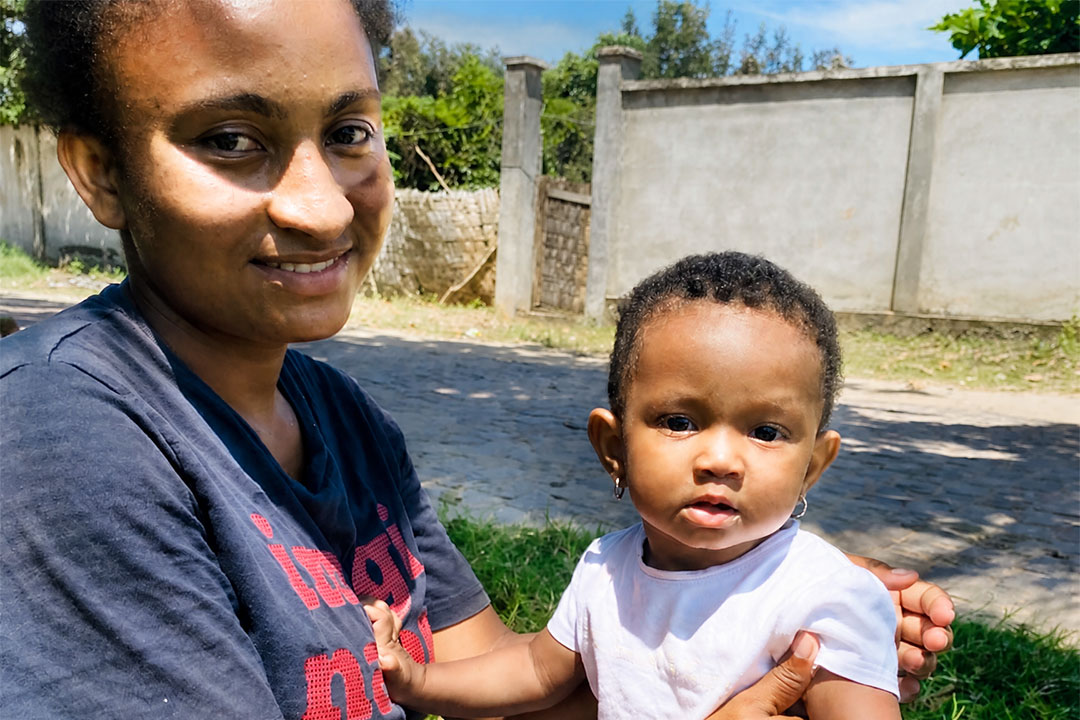
Louise Christinah Rasoamitia, known as Tinah, sits quietly with her baby in her arms. Something she has heard during the meeting has affected her. She slowly gets up to leave, but she does not return home. Instead, she heads straight to the local community health centre.
A tough start to motherhood
Rasoamitia is 18 years old. She was about to sit her second-cycle exams at school when she got pregnant, and everything came to a halt. Her daughter Chamnela’s father did not stay around to support Rasoamitia through pregnancy, and she is raising Chamnela with only her grandmother by her side.
Rasoamitia dreams of going back to school and completing her education. She wants to give herself the chance to succeed, to ensure a better future for her daughter. But since she got pregnant, she has become withdrawn. She hasn’t so much as attended routine antenatal appointments – physically, she felt well throughout her pregnancy, and didn’t see the need. Since Chamnela's birth, Tinah has rarely taken her daughter to a health centre.
That, and a critical misunderstanding, meant she fell quickly behind on Chamnela’s vaccination schedule. “I thought vaccines were paid for,” she explains – she hadn’t realised that the government provides them to children free of charge.
The turning point
But on the afternoon of the community meeting in Ambodisatrana 2, Rasoamitia took nine-month-old Chamnela to receive the vaccine doses she had missed.
That meeting had been organised by CSO Jhpiego, in collaboration with the Sambava Expanded Programme on Immunization (EPI). Rasoamitia attended after repeated encouragement from a community outreach worker called Soamihanta Alphine, who refused to give up on her.
Alphine had met Tinah during a home visit, and learned about her concerns about immunisation. Initially worried only about costs, now the young mother had heard rumours, and become convinced that vaccines were dangerous.
Rasoamitia arrived late at the community dialogue. Thirty women and four men gathered that day, to share their fears, knowledge, doubts and questions about vaccination.
Dr Victorienne Bejoma, the EPI representative for the Sava region, encouraged everyone to speak freely, so that she could identify the main barriers preventing families from vaccinating their children.
Opinions were divided.
“We should rely on our traditions, customs and local practices rather than on vaccines,” said community member Patrice Bekamisy.
Clodias Rafalisoaniaina Herivola, a mother of three and the wife of the pastor of the Sambava church, shared reassurance: “My children have had all their vaccinations and are doing well.”
The discussions created a space where people could express their concerns with confidence, and without judgment, and receive accurate information from a health professional.
Dr Bejoma explained the vaccination schedule, and clarified that mild side-effects, such as a mild fever or some redness, are normal and subside quickly. She then highlighted positive experiences shared by mothers who had vaccinated their children without complications.
“Community meetings are essential for countering rumours and improving vaccination coverage,” she said.
For Rasoamitia, Dr Bejoma’s messages struck a chord. “It was at that moment that I realised it was not the vaccine that was making the children ill,” Tinah said.
Another participant, Soniah Raoanirina, agreed. “Even if a child has previously experienced reactions after vaccination, I now understand that these effects are harmless and can be quickly treated.”
Dr Bejoma closed the meeting with a simple reminder that vaccines are available for free, and that they protect children against serious diseases.
When rumours travel faster than facts
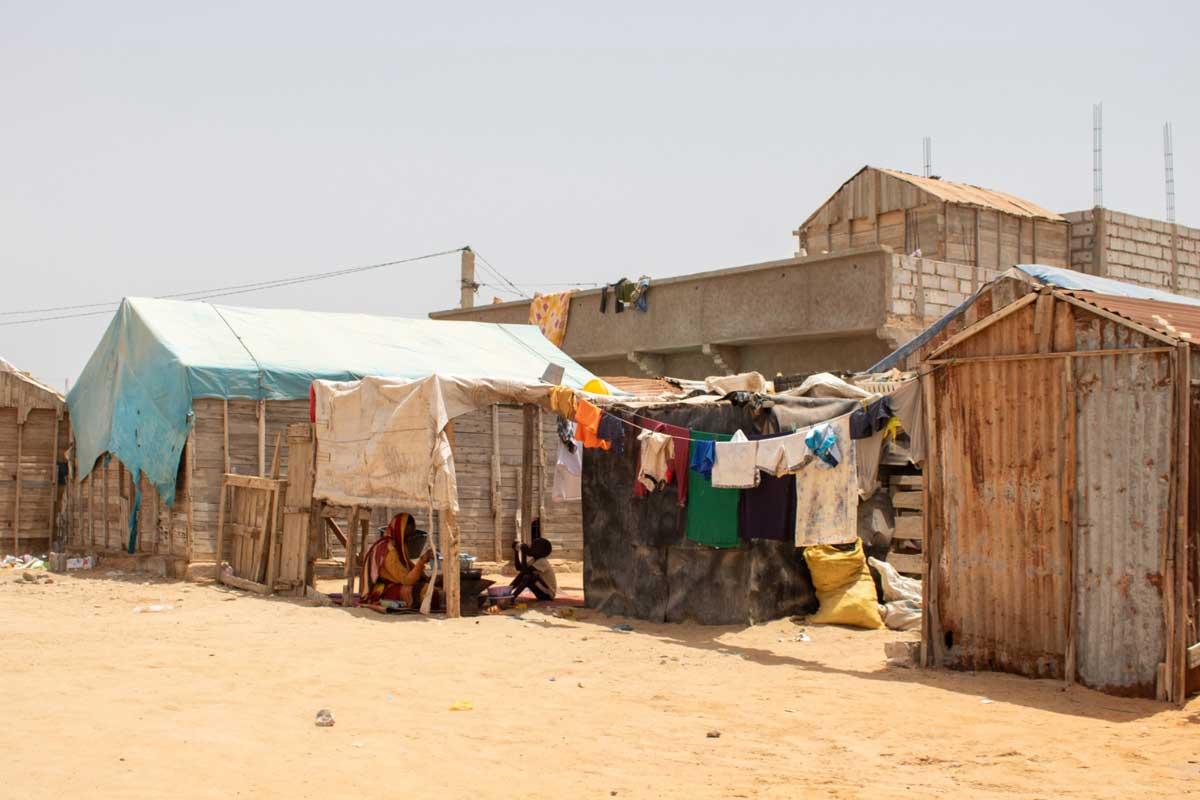
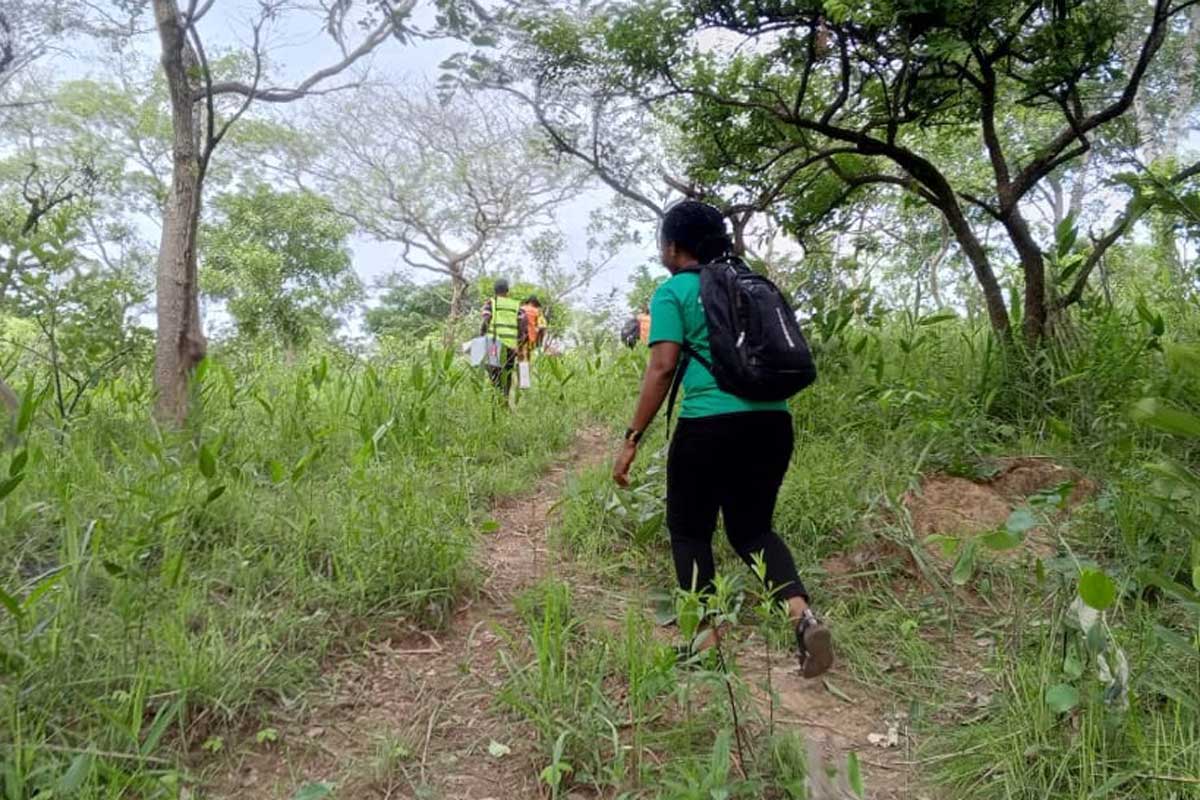
Some neighbourhoods in the district of Sambava remain poorly connected and difficult for health services to access. The nearest health centre to Ambodisatrana 2 is a 30- to 60-minute walk away. Vaccination services are only available twice a week, on Tuesdays and Thursdays.
Access to information is also limited. Many families have no television, and only seasonal access to electricity, telephone and internet coverage, and so they rely on word-of-mouth.
In Ambodisatrana 2, “word-of-mouth is often much faster than official and verified information,” explains Jean Luc Hajanihaina, VAKANA Project Manager from Jhpiego. Misinformation can spread quickly and influence decisions about health and vaccination.
Community dialogues offer a way to address this challenge, by offering people an opportunity to share their concerns among peers; to ask questions, learn accurate information and hear testimonies from trusted community members.
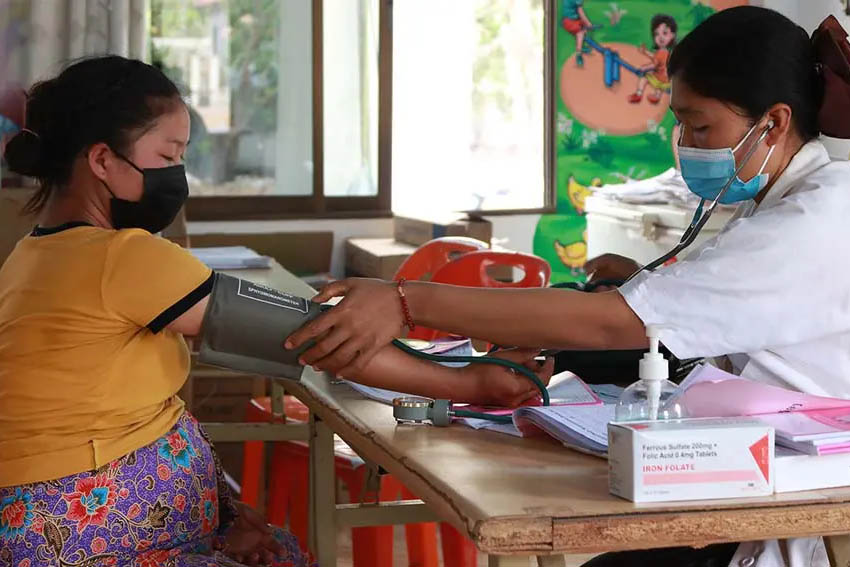
By the afternoon of the community dialogue, a vaccination catch-up session had been organised for children with no or incomplete vaccinations.
© Jhpiego region, Madagascar
Promises of support poured in: the community chief pledged to support awareness-raising and door-to-door outreach activities. Some fathers committed to monitor children’s health and encourage other men to follow their lead. Even a Seventh-day Adventist pastor, a representative of a community that had previously been reluctant to vaccinate, agreed to support the community outreach workers and spread accurate information in their churches and neighbourhoods.
A complete vaccination record
For Rasoamitia, the change has lasted beyond that afternoon.
Rasoamitia now knows when vaccination services are available and plans to return to complete her daughter’s schedule. Importantly, she has regained confidence in the health services.
According to a survey carried out by Jhpiego in 2025, 11,630 zero-dose children have been identified in the Sambava district, and 3,548 in the urban municipality alone.
Behind every statistic there is a story. Many parents are not opposed to vaccination, but they face challenges like misinformation and rumours, distance from services, limited access to reliable information and lack of opportunities to ask questions to health professionals. Community dialogues give them this space – a place to be heard and develop self-confidence, and gain confidence in the health system.
Today, nine-month-old Chamnela’s health record is complete. It includes OPV-0, BCG, OPV-1, 2, 3, PENTA 1,2,3, IPV 1-2, VAR 1&2. Her vaccinations are up to date.
As for Rasoamitia, she now feels comfortable speaking to health professionals, and understands where to find accurate information. She now walks through the health centre doors without hesitation.