
Inside a Ugandan bat cave: how the deadly Marburg virus jumps from animals to humans
Camera traps have offered a rare real-world glimpse of the conditions that could lead to a zoonotic spillover at a Ugandan bat cave known to host the Marburg virus.
- 21 April 2026
- 6 min read
- by Linda Geddes
At a glance
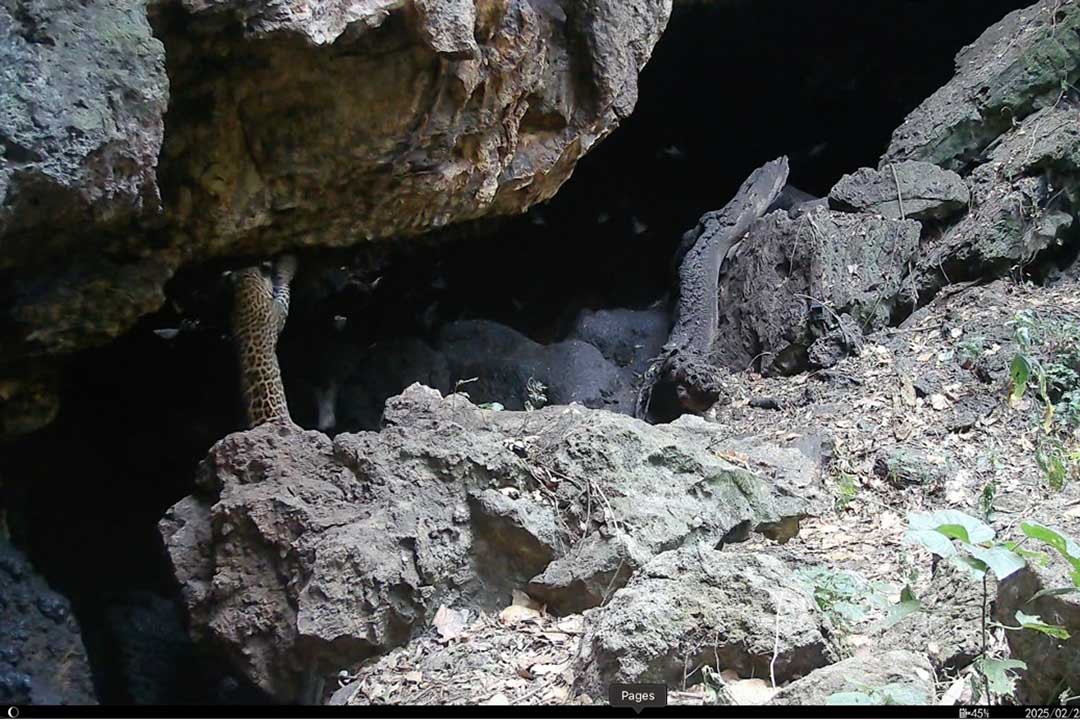
- Camera traps installed at Python Cave in western Uganda – a known natural reservoir for Marburg virus – have captured a large cast of animals and human visitors approaching or entering the caves.
- Over 368 nights, researchers recorded at least 14 vertebrate species preying on bats, scavenging, foraging in bat guano or exploring the caves in 321 separate encounters.
- They say the findings provide a rare real-world glimpse of how spillover risks operate at a known viral hotspot, and challenge the assumption that such interfaces are hidden, rare or difficult to study.
From leopards and monkeys to monitor lizards and human tourists, a surprising cast of visitors has been captured on camera at a Ugandan cave that hosts Egyptian fruit bats.
The bats are known to carry Marburg virus, and the human visitors enter despite rules requiring them to keep their distance.
The footage, published in Current Biology, offers scientists a rare real-world glimpse of how viruses such as Marburg could potentially pass between wildlife and people. In response, they are calling for stricter visitor controls, protective equipment for staff and tourists, as well as more testing of wildlife regularly exposed to the cave.
Could this cave be a hidden hotspot for Marburg virus spillover?
Marburg virus is a rare but highly dangerous relative of Ebola that can cause a severe and often fatal haemorrhagic fever marked by sudden onset of fever, muscle pain, vomiting and, sometimes, severe internal and external bleeding.
Its natural reservoir is Egyptian fruit bats, which can carry the virus without becoming ill themselves.
People can become infected through close contact with bats, their droppings, or by entering caves and mines where infected colonies roost. Once a person is infected, the virus can spread to others through direct contact with body fluids or contaminated surfaces.
Other species, including monkeys and apes, can also become infected, and could potentially pass the virus to humans if people come into contact with their blood or bodily fluids, such as through handling, hunting or butchering them, although strong evidence for regular transmission from species other than bats is limited.
The latest paper provides a rare insight into the kind of conditions that could allow Marburg virus to spill over from bats into other animals or humans, by bringing wildlife into repeated close contact at a site that harbours bats carrying Marburg virus and other potentially dangerous pathogens.
Why are animals and humans gathering at Python Cave?
Python Cave is a shallow cave in Queen Elizabeth National Park, western Uganda, famed for its colony of roosting fruit bats, as well as for the rock pythons that lurk in its crevices and feed on the animals.
Although many caves in the region host bats, parts of Python Cave’s roof have fallen in, reducing the distance between roosting bats and predators, scavengers or humans on the ground below.
Have you read?
Together, these conditions may increase the chances of exposure to potentially dangerous pathogens, including Marburg and other filoviruses.
Python Cave has also previously been linked to several human cases of Marburg virus disease, including a 2008 case in which a Dutch woman fell ill after visiting it.
Bosco Atukwatse at the Volcanoes Safaris Partnership Trust in Kampala, Uganda, and colleagues initially decided to instal camera traps at the cave as part of a government-supported programme to monitor carnivores in Queen Elizabeth National Park.
But they believe the images they’ve captured may offer a rare insight into the conditions that shape the emergence of zoonotic diseases: those that jump from animals to humans.
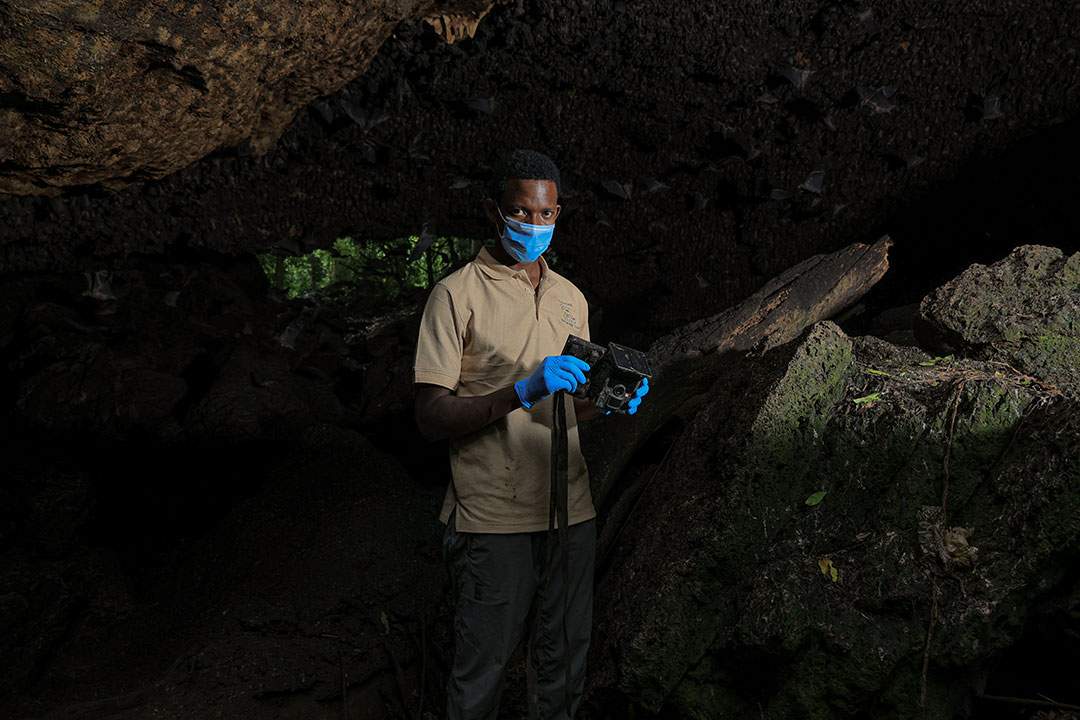
Credit: Alexander Braczkowski
“In an era of heightened pathogen emergence and costly detection delays, visual confirmation of a predator guild engaging with a Marburg virus bat reservoir represents a watershed moment for field-based zoonotic surveillance,” the researchers said.
What do these camera trap images tell us about disease risks?
Over 368 nights, the researchers recorded more than 300 wildlife encounters involving at least 14 different species, suggesting the cave acts as a busy meeting point, where many animals come into contact with bats from a known Marburg virus reservoir colony.
Nile monitor lizards, palm-nut vultures and large spotted genets – carnivorous mammals related to civets – were the most frequent visitors, although an individual leopard was repeatedly filmed entering the cave, capturing bats and leaving with prey at least 43 times.
“We recorded instances of overcrowded bats falling, crawling or occupying crevices, likely driven by density-dependent displacement,” the researchers said.
“These accessible zones appear to act as predation funnels, exploited by terrestrial and arboreal predators. Bone piles and repeated visits suggest Python Cave functions as a feeding site for predators and scavengers.”
They also captured species that would usually compete – including fish eagles and vultures, pythons and monitor lizards, as well as pythons and genets – in the same camera frame, suggesting the abundance of food may make them more tolerant of one another than usual. However, they also documented a fight between a crowned eagle and Nile monitor over bat prey.
As well as wildlife, the camera traps recorded 214 people – including school groups, researchers and tourists – approaching the cave mouth, breaching park rules and bypassing an observation platform about 30 metres away that was built to help prevent human spillover events.
Many came within metres of the cave mouth and only one person (a tourist) wore a mask. “This represents a significant human exposure pathway at a known Marburg virus bat reservoir,” the researchers said.
Although there was no evidence of viral transmission, they said the findings provided a rare real-world glimpse of how spillover risks operate at a known viral hotspot, with the repeated mixing of bats, wildlife and people creating the kind of conditions in which viruses could jump to new hosts and potentially spread further.
“This dataset challenges the assumption that spillover interfaces are hidden, rare, or inaccessible,” the researchers said.
How could the risk of disease spillover be reduced?
The team says it has already presented its findings to senior Uganda Wildlife Authority officials, and has recommended stricter distancing rules, locally trained guides to help monitor disease risks and educate visitors, and mandatory protective gear for anyone approaching the caves.
The researchers also called for targeted blood-test surveys of predator species and rangers that regularly visit the site to assess potential exposure to Marburg virus or related filoviruses.
“Disease preparedness must take into consideration ground-based surveillance of potential interface sites,” senior study author Dr Alexander Braczkowski told VaccinesWork.
“Ecological attentiveness is a critical part of understanding potential spillover pathways.”