
“I’m no longer afraid to go to hospital”: bringing healthcare to cocoa farmers in Côte d’Ivoire
In Côte d’Ivoire’s remote cocoa-growing communities, seeking medical care or getting a child vaccinated can still be difficult. A new partnership is helping to change that.
- 8 September 2026
- 8 min read
- by Aïssatou Diallo
“What has the project changed for me?” repeats 22-year-old cocoa farmer Yacouba Sama. He takes his phone from the pocket of his jeans, scrolls through his photos and holds up two images. The first shows a prescription and a bag of medicines. The second is a pharmacy receipt showing that he paid nothing.
“They gave me all of this, and instead of paying 8,910 CFA francs, I didn’t pay a thing,” he says.
Sama is one of around 5,000 cocoa farmers benefiting from CHEER, a partnership incorporating Gavi, Tony’s Open Chain, Elucid and philanthropic partners including Bayer Foundation and UBS Optimus Foundation. The initiative aims to improve access to healthcare for cocoa-growing families in Côte d’Ivoire, particularly in Lôh-Djiboua.
Wearing the shirt of the Elephants, Côte d’Ivoire’s national football team, the young farmer smiles as he describes the difference the project has made.
“I used to be afraid, but I’m not anymore,” he says.
After finishing secondary school, Sama took over his family’s plantation in Hermankono, a village reached from Guitry along a laterite track lined with rubber trees, oil palms, rice fields and cocoa plantations.
When Elucid staff first came to explain the project, he was sceptical. But after his first consultation was fully covered in March, his doubts disappeared.
“When I tried it and saw that it worked, I paid seven months of contributions to renew my universal health insurance card in one go,” he says.
He and members of his family now receive additional coverage alongside Côte d’Ivoire’s universal health insurance scheme, known as CMU.
"The government-run scheme covers 70% of medical costs at approved health facilities,” said Björn Gillsäter, Gavi’s Managing Director of Global Donor Relations, Advocacy and Fundraising.
“The remaining 30% – a cost that had previously discouraged many farmers from seeking care – is covered by the Elucid card. The card is available to cocoa farmers who belong to cooperatives taking part in the project.”
Rather than a private insurance scheme, the programme is designed to help strengthen the public health system, supporting enrolment into the national health insurance scheme and working through Ministry of Health facilities. It is designed to strengthen routine immunisation, support community health workers and reinforce existing government systems rather than creating parallel ones.
A few kilometres from Hermankono, in the village of Cochem Dida, Jacques Bogui Adou, a collection representative for the Bassadougou de Dies Cooperative Society, known as COOBADI, shares his experience.
That morning, the village is quiet, unlike on market days. Most farmers are working on plantations visible in the distance, during the mid-crop season. Adou, who is in his fifties, invites us into the maquis, a small informal restaurant he runs with his wife, Chantal.
He describes the difficulties facing local cocoa farmers. Some plantations have been affected by swollen shoot, a viral disease transmitted by mealybugs that can severely reduce yields. Poor and sometimes impassable roads also make it difficult to transport cocoa beans.
For Adou, a project that supports farmers’ health is transformative. “Without money, we couldn’t get treatment. With this, our care is covered. Without health, there is no life. You can’t do anything,” he says.
When healthcare is finally within reach
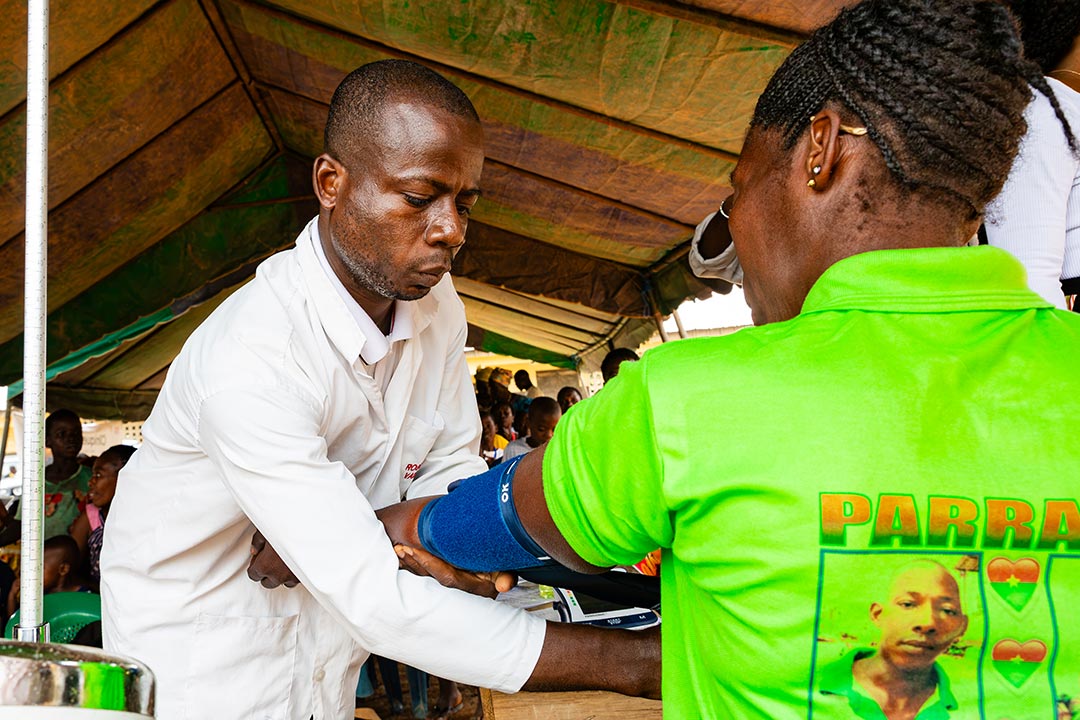
The Cochem Dida health centre is just a short walk away. Patients wait to be seen by the nurses. Simon Koffi Kouamé, one of the project’s beneficiaries, presents his card. His details are entered into a tablet, and the data is then transmitted to Elucid and the Ministry of Health.
“Four other members of my family are covered. It’s a good thing, but I would like the scheme to cover more people in each household. My neighbour, for example, has two wives and ten children. Who is he supposed to choose?” he asks.
The health centre’s two nurses have received training through the programme.
“It has increased attendance at the health centre. Many people did not come before because they could not afford care,” says nurse Fatim Mariam Cissé. “For some, the monthly CMU contribution of 1,000 CFA francs is still a barrier. But we explain that, because of the coverage it provides, it saves them money in the long run,” she adds.
“Enrolling people in CMU was one of the first challenges,” says Aboudramane Kouho Ouattara, programme manager at Elucid. “We had to organise group trips to Divo so that people could register. Some faced difficulties because they did not have birth certificates for their children.”
Vaccines delivered by motorbike
Administrative barriers are not the only challenge. Malaria is endemic in this part of Lôh-Djiboua.
Vaccination is one of the most important tools for reducing its toll, particularly among children. In Côte d’Ivoire, malaria accounts for 30% of consultations in health facilities. Progress has been made: according to the National Malaria Control Programme, the number of deaths fell from 1,534 in 2022 to 1,027 in 2025. But remote rural communities remain particularly vulnerable.
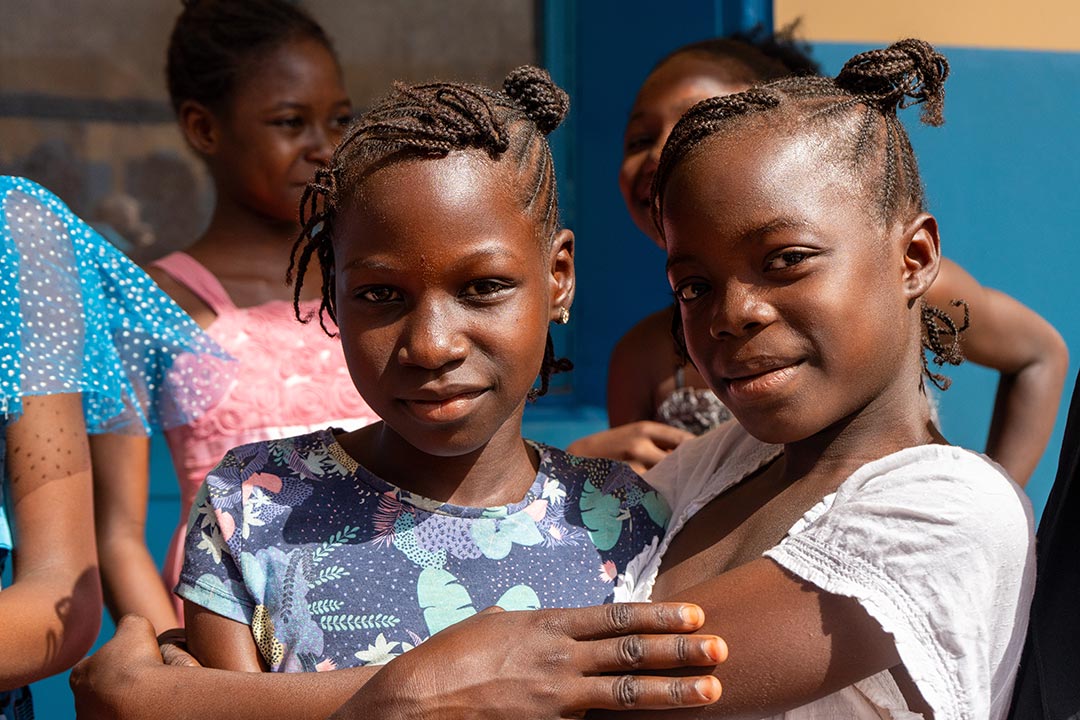
“We used to see one woman and her young twin daughters every month,” says nurse Alex Yannick Yao. “But since the girls were vaccinated, they have been ill less often, and their malaria consultations have become much less frequent. This vaccine saves lives.”
Yao has not yet set off on his rounds that Thursday, but he describes his routine in detail. Every week, from Thursday to Sunday, he gets on his motorbike and travels to some of the most remote settlements, which can become inaccessible for days at a time during the rainy season.
Before setting out, he coordinates with community health workers, who have already identified unvaccinated children in each village.
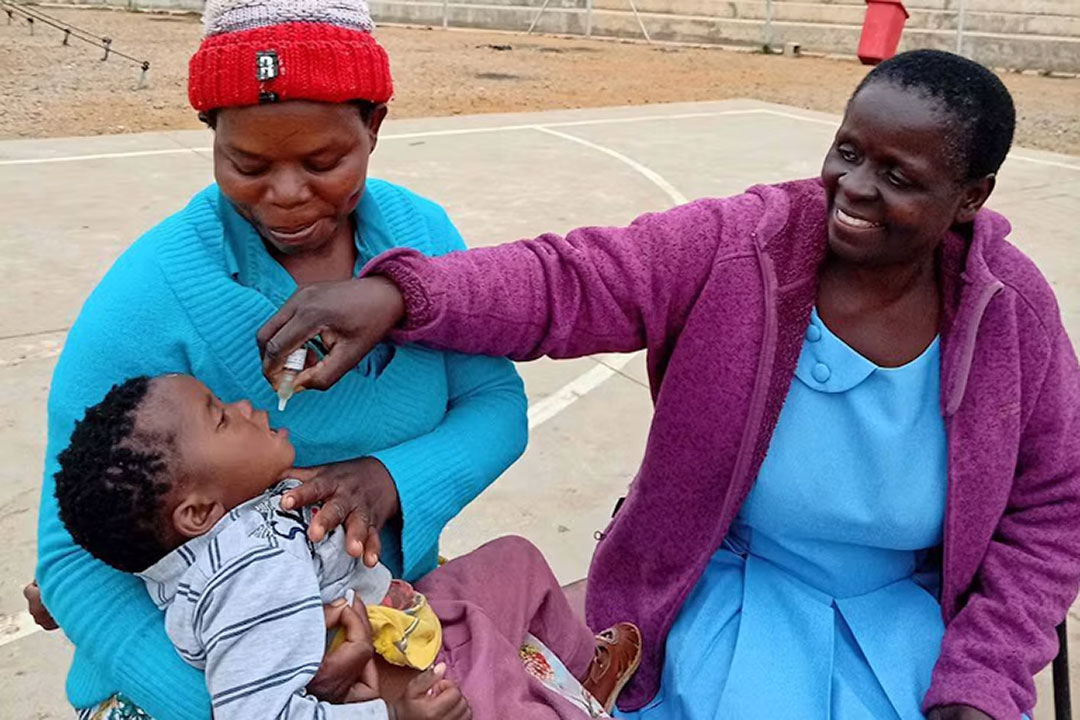
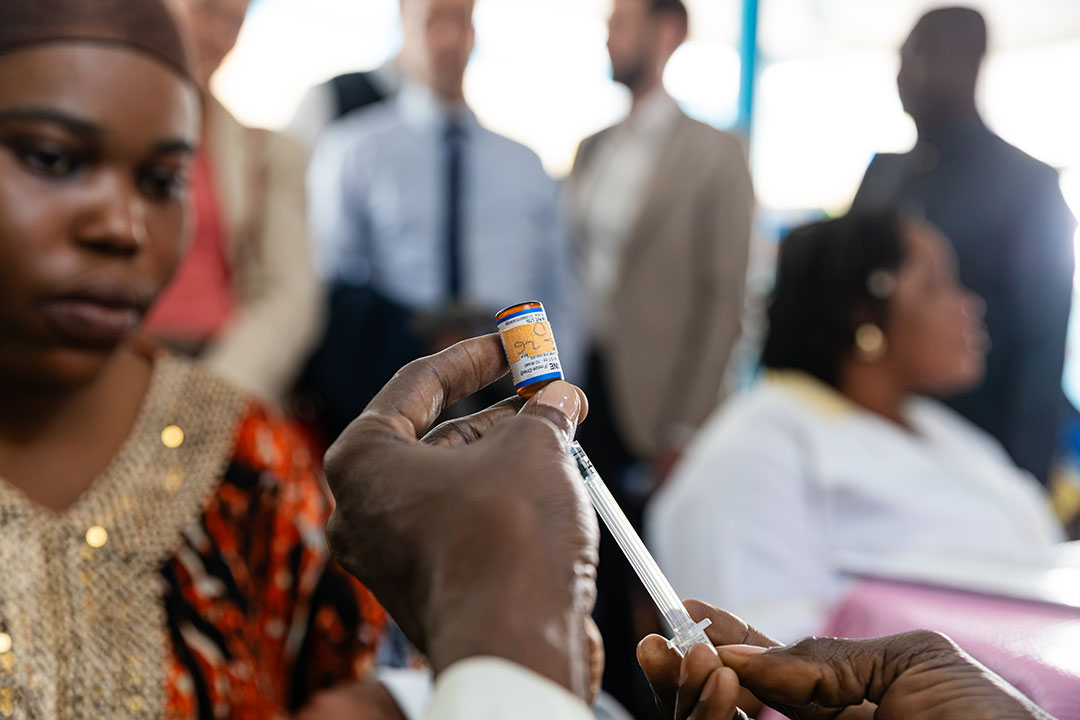
“I prepare the doses according to the number of children identified: oral polio vaccine, pentavalent vaccine for infants and the R21 malaria vaccine,” he explains.
The doses are packed into a vaccine carrier. Once the team arrives, community health workers gather the families and Yao administers the vaccines. Together, they keep a register and follow up with each child.
Have you read?
At the health centre, vaccines are stored in a refrigerator outside the vaccination room. Maintaining the cold chain remains a challenge. “If we lose electricity for several days, I contact my supervisors and they tell me what steps to take to keep the vaccines safe,” he says.
For Dr Nestor Kouadio, head of department at Côte d’Ivoire’s Expanded Programme on Immunization, partnerships of this kind address a clear need. The Guitry health district is one of the areas where vaccination coverage remains too low, particularly in remote cocoa-growing communities where families do not often visit health centres unless actively encouraged to do so. “Our teams seized the opportunity offered by Elucid to reach even further,” he says.
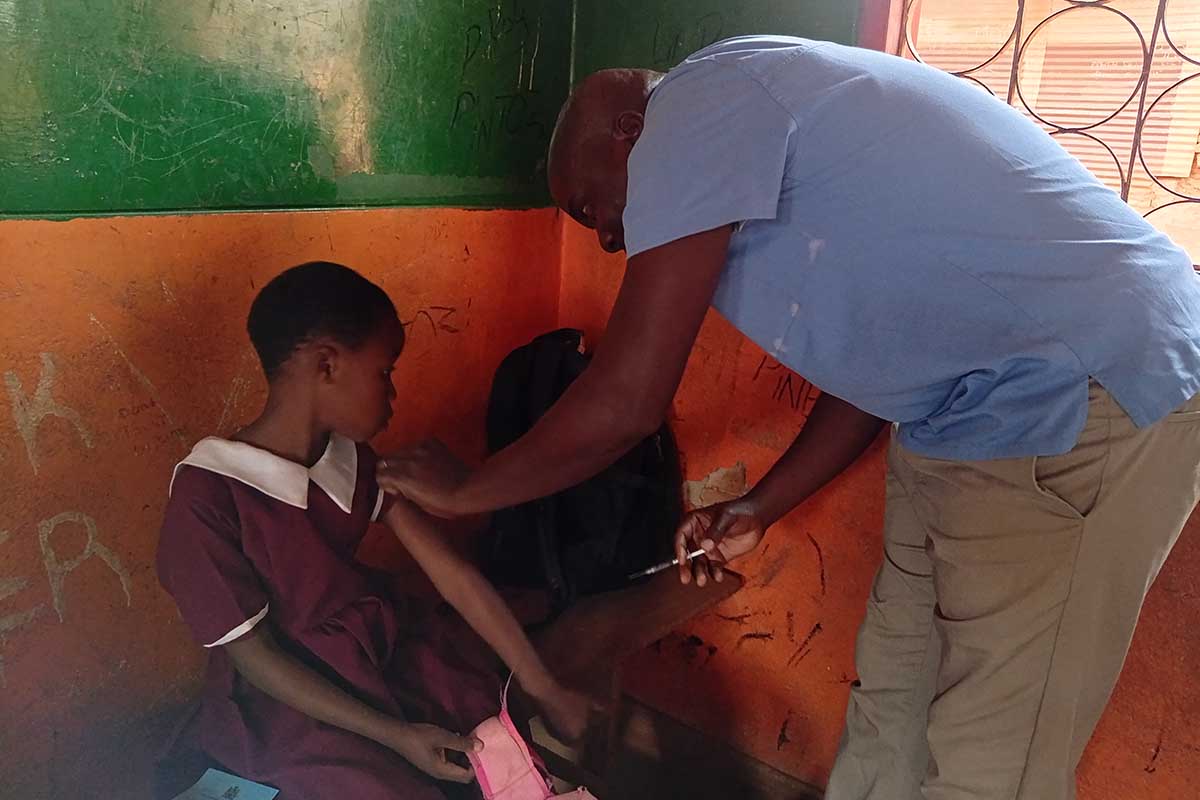
Although the project primarily supports the R21 malaria vaccine and HPV vaccination, health teams use these outreach visits to give children any other vaccines they are missing from the national immunisation schedule. “The goal is to vaccinate every child, wherever they are,” Kouadio says.
Data collected in the field is passed through the health districts to the Ministry of Health, allowing authorities to monitor disease patterns and vaccination coverage in each area.
A clinic that comes to the village
Beyond fixed health centres, the project also deploys mobile clinics to the most remote communities and hard-to-reach areas, particularly during the rainy season.
These outreach clinics are open to the whole community, not only to project beneficiaries, and take place every month between the 15th and the 30th. Depending on the needs identified in advance, the medical team includes a general practitioner and an ophthalmologist. The aim is to see around 100 patients during each day of consultations.
Dona Fologo Soro, 48, a member of COOBADI, received an eye examination when a mobile clinic visited his village, Dairo Didizo.
“They came two weeks ago, and I was given reading glasses,” he says. “This project helps me save money because my wife and our three children, aged 14, 8 and 6, are also covered.”
Although beneficiaries are broadly positive about the project, some mention occasional shortages of certain medicines caused by delays in the delivery of supplies. Others would like the coverage to be expanded beyond basic healthcare.
Putting health into the price of cocoa
“What began as a US$ 6 million pilot project with Tony’s Open Chain has now become a model that can be replicated,” says Markus Beck, Gavi’s Senior Manager for Sovereign and Private Sector Engagement.
“The project currently reaches around 5,000 cocoa farmers and their families and serves as a blueprint for programmes already being expanded with additional cocoa companies. With Hershey’s and Mars, we have already expanded it into a programme worth nearly US$10 million.
“This demonstrates that governments, companies and philanthropic organisations can jointly finance better healthcare for farming communities. The next challenge is to scale this model across cocoa-growing regions and, eventually, other agricultural value chains.”
Wearing a brightly coloured wax-print dress, Yvonne Kra Ya speaks in Baoulé. Born in 1972, the Cochem Dida cocoa farmer leads a mutual support association for women farmers. “I appreciate it. With the card, my healthcare is free. I used it three weeks ago,” she says with a smile. “If the project helps me stay healthy, I have the strength to go and work in the fields.
“Now I’m no longer afraid to go to hospital. As soon as I have a headache or a minor problem, I come here.”
Her words capture more clearly than any statistic what this partnership is changing in the daily lives of these families.