
In a Nigerian emirate, a fathers’ network is talking to dads to unlock vaccine confidence
Using peer-to-peer dialogue, fathers in Akko, an emirate in Gombe State, are helping families to trust vaccines and protect their children.
- 16 February 2026
- 8 min read
- by Jesusegun Alagbe
At a glance
- A group of respected men in Akko emirate, Gombe state, have taken it upon themselves to convince vaccine-sceptical fathers to get their children protected from infectious diseases.
- Operative since 2024, the Fathers’ Response Team, aka Fathers for Good Health, is producing “marvellous” results, according to state health authorities.
- “We wish the work had started earlier… Now, there is an awakening because fathers are engaging their fellow fathers,” said Habila Felix Gambo, Director of Planning, Research and Statistics, Gombe State Primary Health Care Development Agency.
For years, Aliyu Abubakar turned away vaccinators from his home, refusing to open the door when they knocked, convinced that vaccines would harm his children and contravene his religious beliefs.
However, in late 2024, Abubakar allowed seven of his eleven children to be immunised. It hadn’t been a health worker who had finally changed Abubakar’s mind, but rather a group of other fathers.
“Some respected community leaders came to my home, and I thought they had come to discuss some community issues. But to my greatest surprise, they talked about health and vaccines,” Abubakar told VaccinesWork. “They explained the importance of immunisation calmly and respectfully. Their detailed explanation helped me understand better, and this convinced me to allow my children to be immunised.”
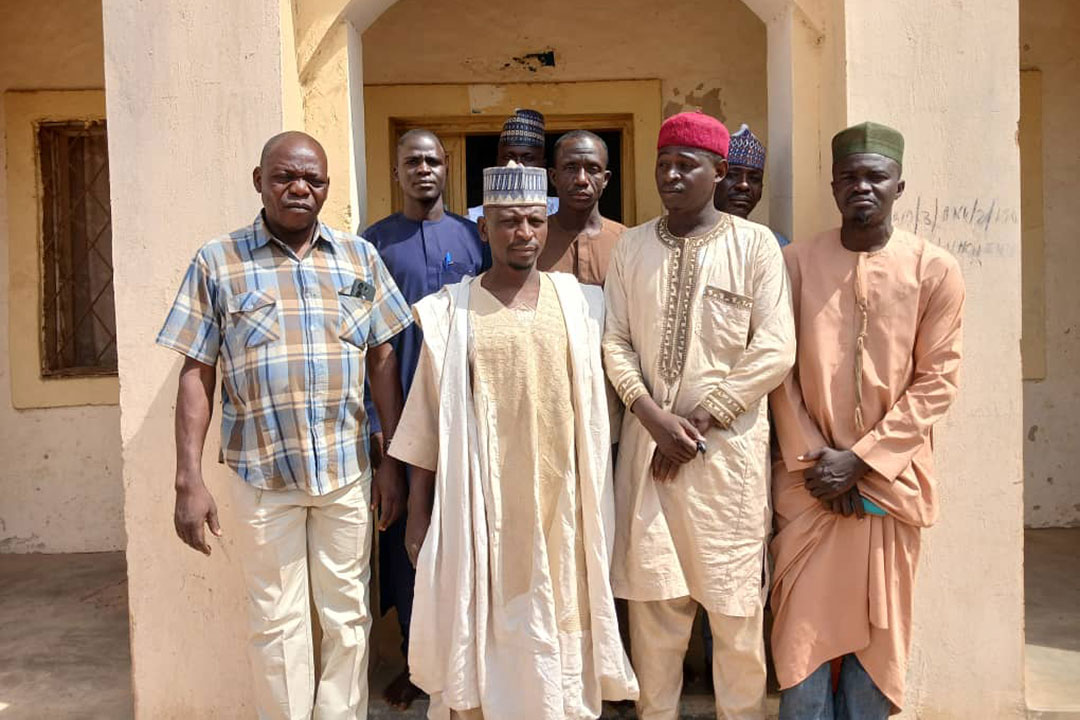
Abubakar, a farmer, is not the only man in Akko, an emirate located in Gombe State in northeastern Nigeria, to have been visited by a network of fathers called the Fathers’ Response Team, also called Fathers for Good Health.
The group comprises respected male community leaders and members of the emirate council, and extends across communities in 11 wards across Akko emirate.
53,000 unprotected children
In Gombe State, vaccine non-compliance is a public health challenge, with the United Nations Children’s Fund (UNICEF) reporting in April 2025 that the state is home to 53,000 unvaccinated children. More than half of these children reside in one of five “high-risk” local government areas, including Akko.
In a bid to combat the vaccine hesitancy that substantially drives those rates of under-vaccination, UNICEF and the Gombe State Primary Health Care Development Agency formed the Fathers’ Response Team in 2024, according to Abdullahi Wakilin Tabra, one of the leaders of the Fathers’ Response Team.
Social life in Akko, like in many other parts of northern Nigeria, is strongly patriarchal, with men typically leading family health decision-making. Allowing respected male community leaders to engage with fellow fathers on vaccination could help turn the tide, the project’s designers hoped.
It worked.
“The results have been marvellous”
“The work the Fathers’ Response Team is doing is critical, and we wish the work had started earlier. Otherwise, we would not be where we are today in terms of vaccine uptake. Now, there is an awakening because fathers are engaging their fellow fathers,” Habila Felix Gambo, Director of Planning, Research and Statistics, Gombe State Primary Health Care Development Agency, told VaccinesWork.
Have you read?
“We are seeing more fathers understanding the importance of child immunisation, and many who have had a change of mind are getting interested in joining the fathers’ team. The more men who join the team, the better for us because men take influential actions in their homes. Many mothers would love to take their children for immunisation, but if their husbands don’t permit them to do so, they are restrained.”
But Gambo says that since the work of the fathers’ team started, “we are witnessing increasing compliance among households.”
Abdulkareem Mohammed Aliyu, the State Immunisation Officer, likewise said there has been a significant improvement in compliance with child immunisation in homes that previously turned away vaccinators.
“Cases of hesitancy are reducing because even the most difficult fathers are having a change of mind and are now allowing their children to be immunised. We provide capacity training and technical support to the fathers’ team, and so far, the results have been marvellous,” he told VaccinesWork.
“Before, we used to only have female community resource groups, moving from house to house to create awareness and set reminders for parents to take their children for immunisation. And now, it’s a beautiful thing to have fathers also doing this work.”
“We decided to take it upon ourselves”
Leaders and members of the fathers’ team say their motivation derives from the fact that they want all children in the community to be fully healthy and the community generally to be safe from diseases.
“Many of us fathers have always desired a healthy society, but then vaccinators and ward focal persons have always complained about fathers preventing their children from being immunised.
“So, when we were approached to lend our voices, we heeded the call. As leaders of the community, it’s not good to ignore such a call, so we decided to take it upon ourselves as fathers to create awareness on the importance of routine vaccines and immunisation because diseases can spread from one person to another, and if that happens, it can affect the whole community and neighbouring communities as well,” Tabra, a leader of the Fathers’ Response Team, told VaccinesWork.
Tabra explained that the team visits fathers at homes, mosques, churches and other public spots to create awareness about vaccines and routine immunisation twice a month.
“Team members are regularly trained by health officials, and whenever we meet, each member discusses their challenges and successes. We review our strategies and encourage ourselves to continue to do the work. This job is about our children’s future and society’s future at large, so we must keep doing it,” he said.
Tabra said the network keeps growing gradually because sometimes, converted fathers indicate interest in joining the team.
“There’s no requirement for joining the team; the only criterion we consider is the person’s integrity in the community,” he said.
Abdullahi Muhammed Galdima, a member of the Fathers’ Response Team who was once vaccine-hesitant, said the motivation to join the team stems from the positive changes he has seen.
“What inspires me is the fact that since I started allowing my children to get vaccinated, they don’t fall ill as they used to. If other children are given the same privilege, communicable diseases will be reduced,” he said. “Whatever fathers say stands, so if they say their children should be immunised, they will be. Interestingly, these days, fathers now report their vaccine-hesitant friends to us, and once we receive such reports, we go and talk to the persons.”
Jauro Bakura, another member, said he finds the work he’s doing rewarding. “When you have the privilege of convincing people to do the right thing, that’s fulfilling,” he told VaccinesWork.
This was also the experience of Naziru Danladi, a youth leader in the community, who said that when he saw elders from Akko Emirate leading a change, “I had no reason but to join.”
From hesitation to acceptance
“Two years ago, I was very sceptical of vaccines for my two children, and I never allowed them to take them,” Suleiman Muhammad, a trader, told VaccinesWork. “But with the help of the Fathers’ Response Team, who educated me on the importance of immunisation, I changed my mind, and I don’t have any doubts again about my children’s safety.”
Abba Muhammad Tabra, a father of two, echoed him. When community leaders from the fathers’ team told him that their own children had been immunised, that gave him all the reassurance he needed.
“The fathers’ team met me at my store. They educated me about the advantages of immunisation, and they further said they allow their own children to be immunised. I thought if our community leaders could do that, then I should also follow in their footsteps. Now my two children don’t miss their routine immunisation schedules,” Abba said.
Mothers are happy
Experience across many parts of northern Nigeria indicates that mothers are often the primary caregivers and frequent visitors to health facilities, while men may have less direct contact with frontline health workers. As a result, men’s opinions about vaccines sometimes rely on religious beliefs and inherited narratives.
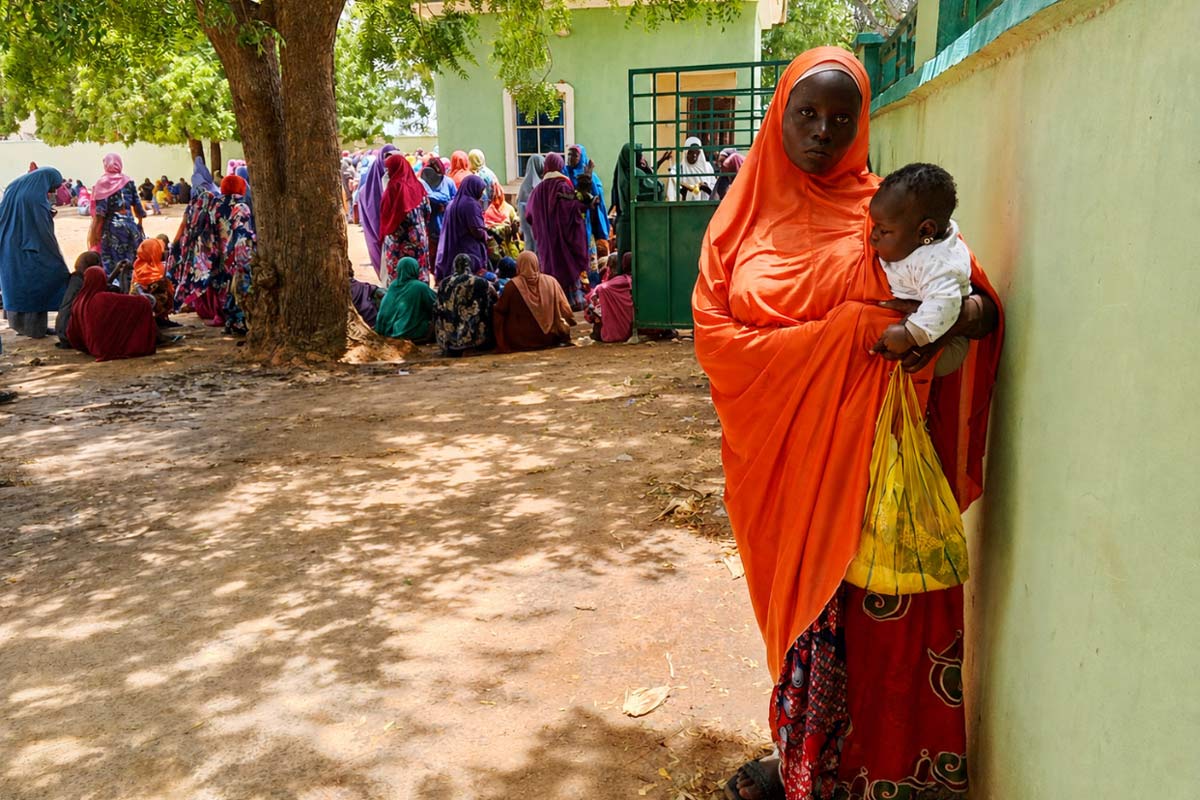
For many mothers in Akko emirate, the change of fathers’ hearts has brought both relief and reassurance. Decisions about their children’s health, once marked by anxiety, are now shared conversations, as husbands who once resisted immunisation have begun to support it openly.
“I feel happy about fathers’ involvement in the vaccination campaign because whatever decisions our husbands take, stay. So it feels really good to see the change of heart and support for child immunisation,” Hadiza Ya’u, a trader, said. “When men are educated about vaccines and routine immunisation, it means we women don’t have to convince them at home. They are the heads of families and their decisions are final, so I’m really happy because my husband no longer proves difficult when it comes to immunising our children.”
Hamsatu Adamu, another mother, described feeling relieved and happy since her husband changed his stance on immunisation. “It's no longer difficult for me as it used to be, because before, I had to take permission and wait for my husband’s approval, but now the situation has changed after the fathers’ team sensitised my husband,” she told VaccinesWork.