
Rabies vaccines offer relief as Indian Kashmir grapples with dog bites
Jammu and Kashmir has seen more than 200,000 dog-bite cases in just three years – and each case must be treated as a potential rabies exposure.
- 14 July 2026
- 6 min read
- by Athar Parvaiz
At a glance
- Jammu and Kashmir has recorded almost 213,000 dog bites since 2022. As India still remains the global epicentre of dog-mediated human rabies, each one of those injuries has needed to be regarded as a potential exposure
- In the absence of vaccination, rabies is almost 100 percent fatal. Fortunately, the people of Jammu and Kashmir are well informed that post-exposure prophylaxis, a protocol which includes several doses of the vaccine, is a must following a bite or scratch.
- In Srinagar, health workers report large numbers of people reporting to clinics for their anti-rabies jabs. The effect is clear: no human deaths from rabies have been recorded in recent years in the region despite a rising tally of bites
After five days in hospital with multiple dog-bite injuries, six-year-old Rehan Yousuf Doye was clearly happy to be home. Playing with a toy on a mattress in the corner of his family’s house in Srinagar, the capital of Jammu and Kashmir, he told VaccinesWork that he and his cousin had just stepped outside to play after returning home from school when it happened.
“We had just begun walking when a dog suddenly chased us and bit us,” said Doye, who suffered the dog attack on June 25.
Fearing the injuries were serious, his parents said they did not take him to the nearby public health facility, but to the Sher-e-Kashmir Institute of Medical Sciences (SKIMS), the only tertiary care hospital in Srinagar.
Doye’s father, Mohammad Yousuf Doye, was at work at the time. “When my family made a video call to me, I saw deep cuts on his face and upper leg with blood oozing out,” he said and added that they are assured that Rehan is now safe, particularly as the child received on-time immunisation against rabies. “We have been told to visit the hospital again for plastic surgery,” Doye’s father said.
Credit: Athar Parvaiz
Rabies risk remains
Rabies, a disease that is close to 100% fatal in the absence of vaccination, is a particularly chilling danger following dog-bites.
Though exact figures are hard to establish, India is understood to be home to the highest burden of dog-mediated rabies in the world, with one recent survey led by the Indian Council of Medical Research (ICMR) estimating 5,726 human rabies deaths each year.
That’s a figure the Indian government aims to bring to zero by 2030. There are two tracks towards the elimination of dog-mediated rabies: the first involves reducing exposure: bringing down bite cases. The second involves reducing risk from exposure: using vaccines (both animal and human jabs) to prevent transmission of the disease during a bite.
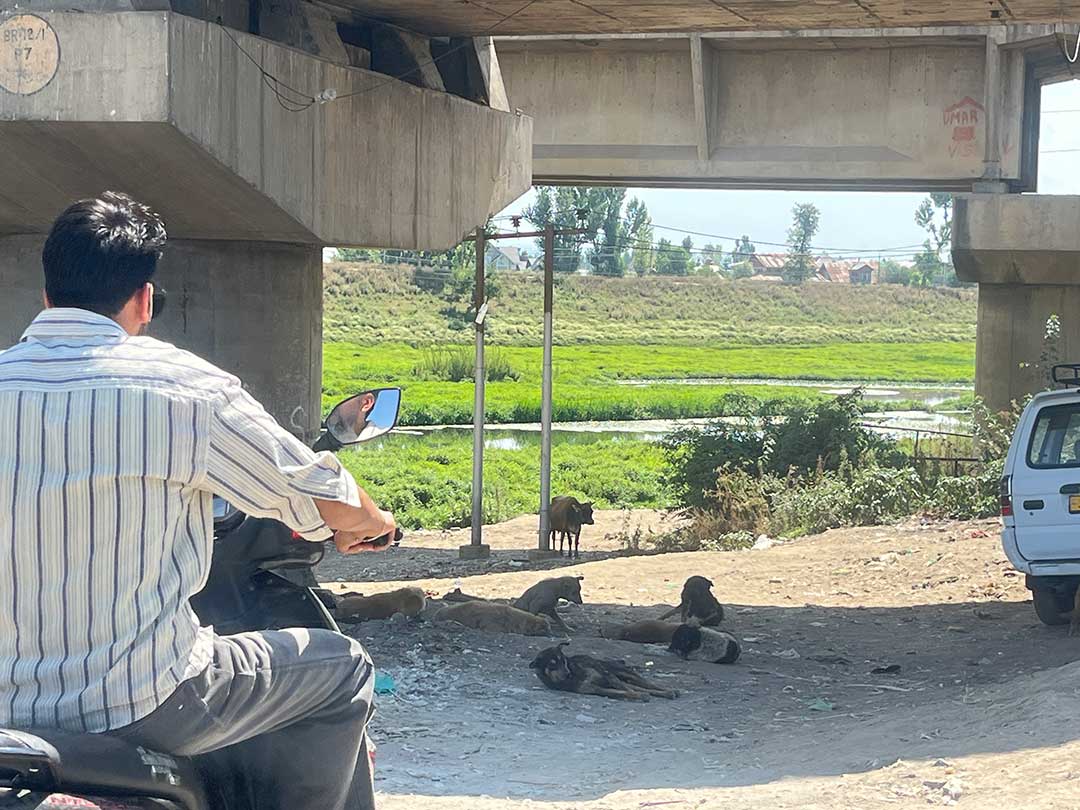
Though bite cases are soaring in Jammu and Kashmir following an unchecked surge in the stray dog population, the region appears to be doing well at administering post-exposure prophylaxis, which includes vaccination, wound washing and rabies immunoglobulin. Between 2022 and 2025, Jammu and Kashmir recorded zero official human rabies deaths, despite notching up 212,968 dog-bite cases.
Credit: Athar Parvaiz
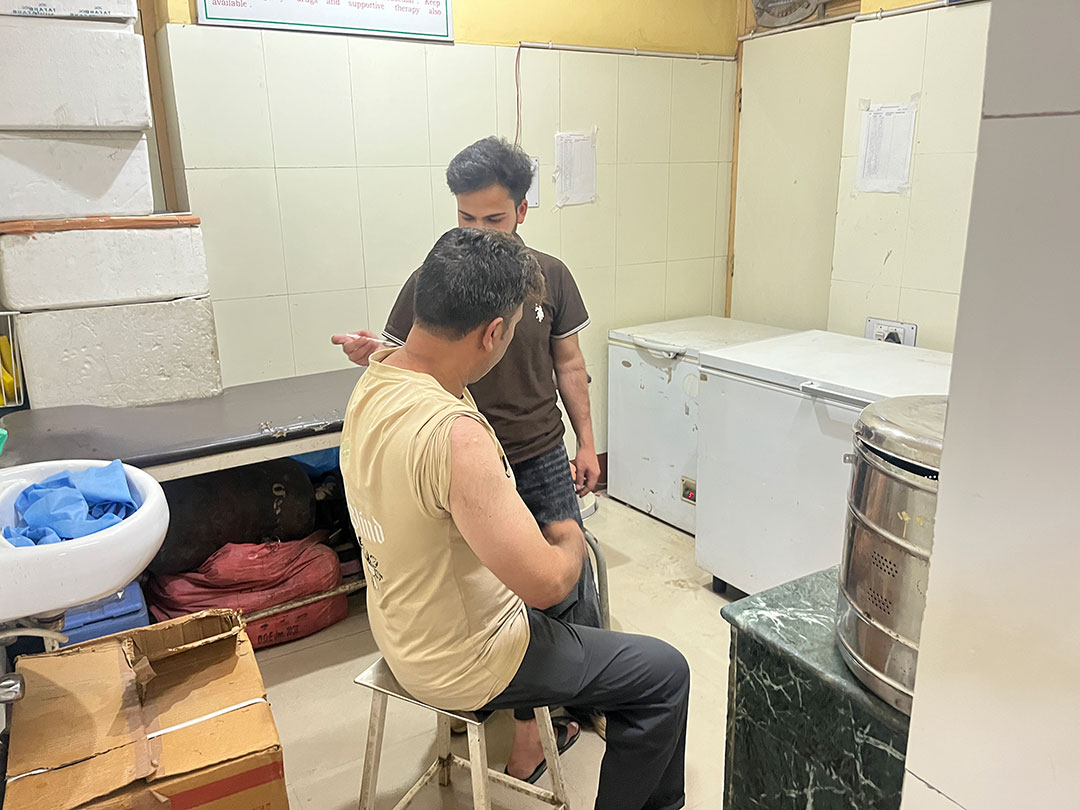
“Public awareness about the consequences of dog bites and importance of vaccines is very helpful,” said one health worker in Srinagar. Another health official in Kashmir’s Shri Maharaja Hari Singh Hospital (SMHS) told VaccinesWork that they vaccinated 17,127 people with dog and cat bites at the hospital’s Anti-rabies Vaccination Centre between April 2025 and March 2026 alone.
A rabies scare: “Give me the shot”
Dog bites and scratches account for 99% of human rabies cases worldwide – but it’s not the only possible route of transmission. Outlier events can keep the public health system on its toes.
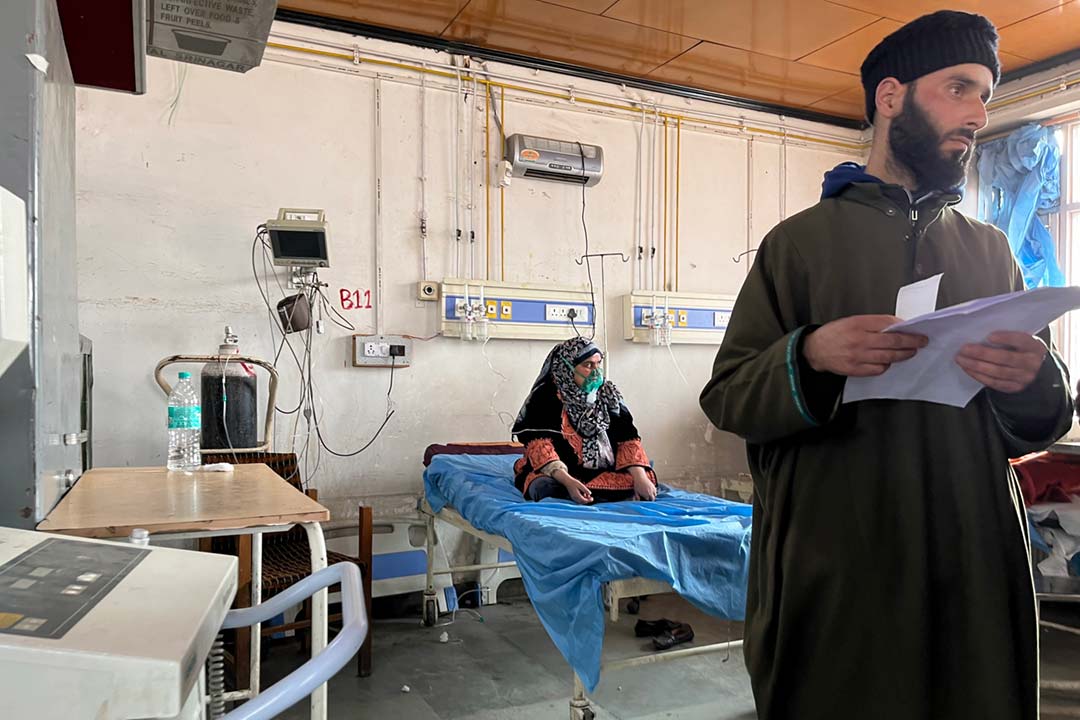
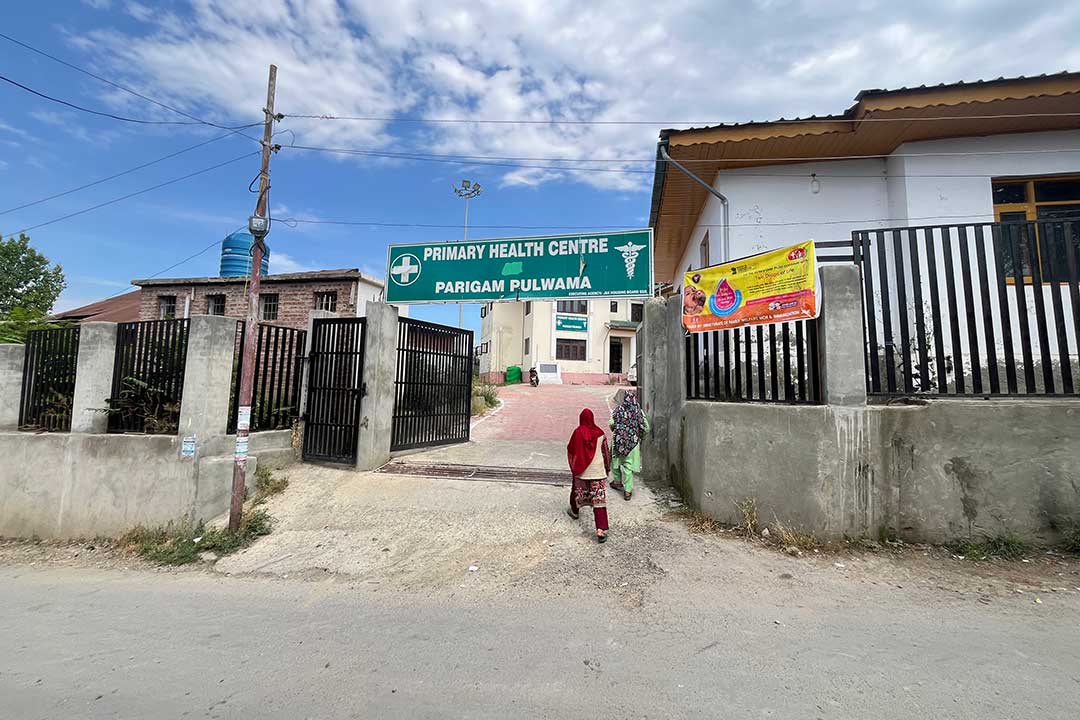
On May 14, an incident of people handling and later eating the meat of a dog-bitten cow forced hundreds to line up for anti-rabies shots within hours at the Primary Health Centre (PHC) of south Kashmir’s Parigam village.
“The moment we learned about people handling the dog-bitten cow, we activated the standard response protocol, as people started reporting at the hospital when 20 hours had already passed,” said Dr Yaqoob Khan, Community Health Officer (CHO) at PHC Parigam.
Have you read?
“Actually, the villagers had learnt a day after consuming and handling the meat that the cow was bitten by a dog following the seizure of the beef-dealer’s shop, who had sold the meat of the dog-bitten cow, by police,” Khan said. He added that by then, 20 hours had already passed.
“So, for us, it was a race against time, as our protocol says that vaccination has to be started within 70 hours for the suspected rabies cases,” he said. “We had only a narrow window to identify the suspected cases and administer the vaccine,” Khan told VaccinesWork. But widespread public awareness of the risk of rabies was on health workers’ side: “Within no time, anxious residents streamed into the hospital, urging the hospital staff to administer vaccines to them immediately.”
Abdul Rashid, a local resident of Parigam, explained: “The word had travelled via social media that whosoever has handled or eaten the dog-bitten meat can die of rabies if not vaccinated on time.”
The next challenge: supply
Although rabies is a uniquely deadly virus, its mode of transmission is relatively cumbersome, and large outbreaks of human rabies are unheard of in history. That means few health systems are prepared for sudden spikes of demand for post-exposure prophylaxis.
According to Khan, there were only around half a dozen anti-rabies vaccine vials in stock at the PHC. Staff also ran short, and Khan said his colleagues summoned staff from different locations to help handle the emergency. The villagers, meanwhile, were scared and grew fractious.
Credit: by Athar Parvaiz
Zonal Medical Officer (ZMO), Jureeda Qayoom said, “One of them accused us of being in league with the person alleged to have sold the dog-bitten meat that sparked the entire episode.”
Thankfully, the Block Medical Officer was able to quickly get more vaccine in stock and Khan’s team vaccinated 369 villagers.
Rising dog bites, immunisation and animal birth control
Experts say that it is impossible to minimise or control incidence of dog bites unless the problems of waste mismanagement and dog population growth are addressed.
An official of the Srinagar Municipal Corporation, who spoke with VaccinesWork anonymously, acknowledged that waste mismanagement remains a huge challenge in Srinagar. “The fact remains that the stray dogs feed mostly on garbage, which often stays neglected most of the times,” the official said.
Mohammad Iqbal Pandit, head at the Department of Community Medicine, Government Medical College (Srinagar), said the growing stray dog population has become a daily ordeal for residents, especially for children.
However, he reiterated that the vaccine was an effective bulwark against disease transmission: “It is virtually impossible for rabies to develop if a person reports to a hospital promptly and receives post-exposure prophylaxis,” he said.
But the vaccine remains a reactive measure. “Vaccination only addresses the aftermath of dog bites. The long-term solution is to reduce the stray dog population through effective animal birth control,” he said.
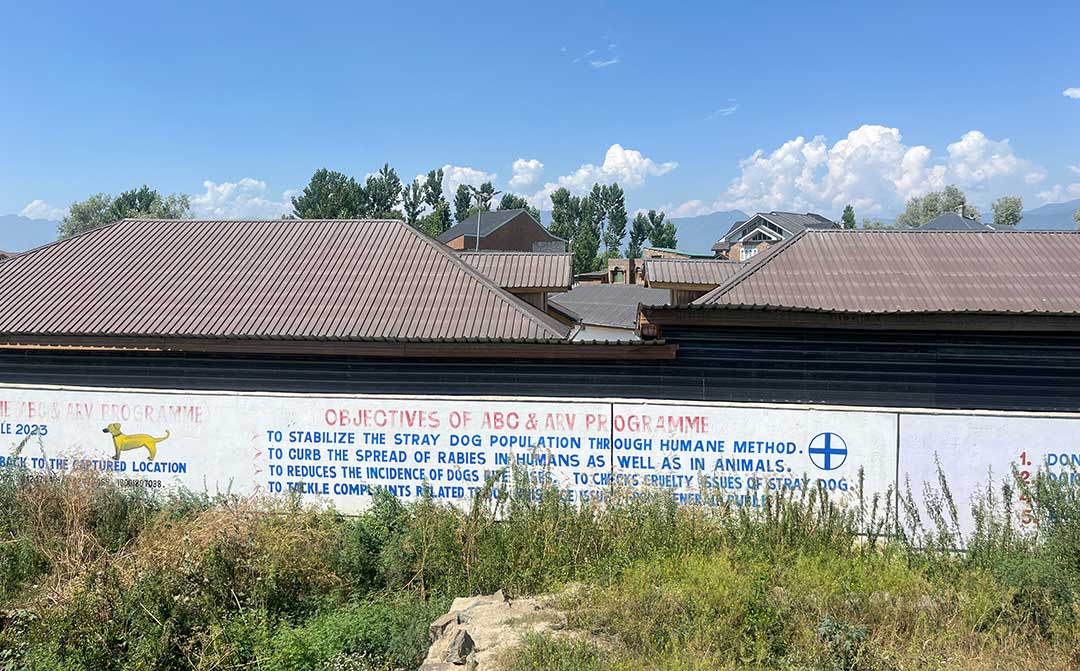
He said that although sterilisation programmes have been running for some years at two ABC facilities, their scale remains far below what is needed.
“The sterilisation capacity has to match the size of the stray dog population. Unless the programme is expanded significantly, the problem will continue to grow,” Hakim Ather, an associate professor at the Division of Veterinary Surgery and Radiology at Sher-e-Kashmir University of Agricultural Sciences and Technology (SKUAST), told VaccinesWork. He added: “More importantly, the process of sterilisation has to be sustained.”
A memorandum of understanding between SKUAST and Srinagar Muncipal Corporation providing for a sterilisation programme has reportedly been allowed to lapse.
More from Athar Parvaiz