
World’s most mosquito-bitten district records sharp drop in hospitalisations since malaria jab
Apac, in northern Uganda, is infamous for its record bug-bite rate. But early indicators suggest that the new vaccine is blunting the severity of the malaria infections the mosquitoes are spreading.
- 30 July 2026
- 7 min read
- by John Agaba
At a glance
- The people of Apac are the most mosquito-bitten in the world. But a year after the introduction of a new vaccine, malaria, the deadliest of the mosquito-transmitted diseases, appears to be in retreat here.
- The monthly average number of children hospitalised with severe malaria is down 63% in Apac. Nationwide, nearly 52,000 fewer children under age five suffered a bout of severe malaria in 2025–2026 than in the year before.
- But health authorities say that getting children to complete the vaccine series remains a challenge, with only about 20% of children receiving dose four.
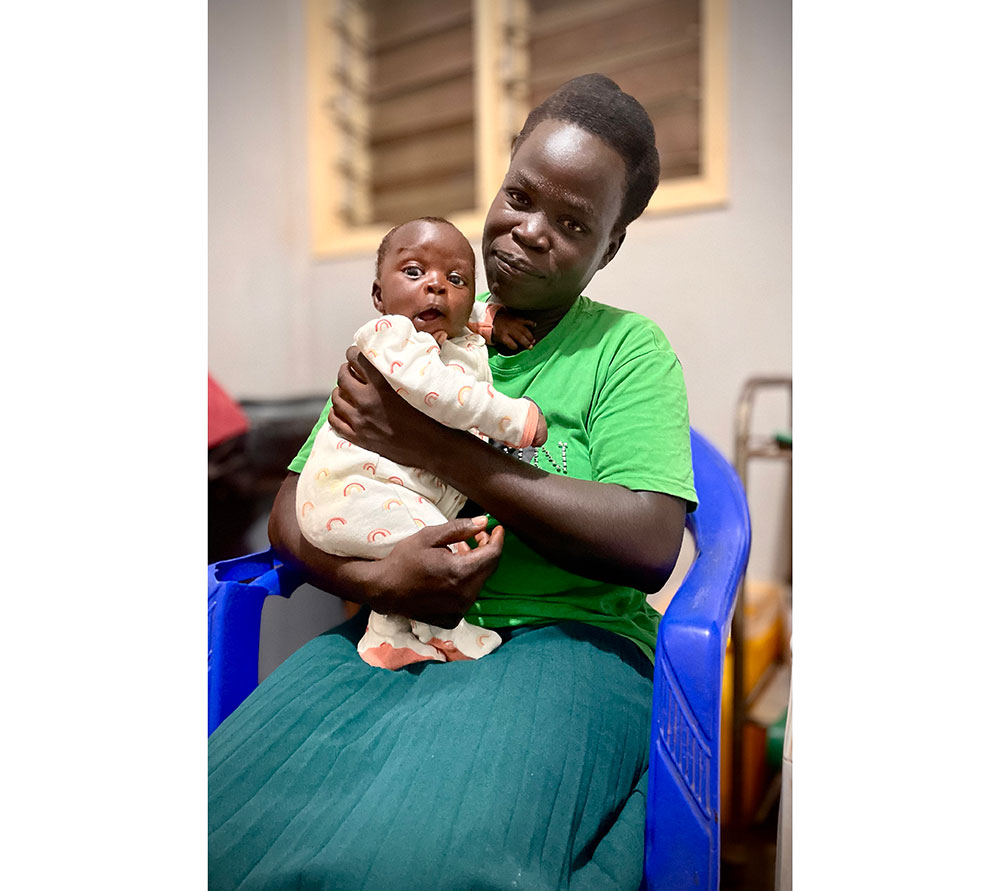
In Apac, northern Uganda, Sarah Among had just put out her small kerosene lamp to go to bed when she noticed her youngest daughter had developed a burning fever. The child began to cry and seemed unable to stop.
Among, a mother of three, immediately suspected malaria. Bad memories stirred up a feeling of dread. She had nearly lost one of her older children to the disease after delaying taking him for treatment. By the time he was hospitalised and tested positive for the mosquito-transmitted parasitic infection, he had begun to vomit and convulse incessantly. Doctors had resorted to blood transfusions to keep him alive.
Credit: John Agaba
So, Among relit the kerosene lamp, dug out her patient record book, strapped the baby onto her back, and stepped out of the small circular house into the night, her husband following close behind.
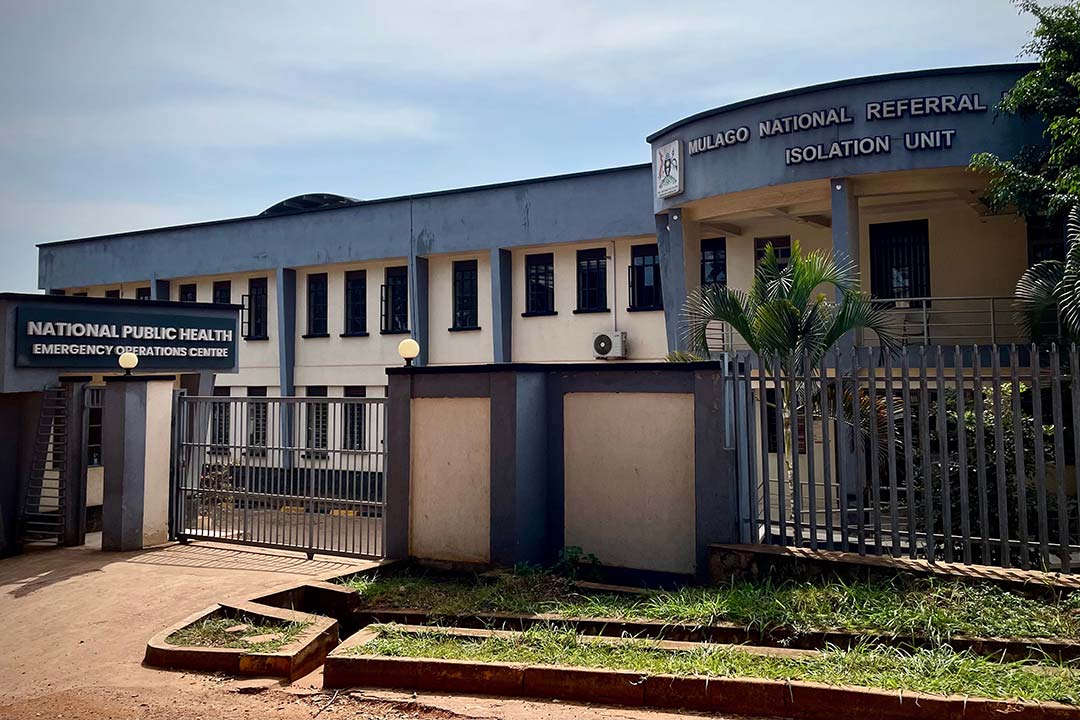
But when Among got to Apac General Hospital about two hours later, doctors told her that her baby’s case was mild. Yes, the girl had malaria. But doctors could manage it with simple treatment of Coartem pills.
It was at this point that the woman remembered that health workers had vaccinated her little girl to protect her against severe malaria the previous year. A smile spread across her face.
Still bug-bitten, but less at risk
Apac is infamous for having the highest entomological infectivity rate (EIR) in the world at 1,586 infectious mosquito bites per person per year. But the malaria vaccine – first rolled out in Uganda in April 2025 – has been helping reduce the scale and intensity of the infections linked to all those bug bites.
Indeed, hospital records show severe malaria cases in children under age five in the district have decreased from a monthly average of 168 cases down to 62 cases in the year since the vaccine was introduced. That represents a 63% drop.
Have you read?
Beyond Apac, severe forms of malaria in under-five children in the country as a whole have dropped from 304,718 to 252,896. Malaria-related deaths in that youngest age group have fallen from 1,262 to 1,042 in the same period, according to figures supplied by the Ministry of Health.
“Although we’ve not done a study, when we look at the data, it suggests that the vaccine has helped to reduce severe malaria [cases] and hospital admissions in under five children in Apac,” said Samson Ongebo, a biostatistician for the district. “We think that the vaccine has eased our numbers because other interventions, such as use of bed-nets and indoor residual spraying, have remained constant.”
These reductions have alleviated the disease’s burden on parents, communities and health facilities in the country, he said.
A big, but falling, burden
“Malaria is a big burden in Uganda,” said Dr Elizabeth Kaijuka, the malaria vaccine focal person at the Uganda National Expanded Programme on Immunization (UNEPI). “In some high transmission areas, between 451 to 650 individuals out of every 1000 have the malaria-causing parasite.” In Apac, as many as 651 individuals per 1000 – almost seven people in every ten – who present with common symptoms like fevers and headaches will test positive for the disease.
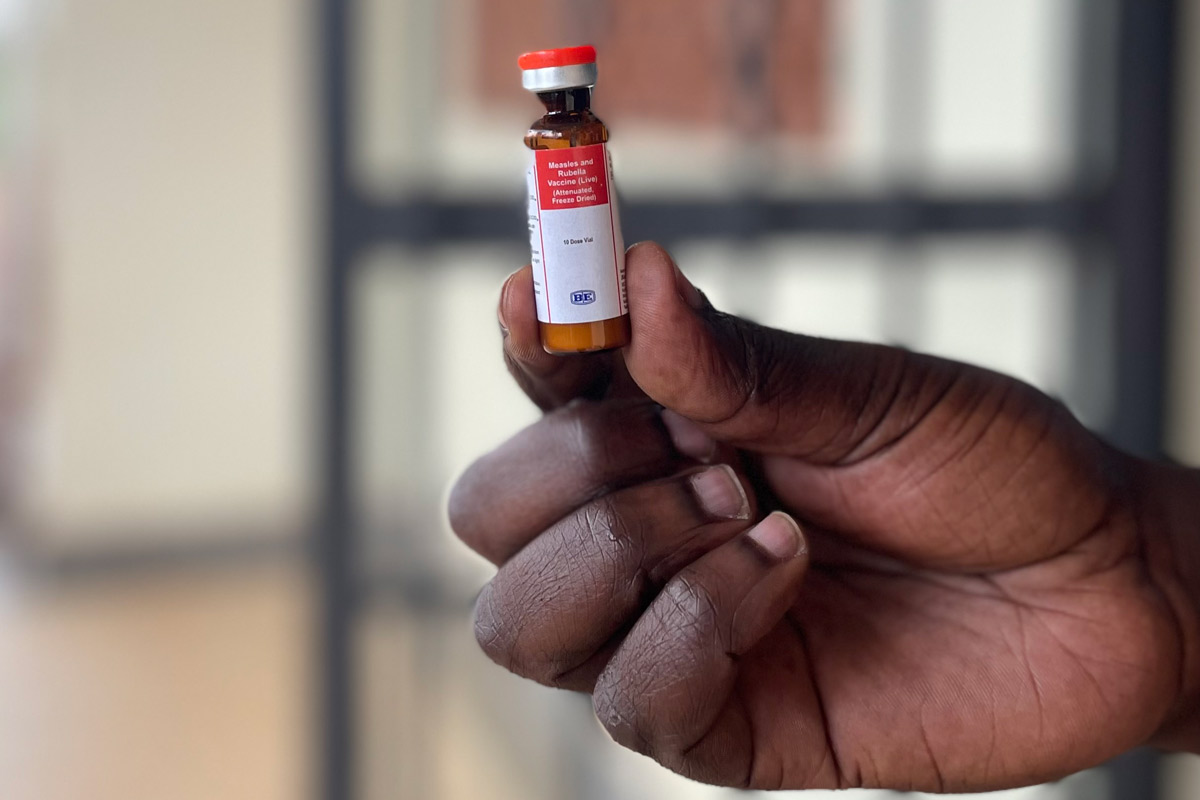
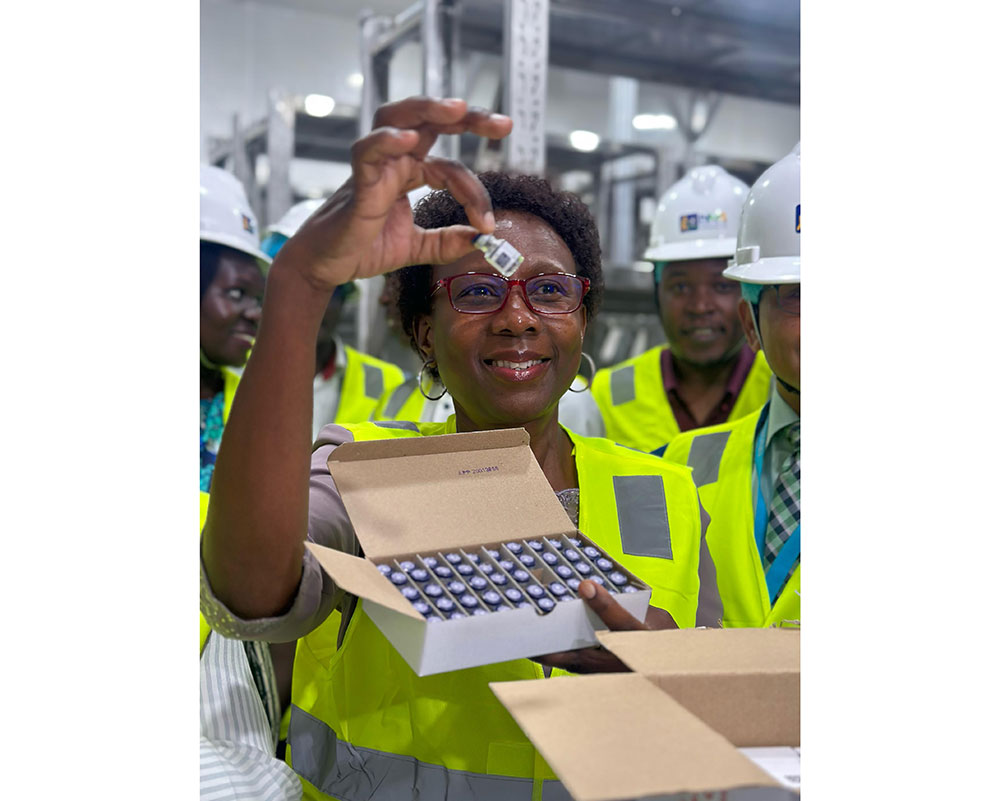
But with support from Gavi and partners, the country distributed just under 2.3 million doses of the R21/Matrix-M vaccine in April 2025, with an initial goal of reaching 1.3 million children under two years in 105 high and moderate transmission districts across the country.
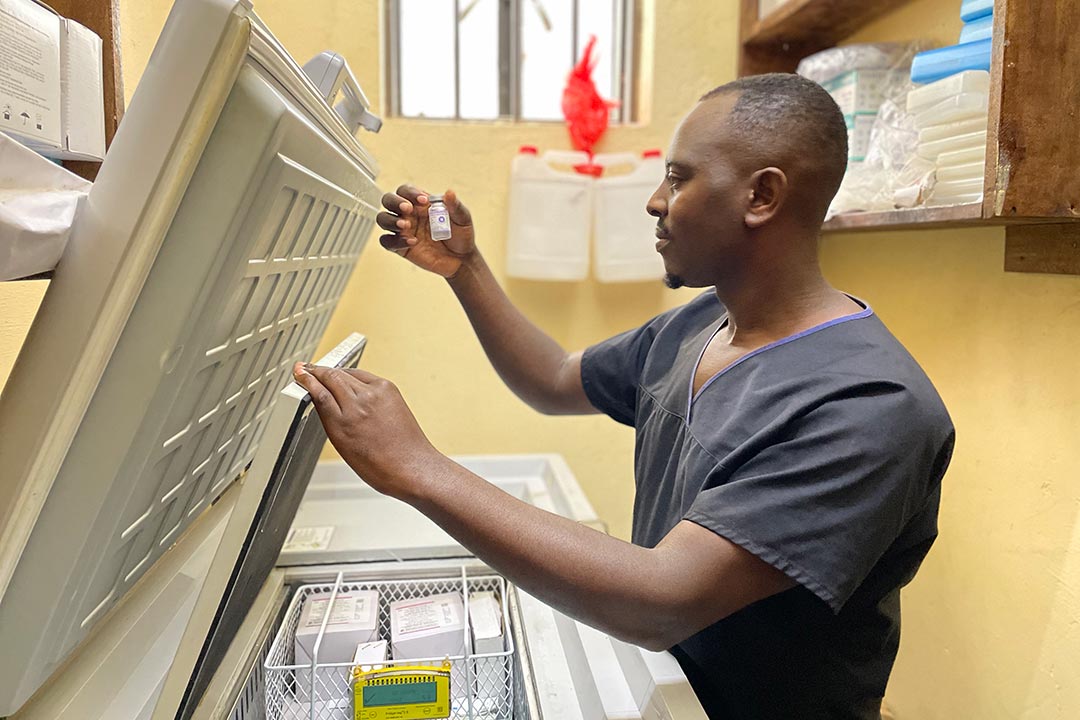
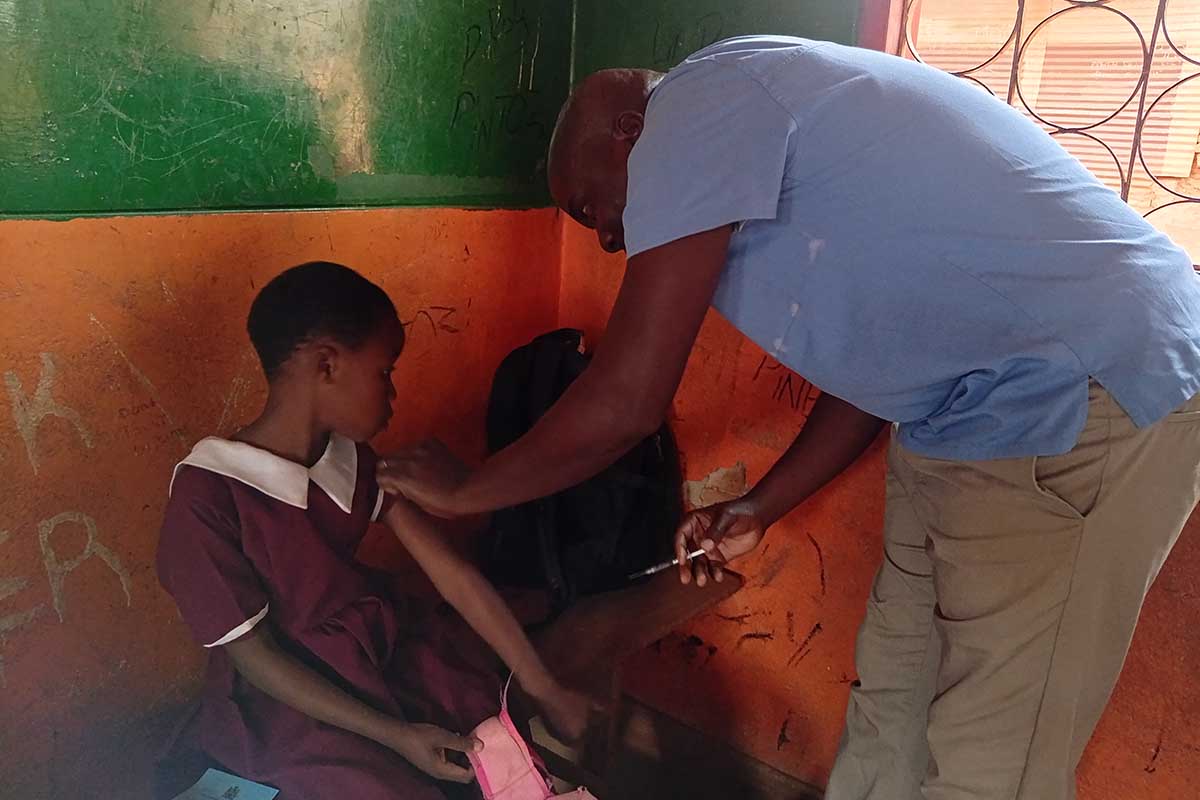
Since April 2025, the country has distributed a total of 5.1 million doses of the four-dose vaccine and reached at least 1.4 million children, said Kaijuka. The country has also integrated the vaccine into its routine immunisation schedule, which means nurses at each of the districts’ vaccinating health facilities will be able to administer the shot alongside other antigens when a child reaches the age of eligibility.
Credit: Path Uganda
Health workers say that the vaccine has landed as a relief. “Managing kids with severe malaria can be complicated,” said Dr Tonny Ebong Ogwal, head of the paediatric ward at Apac General Hospital. “That is because they present with a myriad of symptoms, including seizures, respiratory distress and extreme physical weakness. So, you have to admit the child, put them on a drip, and use quinine, artesunate and other treatments to manage all of these symptoms.
“When it is severe malaria, ordinary Coartem [a first-line malaria treatment] will not help,” he said. “It is worse when the kids have blackwater fever or sickle-cell disease. Then, you may need to transfuse the child and give them red blood cells.”
But in the last year, the strain has eased off. “Before the introduction of the vaccine, we registered lots of kids with severe malaria, sometimes more than ten cases a week,” he said. “Today, we are registering maybe one or two cases a week.”
Household financial health benefits, too
The reductions have also helped to alleviate the burden of malaria on the community, helping families to reduce out-of-pocket expenditure on treatments.
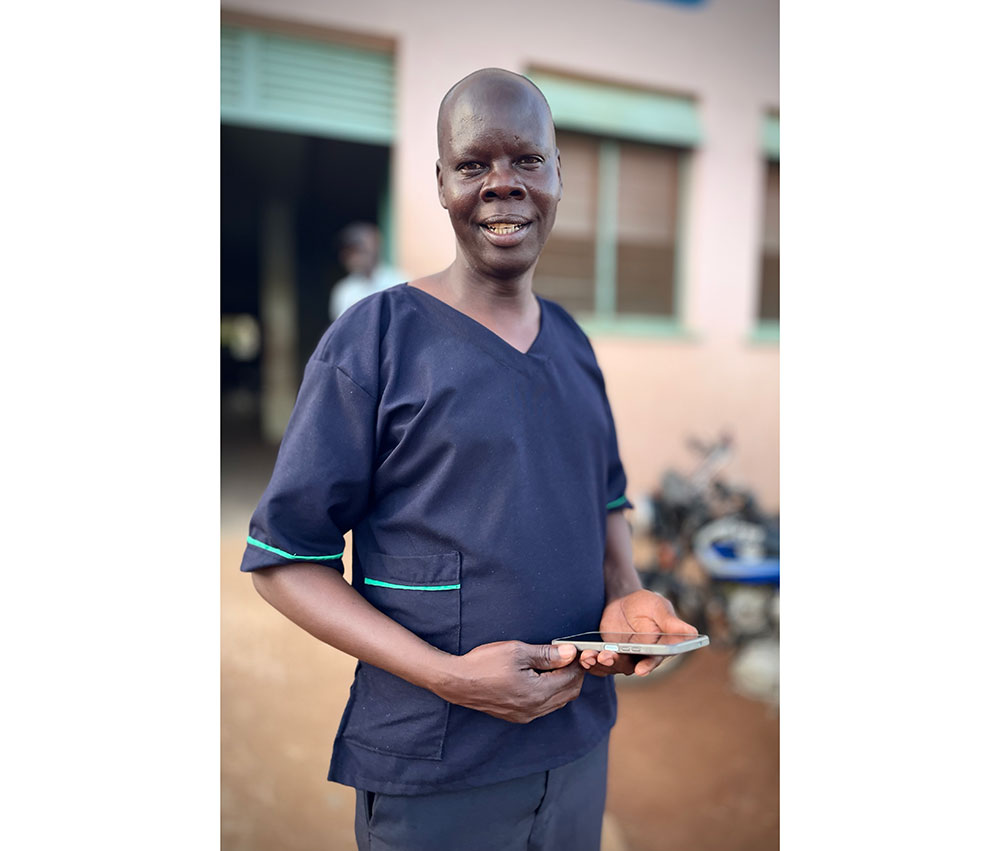
“Ordinarily, families spend between 10,000 Ugandan shillings [US$ 2.66] and 20,000 Ugandan shillings [US$ 4] to treat malaria. But that is when we are talking about simple malaria cases,” said James Ogwang, nurse and community leader in Apac. “When it is complicated [malaria] and doctors have to transfuse a child, then we are talking millions,” he said. “Some people have sold land to treat severe malaria. So, it is a good thing if the vaccine has reduced severe malaria cases.”
Credit: John Agaba
The early signs are promising, but Kaijuka cautions that it’s too soon to pin down the exact impact of the vaccine. UNEPI will assess the vaccine’s actual effect in a study, planned for later this year. Meantime, her team continues to train cultural leaders and community health workers to encourage parents to take children for the jabs to maximise the vaccine’s potential results.
“When we look at the vaccine’s coverage, we have high dropout rates especially between dose three and four. Coverage for the first dose stands at [around] 100%, then at about 70% for the second dose, but it drops to about 40% to 50% for the third dose and to about 20% for the fourth dose,” she said. “Yet, children need all four doses [at 6,7,8, and 18 months] for protection.”
She said that her team has integrated outreach platforms to address these gaps in remote areas. “The plan is to reach every eligible child,” she said. “We want to reach every child that is below two years in the 105 high and moderate transmission districts.”
The vaccines aren’t working alone, she emphasised. Kaijuka said that they were prioritising a combination of prevention initiatives, including the use of treated mosquito nets, integrated community case management of malaria, and seasonal chemoprevention to reduce transmission, severe cases and malaria fatalities.
Back in Apac, Among held her baby close to her chest, waiting for the doctor to discharge them. She was glad that she had heeded the call and taken the girl for vaccination when health workers had come calling. She was glad that her daughter would be fine.
She was glad that soon she would be returning home, instead of spending more sleepless nights in hospital.