
Could a new oral rabies vaccine help us finally end the disease?
A new dog vaccine for rabies can be tucked into a bait and eaten, making it much easier to protect street dogs.
- 29 January 2026
- 4 min read
- by Priya Joi
At a glance
- Rabies still kills tens of thousands of people each year, mostly in Africa and Asia, with almost all human cases traced back to dog bites.
- A study published in PLOS Neglected Tropical Diseases finds that SPBN GASGAS, an oral rabies vaccine hidden in edible baits for dogs, appears safe for animals and humans even if people come into contact with the vaccine virus.
- Used alongside injectable vaccines, oral rabies vaccination of free-roaming dogs could help countries reach herd immunity thresholds and finally eliminate dog-mediated rabies.
A new study suggests that a dog vaccine delivered in a bait that the dog eats, rather than a syringe, could be an important tool in finally driving dog-mediated rabies to zero.
For decades, oral rabies vaccination has been critical in wildlife rabies control, helping to eliminate the disease in foxes and raccoons across large swathes of Europe and North America.
However 99% of human deaths from rabies are linked not to wild animals, but to dogs.
To fix the problem at its source, Ceva Sante Animale, a France-based animal health pharmaceutical company, has registered the oral rabies vaccine for use in street dogs that cannot easily be caught and injected.
In PLOS Neglected Tropical Diseases, Dr Gowri Yale, Global Rabies Programme Director at Ceva Santé Animale and colleagues present a comprehensive human safety assessment of SPBN GASGAS, a third-generation oral rabies vaccine designed specifically for dogs.
The team pulled together three decades of laboratory, regulatory and field data to show that if people come into contact with the vaccine virus, either through a leaking bait or a recently vaccinated dog, there are no safety concerns.
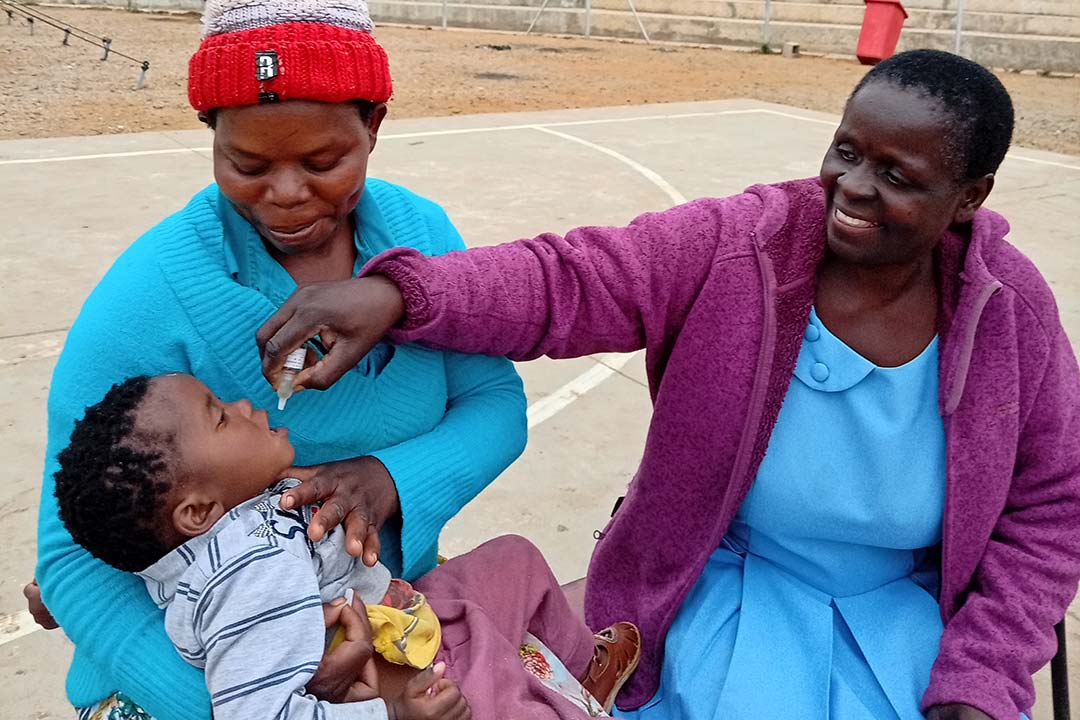
Rabies is a serious public health problem in Africa and Asia, where it causes tens of thousands of deaths every year – 40% of which are in children under 15. Once the symptoms of rabies start, it is fatal in virtually 100% of cases.
Yale is optimistic about the potential impact. Oral vaccines can “increase coverage with ease and quickly without chasing dogs.”
Delivering them doesn’t require technical expertise or extensive training, as anyone can be trained to vaccinate dogs with oral rabies vaccines within a day or two in the field, she adds.
“Additionally, oral rabies vaccines provide very long-lasting immunity, adding to maintenance of herd immunity, making elimination achievable. This helps countries more reliably reach the critical 70% immunity needed to interrupt rabies transmission.”
Testing safety
SPBN GASGAS is a genetically engineered descendant of the long-used SAD B19 vaccine strain, modified to prevent the virus being harmful.
In extensive testing across target species such as dogs, foxes and mongooses, as well as non-target species from cats to skunks and swine, no serious adverse events were observed, even when animals received an overdose, repeated doses or different routes of administration.
Studies also found the vaccine is not actively shed in the vaccinated animal and isn’t spread beyond the entry site. Furthermore, there is no transmission from vaccinated pregnant animals to their offspring.
Because live, replicating vaccines can theoretically mutate back towards virulence, the team repeatedly grew SPBN GASGAS in cell culture and in highly susceptible mouse brain tissue, followed by whole genome sequencing.
After testing this five times, the critical mutations remained stable, and no reversion to virulence was seen when the virus was injected into adult mice.
To understand what would happen if immunocompromised people (such as someone undergoing cancer treatment) came into contact with the virus, the researchers tested this in immunocompromised mouse models.
The vaccine proved safe when given orally or subcutaneously, causing disease only when it was injected directly into the brain of these animals – an extreme exposure route that does not reflect field use.
Have you read?
The final mile
As the oral rabies vaccine has already led to the elimination of wildlife-spread rabies in Europe and North America, the potential for eliminating dog-mediated rabies in low and middle income countries is huge, says Yale.
“If the oral rabies vaccines is rolled out at a scale alongside existing tools, the problem is solved – rabies is removed at its source, which is free-roaming dogs.”
Although oral rabies vaccines are more expensive per dose than injectable vaccines, this cost is more than offset by lower operational costs: injectable campaigns require large teams, trained staff to safely restrain and vaccinate dogs, and vehicles to transport people and equipment.
In contrast, says Yale, oral vaccination can be delivered by small teams, often just two people on a motorbike, without the need for dog handling or advanced technical skills.
How vaccine baits are deployed matters. The authors suggest a “hand-out and retrieve” model – in which trained teams directly offer baits to dogs and collect any leftovers – as the lowest-risk approach for human contact, compared with distributing baits to owners or scattering them in the environment.