
A spoonful of sugar: how a Zimbabwe sugar producer is helping beat back cervical cancer
Sugar giant Tongaat Hulett has reach, influence, and its own health workforce. Recently the company has stepped up to partner with the Ministry of Health and boost national cervical cancer efforts.
- 4 June 2026
- 6 min read
- by Progress Mwareya
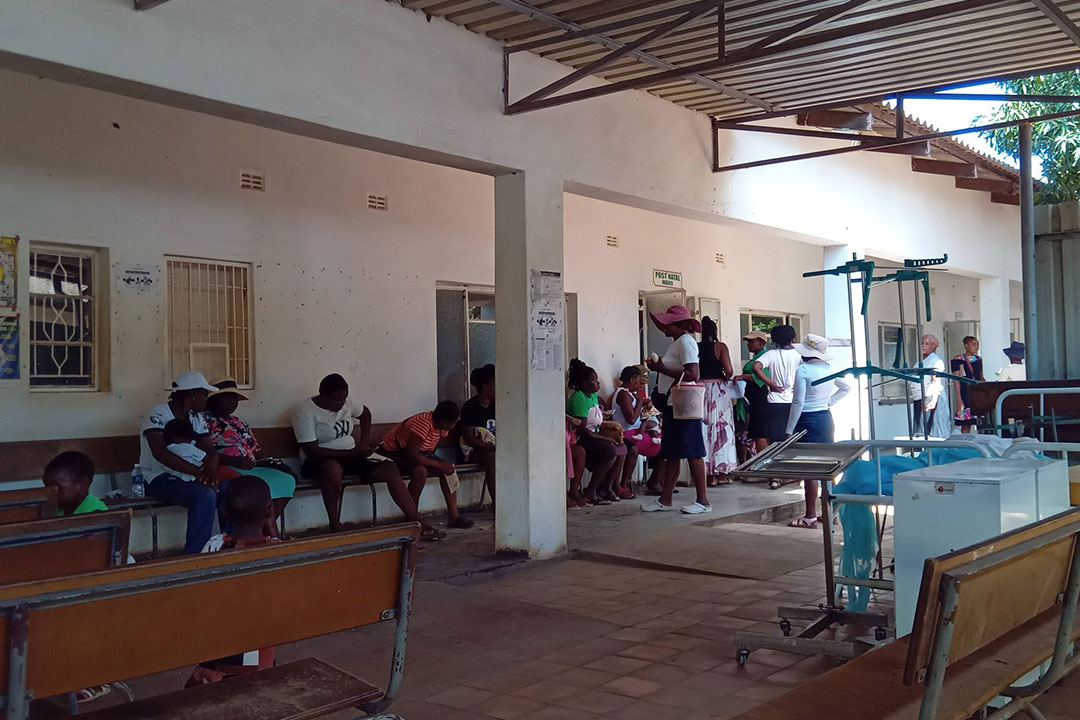
When hundreds of women in Chiredzi, a semi-rural part of south-eastern Zimbabwe well known for its sugarcane fields, lined up for a cervical cancer screening campaign in January, it seemed to prove that the messenger mattered quite as much as the message.
The campaign had been announced in communities by its co-organiser, the country’s oldest and largest sugar-producer, and the region’s major employer. Tongaat Hulett Zimbabwe, a subsidiary of the South African agriculture and agriprocessing company, had partnered up with Zimbabwe’s Ministry of Health and Child Care (MoHCC) to help advance preventive efforts against cervical cancer, in an innovative alliance that put the corporation’s influence at the last mile to public health use.
Dahlia Garwe, the firm’s head of corporate affairs, said the campaign aimed to alert women to the need for Pap test screening, and to let them know that referrals for colposcopy, biopsies and possible surgical management at referral facilities would follow if abnormalities were found.
“The recent cervical cancer screening initiative conducted in Chiredzi marked the first time the programme was implemented in direct partnership with the MoHCC at a town level,” she said, meaning that the push included any eligible woman, not just women in the employ of the company.
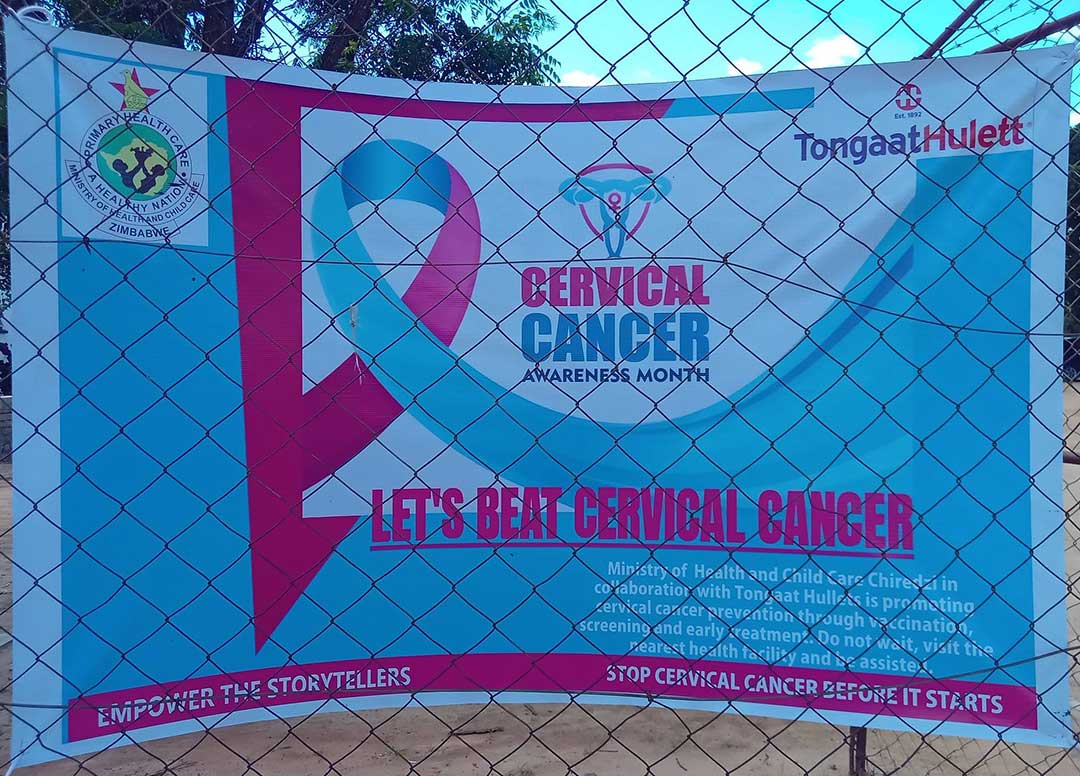
Credit Zimbabwe health ministry
Tongaat Hulett has been running an internal cervical cancer screening programme across its sugar estates mainly for its employees and their families for about the last ten years, Garwe said. Roughly 1,030 women are employed by Tongaat Zimbabwe, with women representing approximately 7% of the total workforce.
The purpose of the ongoing collaboration with the government is to reach a broader segment of the community. Tongaat Hulett’s part is to provide more or less everything but the vaccines – transport and logistical support for outreach teams, medical consumables and screening materials, as well as healthcare and clinical personnel to support screening services and deliver health education and awareness campaigns within communities.
“Bombarding” the masses with information
Major employers like Tongaat Hulett often have extensive healthcare infrastructures of their own, based on the rationale that keeping the labour force fit means maximising productivity. The sugar producer’s health apparatus is centred on the Hippo Valley Estates Medical Centre, a 50-bed hospital serving both employees (for free) and the surrounding community (for a small fee). Immunisation services deploy vaccines provided by the government, and are free-of-charge across the board.
In addition to the 162 healthcare workers in the Hippo Valley section, the company also employs dozens of community health workers who work with communities living around its further-flung plantations and mills.
That means the company’s potential public health reach is colossal. While Tongaat directly employs 14,000 and 16,000 people in Chiredzi, Chiredzi District as a whole is home to 300,000 residents.
Have you read?
Edina Rukuni, a nurse who is the Maternal and Child Health Lead for Tongaat Zimbabwe, took part in the January screenings. On this occasion, she recalls, the entire healthcare team brigade did screening for cervical cancer focusing on Tshovani, the most populous low-income township of the Chiredzi, in partnership with Zimbabwe’s health ministry teams.
“It was an idea to bombard the town – so we help as a backup of the ministry to bring numbers to HPV awareness. We also used equipment from us, manpower from us, so we can reach so many women. When we do HPV work here in Hippo Valley, we do it at Tongaat company’s health facilities. In this one, we did at the government polyclinic,” she says.
“We screen all. If we detect the presence of cervical cancer, we then refer them to government-run public hospitals where surgeons take over patient management,” she adds.
PPPs
In Zimbabwe, the government steers public healthcare, but in delivery, the government is supported by a web of partners.
That’s true of the national cervical-cancer-preventing human papillomavirus (HPV) vaccination programme, which kicked off in 2018. The government provides primary healthcare infrastructure – facilities and clinical personnel – while big donors like Gavi and UNICEF finance vaccine doses and contribute to delivery costs.
Tongaat Hulett is not the only large corporation to step up and lend their muscle to the effort. Telecoms giant Econet has also stepped up, offering support for logistics and making free mass SMS messaging for cervical and breast cancer screening available in indigenous languages.
It also offers toll-free lines to medical facilities, so that women can freely call medical charities like Population Services Zimbabwe if they have concerns about risks of conditions like cervical cancer, diagnosis and treatment options. The telecoms provider has also joined hands with programmes carried out by organisations such as Cancer Association of Zimbabwe and Cancer Care Network Zimbabwe.
Other big corporate players like Zimplats – the largest miner of platinum group metals in Zimbabwe – also extend health screening support to their employees, contribute to the refurbishment of public hospitals, and further offer ad hoc support to the government to beat back diseases including HIV, cholera and cervical cancer.
“While the financial value of this support is not currently quantified as a single figure, (corporates) play a significant and sustained investment in community health systems and complements government-led programmes such as immunisation campaigns,” said Tongaat’s Garwe.
Caught in time
Macy Hofa, 34, from Hippo Valley, says she is grateful. She got treated after physical cell abnormalities and precancerous lesions were spotted during the screenings done by healthcare personal from Tongaat in 2023, she says, and is cancer-free today.
“It was my first time to hear of that (lesions and cervical cancer risk) – but my husband said we must consult prophets because evil spirits were afflicting me,” she says. Instead, she persisted with nurses’ advice, and was referred to a big state hospital where surgery was carried out on time.
“It went well – I’m a new mum again to a daughter whom I will take for HPV vaccination as soon as she is eligible. Tongaat healthcare workers came for me in a big way,” she says.
Hofa’s experience chimes with Sister Rukuni’s thoughts: that lower rates of what she says “health-seeking behaviour” is what leaves women in semi-rural districts of Zimbabwe at unnecessary risk.
“There is this social thought that ‘if I am not sick what the hell do I need to get tested for?’” she said of this phenomenon.
This is the reason why corporates like Tongaat have company community health workers who work hand-in-glove with state-employed community health workers, especially in farming districts, to send advance messaging to families via school kids of screening and vaccination sessions.
“We don’t just pitch up at random,” Rukuni says. “We work together: state village health workers and company-employed community health workers”.
Zimbabwe faces a severe cervical cancer burden – with 2,318 deaths recorded in 2023 according to the WHO Global Cancer Observatory, and the International Agency Research Center on Cancer.
The private sector’s central role in Zimbabwe’s immunisation drive is aligned with national strategies to decentralise healthcare delivery.