
The boat ambulances saving lives on Africa’s largest lake
Whether via emergency evacuation or outreach vaccination, Uganda’s boat ambulances are life-preservers for remote island communities.
- 18 June 2026
- 7 min read
- by John Musenze
At a glance
- A fleet of boat ambulances plying Lakes Victoria, Albert and Kyoga have been saving islander lives since 2022.
- Like many other Ugandan islands, Koome Island in Lake Victoria has limited health facilities. For pregnant women facing complications, evacuation to the mainland is the best bet. It used to be an hours-long, risky journey. Today, it takes about half an hour, under midwife supervision.
- When Koome’s ambulance boat isn’t speeding emergency cases to hospital, it’s helping get routine vaccines to fishing communities that are otherwise too easily missed out.
When 36-year-old Rebbecca Nabiryo began bleeding four months into her pregnancy, midwife Ruth Gokyalya was more worried than she would have been if they hadn’t both been located on an island in Africa’s largest lake.
Koome Island, home to Nabiryo, Gokyalya and the rudimentary facilities of Koome Health Centre III, lies about 35 kilometres southeast across the waters of Lake Victoria from Entebbe, and 55 to 60 kilometres from Mukono. A referral to the better-equipped Mukono General Hospital on the Ugandan mainland would typically have meant a trip by wooden dinghy for Nabiryo – but the following day was a Saturday, the boatman’s day off.

Credit: John Musenze
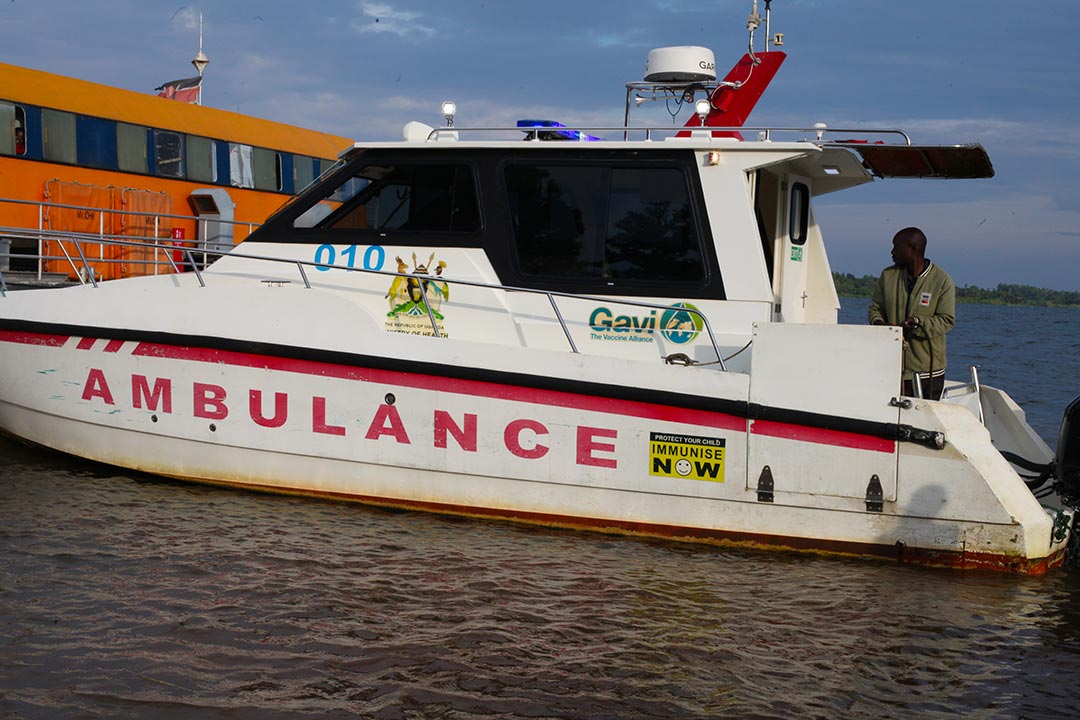
Just a few years ago, that would have meant it was time to seek passage on an ordinary fishing boat, an hours-long, uncomfortable and risky journey. But this was early June 2026, and she had a better fall-back. A boat ambulance stood moored in the bay, offering a lifeline to patients needing urgent care.
“This is my third time coming here to check on my pregnancy,” said Nabiryo. “Since morning I have been bleeding nonstop, so I came here, but the nurse can’t do much. I was on this island before that ambulance [existed]. I know mothers who died while giving unseen abnormal birth, but now they are referred to the main hospital,” she added.
“The challenge is that it is mostly reserved for the very sick. The rest of us still use ordinary boats, which are uncomfortable because you travel for long distances while sitting and without any health worker to monitor you,” she said.
Emergencies
For decades, families living on Uganda’s islands and water-locked communities found it hard to access healthcare, as water separated them from hospitals, making emergency referrals difficult and expensive.
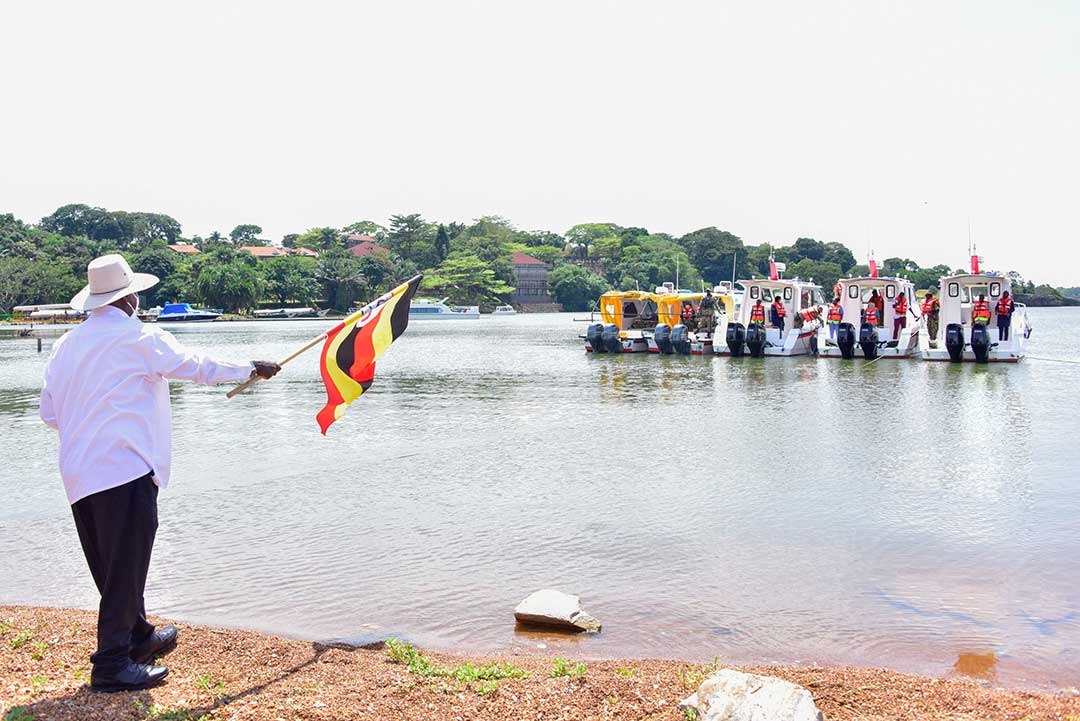
That changed on 20 May 2022, when the Ministry of Health, with support from Gavi and other partners, introduced a fleet of specialised water ambulances designed to better connect isolated communities living in Lakes Victoria, Albert and Kyoga to the national health system.
Credit: John Musenze
That included emergency dashes to the mainland hospitals, but the 12 state-of-the-art Type A double-engine boats commissioned by President Yoweri Museveni were also specifically tasked with supporting maternal health and immunisation outreach services in island communities.
According to Edward Kanakulya, the in-charge of Koome Health Centre III and coordinator of the boat ambulance, the service has dramatically improved the referral system for both expectant mothers and critically ill patients.
Credit: John Musenze
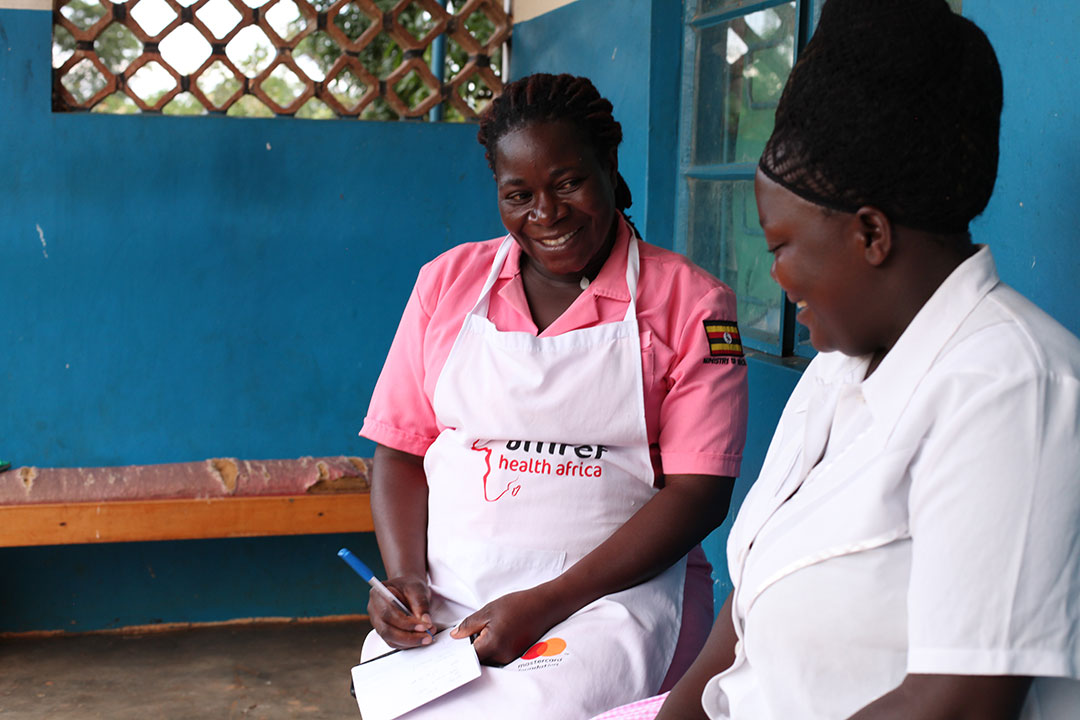
“Before we received the ambulance, we did not have a standard means of transporting patients, especially mothers who needed urgent referral. Now we can move them faster, more comfortably and together with a health worker, which was not always possible before,” Kanakulya said.
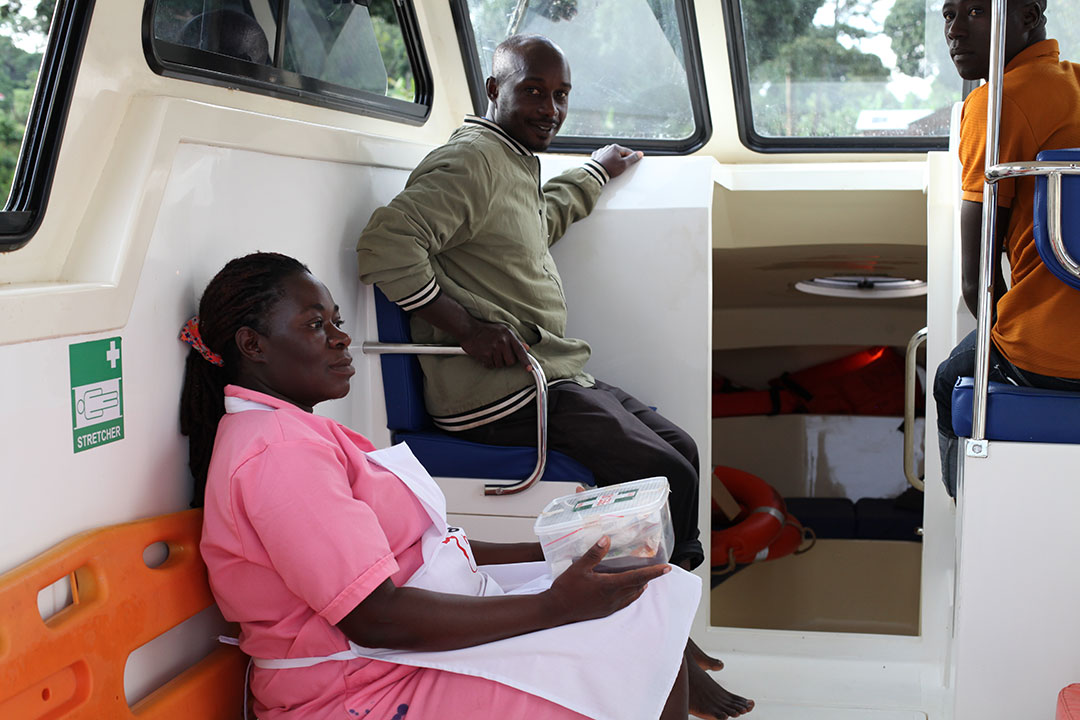
That health worker is often Gokyalya. The midwife explains that she splits her time between the maternity ward and the waters of Lake Victoria. She helps deliver babies at Koome Health Centre III, but since that smaller clinic does not even have an ultrasound scanner, she manages complications during emergency referrals across the lake to Mukono Health Centre IV.
“I have to be on standby 24 hours a day. [The boat is] my other working station. On a rare occasion it’s an accident on the lake, and sometimes it’s a mother with abnormal labour or another patient who needs immediate referral because there are conditions we cannot handle at a Health Centre III,” she said.
“We normally have about 70–90 mothers attending our maternity section, but nearly 45% of them are referred because of potential risks. Many of them have not had scans, so we do not always know exactly what we are dealing with,” Gokyalya explained.
Over the past four years, she says she has witnessed first-hand how the ambulance has changed lives and outcomes.
“I cannot forget the night I was called at 9pm to escort a mother who was having an unusual labour. It was late, and without the ambulance she could have died. With a few minutes to [go to] reach the referral hospital, she gave birth on the boat, and they were twins – though she was expecting one. She had only done two antenatals, but thankfully the ambulances normally have everything I need, and we were close to the hospital, so we found the land ambulance already waiting for us at the shores,” Gokyalya recalled.
Prevention
Kanakulya, the island’s Health Centre in-charge, clarified that the ambulance serves a catchment area comprising 30 villages, four parishes and four government health facilities within Koome Sub-county. It handles at least 40 maternal referrals in each four-month period.
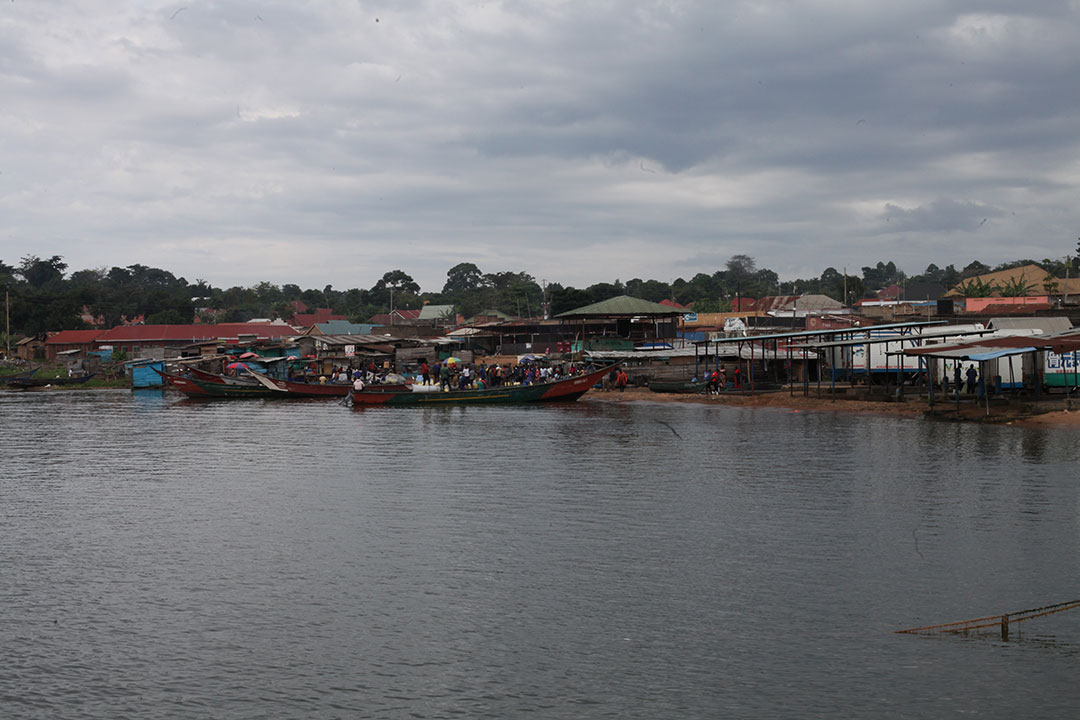
In between those runs to the mainland, Gokyalya and her facility team use the same vessels to reach fishing communities and remote landing sites – villages locally known as ‘camps’ – where children might otherwise miss routine vaccinations.
Credit: John Musenze
“I have travelled to different camps on the island to administer malaria and PCV vaccines. In the past, people either missed those services or had to come to the health facility themselves. So, since 95% are fishermen, they hardly give time to come to the facility. Now we go looking for them wherever they are on the island,” she said.
Koome Health Centre staff say that the ambulance has helped improve vaccine uptake, with Gokyalya estimating that across antigens, uptake has risen from the region of 40% among the island’s children, to above 75% for most recommended doses of the recommended childhood vaccines (the third dose of the malaria vaccine, she conceded, is lagging, with coverage in the region of 35%).
Carrying capacity
“The moment this ambulance starts the journey, it can reach the referral facility in about 20–30 minutes because of its double turbo engines. The boats we used before could take up to three hours depending on the type of vessel available. Patients travel with a health worker and arrive in a much better condition because they are monitored throughout the journey,” In-Charge Kanakulya explained. The boat also supports rescue operations during emergencies on Lake Victoria.
More referrals would be undertaken, he added, but fuel shortages frequently limit the number of trips the vessel can make, even as demand for its services continues to grow.
“That’s why we strictly focus on critical cases only which is about eight monthly. Other patients are advised to use other means of transport. One referral takes 80 litres [of fuel] – that’s to and from – which is a lot of money that’s not sent.”
Un-marooned
According to the Ministry of Health emergency department, Koome’s progress reflects a national transformation taking place across island and water-locked communities.
According to Eng. John Paul Ssempebwa, an Automotive Engineer at the Ministry of Health, the water ambulances have significantly improved access to emergency referrals, maternal healthcare and immunisation services in several of the country's most isolated regions.
The boats have reduced referral delays, strengthened outreach services and brought under-served populations closer to the national health system.
Credit: MOH
“Before the water ambulances, a journey to hospital was often a gamble at the mercy of weather and waves. Today, the boats are helping to save lives, restore dignity and bring communities that were once left behind closer to the national health system,” Ssempebwa said.
He noted that Health Ministry currently operates 12 water ambulances stationed across 12 districts, covering 70% of Uganda’s priority water-locked populations.
Dr John Baptist Waniaye, the Commissioner for Emergency Medical Services said the programme has become an essential component of Uganda's emergency referral network and racks up more than 1,200 emergency evacuations annually.
“Most of the people transported are pregnant women experiencing obstetric emergencies and children requiring urgent care. We are strengthening the programme through increased budget advocacy for fuel and maintenance, while also working closely with the UPDF, police and other government agencies to ensure the boats remain operational. Our goal is to build a sustainable emergency medical transport system that leaves no Ugandan behind, regardless of where they live,” Waniaye told VaccinesWork.