
How four new motorbikes and a delivery of raincoats are curbing disease risk in hilly eastern Uganda
A large consignment of gear, including motorbikes, raincoats, portable camping tents and more, is making it easier for health workers to reach remote communities in Uganda with vaccines.
- 17 July 2026
- 6 min read
- by John Musenze
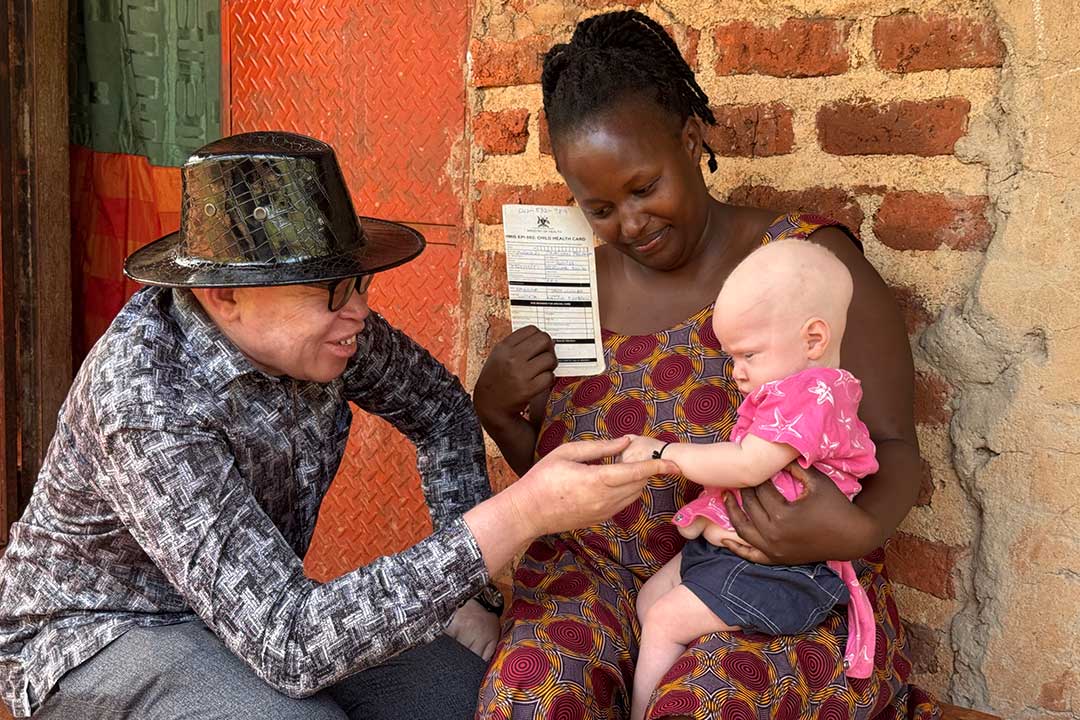
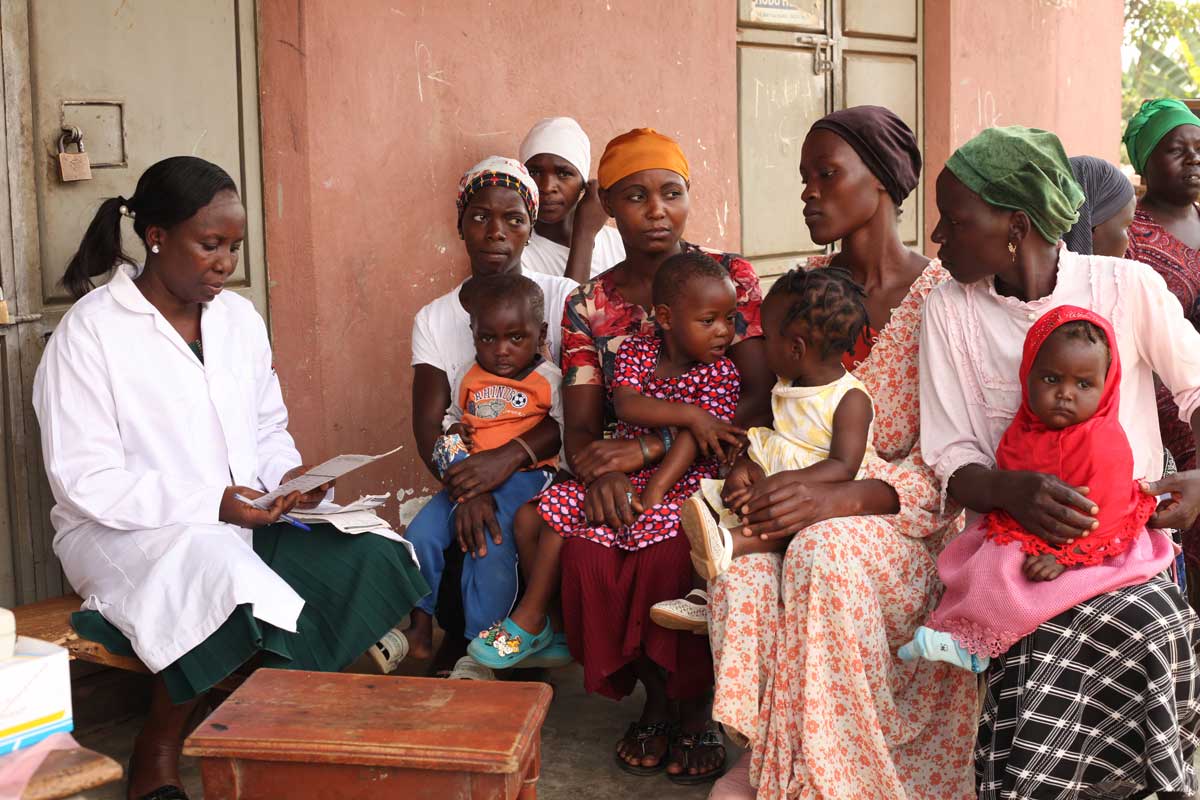
It costs Sumayiya Namboozo, from Webuta village in Mbale City, eastern Uganda, about US$ 30 to travel to and from the nearest health centre by motorbike taxi – a steep fee for an otherwise free vaccine. The alternative is to strap her child to her back and walk.
“If I decide that today I am going to the hospital, that means a full day is killed. But also, it’s risky and tiresome to walk for three hours with the baby on the back. Sometimes my husband will not allow me – that’s a fight,” Namboozo said.
Namboozo is far from the only parent for whom a vaccination appointment can feel like an odyssey. Access issues are one of the biggest drivers for under-vaccination in Uganda, and here, in the country’s hilly east, it’s plain to see why.
Mbale serves an estimated population of more than 400,000 people, with large proportions of that population living highly mobile lives, or in settlements perched on inclines or nestled in remote valleys. Although routine immunisation coverage remains relatively high region-wide, health authorities estimate that 4,000 children in harder-to-reach communities remain either completely unvaccinated or have missed critical follow-up doses.
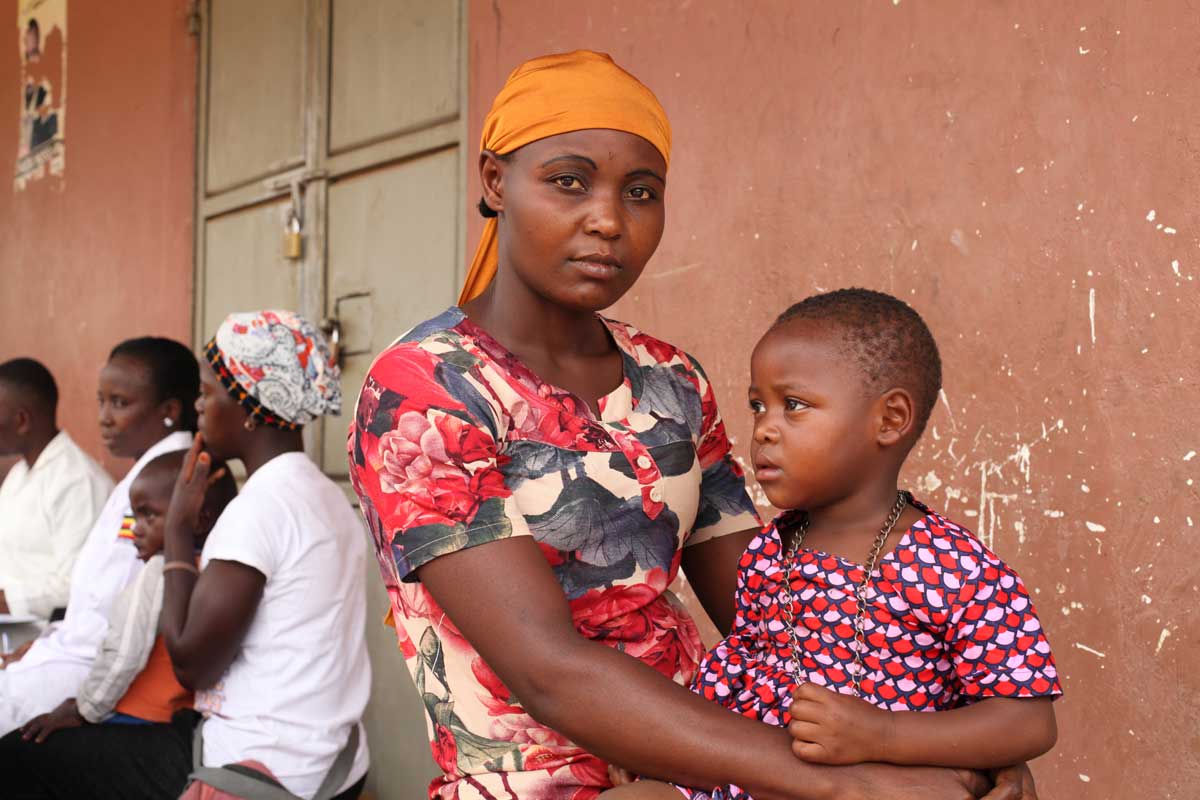
But while Namboozo says she understands the importance of vaccination, travelling to the health centre is often simply too complicated. “The only [remaining] option is to wait the doctors, when they come to us,” she reflected.
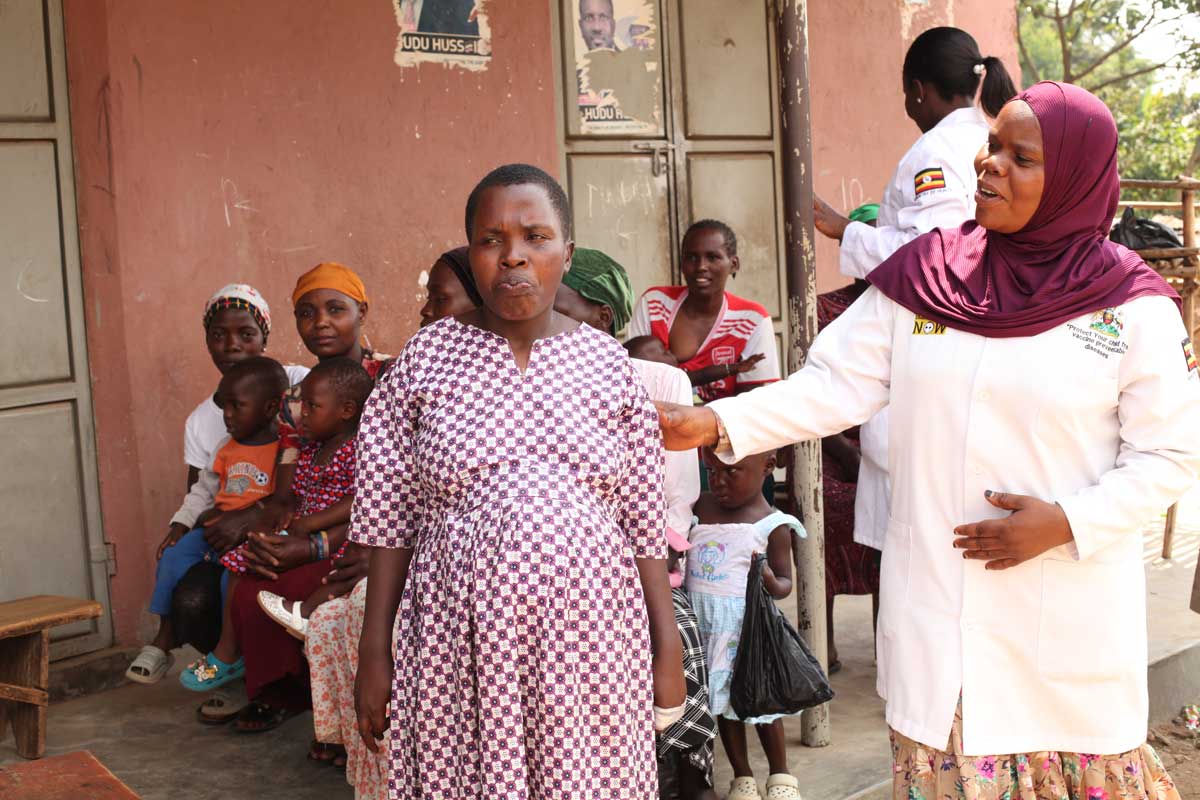
Apart from the vaccines given at birth, Namboozo’s five children have only been vaccinated during such outreaches, she explained.
“Today I came for the third dose of malaria, but it had taken long since we last received the second dose. It’s because they have not been coming. During rainy seasons, roads are slippery so they have not been coming. But now with these bikes, we believe they will come often,” Namboozo said.
New wheels
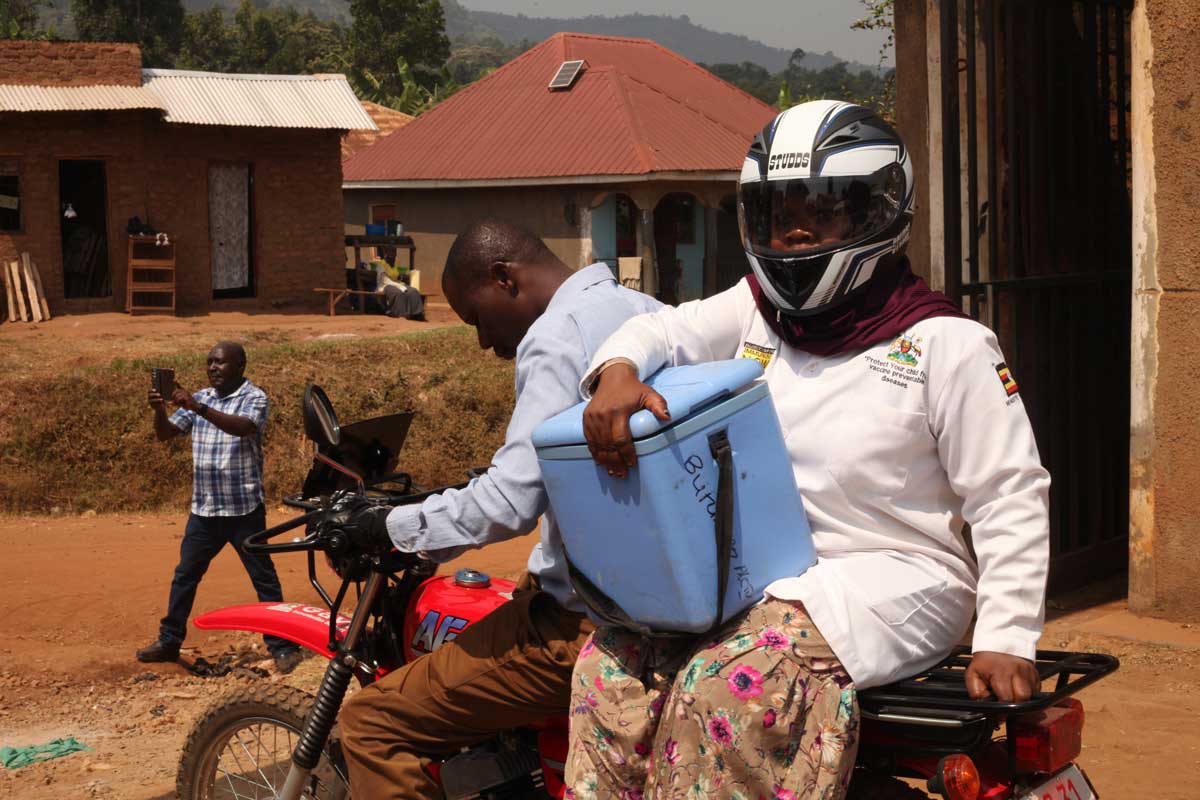
The bikes she was referring to was a fleet of four shiny, brand-new, high-powered motorcycles that had recently arrived at the Mbale clinic to help health workers make it out to isolated communities faster and more easily.
Those four motorbikes were part of a larger consignment of equipment supplied to Uganda through Gavi's Equity Accelerator Fund. In total, the initiative, which was launched in March, supplied 642 motorcycles, an equivalent number of pairs of motorbiking gloves and tyre pumps, 90 portable camping tents, 1,095 sleeping bags, 2,022 raincoats, 2,022 backpacks, 2,022 umbrellas, 2,022 gumboots, 2,022 life jackets, and 1,095 lightweight mountain climbing helmets to the country.
“The programme is helping districts identify, follow up and vaccinate children who would otherwise be missed through targeted community mobilisation and more frequent outreach services,” Dr Michael Baganizi, Programme Manager for the Uganda National Expanded Programme for Immunization (UNEPI) with Uganda’s Health Ministry told VaccinesWork.
Dr Moses Mugonyi, the Mbale City Health Officer, said the four bikes allotted to Mbale City immediately transformed how outreach services were organised and delivered.
Mugonyi explained that before the motorcycles arrived, organising a single outreach was an expensive logistical exercise that involved hiring motorcycles or vehicles to transport six-member vaccination teams together with cold boxes containing vaccines. Each outreach could cost around US$ 160 in transport alone.
“We have been having serious challenges accessing certain populations since we are geographically mountainous, and in most cases, people are ever-shifting to safer places because of landslides,” he said.
“Our city has both 25% urban settlements and 75% rural communities spread across rugged mountains and valleys. Some places cannot even be reached by vehicle because the paths are narrow and slippery. These motorcycles have come exactly when we needed them,” he added.
Mugonyi noted that the motorcycles represent far more than convenience. Their speed on rough terrain has diverse public health benefits, allowing health workers to transport vaccines while comfortably maintaining the cold chain, to quickly investigate suspected outbreaks, to supervise village health teams and conduct follow-up visits for children who missed routine immunisation sessions.
“Previously you had to call a boda rider, who could be 30 or even more kilometres away. That was wasted valuable time, especially when vaccines had to reach communities quickly. Now we can respond immediately. The four bikes can transport the teams, wait for them the whole day – and these are high-horsepower bikes so they are good for mountainous regions like ours,” he explained.
“These motorcycles have already helped us improve coverage because transport has been one of the missing links. Now we can move from village to village looking for children who were missed,” Mugonyi said.
Have you read?
Rock-climbing to outrun disease
Zaina Namalwa, an enrolled nurse and immunisation focal person at Bufumbo Health Centre IV, says she is among the immediate beneficiaries of these new items. In the past, her work regularly took her into Mbale’s remote hills on foot.
“We used to hire riders, but these couldn’t pick us back from the field. You had to walk back to the hospital with your vaccine box. In rainy season, the hills were slippery and you had to be careful not to fall off,” she explained.
She notes that she and her team-mates are under constant time-pressure: the isolated communities she serves depend on health workers finding families before preventable diseases do. “Our facility mainly receives sick patients. But for antenatal care and vaccination, many mothers do not come because health facilities are far away. We have to go and look for them,” she said.
“Families had to choose between expensive boda-boda cost or the unsafe longer routes on foot for vaccines so many of them. These equipments will help us take the health facility to them,” she said.
But she adds that the final miles to many villages remain impassable for vehicles. That means health workers still need to climb sharp-edged stones on foot while carrying vaccines, medical supplies and record books.
“Our hospital received one 24/7 standby motorcycle plus gumboots, mountain climbing helmets, raincoats and lifejackets. During outreaches, the district sends us the other three motorcycles to transport us, and they are now very easy to organise,” she noted.
“Because we arrive early at the sites, we are able to work on at least 50 children and like 20 mothers on antenatal – unlike before when we would work on about 20 children because at times, we even had to walk to the villages,” Namalwa added.
Baganizi said the motorcycles have been received as part of the Equity Accelerator Fund (EAF), a Gavi-supported grant that helps reach zero-dose and under-immunised children living in communities facing the greatest barriers to vaccination in 59 districts across the country.
He noted that since 2024, when the grant was given, programme support has been mobilised for targeted outreach, community mobilisation and defaulter tracking, and has provided frontline health workers with equipment needed to reach difficult terrain.
Although the nationwide roll-out of these goods is still underway, Baganizi said early monitoring shows districts are reaching previously under-served communities more consistently while strengthening the routine immunisation systems.
“Our goal is not simply reducing zero-dose children but building a sustainable immunisation system where every eligible child, regardless of where they live, has equitable access to life-saving vaccines,” he noted.