
In Uganda, TB survivors are boosting childhood vaccination in the hardest-to-reach communities
Former tuberculosis patients in Uganda are going door to door in communities with low vaccination rates, and turning their own stories into a force for change.
- 22 April 2026
- 6 min read
- by John Musenze
At a glance
- Martin Onyuthi Uma had a long, traumatic battle against drug-resistant tuberculosis. With that behind him, he’s now using his story to campaign for prevention, and urging families to get their children vaccinated.
- Onyuthi belongs to a volunteer group, the Fellowship of TB Survivors Uganda, which is actively campaigning for preventive healthcare across 35 districts countrywide.
- “When a TB survivor speaks, people listen differently,” said paediatrician Sarah Kisaakye.
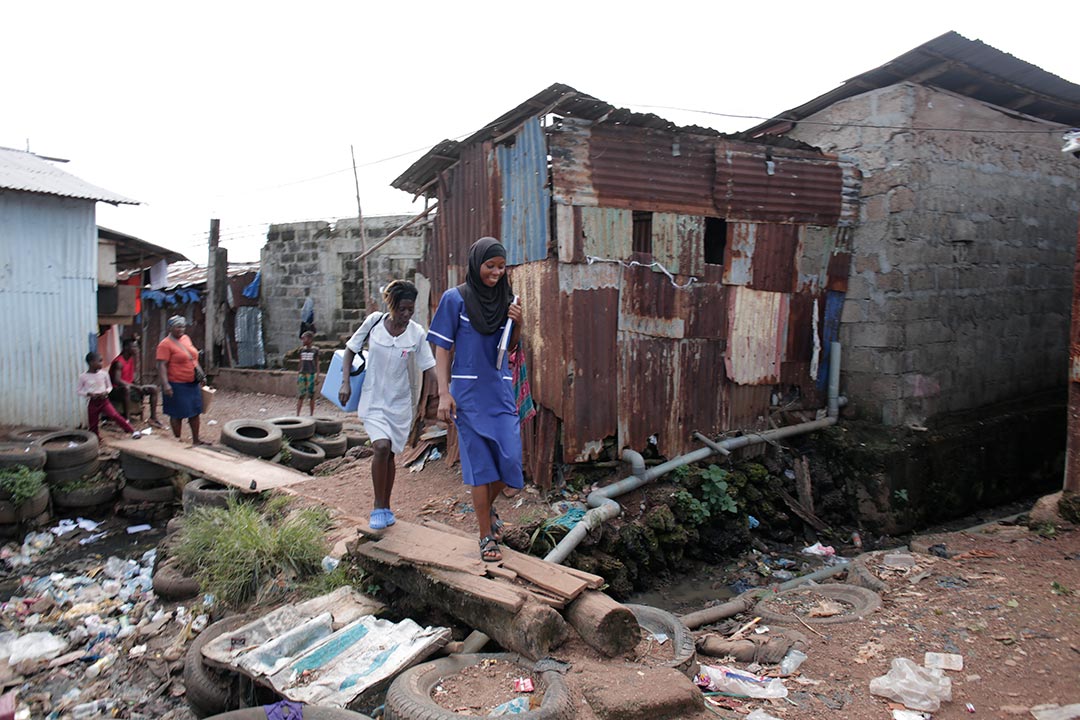
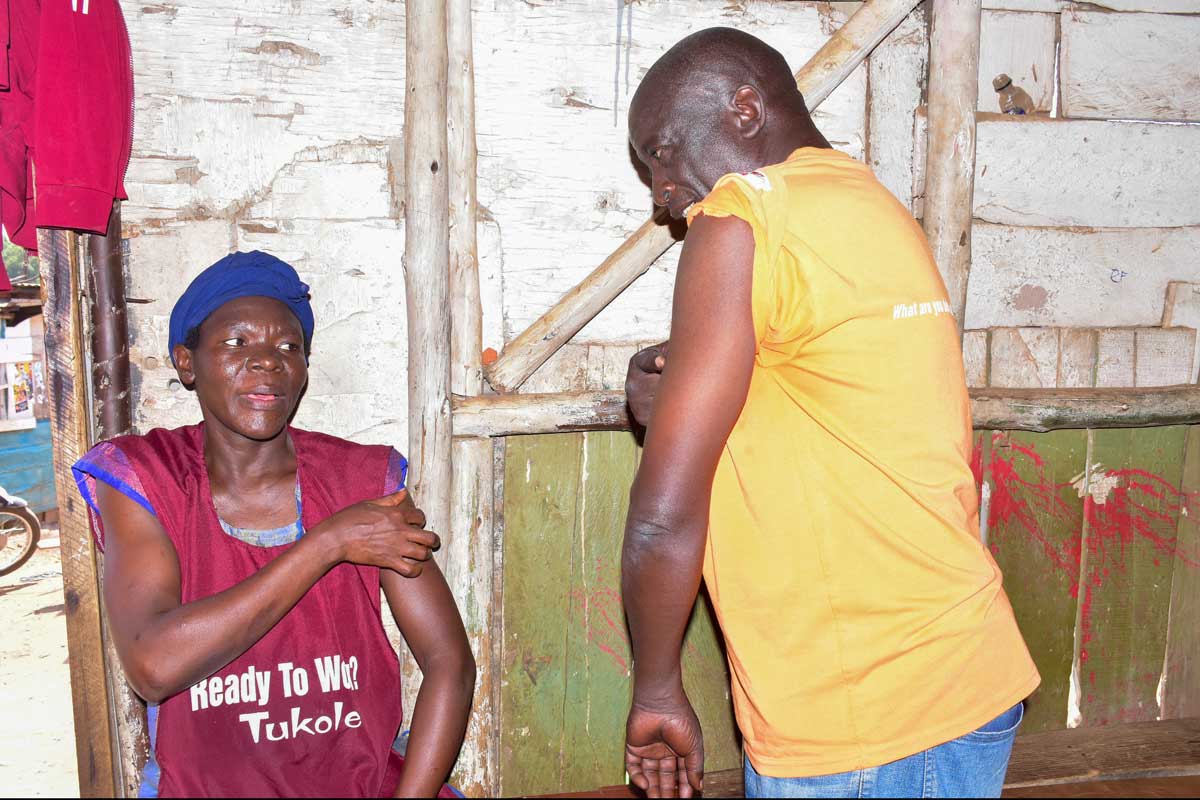
Immaculate Fuachan (41) is eight months pregnant and lives in a densely populated informal settlement in Uganda, where poor living conditions and limited access to information leave many residents vulnerable to disease. On top of that, Fuachan says misinformation-based fears about vaccination are widespread in her community.
But outreach visits by health advocates and Village Health Teams are making a difference, she says, improving awareness about disease prevention and changing attitudes – her own included.
“Most people here do not have TVs or radios to learn about health programmes, so the only way is for advocates to come to us […] My first two children were vaccinated after an outreach here, but for this one, I will go to a government hospital to deliver, and make sure the baby is vaccinated,” Fuachan told VaccinesWork.
Fuachan’s resolution to actively seek vaccination at the health facility is a critical shift – and one that she says was driven by a particularly convincing group of community mobilisers: tuberculosis survivors.
A diagnosis changed everything
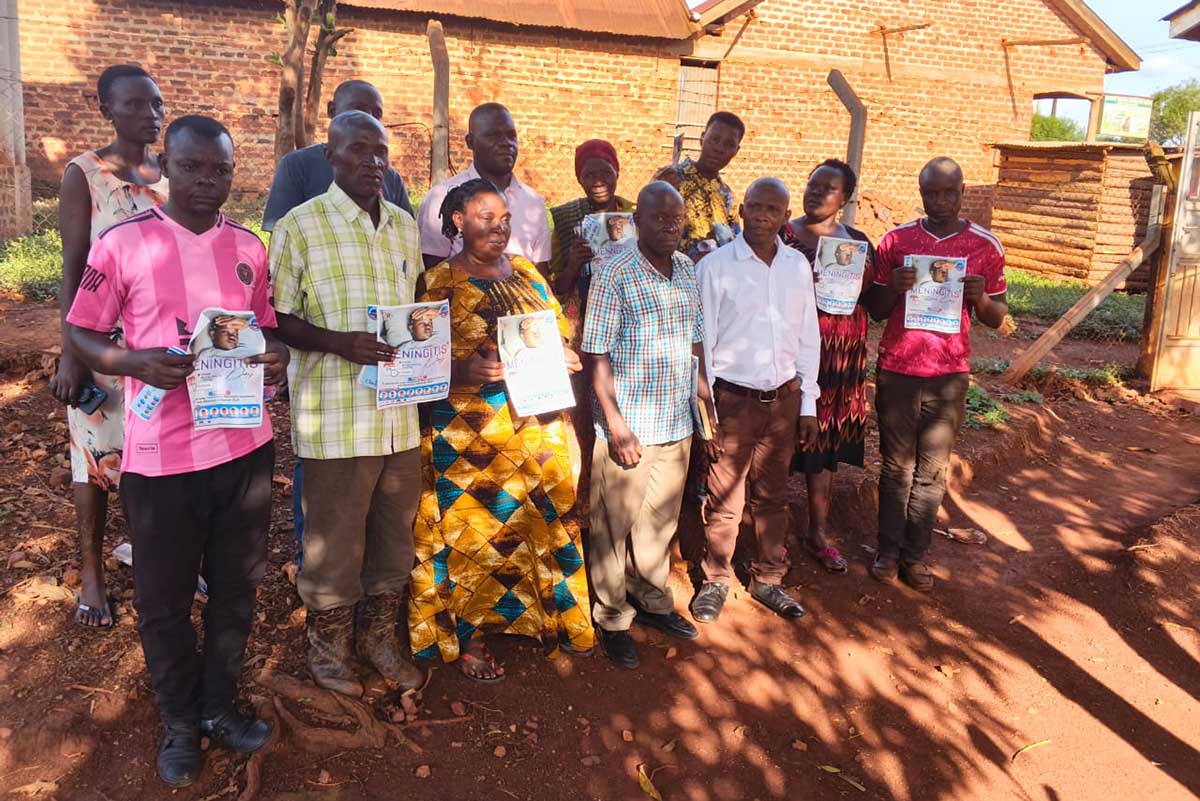
In many of Uganda’s urban slums and remote rural communities, former TB patients are stepping forward as grassroots advocates, going door to door to promote immunisation and other means of disease prevention.
Among them is 62-year-old Martin Onyuthi Uma, who received a life-altering diagnosis in 2015 while working as both a schoolteacher and HIV peer-educator in Arua district, Northern Uganda.
Onyuthi had been experiencing persistent symptoms, including coughing, fever, weight loss, night sweats and chest pain.
“My work as a teacher and an HIV peer educator meant I meet so many people. I coughed for two months, and when I went to Arua Regional Referral Hospital, I was tested, but after days, doctors came looking for me [to tell me] that I had multi-drug-resistant tuberculosis (MDR-TB), a more severe form of the disease that does not respond to standard treatment,” Onyuthi told VaccinesWork.
The TB treatment plan of that time was gruelling enough to send many patients running away from screening. His two-year regimen of 18 tablets a day, followed by painful injections for six months began.
“The side-effects were very serious, my skin changed colour, my sight was affected and even sitting became painful because of the injections.” In the decade since his diagnosis, TB therapy has improved. “Currently it’s now a six-month treatment unlike then, when we had two years including isolation,” he recalled.
But for Onyuthi, and many patients today, the disease’s trials don’t end at the conclusion of treatment. After Onyuthi returned home after diagnosis, the reaction from those around him was immediate and painful. Neighbours kept a distance. Children ran away at the sight of him. Even relatives spoke from afar, covering their mouths.
“TB is not just a disease, it isolates you. My wife packed her things and left. She feared getting infected, and that’s what many people in our communities think about TB. They equate it to HIV, that one can’t be healed completely. Some in remote areas, especially slums, do not believe in the vaccinations,” he said.
According to Onyuthi, it was only after health workers intervened through educating his family and community about transmission and prevention, that people started coming closer again.
From survivor to advocate
At some point during his long recovery, Onyuthi resolved to campaign for prevention.
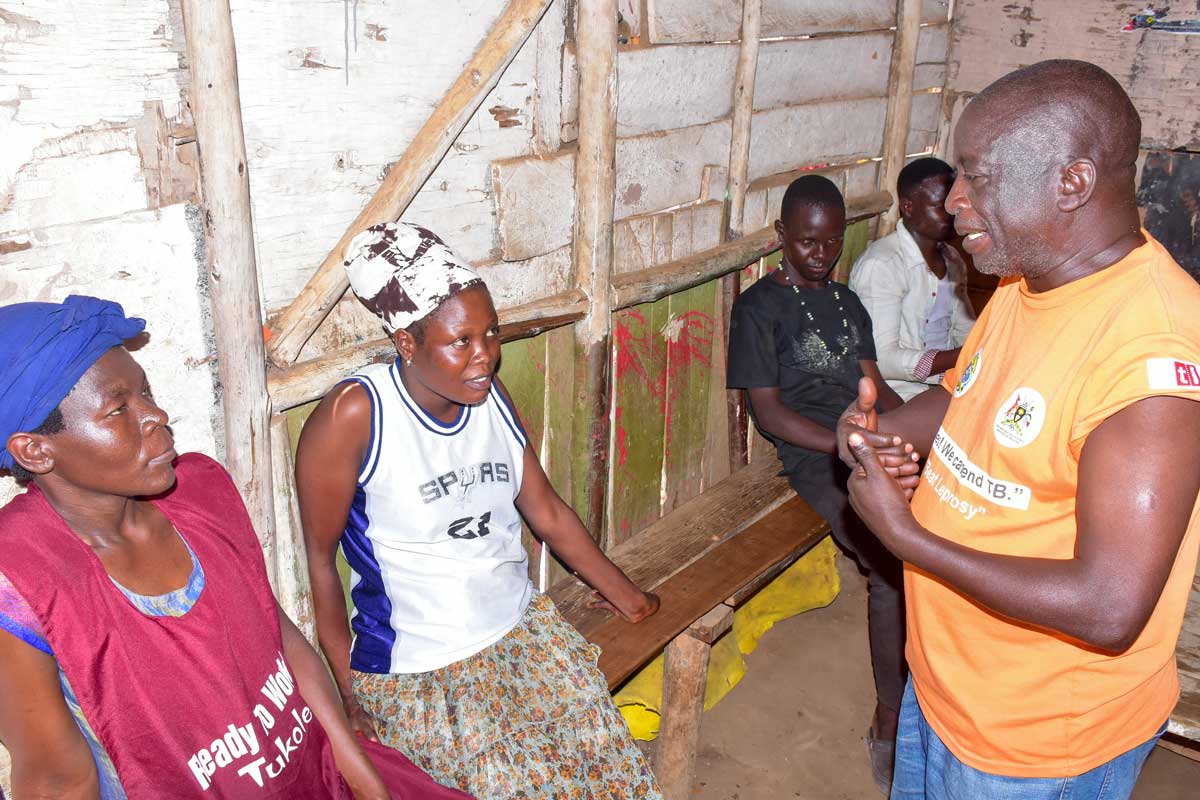
Today, he volunteers with the Fellowship of TB Survivors Uganda (FOX Uganda), a network of TB survivors operating in 35 districts across Uganda so far, with about ten members in each district.
“We don’t wait for perfect funding. We step in because we understand the urgency. We move from urban markets to slums, then go to hard-to-reach communities like in Northern Uganda where the TB burden is big,” Onyuthi highlighted.
He and his colleagues have grown conscious that many people in slums do not take their children for vaccination – that’s made door-to-door visits in such communities strategically critical.
He and fellow advocates visit between 25 and 50 households each week, focusing on high-risk areas such as informal settlements, markets, schools and densely populated neighbourhoods.
“We tell parents that while the [BCG] vaccine does not prevent all TB, it protects children from the most dangerous forms. It can save their lives. We explain what TB is, how it spreads, and how it can be prevented,” Onyuthi explained.
That’s not the only vaccine that Onyuthi has gone to bat for, however. “We have seen what vaccines have saved this generation,” he said. “It’s a message we give [parents]. Where possible, like in schools, we move with health workers who vaccinate girls against with HPV and provide other professional support,” he noted.
If you’re interested in tuberculosis, read next:
Uganda’s TB burden and vaccine gaps
Sarah Kisaakye, a paediatrician at Kiswa Health Centre 11, acknowledged that TB survivors have become a critical link between communities and the formal health system in her area. Kisaakye has worked closely with them during outreach activities.
“They help us reach households we would otherwise miss. When a TB survivor speaks, people listen differently. They are not just giving information, they are sharing experience,” she said.
According to her, survivors play a key role in identifying unvaccinated children, mobilising parents and addressing fears around immunisation.
“In some communities, there is still mistrust and misinformation. But survivors help break those barriers because they are living proof that TB is real, but also preventable and treatable,” she explained.
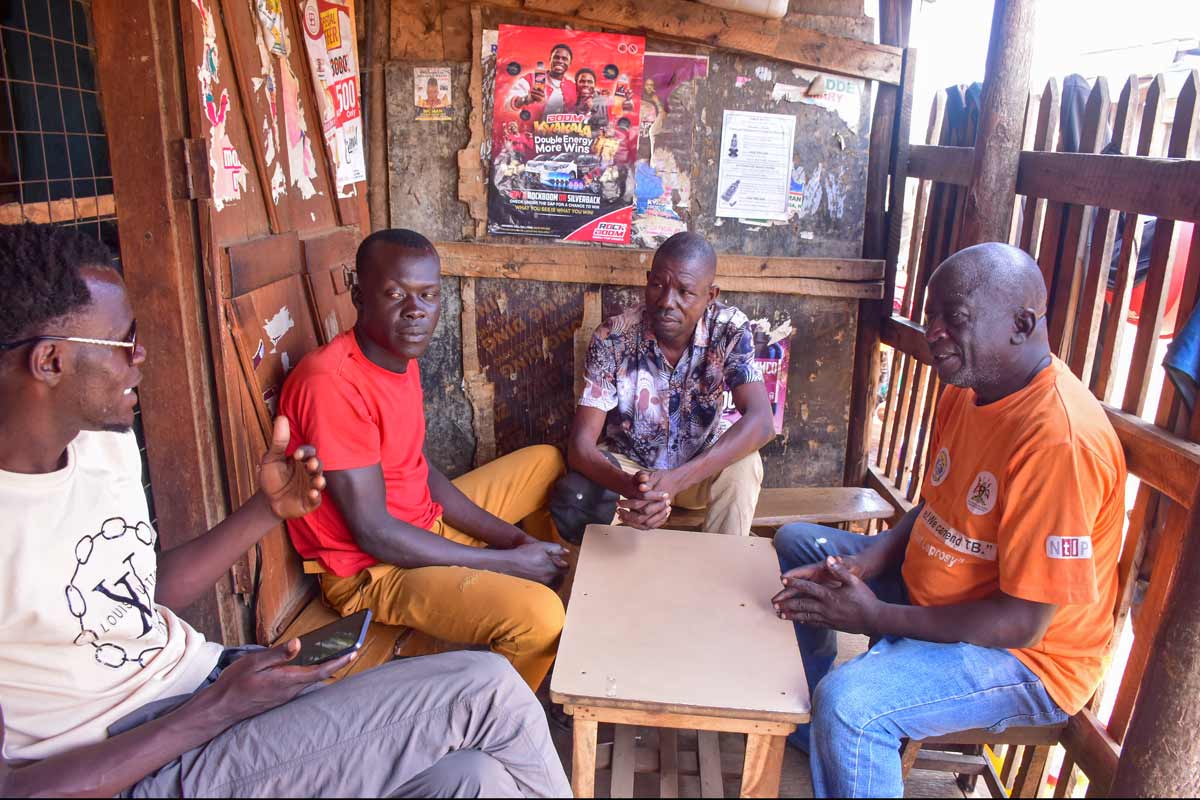
Dr Rita Atugonza of the Vaccines and Immunisation Division at the Ministry of Health said reaching persistently missed-out children requires innovative community approaches like these.
“Community-based strategies, including the involvement of TB survivors, are essential in ensuring that no child is left behind. They help us reach families in hard-to-reach areas and urban settlements where access to services is limited,” she said.
While efforts continue to improve uptake of existing vaccines, global attention is also focused on developing more effective TB vaccines. Dr Atugonza said these developments are promising, but emphasises that current tools must still be fully utilised.
“Even as we look forward to new vaccines, the BCG vaccine remains critical. Ensuring every child receives it at birth is one of the most effective ways to protect them. Vaccines have saved millions, so we will always give an opportunity to our people,” she said.
Speaking on World TB Day last month, Minister of Health Jane Ruth Aceng commended the role of vaccines in TB reduction cases and highlighted that government has deployed mobile TB clinics across the highly burdened districts to search for unvaccinated children, but also to test and find TB cases.
“As a country we have made progress in the fight against TB. The cases are very few and this is because most of our people vaccinate. The mobile TB clinics will screen, but also help carry out vaccinations especially in hard-to-reach areas,” she told gathered members of the press.
In Uganda, data from WHO shows that 96,000 people fall ill with TB annually with a reduction from 276 cases per 100,000 people in 2000, to 196 cases per 100,000 people.