
In Brazzaville, Congo, a trusted midwife steps up to offer immunisation to an under-protected district
Aline Alemby has supported women through pregnancy for 20 years. Now, for the first time, she’s able to offer protection to their babies, too.
- 9 October 2026
- 5 min read
- by Olivier Konan
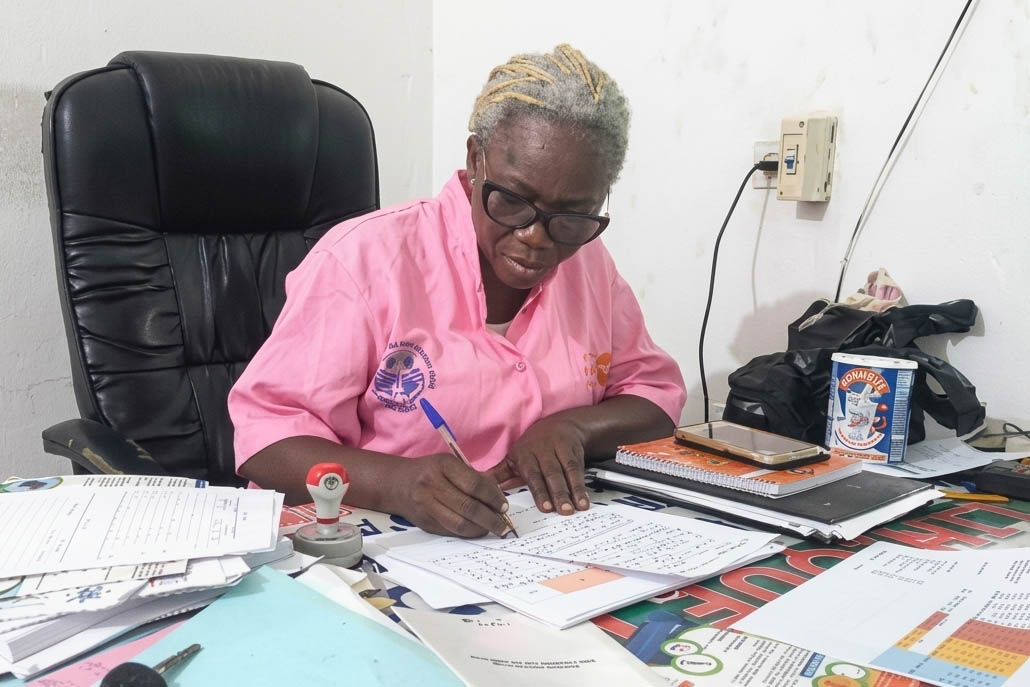
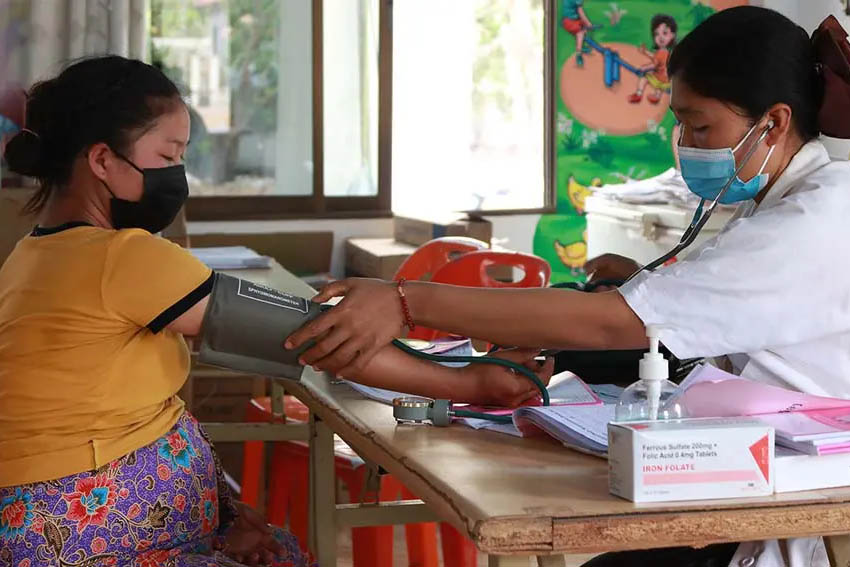
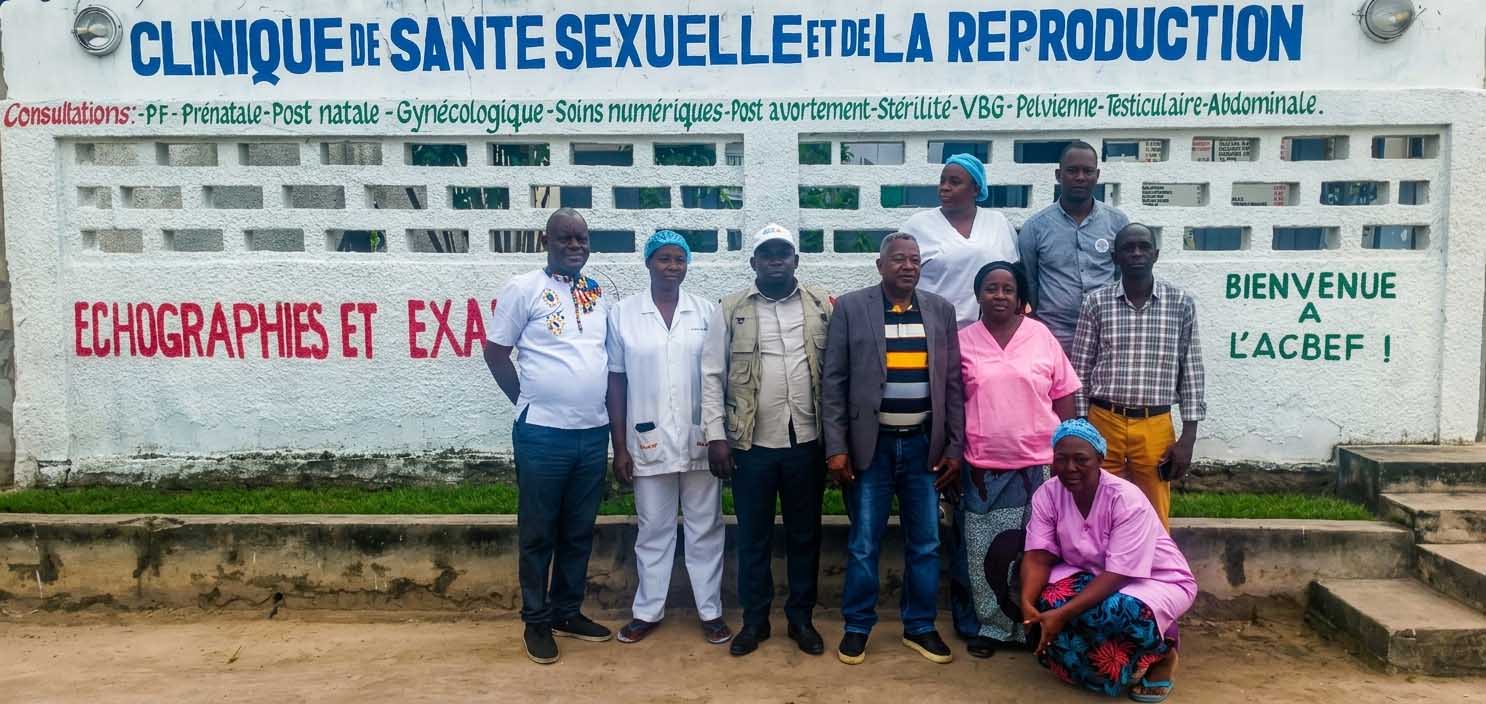
For more than 20 years, Aline Alemby has cared for women and children in Moungali Health District, Brazzaville. As a midwife and the medical manager of the Association Congolaise pour le Bien-Être Familial (ACBEF) health clinic in Brazzaville, Aline and her team receive an average of 50 women each week, for gynaecological, pre- and post-natal care.
Aline chose to dedicate her life to supporting other women after experiencing complications during an early pregnancy of her own. “I was so struck by the attention and care I received from the midwife who looked after me that, as soon as I had recovered, I became interested in this profession,” she says.
A bond of trust
In these community settings, where medics are in short supply, midwives often take on many other roles: “We are called upon to be nutritionists, paediatricians and psychologists too”, Aline says.
The institution she works for has similarly expanded its initial remit to respond to community needs.
Founded in 1987, ACBEF is a pioneering sexual and reproductive health association in the Republic of Congo, promoting quality services and sexual and reproductive health, especially to vulnerable and under-served populations, enabling free and informed choices without discrimination.
But while Aline and her colleagues were able to support women in the full gamut of sexual and reproductive health needs, their role stopped at post-natal care. Since the clinic opened in 1994, mothers needed to take their babies to paediatric healthcare providers for vaccination.
That proved difficult for many of them, who had learned to feel safe at ACBEF. “Changing venue seemed to give them the feeling of breaking a bond of trust,” explains Aline. Consequently, many children’s vaccination schedules were left incomplete, and risk of an outbreak grew.
Immune shortfall
About half of the 20,000 immunisation-eligible children aged 0–12 months in Moungali health district were zero-dose, and the main reason for that was infrastructural. Of the 24 health facilities catering to this population, just 8 offered routine vaccination.
“The system’s ability to reach every child and keep them in the immunisation programme is the major challenge to address,” says Dr Blonde Hustelle Amboulou, the head doctor at the Moungali District Health Centre.
Expanding care
Expanding vaccination services to private health facilities like ACBEF that already provided some child health services was a logical way to tackle the immunisation access gap.
The transition was made easier by the fact that Aline and her colleagues were not altogether new to immunisation. According to Patrice Obaya, the programme coordinator at ACBEF, “The midwifery curriculum includes dedicated modules on vaccine administration techniques. However, many years without vaccinating had eroded those skills.”
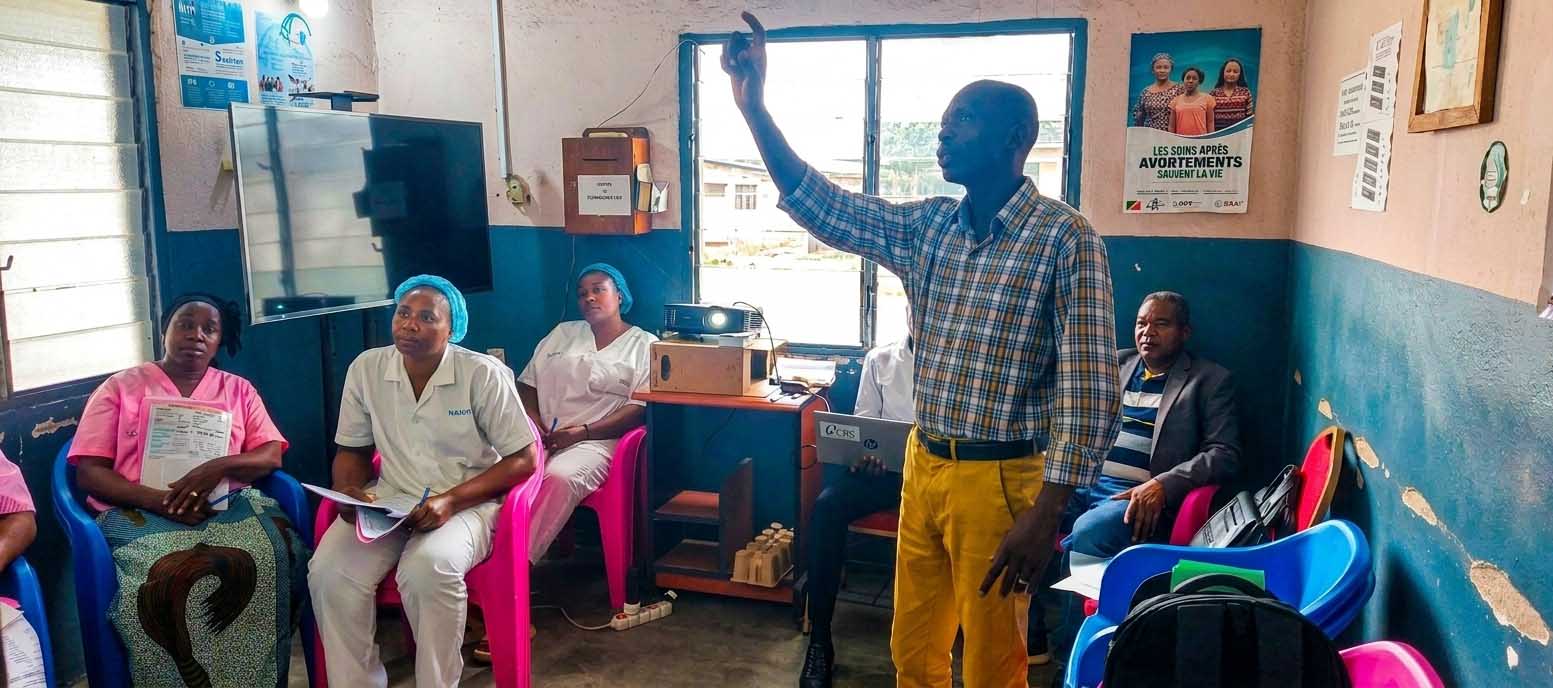
To get back up to form, Aline and three of her teammates took part in a three-day course of classroom teaching run by the departmental health directorate, which was followed by a week-long immersion placement in the public integrated health centres in Brazzaville.
The training was designed to build staff competence across the full spectrum of immunisation delivery – from practical injection techniques and cold chain management, right through to the proper completion of data collection tools – ensuring that every step of the process met quality standards.
The training equipped ACBEF’s staff to “meet the needs of the patients”, Aline said, explaining she meant the mothers hoped for the complete gamut of mother-and-child services, “including vaccination and pre-school follow-up”.
Cross-generational care
One of those women is Marina Ngoma, a patient of Aline’s since 2010, who has welcomed ACBEF’s expansion into immunisation services.
“The midwives are professional and inspire trust through the way they welcome women,” Ngoma says. Sixteen years ago, Aline cared for Ngoma at the ACBEF clinic, and now Ngoma accompanies her 16-year-old daughter, Jocelyne, for her own first antenatal appointment at the clinic.
“What was difficult for me was having to change venue [for Jocelyne’s vaccinations]. From now on it will be easy for my daughter, because she will be in good hands,” Ngoma says.
A new chapter in community health
ACBEF’s new chapter was enabled by the Gavi-funded Inclusive Immunisation Project, supported by the Plateforme des Organisations de la Société Civile intervenant dans la santé au Congo (POSCO). POSCO is a network of 72 local CSOs, which mobilised nearly 200 community health workers between January and June 2026 – including community and association leaders – for door-to-door outreach and educational talks in support of improved immunisation coverage.
ACBEF is now the ninth fixed vaccination site in Moungali health district. The organisation has plans to add immunisation services to its two other clinics around the country, in Dolisie in central DRC and Pointe-Noire in the southwest.
Since June 2026, Aline and her colleagues have vaccinated 70 infants under one year with the vaccines they were due.
How is Gavi helping?
With support from Gavi through its Community Health Actors (CHA) project, ACBEF: Association Congolaise pour le Bien-Être Familial, (the Congolese Association for Family Welfare) worked in consortium with the Platform of Congolese Civil Society Organisations (POSCO), implementing the Inclusive Vaccination Project to strengthen community vaccination in the Republic of Congo.
Gavi’s CHA project was designed as a strategic initiative to strengthen the role of community actors in identifying and reducing zero-dose children, improving vaccine coverage and institutionalising community health.
Implemented in eight countries in sub-Saharan Africa with operational support from MannionDaniels, the project experimented with innovative indirect financing mechanisms via civil society organisations (CSOs), domestic resource mobilisation and strengthening existing coordination platforms.