
Did climate chaos unleash the Black Death?
A new analysis reveals how a volcanic chill in the 1340s reshaped grain routes to Italy –unwittingly bringing plague-infected fleas to Europe and setting the Black Death in motion.
- 10 December 2025
- 5 min read
- by Linda Geddes

It was one of the greatest pandemics in human history, responsible for tens of millions of deaths and a terror that still reverberates today.
Now, a new analysis suggests that climatic upheaval and expanding global trade may have inadvertently set the Black Death in motion – offering sobering lessons for our increasingly interconnected future.
The bubonic plague pandemic, known as the Black Death, stands among the deadliest catastrophes in history, racing across Europe and Asia in the mid-14th Century and claiming as much as 60% of the population in some regions.
It is now accepted that the disease was caused by the bacterium Yersinia pestis, which originated from wild rodent populations in central Asia and reached Europe via the Black Sea region. However it’s still unclear why the Black Death started precisely when and where it did, how it spread so quickly and why it was so deadly.
“This is something I’ve wanted to understand for a long time,” said Professor Ulf Büntgen at the University of Cambridge, UK, who led the new study.
“What were the drivers of the onset and transmission of the Black Death, and how unusual were they? Why did it happen at this exact time and place in European history? It’s such an interesting question, but it is one no one can answer alone.”
How could volcanic activity and unusual weather trigger plague?
Although some historians and climate scientists had previously speculated that unusual weather in the 1340s – potentially triggered by mid-14th-century volcanic activity – might have contributed to famine and reshaped trade routes, there had been little high-quality environmental evidence to support the idea.
To investigate, Büntgen, whose research group specialises in using tree rings to reconstruct past climate variability, joined forces with Dr Martin Bauch, a historian at the Leibniz Institute for the History and Culture of Eastern Europe in Germany.
Together, they set out to piece together a clearer picture of the climatic, agricultural and economic conditions in the years immediately preceding the Black Death, combining environmental records such as tree rings and ice cores with medieval documentary accounts to understand how these forces might have converged.
The research, published in Communications Earth & Environment, found that a series of volcanic eruptions around 1345 may have triggered a sequence of events that ultimately led to the Black Death.
Evidence came first from the trees. A run of “Blue Rings” – pale, weakly formed wood that develops only in exceptionally cold summers – in the Spanish Pyrenees indicated an abrupt spell of unusually cold, wet weather in 1345, 1346 and 1347 across much of southern Europe. Documentary evidence from the same period also noted unusual cloudiness and dark lunar eclipses, which could suggest volcanic activity.
Densely populated, heavily urbanised and reliant on imported grain, medieval Italy was acutely vulnerable to climate shocks. As harvests faltered, officials in Venice, Genoa and Pisa began importing grain from the Mongols of the Golden Horde around the Sea of Azov (bordered by modern-day Russia and Ukraine) in 1347.
Deadly cargo
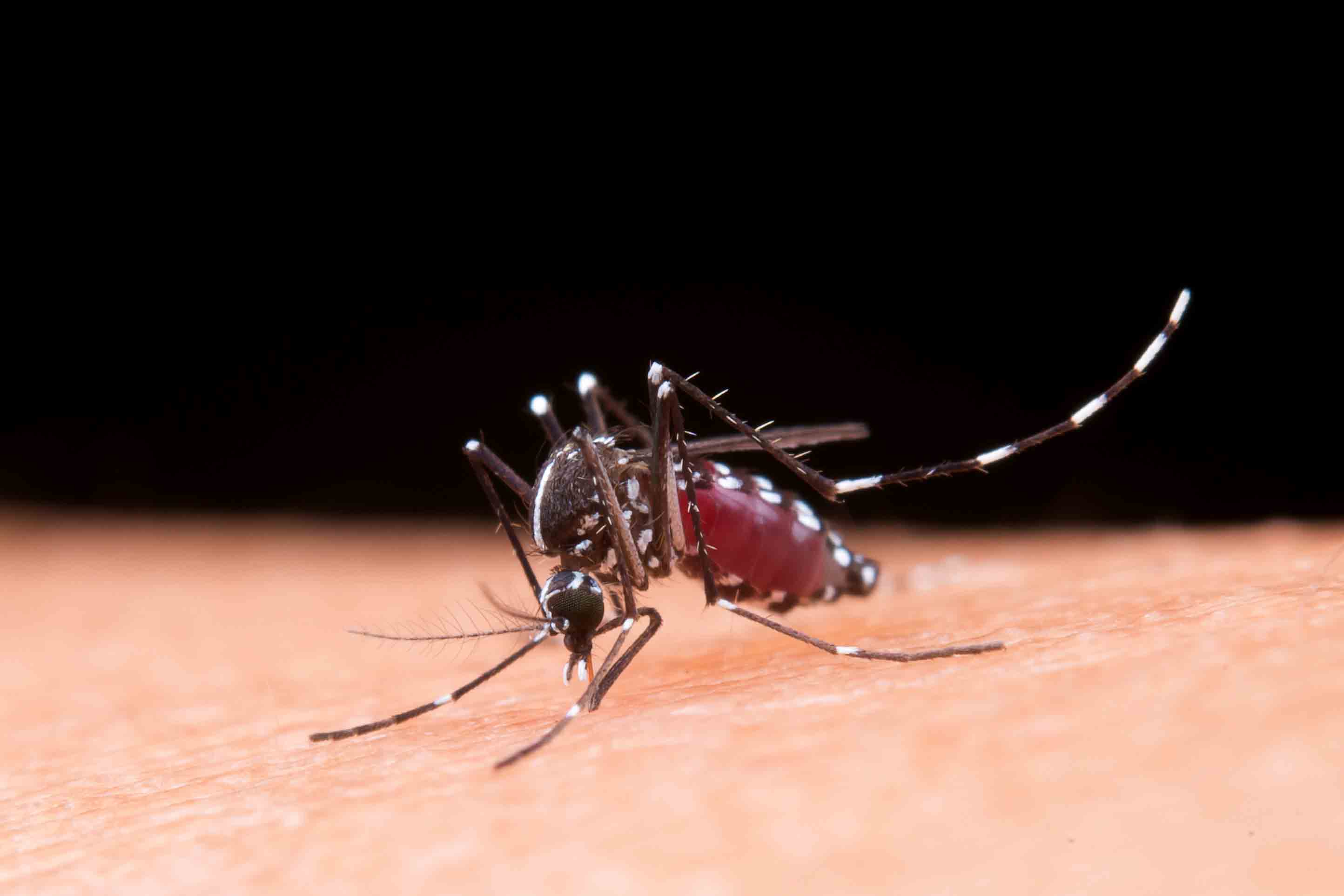
While this imported grain staved off starvation, the ships carrying it are believed to have harboured a swarm of deadly stowaways: fleas infected with Yersinia pestis, sustained by grain dust in the holds during the long voyage.
Once these plague-infected fleas arrived in Mediterranean ports, they became a vector for disease transmission, enabling the bacterium to jump from mammalian hosts – including rodents – to humans.
“In so many European towns and cities you can find some evidence of the Black Death, almost 800 years later,” said Büntgen.
“And yet, we could also demonstrate that many Italian cities, even large ones like Milan and Rome, were most probably not affected by the Black Death, apparently because they did not need to import grain after 1345,” Bauch added.
Have you read?
Could climatic factors increase the risk of future pandemics?
Climate change is already expanding the habitats of disease-carrying species and increasing opportunities for pathogens to jump between hosts. And, as COVID-19 made clear, in a world connected by globalised supply chains, a disruption in one region can have consequences thousands of miles away.
Although the world of the 1340s was not globalised by modern standards, the Black Death can still be seen as an early example of how interconnected systems can amplify risk, the researchers said.
“Although the coincidence of factors that contributed to the Black Death seems rare, the probability of zoonotic diseases emerging under climate change and translating into pandemics is likely to increase in a globalised world,” said Büntgen. “This is especially relevant given our recent experiences with COVID-19.”
Preparing for future pandemics, they argue, means looking beyond individual pathogens to the wider conditions that allow them to emerge and spread.
Understanding how climate, society and disease interacted in the past could also help to inform modern risk assessments and highlight where current vulnerabilities lie.
More from Linda Geddes