
How a peep through a microscope changed health-seeking behaviours in Pakistan
In Sargodha, Pakistan, 1,200 people got a close-up look at the microbial world around them. That telling glimpse has changed their lives in measurable ways – and looks set to change their health in the long run.
- 18 February 2026
- 7 min read
- by Adeel Saeed
At a glance
- During a recent randomised controlled trial, 1,200 people in Sargodha, Pakistan, got their first peep at the microscopic bugs populating the world around them – in their milk bottles, drinking water, on their make-up brushes and crockery.
- The behaviour change was rapid and measurable: self-reported commitment to vaccination rose by 19 percentage points in the target group, and polio immunisation coverage hit 99%.
- “The goal for which we are struggling from years – to raise awareness of disease transmission and reduce vaccine hesitancy – was achieved in a day through holding live germ-watching workshop,” said Lady Health Supervisor Farah Deeba.
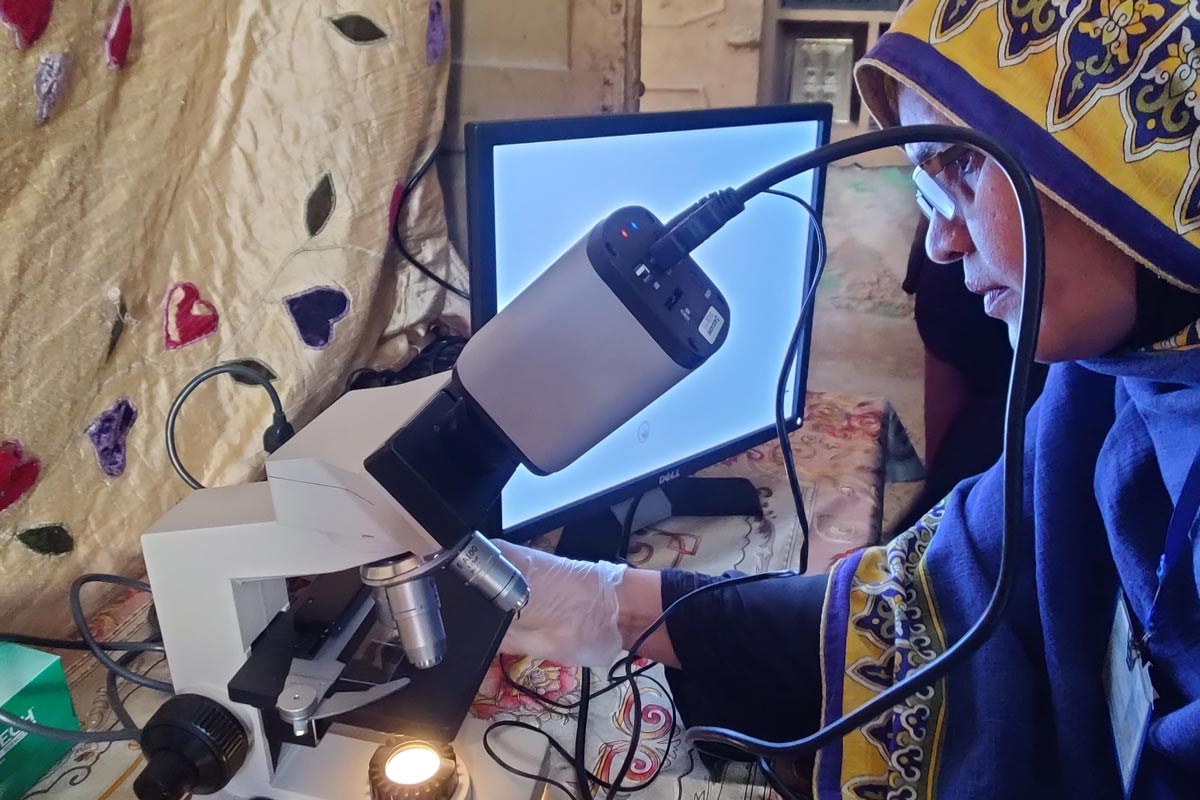
Sajida, a housewife and mother of two, gaped at the magnified image on the monitor in front of her. Germs, usually too small to see, clustered visibly on the microscope slide she had helped scientists to prepare, using a sample taken from the milk bottle she regularly uses to feed her three-year-old son.
“I was shaken, and my eyes widened in disbelief when I discovered that the healthy diet of my cute son was in fact contaminated with bacteria, threatening his health,” Sajida said.
She said she threw out the bottles and changed how she was cleaning the containers and crockery she was using in her home. Weeks later, she says her children appear to be suffering fewer stomach-aches – and her husband, she adds smiling, is relieved the family no longer needs to spend thousands of rupees each month on remedies.
A world of microbes, unveiled
Sajida is one of hundreds of mothers in Sargodha who got their first peep down the barrel of a microscope during a 2024 initiative designed to boost public health awareness and vaccine confidence by bringing caregivers face to face with some of the pathogens in their environments.
Milk bottles, drinking water, vegetables, fruits and even make-up tools were sampled and studied as part of the Microbe Literacy Cluster Randomized Controlled Trial run by Islamabad-based consultancy Development Synergies International (DSI) in collaboration with the Ministry of Health, National University of Sciences & Technology (NUST) and Microbe Literacy Initiative (MLI), a non-profit organisation dedicated to improving children’s health outcomes in South Asia.
Dr Muhammad Tariq, Chief Executive of DSI, said his team verbally linked the micro-organisms observed in household and other samples under the microscope, to vaccine-preventable diseases such as polio and hepatitis, helping communities better understand how immunisation protects against invisible threats.
Seeing moving organisms that were otherwise invisible to the naked eye created strong realisation and changed participants’ perception, he added.
That was evidenced by their changed behaviours. “Parents dramatically increased handwashing, adopted better food hygiene and – most significantly – expressed intent of vaccinating their children to prevent them from [contracting] different diseases,” said Dr Tariq.
Sargodha was selected as the trial site because of its diverse socioeconomic landscape and ongoing challenges with infectious diseases, which are spurred in part by limited health education and cultural barriers, Tariq told Vaccines Work.
Poor hygiene practices, polio threat underscore urgent public health action
Pakistan is among the last two countries in the world, along with Afghanistan, where the wild poliovirus continues to circulate endemically. Thirty-one cases were recorded in 2025, underscoring the urgency of sustained immunisation efforts and public awareness about the efficacy of vaccination.
The country’s WASH (Water, Sanitation, and Hygiene) data, available from UNICEF, WHO and WaterAid, reflects persistent gaps with millions lacking safe water (around 22.1 million) and basic sanitation (around 69.5 million), leading to health issues like stunting and diarrhoea. Some 53,000 children under five die of diarrhoeal disease in Pakistan each year. .
Measurable changes
“The Microbe Literacy trial engaged 1,200 families across 12 union councils and [was] found to be an important initiative to strengthen community health awareness and vaccine confidence through locally-led, evidence-based interventions,” said Nimra Mudasser, a biologist and researcher involved in the public health initiative.
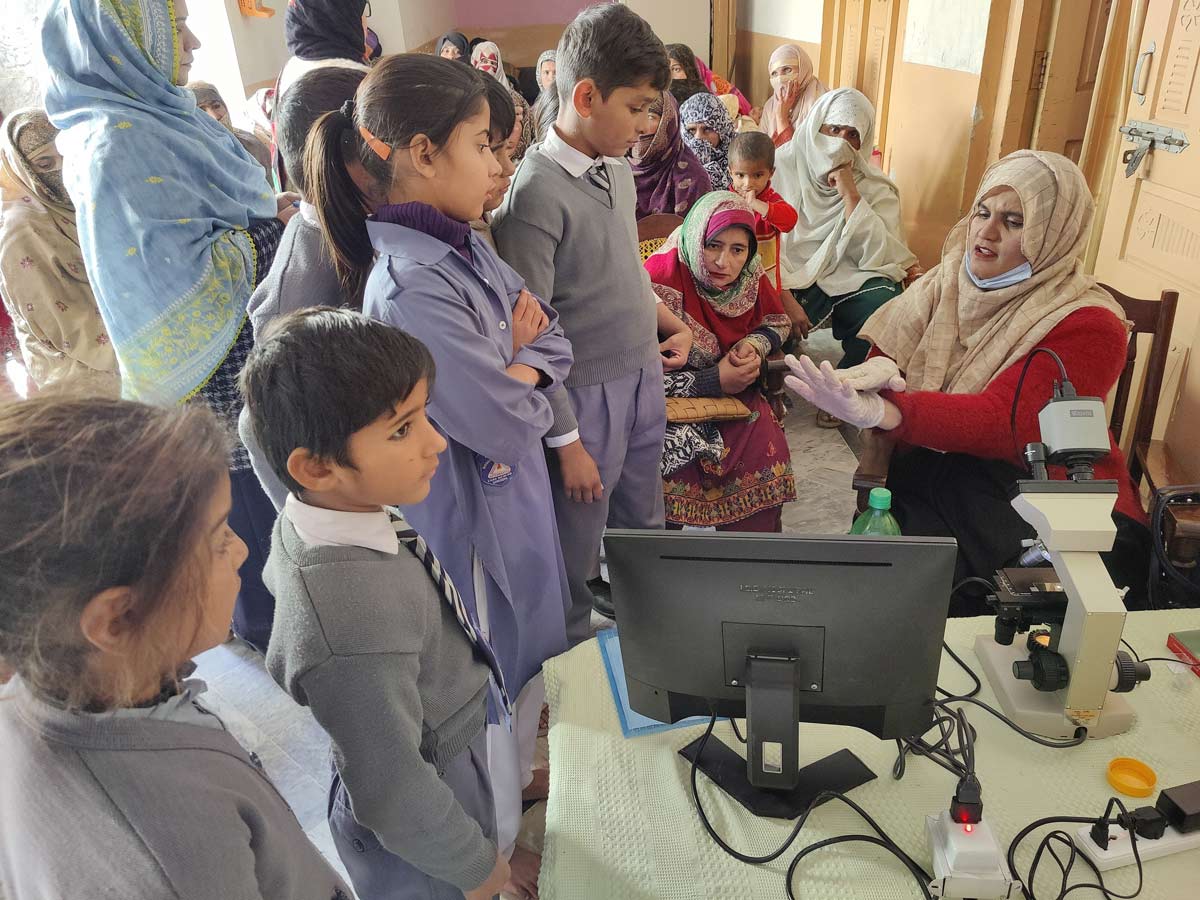
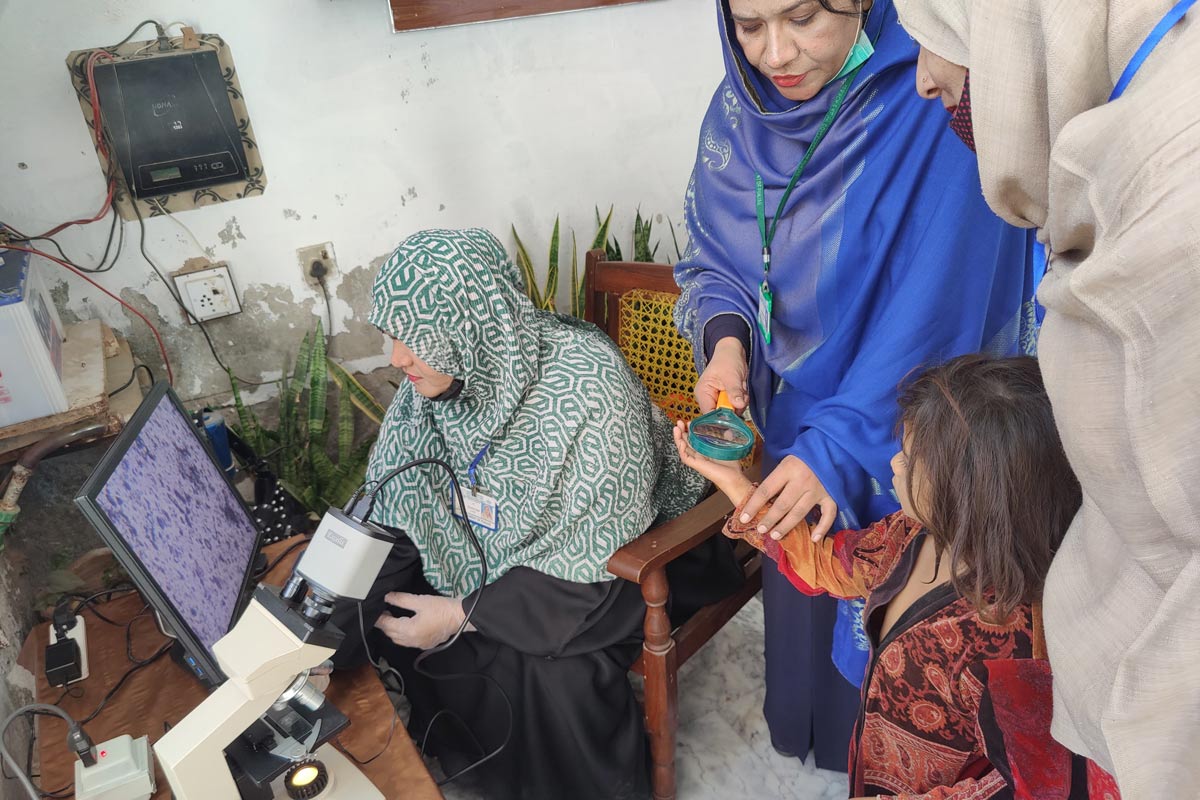
Every microscope was connected to a monitor and each participant was allowed to sit, prepare a slide, adjust the focus and explore different samples they brought from their homes, she describes.
“Among the selected cohort of 1,200 mothers, majority had low literacy levels. The largest group of 350 women had received no formal schooling, while 300 had only primary-level education,” says Dr Tehreen Baig, Data Scientist at DSI.
Baig said the initiative, which was carried out with the support of Lady Health Workers (LHWs) at household level, achieved a vaccine uptake increase of 19 percentage points.
Prior to the intervention, only 58% of mothers reported full intent to vaccinate. After the microbe literary training, 77% of mothers expressed strong intention of vaccinating their children. Meanwhile, in the union councils in which microbe literacy workshops were held, polio vaccine coverage surged to 99%, compared to 81.8% in control zones.
Post-intervention analysis also revealed a rise of 38% in handwashing, 28% in awareness of vaccine-preventable diseases, 32% in trust in health workers for vaccine information, and 25% in adoption of sanitary practices.
Live germs demonstration shocks parents
“The impact of the microbe literacy initiative was immediate and striking, as participants reacted with noticeable expression of amazement and fear, by instinctively touching their ears after seeing live germs in everyday household items and food,” recalls Farah Deeba, a Lady Health Supervisor (LHS) and District Focal Person for the Community Health Inspector (CHI) programme.
Children, too, were visibly surprised by what they saw on the screen, and eagerly asked questions about proper hygiene practices to prevent illness.
“The goal for which we are struggling from years – to raise awareness of disease transmission and reduce vaccine hesitancy – was achieved in a day through holding live germ-watching workshop,” Deeba remarked.
Stories from the community
Shagufta Jabeen, a Lady Health Supervisor in one of the targeted union councils, told VaccinesWork that stories of changes precipitated by the workshops are making the rounds in the community.
One local grandmother built a handwashing station in her home after her encounter with the microscope, Jabeen said. Both her grandchildren and visitors to the home are monitored while they thoroughly wash their hands at mealtimes. Another lady, formerly a confirmed vaccine-avoider, said that the microscope session had allowed her to understand how infections spread. She has since brought two of her sons to the clinic for their missing jabs, and says she is working on convincing her hesitant neighbours to do the same.
Seeing is believing
“This experience reinforced the adage ‘seeing is believing’,” observed Farooq Khan, WASH Specialist with UNICEF Khyber Pakhtunkhwa.
“Observing live germs by people, especially with less literacy, elicited strong feedback in the shape of better understanding of the threat and preventive measures for health safety,” Khan told VaccinesWork.
“The Sargodha trial proved that preventive awareness, if rooted in science and delivered through trusted community channels, can reduce disease burden more effectively than expensive treatment plans,” said Dr Mukhtar Ahmad Bharath, Minister of State for National Health Services during his speech at the launch of the Microbe Literacy Trial findings in October 2025 at NUST.
Have you read?
Microscopy for the people
“A plan is under consideration to launch the second phase of the project wherein the health impact among the targeted population will be evaluated,” said Dr Tariq.
In the second phase, the health of all those 1,200 families who participated in microbe literacy will be checked, along with the nutrition status of the newly born babies, as well as their weight and height.
Dr Tariq recommended incorporating microbe literacy modules into the Expanded Programme on Immunization (EPI) at the provincial and district levels, besides equipping LHWs with microscope toolkits to improve vaccination coverage in the country.