
Kenya’s long battle with brucellosis
The zoonotic disease is widespread across the country with significant consequences for public health, animal health, livelihoods and the economy.
- 6 February 2026
- 6 min read
- by Joyce Chimbi
At a glance
- An outbreak of “milk disease”, or brucellosis, a zoonotic bacterial disease, can decimate cattle-keepers’ finances and expose them to life-threatening infection in the process.
- Spillover infections are shockingly common: Kenya records about 100,000 human cases of the disease each year. In some parts of the country, 75% of households are infected.
- The most effective way to control brucellosis is vaccinating livestock. No human vaccine exists.
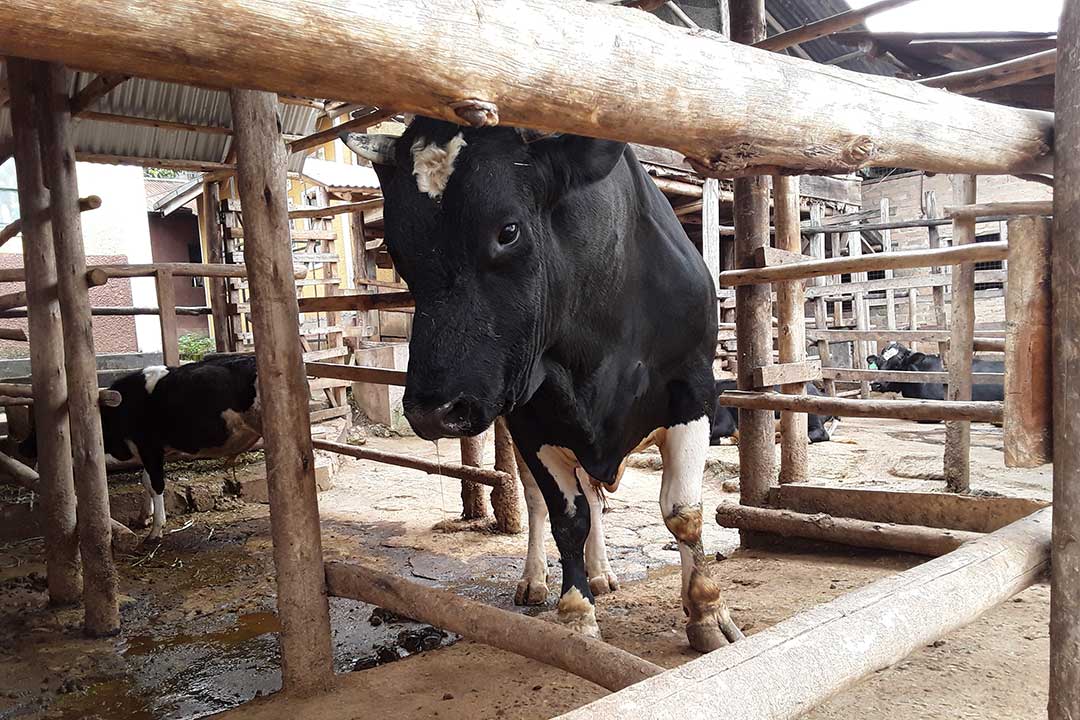
Last October, Amos Lukumae watched helplessly as his cow started to abort towards the end of her pregnancy. He instantly knew it was the so-called ‘milk disease’, or brucellosis, a zoonotic bacterial infection that often passes from animals to humans through unpasteurised milk.
One cow miscarrying already qualified as a crisis for the pastoralist from Ololulunga, a village in the semi-arid Narok County in southwestern Kenya. But if the herd should start to suffer a wave of miscarriages due to rapidly spreading brucellosis, that would be nothing short of a catastrophe.
“The aborting animal often becomes infertile or has difficulties breeding again and will produce little to no milk in their lifetime,” Lukumae explained. A healthy, breeding heifer can be sold for between US$ 600 and US$ 1,160, he said. “After the abortion, the animal’s value goes down by more than 60%.”
Isaac Lemayian, a veterinary extension officer in Kajiado County, a pastoralist-dominated tract of land southwest of the capital Nairobi, explains that once an animal – typically a cow, goat, sheep or camel – has contracted brucellosis, it remains infected for life, as there is currently no treatment or cure for brucellosis in livestock.
The risk of human infection looms. “Nearly three weeks after an abortion, the aborting animal will have a discharge and will release a large amount of brucellosis-causing bacteria in their surroundings, in the water, pasture and general environment,” Lemayian explained, adding that the cow will continue to shed the bacteria in her milk and uterine discharges.
The tail of the cow will also be contaminated with bacteria, through urine, and can pass on the bacteria when in skin-contact with other animals.
During this period, humans are easily infected – whether by direct contact, or by eating or drinking contaminated animal products. In Northern Kenya, an expansive pastoralist region, as many as three-quarters of households are estimated to be infected with the disease. The country as a whole records more than 100,000 human brucellosis cases per year.
Have you read?
Fevers, sweats, and worse
In humans, brucellosis is unpleasant at best, and deadly at worst.
After Lukumae’s cattle began to miscarry, his father began to exhibit some common symptoms of brucellosis – fevers, torrential sweating, weakness, musculoskeletal pain, weight loss. Other people are affected more severely still: in chronic and complicated cases, brucellosis can be a life-altering and life-ending condition, triggering arthritis, potentially fatal heart valve infections, meningitis, inflammation of the liver and spleen, and miscarriages in pregnant women.
There is no vaccine for brucellosis in humans, though vaccines for some species of livestock do exist. Ndegwa Wairera, a zoonotic diseases expert with the Ministry of Agriculture and Livestock Development, says that while developing a human vaccine for brucellosis is urgent, it’s also elusive. The bacterium that causes the disease is highly sophisticated and can hide inside host immune cells, making it difficult for the immune system to eliminate it by evading both the immune system and many antibiotics.
Still, antibiotic treatment regimens do exist. Often, treatment lasts several weeks, and up to four months in severe cases.
The disease is best controlled preventively. Avoiding exposure – by, for instance, consuming only pasteurised dairy products – is critical prevention, and enough to keep most people safe. But people working in certain industries have a hard time dodging contact with the bacterium while it continues to circulate in the livestock population. Although the Kenyan national strategy on brucellosis acknowledges that vaccines – which are only available for animals – are not currently capable of eradicating the bacterium, which is hardy, and can survive long spells in the environment, it’s “a first step in control”.
Rates of exposure among systemically vulnerable demographics show that there’s clearly further to go. A 2023 study in Isiolo found that across the county’s 19 slaughterhouses, 40.2% of 378 surveyed workers had been exposed to the brucella bacterium. Ten percent of those also tested positive for Rift Valley Fever.
Misdiagnosis muddle
Lydia Muthiomi is one such person. She used to work at a slaughterhouse in Isiolo, and says that during that time she experienced two miscarriages. In 2019, she was extremely sick and treated for malaria and typhoid, “but I never fully recovered until I relocated to Mombasa where I was treated for Ugonjwa ya Maziwa [milk disease]. I did not have any other miscarriage.”
Muthiomi’s experience is not uncommon. Ndegwa explains: “Brucellosis in humans resembles malaria and even typhoid, leading to high incidences of misdiagnosis. The disease burden is much higher than estimates show due to underreporting.”
Ironically, the misdiagnosis trap runs both ways. The low-cost (US$ 0.20) and readily available Febrile Brucella Agglutination Tests that many hospitals produced waves of false positives for brucellosis. That’s an expensive mistake: the government says an estimated US$ 338,891 is spent annually to treat those false positives.
Reliable tests such as Rose Bengal Test are more expensive (US$ 0.50 per test) and time-consuming, but cost-effective long-term as they especially prevent prolonged use of ill-targeted antibiotics, which can have the unintended consequence of promoting drug resistance.
In November 2024, the Kenyan government issued a policy brief that directed hospitals in Kenya to use the Rose Bengal Test. Ndegwa calls this a “critical intervention”.
In addition to improving diagnostics and extending the reach of animal vaccination, the country has also published plans to escalate animal-human surveillance, environment disinfection, elimination of infected animals and raising public awareness.
The bottom line
Protecting the public from brucellosis is about more than reducing the number of human spillover cases that occur. The financial impact of the disease has health knock-ons.
Viewed at national scale, the losses of cattlemen like Lukumae are profound. Data published by the UN Food and Agriculture Organization (FAO) show brucellosis causes Kenya’s cattle sector an annual economic loss of approximately US$ 237.5 million Purchasing Power Parity (PPP) – the buying power in a given country relative to the US dollar. That’s a figure comparable to 22.5% of the annual budget of Kenya’s Ministry of Agriculture and Livestock Development.
Approximately 65 of this total loss is attributed to foregone production such as reduced milk yield, abortions and reproductive issues.
The total societal cost of the disease, with human health impacts factored in, is estimated at a staggering US$ 4.1 billion PPP.
The losses are concentrated in pastoralist systems. Lemayian, the veterinary extension officer, who was born in a pastoralist household, says brucellosis spreads faster in pastoralist communities due to widespread cultural practices such as drinking raw milk, eating raw meat and drinking animal blood. “Diseases are pushing us to abandon these practices,” he says.
More from Joyce Chimbi
Recommended for you