
The male health promoter breaking cervical cancer myths in rural Kenya
Charles Odira is an outlier in a female-dominated profession. That has meant he’s had to work hard to gain trust. But it’s also helped him reach a powerful demographic: dads.
- 1 October 2026
- 5 min read
- by Edna Osuo
At a glance
- Charles Odira is one of 107,000 community health promoters (CHPs) leading the charge against preventable disease in Kenya’s Siaya County
- His gender has sometimes made his job trickier – reproductive, maternal and child health is broadly thought to be women’s work. But he’s found it’s also given him access to a group of people with untapped power in public health: fathers.
- He’s putting that influence to use on human papillomavirus vaccine trail. Cervical cancer is the second-most common cancer among women in Kenya. The vaccine can stop it – but only if misinformation doesn’t scare families away.
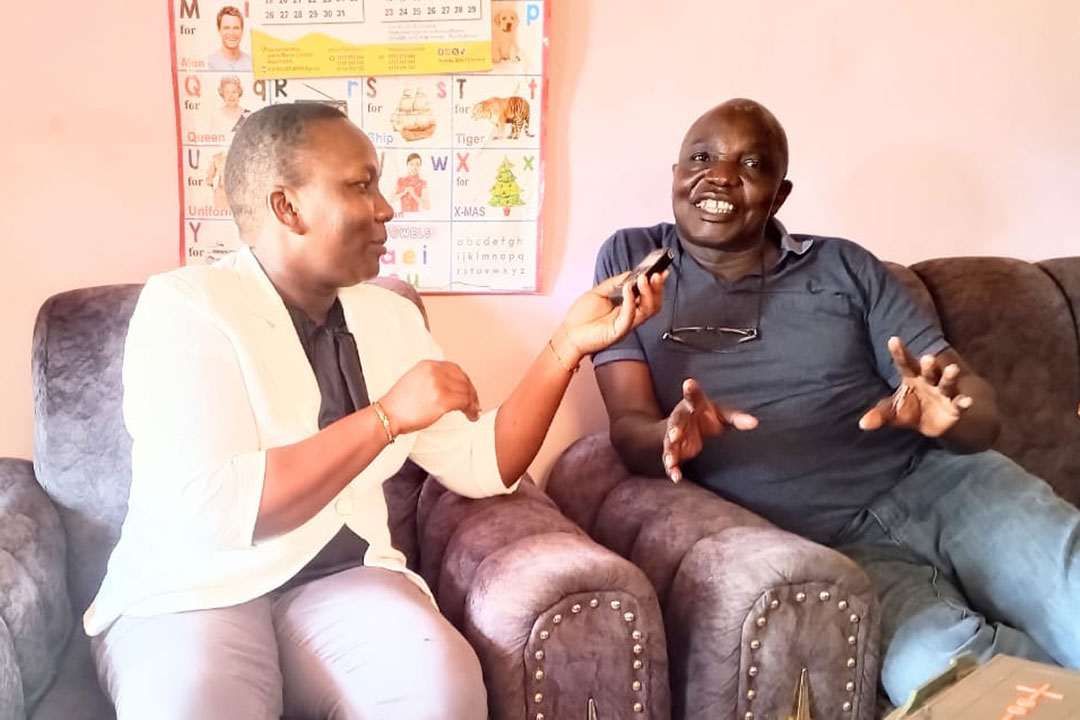
It is sunrise on a Monday morning in Ngunya village when I meet Charles Odira, one of more than 107,000 community health promoters (CHP) serving on the frontlines of primary health care in western Kenya’s Siaya County. His gender makes him something of an outlier – it’s a profession predominantly staffed by women.
Odira’s childhood dream had been to become a medical doctor, but his family didn’t have the funds to send him away to university. When his brother, who was a CHP, passed away in 2012, Odira stepped up to take his spot.
The fact that reproductive, maternal, and child health has long been viewed as a woman’s domain in rural Kenya has on occasion caused friction. “In the beginning, it was very difficult. Families would welcome a female CHP, but they were hesitant to let a male worker speak to their wives and daughters,” Odira recalls. “Whenever I anticipated rejection, I had to request a female colleague to accompany me.”
Earning his position
Still, there are important advantages to bringing men like Odira into this sphere. As a 2021 study published in Frontiers in Public Health reported, male involvement in maternal and child healthcare improves outcomes, and men are more readily brought on board by other men. In other words, male CHPs like Odira may hold untapped power to engage fathers and grandfathers in health issues that affect the entire community.
But influence is built on trust. The 56-year-old, determined to gain the community’s confidence, partnered with local administration, joining the area chief during public barazas (community meetings) to deliver health updates from Ambira Sub-County Hospital. Over time, scepticism turned into respect.
“The chief gave me a platform, and gradually, trust grew,” Odira says. “Villagers began opening up about their health struggles even before I introduced my agenda. Eventually, they gave me the nickname Jakom (chairman).”
Confidence crisis at home
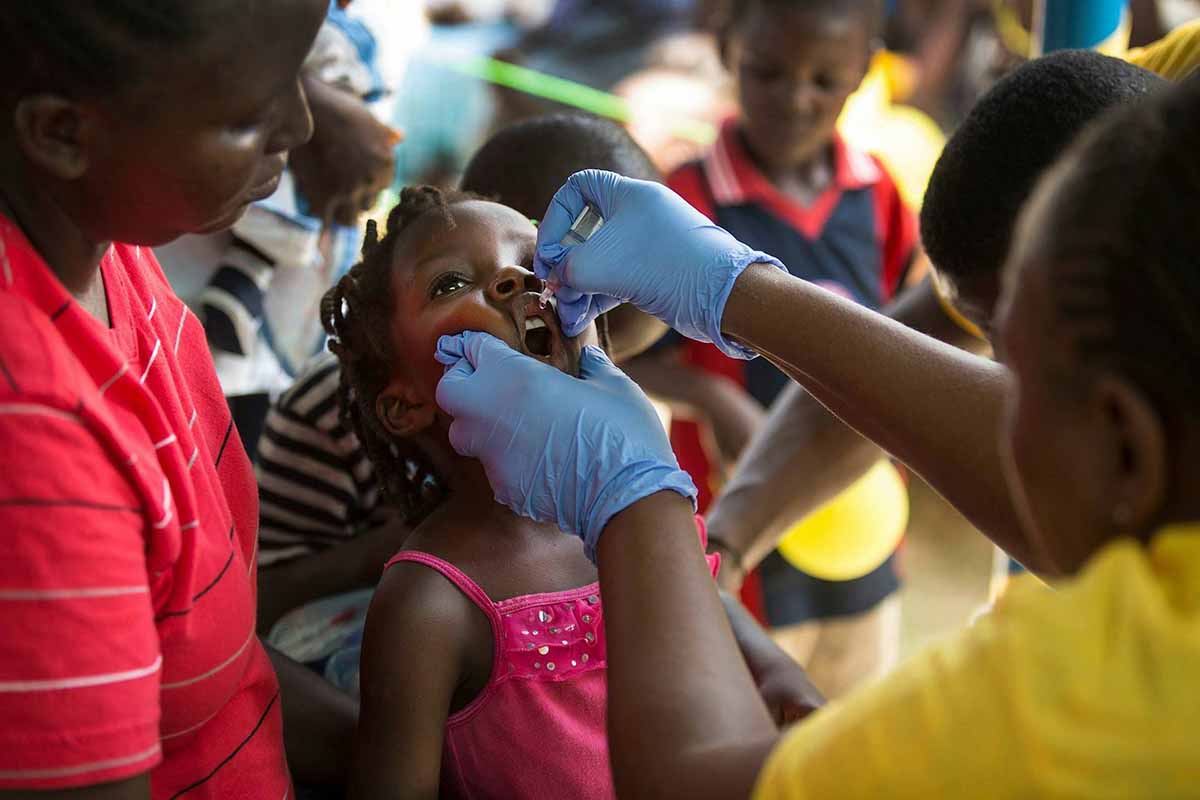
But Odira has found that vaccine misinformation can rattle even profound trust. That was the case amid the introduction of the human papillomavirus (HPV) vaccine, which first rolled out in Kenya in 2019.
The vaccine prevents cervical cancer, the second-most common cancer among Kenyan women, which kills about 3,600 of them each year.
But it was unfamiliar, and arrived in a moment of acute public health stress. That was enough to set the rumour mill churning.
Credit: Charles Odira
Elizabeth Odhiambo, a nurse at Ambira Sub-County Hospital, said many parents were hesitant to vaccinate their girls. “When the vaccine was introduced, many parents resisted because they conflated it with COVID-19 vaccines, [and feared] the government was experimenting on their daughters,” she explained.
Doubt spread, and found a target in Odira’s wife, Sara. Despite the fact that Odira was on the frontlines advocating for the vaccines, she refused to permit their daughter to be immunised. “I feared the vaccine was the disease, and that injecting my daughter would let her have cervical cancer,” Sara confesses.
Odira responded with patience and understanding, explaining to her the benefits of getting the jab, and encouraging Sara to take their daughter along when she went in for a cervical cancer screening. At the health facility, healthcare providers helped dispel the myths that were by now widespread in the community.
“Once the nurses demystified the rumours, I had no hesitation left,” said Sara. “I allowed my daughter to be vaccinated and I got screened. I joined my husband in preaching the gospel of immunisation to our neighbours.”
Man to man
“Many community members simply do not understand cervical cancer as a disease, let alone connect it to the protective benefits of the HPV vaccine,” said Joshua Ondiege, the County’s immunisation coordinator.
“To address this, we have intensified targeted sensitisation through health workers and CHPs, bringing in cancer survivors to share their lived experiences. Putting a human face to the burden helps the community see the reality.”
And sometimes it helps to have a conversation, father-to-father.
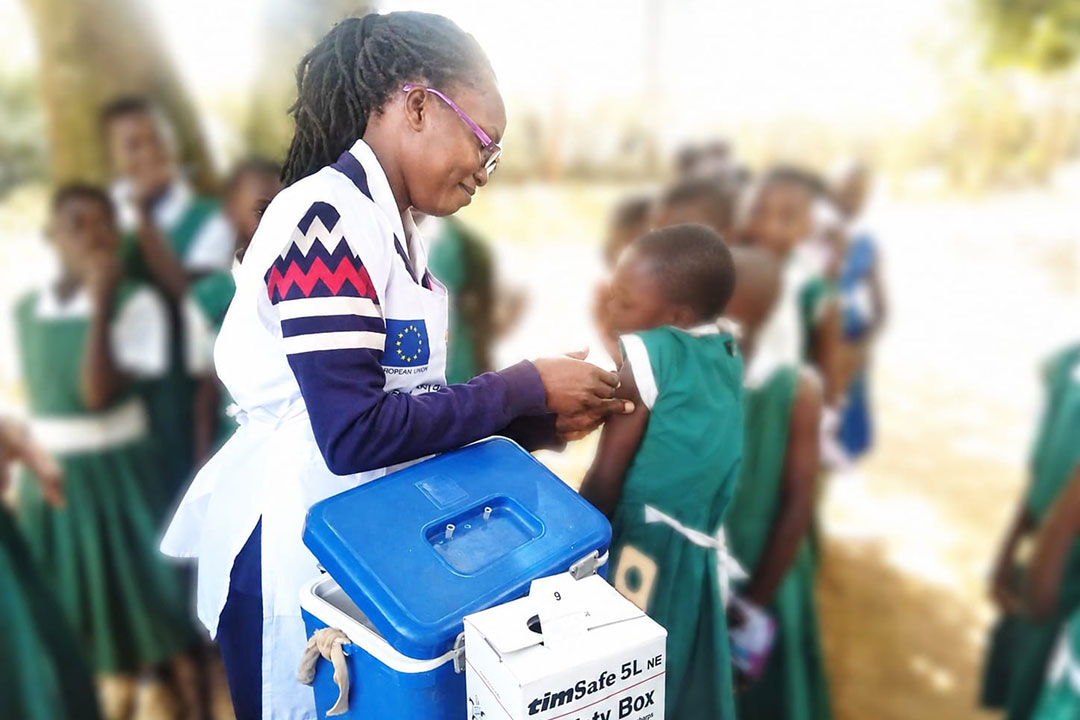
During an outreach mobilisation at Nyamasare Primary School, one girl told Odira her mother had strictly forbidden the vaccination. Odira followed up by visiting the family’s homestead, only to find the mother fleeing out through the back door.
“She claimed we wanted to poison her child,” Odira explains. “I didn’t give up. Since I could not reach the mother directly, I approached her husband. We had an honest conversation, and he agreed, spoke to his wife, and their daughter was successfully vaccinated.”
One girl at a time
Each successful outreach to a hesitant family brings Kenya closer to its target: the immunisation of 90% of girls by age 15 – a critical step on the road to the elimination of cervical cancer.
According to data by WHO between January and June 2026, Kenya recorded 472,845 adolescent girls receiving the single-dose HPV vaccine, an 80% surge compared to the same period in the previous year. That puts Kenya at 69% coverage nationwide.
Siaya county stands at 72% coverage for the same period, said Ondiege. There’s further to go, and for Jakom and his fellow health promoters in Siaya, that means there are doors to knock on and conversations to start.