
Scientists found 54 viruses in indoor dust: could this help us track disease outbreaks?
Researchers in the US have shown that ordinary indoor dust can reveal which viruses have been circulating in a building, opening up a possible new front in disease surveillance.
- 28 May 2026
- 5 min read
- by Priya Joi
At a glance
- A new study from Ohio State University found genetic traces of 54 different viruses in dust vacuumed from schools, university residence halls and offices, including SARS-CoV-2, influenza and norovirus.
- The viral particles left behind in dust are typically harmless because they have decayed and are no longer infectious, but they offer a record of what has been circulating in a space.
- While there’s currently no standard dust-sampling technology for virus detection, the researchers plan to test whether their technique can be applied more broadly.
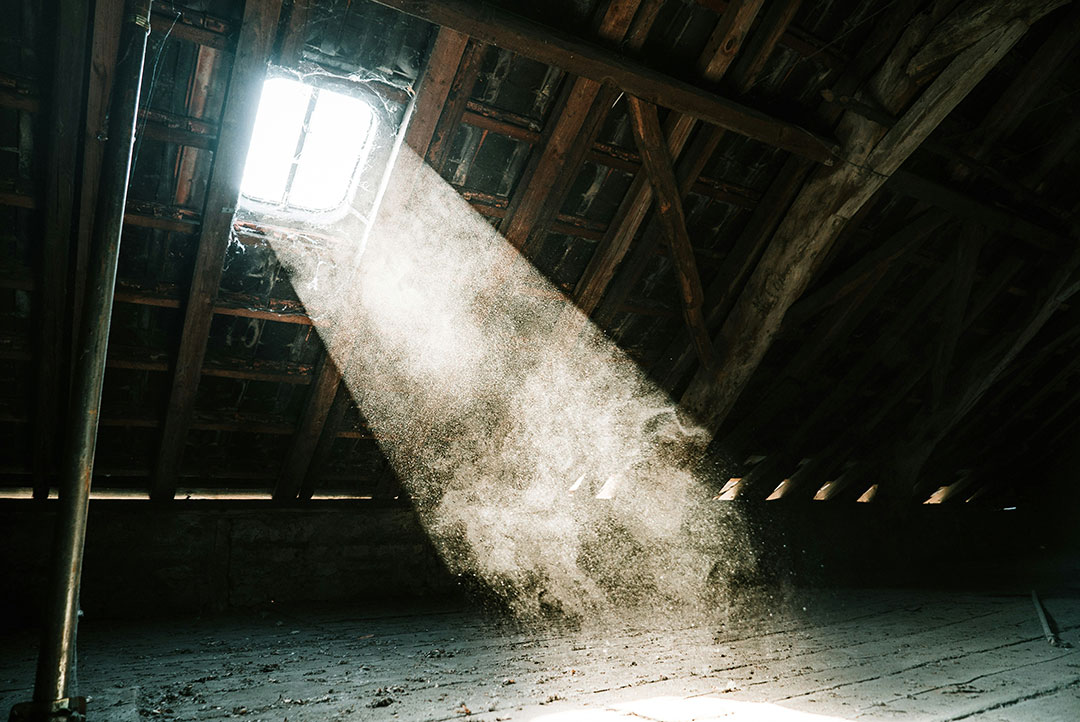
For most people, dust is something to be rid of. For a team of environmental researchers, it’s become something worth collecting.
The group, led by environmental health sciences professor Karen Dannemiller, has been working on the idea of dust as an outbreak warning system since the COVID-19 pandemic.
They showed in 2021 that SARS-CoV-2 genetic material could be detected in dust collected from buildings on the Ohio State campus, and they could even differentiate between different variants of the virus.
In the new study, published in the journal Building and Environment, the researchers vacuumed dust from nearly 30 indoor settings in the US, including schools, university halls of residence and office buildings.
They used technology designed to pick up the molecular traces that viruses leave behind as they decay, screening the samples against a panel covering 200 viruses. Across the 27 samples analysed, the team detected 54 distinct viruses, with every sample containing at least one.
The findings suggest it may be possible to monitor which viruses are circulating in a given building without having to test the people inside it.
“This is groundbreaking work,” Dannemiller said in a release accompanying the study. “While people have sequenced viruses out of dust before, it’s been on a pretty limited basis and was not proposed as a surveillance tool.”
This new study could lead “to a more informed use of precautions and better targeting for the use of resources,” she added.
Tracking pathogens
Environmental tracking of pathogen spread often uses wastewater surveillance. Sewage can reveal what is circulating in the wider community, often before people start turning up in clinics. But wastewater works best at the level of populations, and not everyone sheds every pathogen in ways that show up in sewage.
Indoor dust, however, accumulates biological material shed by the people who spend time in a space, and it picks up particles from the air and from surfaces too. Over time, it builds up a kind of layered record of what has been in the room.
The viruses identified in the Ohio State samples reflected this. Rhinoviruses, the family responsible for the common cold, turned up in 85% of the samples collected.
Have you read?
The viral fingerprints also differed between buildings used mainly by adults and those used by children, with dust from daycares and elementary schools carrying a distinctly different mix of viruses from dust collected in offices.
Levels of influenza virus in the dust rose and fell roughly in step with national outbreak data, suggesting the method could pick up wider trends.
“Similar to wastewater monitoring, which tracks disease clusters on a large-scale level, we’ve created an intermediate tool that has those same benefits for a smaller population,” Dannemiller said.
A record, not a risk
A key point the researchers emphasise is that the viral material in dust is not dangerous to the people in the building. By the time a virus has decayed into particles detected by genetic tracing, it has typically lost the ability to infect.
A school, hospital, care home or workplace could, in principle, be monitored for signs that a particular virus is circulating before it becomes an outbreak.
What dust offers is a record of what has passed through a space, rather than an active source of infection. This means dust-based surveillance does not require people to be tested and does not raise the same safety concerns as handling live virus samples.
Dust can also capture traces of viruses shed by people who never developed symptoms as well as those who did, without anyone needing to volunteer a swab.
What it could mean for outbreak detection
The most obvious application is in early detection. A school, hospital, care home or workplace could, in principle, be monitored for signs that a particular virus is circulating before it becomes an outbreak.
That kind of early signal can shape decisions about ventilation, cleaning or targeted vaccination campaigns.
It could also help direct scarce public health resources to where they are most needed.
“Research like this is useful for monitoring a range of buildings where there’s a variety of things that you're concerned about,” Dannemiller said. “By using that information to help pinpoint those issues, it’s possible to improve our decisions about where to direct limited mitigation resources.”
There is, as yet, no standard technology or protocol for sampling dust to test for viruses. Different buildings collect dust at different rates and in different ways, and the mix of people who use them varies, all of which will need to be factored in if dust is ever to be used routinely.
The Ohio State team’s next step is to find out whether the technique they used can be applied more broadly, across different building types and a wider range of viruses than the 200 covered by their panel.
More from Priya Joi


Recommended for you