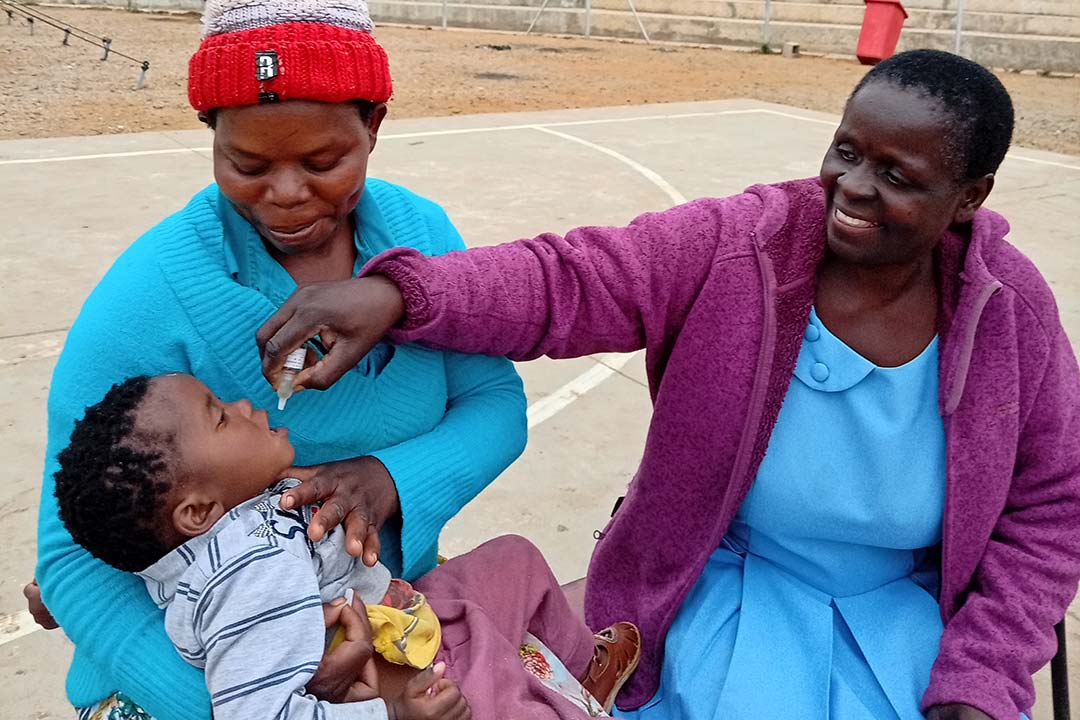

Inside one of Africa’s most complex supply chains
How Gavi and its partners are using real-time data, drones and private sector logistics to get more vaccines to the hardest-to-reach communities.
- 1 July 2026
- 6 min read
- by Priya Joi
At a glance
- Gavi’s new immunisation Supply Chain strategy sets out how the Alliance will get vaccines to zero-dose and under-served children across more than 50 countries over the next five years.
- Real-time cold chain monitoring devices deployed in 43 countries have cut vaccine losses by up to 80%, and outsourcing last-mile delivery to private logistics firms in Ethiopia more than doubled vaccine availability, while cutting the cost per mile.
There’s usually a long and complicated journey between the end of the vaccine production line and the child destined to receive that life-saving dose.
Gavi supports immunisation supply chains in the more than 50 countries that include the world’s most remote and hard-to-serve communities, and therefore takes on some of the world’s trickiest logistical puzzles. This week, the Vaccine Alliance is launching a new strategy to make sure more vaccines get to more people, more efficiently.
The plan? Build on the truly compelling gains made during the last five-year strategy.
By end-2025, 82.5% of decentralised vaccine distribution points – those fragile end-segments of the cold chain that branch off from main vaccine stores – in Gavi-supported countries reported full availability of key vaccines.
But that still leaves nearly one in six of those distribution points facing inconsistent supply. Gavi and its partners head into the next chapter knowing that last-mile delivery remains the most persistent challenge, particularly in fragile and conflict-affected settings. Making vaccines reliably obtainable in every place is nothing less than a life-or-death question.
“Vaccines only save lives when they reach people in the right place, at the right time and in the right condition,” explains Thabani Maphosa, Gavi’s Chief Country Delivery Officer. “This strategy is about delivering that consistency by strengthening the entire system, with a clear focus on availability, efficiency and equity, and by ensuring stronger integration and coordination at the last mile, where systems must come together to reach communities effectively.”
News release: Gavi launches new supply chain strategy to boost vaccine availability and reach remote communities
Gavi, the Vaccine Alliance, has unveiled a new immunisation Supply Chain Strategy to support countries ensure vaccines reliably reach people, reliably and in time especially those in underserved communities.
Here are five insights that the new supply chain strategy will build on, in order to ensure life-saving improvements in reach and efficiency.
1. Real-time monitoring has cut vaccine losses by up to 80%, and can do more
If vaccine vial temperatures drop below or rise above the temperature sweet spot (for most vaccines, this is 2–8°Celsius), the doses inside can lose their protective power. Making sure health systems know when the cold chain is malfunctioning is critical, and a challenge tech innovators have been making incremental progress on for decades.
Between 2021 and 2025, Gavi supported the roll-out of next generation remote temperature monitoring devices called ColdTrace, developed by Nexleaf Analytics, across 43 countries. Nexleaf Analytics is a firm that emerged from Gavi’s INFUSE (Innovation for Uptake, Scale and Equity in Immunisation) programme, which identifies and scales promising innovations from the private sector.
Those ColdTrace devices have made a convincing impact: up to an 80% reduction in vaccine losses, a 63% reduction in equipment downtime and US$ 1.7 billion worth of vaccines monitored each year.
Gavi estimates that one in six children globally is now benefiting from this technology. Next up? Shore up those gains, and push onwards.
Have you read?
2. Teaming up with the private sector for last-mile delivery can double vaccine availability while saving money.
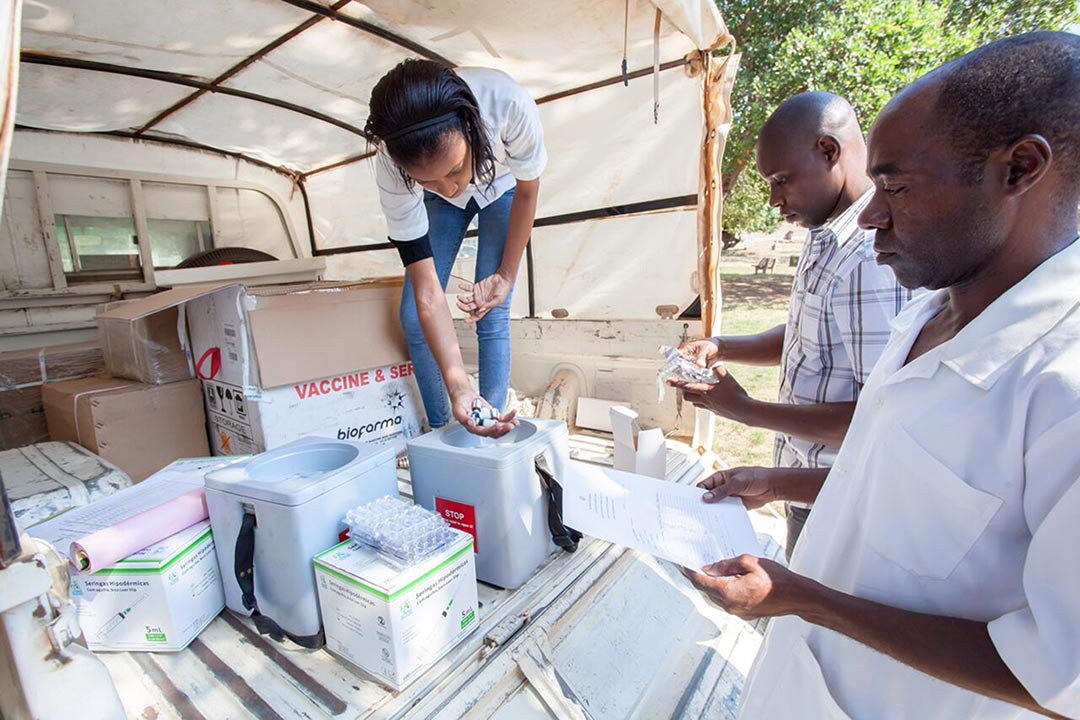
Under its previous strategy, Gavi began testing whether private sector logistics firms could do more to tackle last-mile vaccine delivery where overstretched public systems were struggling.
In Ethiopia, an outsourced delivery model more than doubled vaccine availability at the very end of the delivery chain, from 41% to 95%. It also proved cheaper, with the cost per mile dropping from US$ 0.83 to US$ 0.64. Subsequent pilot programmes using optimised routing and integrated delivery models have achieved up to 100% vaccine availability across hubs, and more than 97% service coverage.
In Nigeria, Kenya, Rwanda and Ghana, Gavi expanded the use of drones for vaccine distribution, reaching communities that were previously inaccessible by road.
The new strategy makes these kinds of partnership a central pillar. It calls for what Gavi calls a “merger at the last mile”, in which supply chains, data platforms and delivery routes for immunisation and other primary health care services are brought together so they function as a single system at the point of delivery.
3. Deploying 38,000 cold chain equipment units between 2021 and 2025 measurably boosted system functionality. Further expansions are in the works.
Between 2021 and 2025, Gavi deployed nearly 38,000 cold chain equipment units. The number of Gavi-supported countries who could claim to have achieved 90% or higher cold chain functionality accordingly rose from 3 to 31.
In South Sudan, warehouse capacity was expanded from 2,700 m2 to 4,700 m2.
A growing share of this critical infrastructure is powered by solar energy. Gavi’s Health Facility Solar Electrification programme is bringing reliable power to health facilities in areas where the electricity grid is absent or unreliable, ensuring that vaccines can be stored safely in places that were previously impossible to serve.
The new strategy calls for a shift from reactive repairs to preventive maintenance, and then to predictive maintenance, supported by the same real-time monitoring data that is already reducing vaccine losses.
4. What’s better than a bunch of clever immunisation data tools? A bunch of clever data tools merged into a single, seamless system.
The unification of previously fragmented data-tracking systems is likewise expected to propel further efficiency gains at the national level.
Countries including Rwanda, Tanzania and Nigeria have begun connecting the systems that track vaccine stocks, monitor cold chain temperatures and report immunisation coverage, integrating electronic logistics management systems, health information systems and temperature monitoring into a single digital ecosystem.
A joint initiative between Gavi, the Global Fund and UNICEF Supply Division is supporting this integration, with the goal of creating interoperable national platforms that allow data to flow between systems.
The new strategy calls specifically for the adoption of international data standards and the roll-out of tools like Thrive360 and Data Control Towers, platforms designed to give health officials a live, consolidated view of their supply chain performance.
5. In the last five years, 22 countries developed national strategies to tackle medical waste. Making plans sooner rather than later will save money and the environment.
Immunisation generates waste: syringes, vials, packaging, expired vaccines and decommissioned equipment. In many low-income countries, this waste is burned in open-air incinerators or, worse, disposed of unsafely. A survey of health facilities in Ethiopia found that 61% had poor waste management practices.
Under its previous strategy, Gavi supported 22 countries to develop national healthcare waste-management roadmaps. Roughly 30 Gavi-supported countries have been introduced to green waste management technologies, and long-term agreements have been established with suppliers of these technologies.
The new strategy frames waste as part of a broader commitment to environmental sustainability.
As immunisation programmes expand to offer more vaccines across the life course, the volume of waste will grow with them. Countries that lack systems to manage it safely will face compounding problems. Building those systems now, while the infrastructure is still being put in place, is considerably cheaper than retrofitting them later.