
HPV vaccine means young women are no longer dying from cervical cancer in England
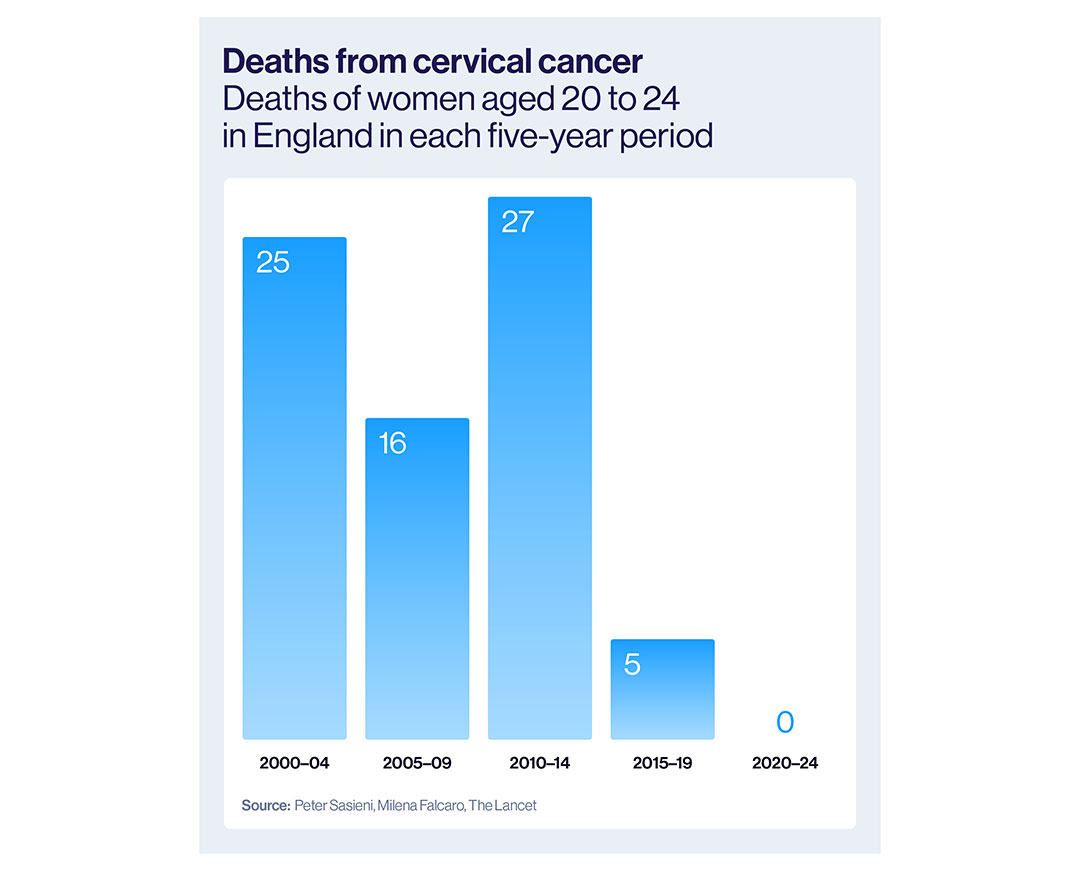
Between 2020 and 2024, no women aged 20 to 24 died from cervical cancer in England, the first time there have been zero deaths since the human papillomavirus (HPV) vaccine was introduced.
- 22 June 2026
- 5 min read
- by Priya Joi

At a glance
- A Lancet analysis of national mortality data in England found no cervical cancer deaths among women aged 20 to 24 years between 2020 and 2024.
- Researchers estimate the HPV vaccination programme has already prevented around 200 cervical cancer deaths in England, with many more lives expected to be saved as vaccinated women grow older.
- However, experts warn that vaccination rates in England have fallen below the level the WHO says is needed to eliminate cervical cancer.
A new study estimates that hundreds of deaths have already been prevented by England’s national HPV vaccination programme, with many more lives likely to be saved as vaccinated women age.
In the early 2000s, roughly 50 women under the age of 35 were dying of cervical cancer in England every year. Almost all cervical cancers are caused by the human papillomavirus (HPV), and between 2020 and 2024, the HPV vaccine has meant deaths in the 20- to 24-year-old age group has plummeted to zero.
Vaccination is critical because HPV is one of the most common sexually transmitted infections; around 80% of people will get it in their lifetime if they are not vaccinated.
“It’s incredible to think that a single jab can almost eliminate a particular type of cancer,” Peter Sasieni, the study’s lead researcher at Queen Mary University of London, told the BBC.
But the gains depend on keeping vaccination rates high, and in England they have been slipping. Only 76% of girls were vaccinated by age 15 during 2024–2025, well below the 90% level the WHO says is needed to wipe out cervical cancer as a public health problem.
What impact has HPV vaccination had on cervical cancer deaths?
Sasieni and his colleague Milena Falcaro looked at every cervical cancer death recorded among women aged 20–34 in England between 2001 and 2024. They split the women into three age groups (20–24, 25–29 and 30–34) and used a statistical model to compare the deaths that actually occurred with how many deaths would have been expected in the absence of the vaccine.
The biggest impact was in the youngest women. Those aged 20–24 between 2020 and 2024 were offered the vaccine when they were 12 or 13, and around nine in ten took it up. None of them have died of cervical cancer. Without the vaccine, the researchers estimated around 23 would have died. The research was published in The Lancet.
Have you read?
The picture was similar in women aged 25– 29, where vaccination has also slashed deaths. In women aged 30–34, the effect is smaller and harder to measure, partly because most of them were offered the vaccine in their late teens, when they might already have been exposed to HPV. The vaccine works best when given before any exposure to the virus.
In total, the study estimated that the vaccination programme has prevented around 200 cervical cancer deaths in England so far. The researchers emphasise that this is just the beginning. As more vaccinated women reach their late thirties and forties, the age at which cervical cancer deaths usually start to rise, the number of lives saved is expected to grow rapidly over the next two decades.
The authors are careful to note that the zero deaths figure in the very youngest age group is partly a reflection of the very low background rate of cervical cancer deaths in women that young. Even so, the broader pattern across age groups and over time is consistent with the vaccine working well.
What does this mean for cervical cancer elimination efforts?
HPV vaccination is the cornerstone of WHO’s global plan to eliminate cervical cancer as a public health problem. England introduced its programme in 2008, offering the vaccine to girls aged 12 and 13, with a catch-up campaign for older teenagers.
The vaccine works by protecting against human papillomavirus (HPV), a common virus passed on through skin-to-skin contact. Most HPV infections clear up on their own, but some can cause changes in cells that lead to cancer years later. Two strains, HPV16 and HPV18, are responsible for the vast majority of cervical cancers in young women.
Earlier studies had shown that the vaccine cuts the number of cervical cancer cases. What had not been clear until now was whether it would also cut deaths. Some researchers had worried that the cancers being prevented by vaccination might be the early-stage ones that screening would have caught anyway, leaving the more advanced cancers, which cause most deaths, untouched. This study shows that fear was misplaced.
Cervical cancer remains the second most common cause of cancer death in women under 65 globally. Around 3,300 cases are diagnosed in the UK every year, and HPV is thought to cause around 99% of them. Vaccinating adolescents before they are exposed to the virus is by far the most effective way of preventing it.
“As vaccinated generations grow older, we’ll see many more lives saved from cervical cancer,” Sasieni said. "New research shows just how vital it is to keep HPV vaccination levels high, so more people are protected.”
Michelle Mitchell, chief executive of Cancer Research UK, which funded the study, called the findings an “incredible milestone” but warned that vaccination rates were slipping. “It’s essential that the UK Government and health systems urgently address this with targeted action to reach communities where uptake is the lowest,” she told the BBC.
The findings support the WHO target of eliminating cervical cancer as a public health problem, but reaching it will depend on countries getting and keeping vaccination coverage high among young teenagers, both in England and globally.