
The state of global immunisation in eight charts
The latest WHO and UNICEF estimates suggest immunisation coverage is improving, particularly in lower-income countries.
- 15 July 2026
- 5 min read
- by Linda Geddes
One of the clearest snapshots of childhood immunisation was released today, offering fresh insights into the health of the world’s children.
Published each year by the World Health Organization and UNICEF, the WHO/UNICEF Estimates of National Immunization Coverage (WUENIC) track how many children received routine vaccines against diseases such as measles, tetanus and polio in 2025.
The latest estimates reveal where progress is being made, while highlighting where children are still being left behind.
Here are eight key takeaways from the data, with a particular focus on lower-income countries:
1. Basic immunisation coverage is rising
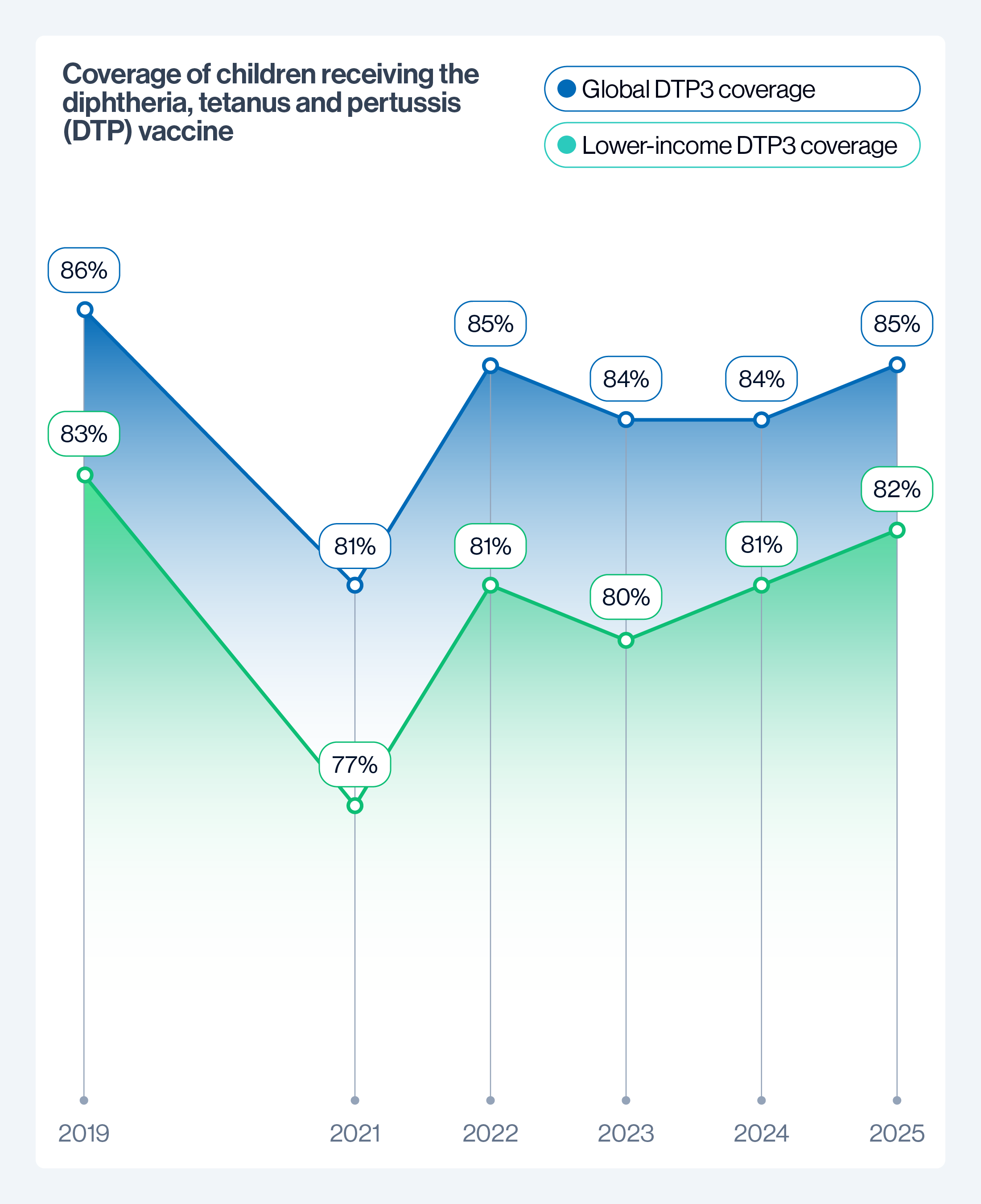
Globally, the proportion of children receiving three doses of diphtheria, tetanus and pertussis-containing (DTP3) vaccine – a key indicator of countries’ ability to consistently deliver essential childhood vaccinations – is increasing.
Global DTP3 coverage reached 85% in 2025, almost recovering to its pre-pandemic level. Protection with a critical first dose of the diphtheria-tetanus-pertussis vaccine (DTP1) has also increased to 90%.
The same trend can be seen in lower-income countries supported by Gavi, the Vaccine Alliance. Gavi currently supports vaccination programmes in 57 countries, with eligibility based primarily on national income. Average DTP3 coverage across these countries reached 83% in 2025, just below its pre-pandemic level, while more than half had already matched or exceeded their 2019 coverage. Protection with a first dose of DTP vaccine increased one percentage point to 88% in 2025, the same level as 2019.
These achievements are remarkable given the disruption caused by COVID-19, the growing number of outbreaks straining health systems and rising birth cohorts in many lower-income countries, which means they must vaccinate more children each year simply to maintain coverage.
2. Basic immunisation coverage has also increased in fragile and conflict-affected countries
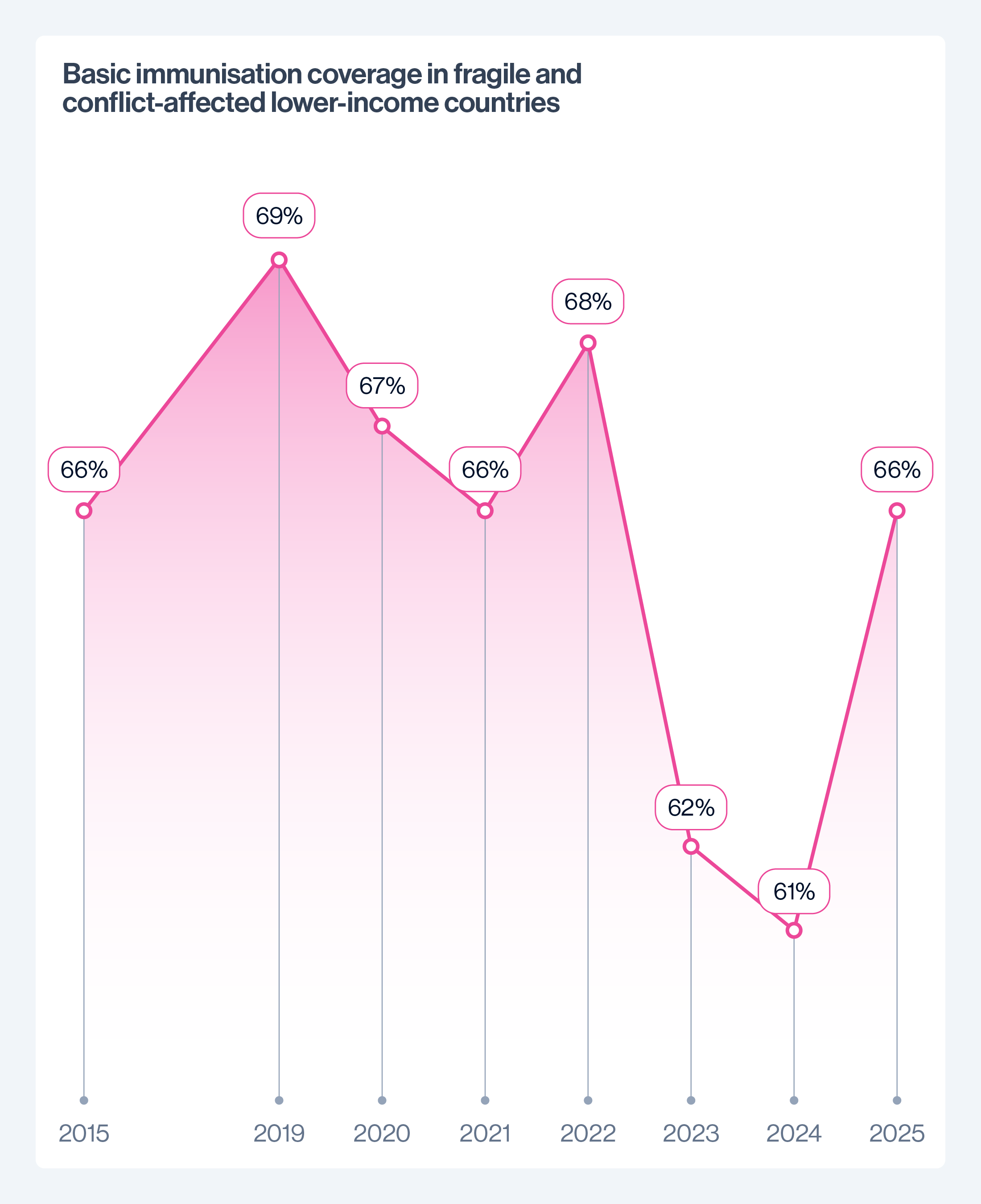
Routine immunisation programmes are particularly vulnerable to disruption in fragile and conflict-affected settings, where insecurity, displacement, damaged health settings and often rapidly growing birth cohorts make it harder to reach every child.
Even so, DTP3 coverage across 12 countries classified as experiencing fragility and conflict increased by five percentage points in 2025, reaching 66%. Sudan recorded the largest improvement, with coverage rising by 32 percentage points.
Coverage also increased in six other countries: the Central African Republic (+4 percentage points), Chad (+3), Somalia (+2), Mali (+1), Niger (+1) and Papua New Guinea (+1).
However, Syria experienced a 13-percentage-point decline from 2024 to 2025, while coverage in Yemen (-3 percentage points), Afghanistan (-2) and Haiti (-2) also declined.
3. The number of zero-dose children has fallen, but there’s still a long way to go
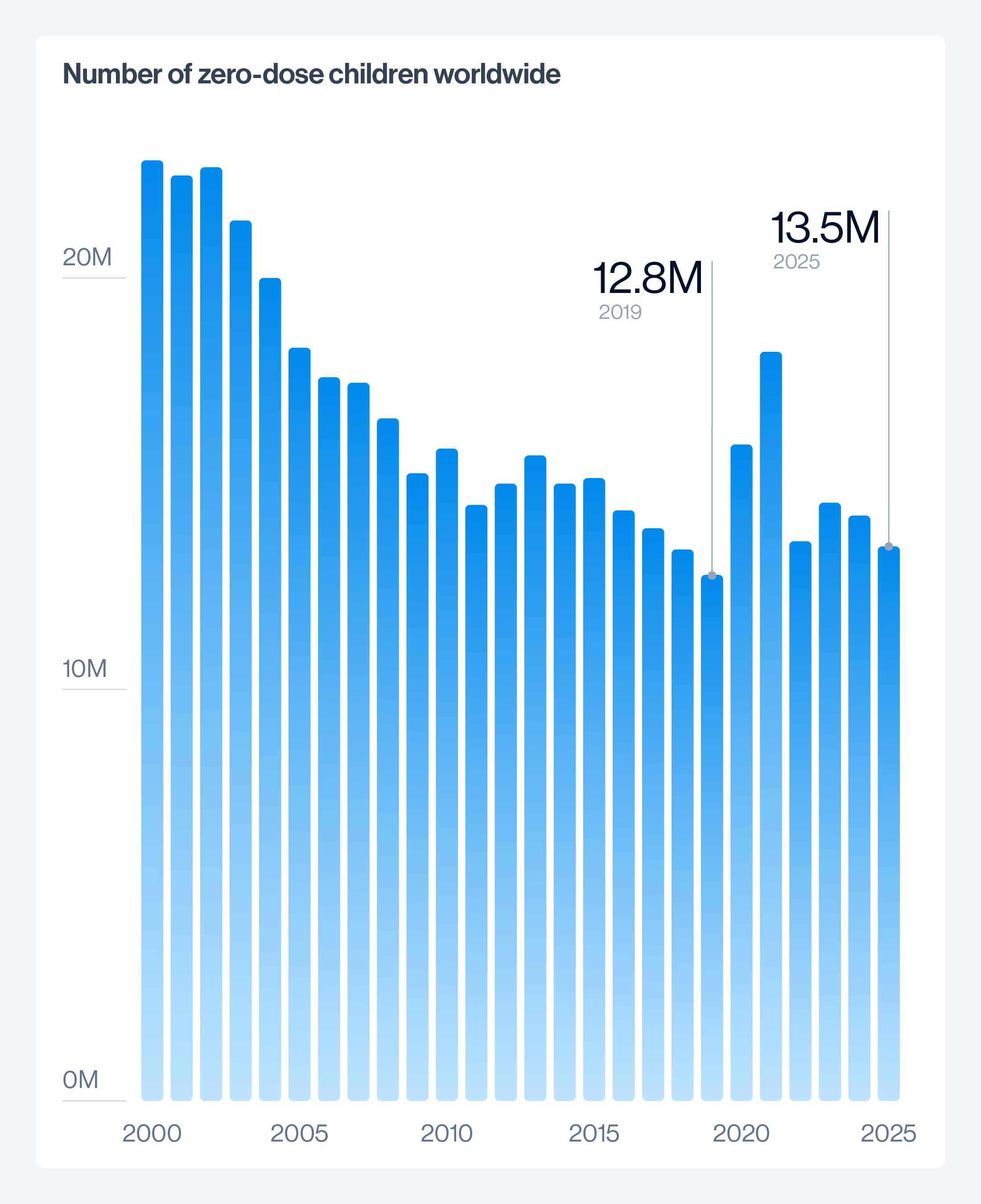
In 2025, an estimated 13.5 million children globally did not receive even a first dose of a diphtheria, tetanus and pertussis-containing vaccine during their first year of life, meaning they were missed by routine immunisation services.
Although the number of these so-called zero-dose children fell from 14.2 million in 2024, it remains higher than before the COVID-19 pandemic.
Around 70% of the world’s zero-dose children live in lower-income countries supported by Gavi. Their number fell by 640,000 in 2025 to 9.5 million, largely driven by improvements in coverage in populous countries including Sudan, Ethiopia and India.
This accounted for 85% of the global reduction and brought the total in Gavi-supported countries close to its pre-pandemic (2019) level of 9.1 million.
4. First-dose measles coverage has stalled, but second-dose coverage in lower-income countries is improving
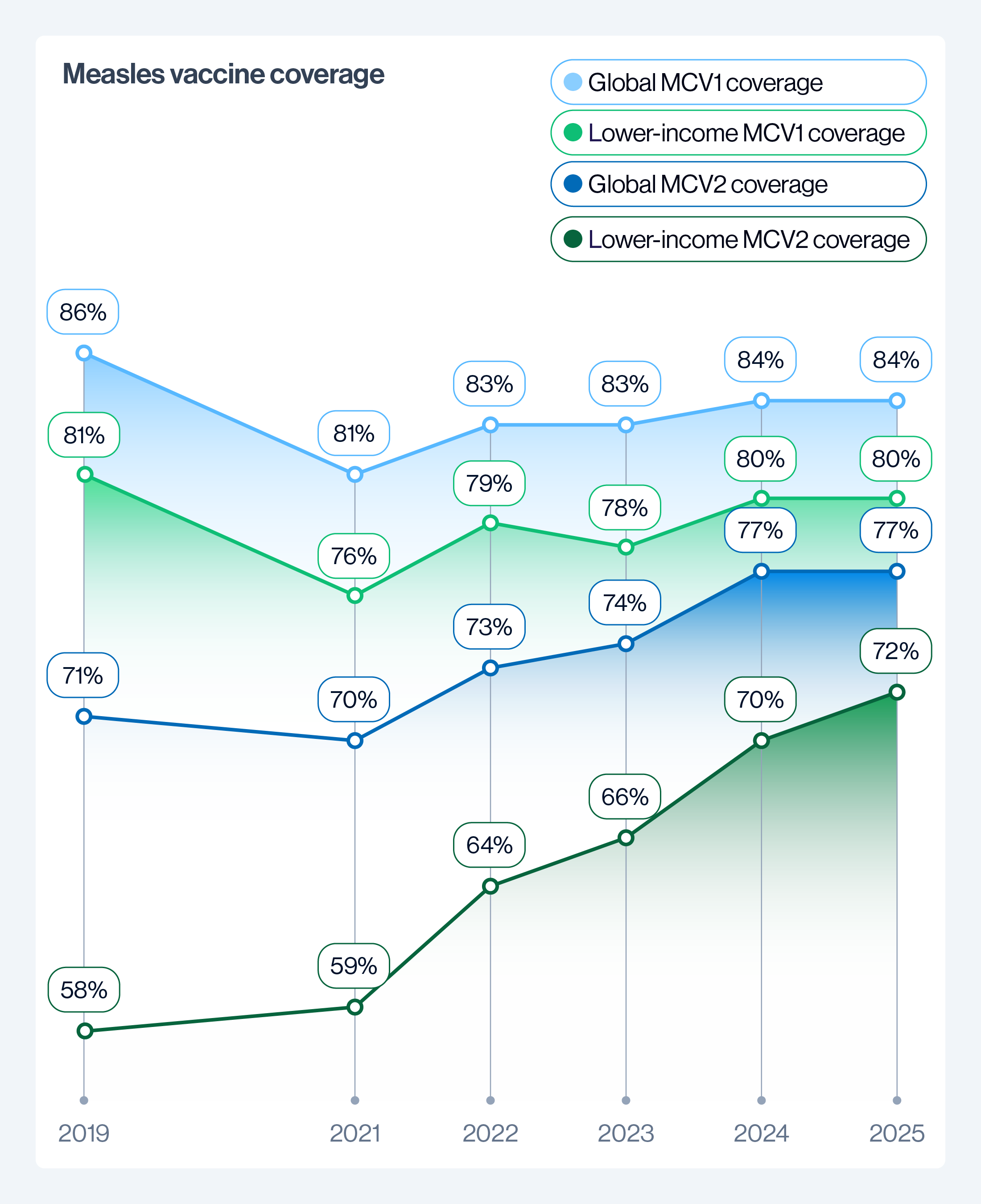
Globally, coverage with a first dose of measles vaccine (MCV1) is still struggling to recover to its pre-pandemic level of 86% and remained steady at 84% in 2025.
However, coverage with a second measles vaccine dose (MCV2) continues to improve, as countries that recently introduced this dose strengthen their second-year-of-life programmes.
In lower-income countries supported by Gavi, coverage with a first dose of measles vaccine held steady at 80% and is now just one percentage point off pre-pandemic levels. Coverage with a second dose rose to 72% in 2025.
Despite these gains, most countries remain well short of the 95% coverage with two doses of measles vaccine needed to prevent outbreaks.
5. High measles vaccination coverage is the best way to prevent large outbreaks
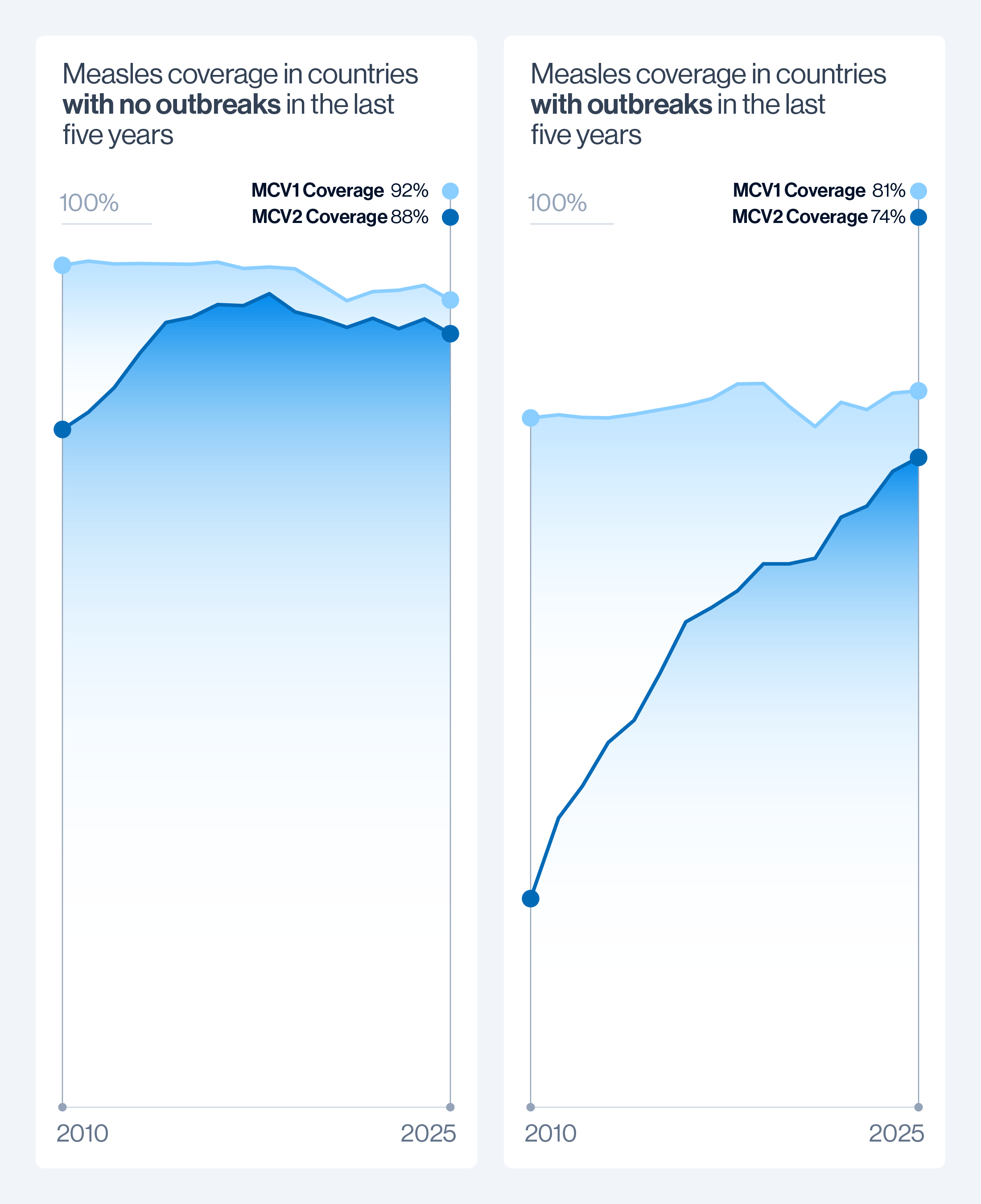
The link between high measles vaccination coverage and fewer outbreaks is clear.
Countries that have avoided large or disruptive measles outbreaks over the past five years have consistently achieved higher coverage than the 97 countries that have experienced them.
6. Protection against multiple vaccine-preventable diseases in lower-income countries is approaching levels seen in wealthier ones
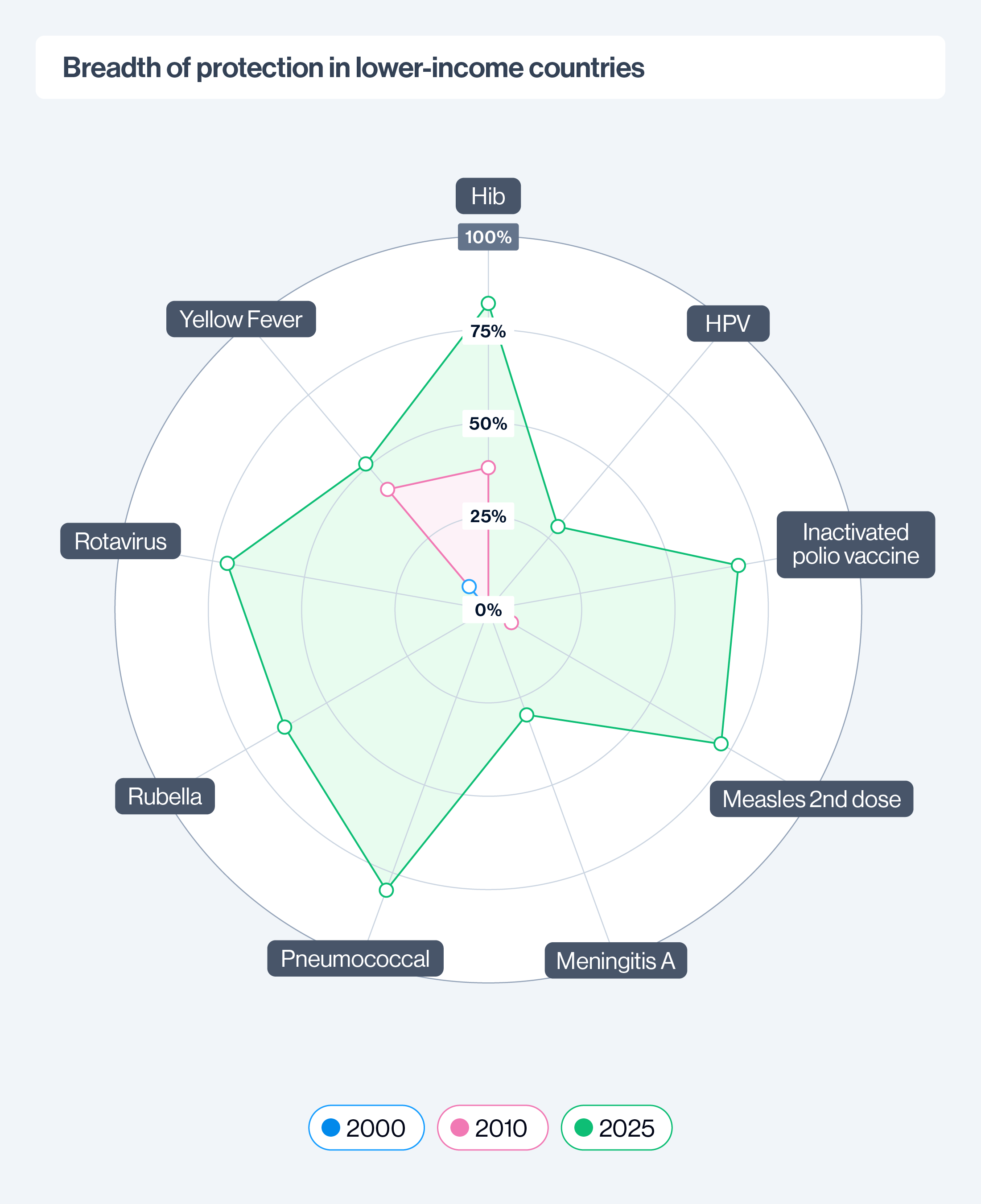
Children in lower-income countries are now, on average, as well protected against multiple vaccine-preventable diseases as those in the rest of the world.
Average coverage across the full range of Gavi-supported vaccines (a measure known as breadth of protection) reached 65% in 2025, matching the rest of the world for the first time.
This represents a 16-percentage-point increase since 2019, driven largely by the introduction and scale-up of new vaccines.
7. The global roll-out of HPV vaccines to prevent cervical cancer continues to gather pace
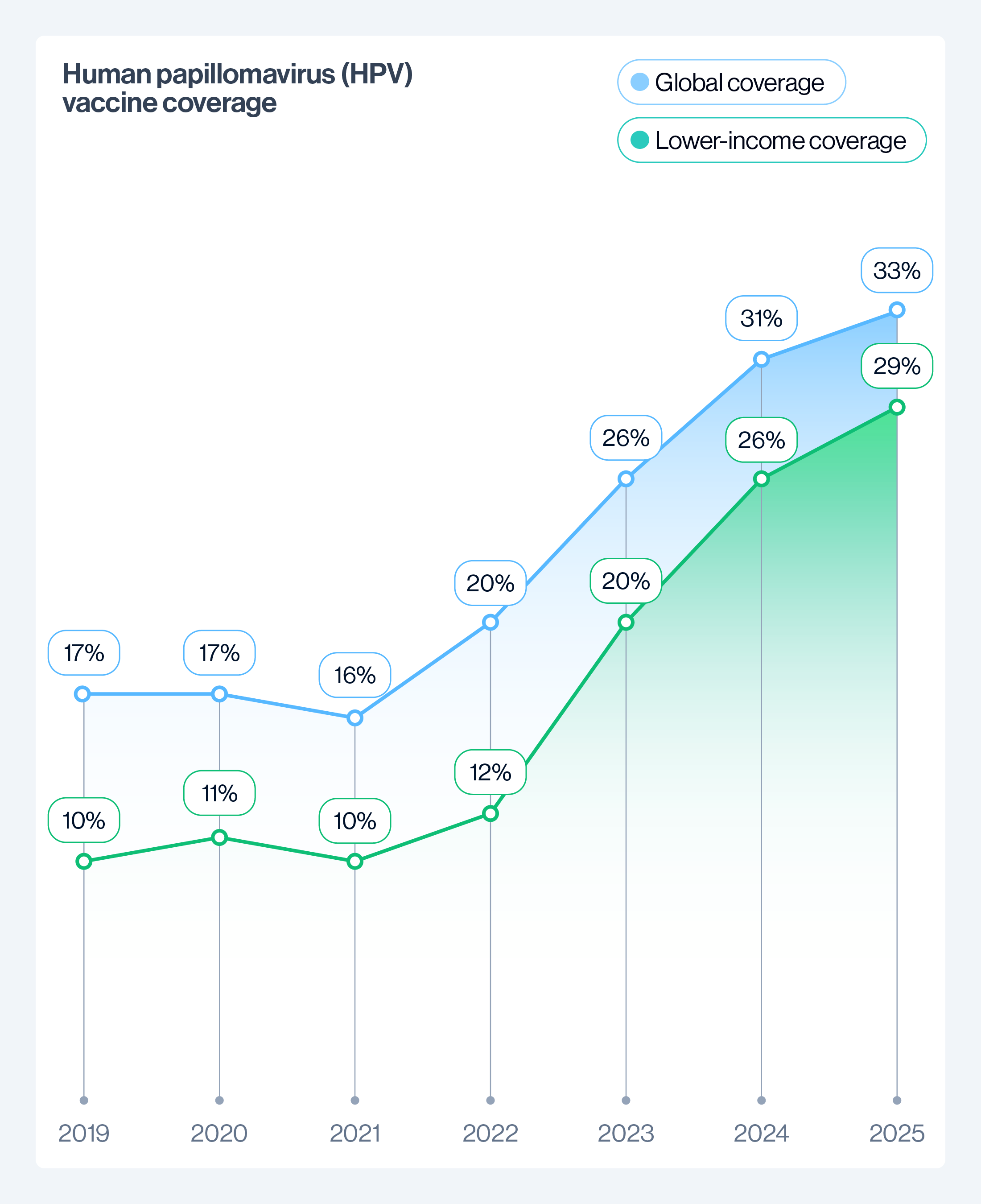
The roll-out of the HPV vaccine, which protects against cervical cancer, continues to accelerate.
Globally, around 65% of adolescent girls now have the opportunity to be vaccinated against HPV through their country’s routine immunisation programme, with 15 new introductions in 2025. HPV vaccine coverage has also increased, with roughly a third (33%) of adolescent girls in countries that have access to the vaccine receiving at least one dose during 2025.
In lower-income countries supported by Gavi, the total protected with the HPV vaccine is now 95 million, with 79 million vaccinated in the past three years alone. In these countries, coverage with a first dose currently stands at 29%.
8. More children are also being immunised in lower-income countries than ever before
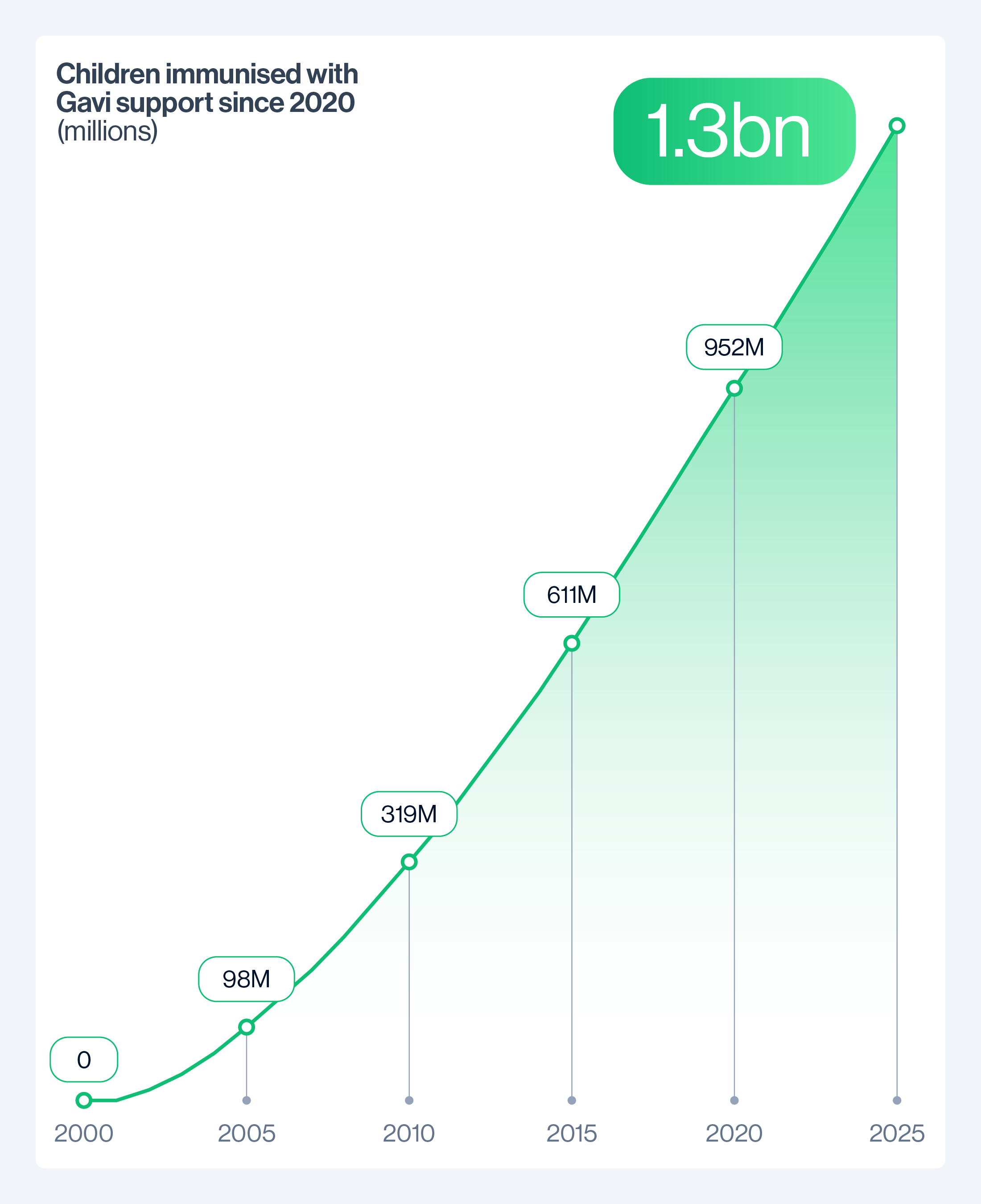
Since 2000, lower-income countries have immunised more than 1.3 billion children with Gavi-supported vaccines. From 2021-25 alone, more than 351 million children were immunised.
More from Linda Geddes