
The world’s first Bundibugyo Ebola vaccine has entered human trials: here’s why it matters
Could a vaccine against the Bundibugyo virus currently spreading in eastern DRC be on the horizon?
- 23 July 2026
- 5 min read
- by Linda Geddes
At a glance
- A phase 1 trial of a vaccine against Bundibugyo ebolavirus has been launched in response to the ongoing outbreak in the Democratic Republic of the Congo.
- The ChAdOOx1 BDBV vaccine candidate uses the same viral vector platform as the Oxford/AstraZeneca COVID-19 vaccine, but instead of carrying the genetic instructions for SARS-CoV-2 spike protein, it carries instructions for a Bundibugyo virus protein.
- The trial will assess the safety of the vaccine candidate and the immune responses it generates in 50 healthy adults aged 18–55 years.
The world’s first vaccine against Bundibugyo ebolavirus has entered phase 1 human trials.
The news comes as health workers begin to lay the groundwork for a study to test whether the existing Ervebo vaccine against a different species of ebolavirus could provide partial protection against the Bundibugyo virus, while Bundibugyo-specific vaccines continue to be developed and tested.
Dr Jean Kaseya, Director General of Africa Centres for Disease Control and Prevention (Africa CDC) said the Bundibugyo vaccine trial marked an important step in the global effort to accelerate safe and effective tools against Bundibugyo ebolavirus.
“Early-stage clinical trials are not an immediate solution for communities facing the outbreak today, but they are a critical part of building the tools we need for this response and for future outbreaks.”
Several other Bundibugyo vaccine candidates are also being developed and advanced towards clinical trials as quickly as possible in an unprecedented collaboration.
Why does the world need another Ebola vaccine?
Bundibugyo is one of six known species of Orthoebolavirus, four of which are known to cause Ebola disease in humans. While licensed vaccines are available against Ebola virus (formerly Zaire ebolavirus), and vaccine candidates for Sudan virus are advancing through clinical trials, there is currently no vaccine against Bundibugyo virus.
This is important because, although Ebola and Sudan virus have caused more outbreaks, Bundibugyo virus can also be deadly and has caused at least two previous outbreaks before the current multinational outbreak.
“The ongoing Bundibugyo ebolavirus outbreak continues to devastate affected communities, underlining the urgent need for effective vaccines and treatments,” said the study’s lead scientific investigator, Prof Teresa Lambe at the Oxford Vaccine Group and Pandemic Sciences Institute in Oxford, UK.
How does the Bundibugyo vaccine candidate work?
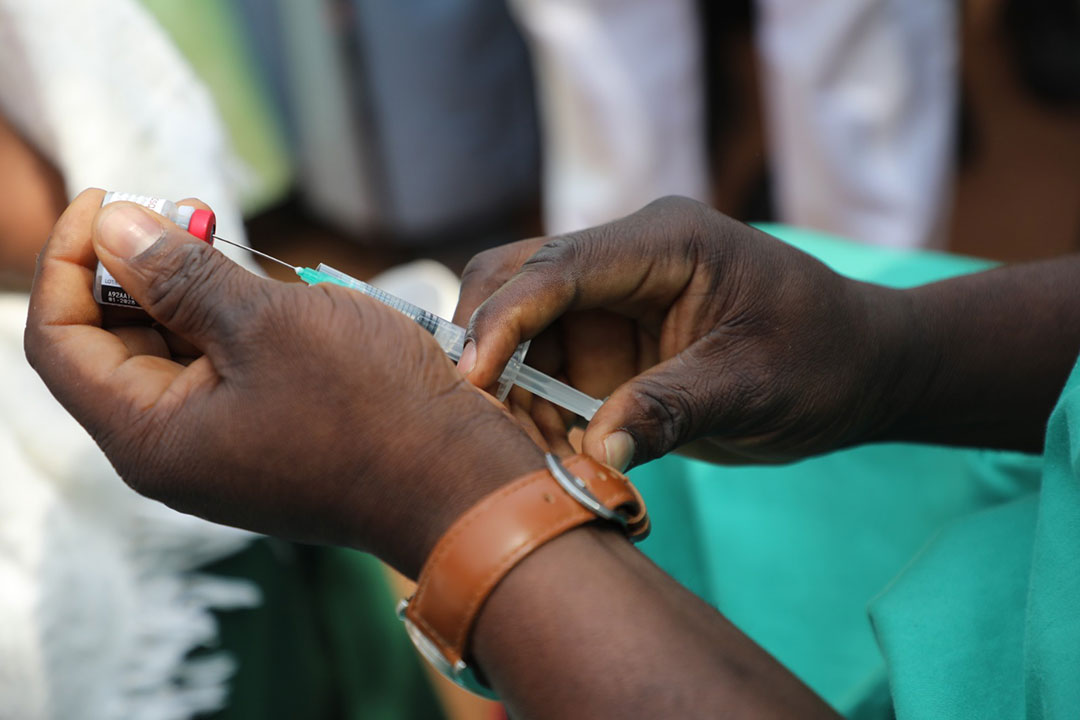
The vaccine candidate is known as ChAdOx1 BDBV and uses the same viral vector platform as the Oxford/AstraZeneca COVID-19 vaccine, but instead of carrying the genetic instructions for the SARS-CoV-2 spike protein, it carries instructions for a Bundibugyo virus protein.
After vaccination, some of the body’s cells should briefly produce this protein, training the immune system to recognise and respond rapidly to the Bundibugyo virus if it is encountered in the future.
The vaccine candidate was developed by scientists at the University of Oxford’s Oxford Vaccine Group and Pandemic Sciences Institute and is one of at least three vaccine platform approaches being explored for a potential Bundibugyo vaccine.
The others are a recombinant vesicular stomatitis virus-based vaccine being developed by the International AIDS Vaccine Initiative (IAVI), and an mRNA vaccine being developed by Moderna.
How is it being tested?
Volunteers are currently being recruited for the Phase 1 trial in Oxford, UK, which will assess the safety of the vaccine candidate and the immune responses it generates in 50 healthy adults aged 18–55 years.
To support the study, the Serum Institute of India has already manufactured and stockpiled around 620,000 doses of ChAdOx1 BDBV. If the vaccine proves safe and generates a promising immune response in this initial trial, these doses could be used in larger clinical studies and, subject to regulatory approval, deployed rapidly.
Have you read?
“Launching this first-in-human study of a Bundibugyo ebolavirus vaccine is an important milestone for the programme, and the culmination of a significant effort by teams across vaccine development, manufacturing and clinical testing,” said Prof Katrina Pollock, MRC Clinician Scientist in Vaccinology, and chief investigator at the Oxford Vaccine Group.
“We are focused on delivering a rigorous phase 1 trial, to the highest standard of care, to evaluate the safety, tolerability and immune responses generated by the vaccine.”
This work is supported by funding from the Coalition for Epidemic Preparedness Innovations (CEPI) to advance the development of Bundibugyo vaccines.
“The University of Oxford’s work to progress their Bundibugyo vaccine candidate ready to enter phase 1 trials in a matter of weeks is a pivotal milestone in the response effort,” said Dr Nicole Lurie, CEPI’s Executive Director for Preparedness and Response.
“The deadly Bundibugyo epidemic is already the third-largest Ebola outbreak on record, and infection numbers are continuing to rise. Every step that brings a safe and effective vaccine closer helps strengthen our ability to protect vulnerable communities, save lives and bring this outbreak under control.”
What happens next?
Assuming the vaccine candidate proves safe and triggers promising immune responses, it will then need to be evaluated in further trials to identify the optimal dose, monitor for less common side-effects that may not be detected in a small phase 1 study, and confirm it is safe and effective in populations for use in Bundibugyo Ebola outbreaks.
Meanwhile, Africa CDC is working with Médecins Sans Frontières and other partners on the design of a trial that could test whether a dose of the existing Ervebo vaccine against Ebola virus, followed by a dose of an experimental vaccine being developed against Sudan virus, could provide partial protection against Bundibugyo virus.
Studies in macaque monkeys have suggested that this so-called prime-boost strategy might increase survival, though not necessarily prevent Ebola illness altogether.