
The typhoid jab is helping mothers reclaim their livelihoods in Western Kenya
Less than a year after the introduction of the typhoid conjugate vaccine, mothers from endemic parts of Kenya say their children are staying out of hospital. Their work lives, finances and feelings have stabilised as a result.
- 5 May 2026
- 7 min read
- by Jackson Okata
At a glance
- Typhoid can be a major drain on family resources, with recurrent bouts of illness forcing costly time off from work and school.
- But mothers in typhoid-endemic western Kenya say that since the national roll-out of the typhoid conjugate vaccine (TCV) in July last year, which reached 16.1 million children, things are looking up. Stella Atieno’s 12-year-old, for example, has stayed out of hospital, which means the fishmonger has been able to go to market each day.
- A Kisumu county health promotion officer reports that the county used to record an average of 12,000–13,000 cases of typhoid a year. The period between July 2025 and March 2026, however, saw just 2,000 recorded cases – a promising sign.
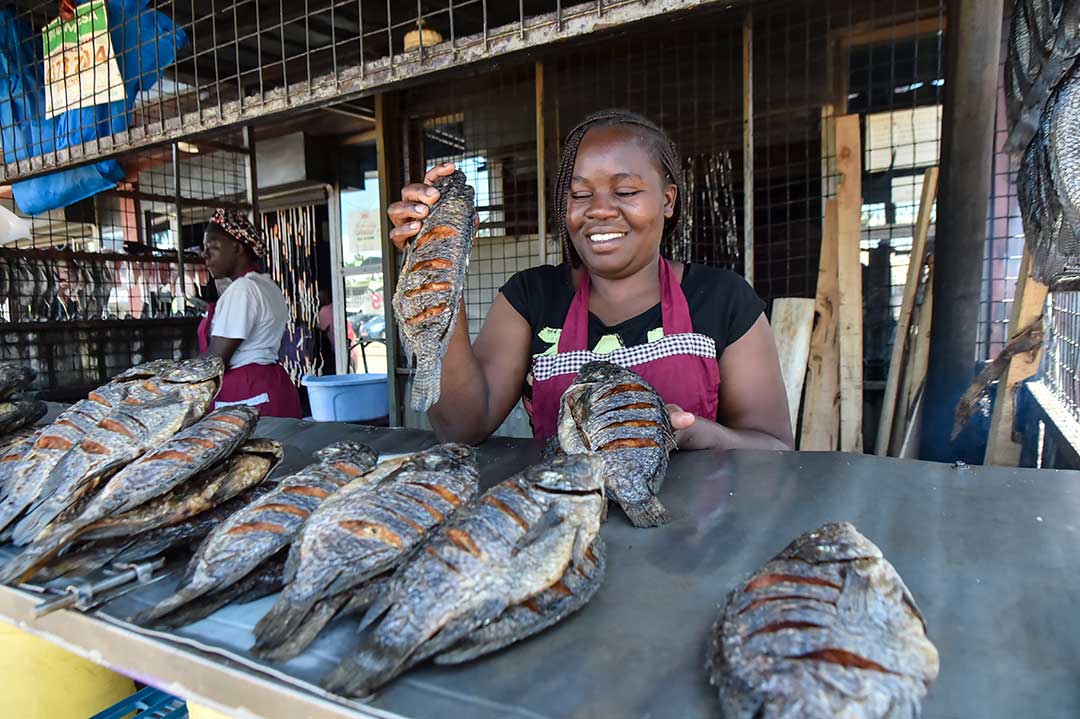
Between 2023 and 2024, Stella Atieno, a fishmonger at Kibuye Market in Kisumu, was a guest at the Kisumu County Referral Hospital four times. Her 12 -year-old son had been diagnosed with typhoid. Each bout of sickness meant three to seven days of missed work and school for them both.
“Being confined in the hospital for days meant that I could not go for fish from my supplier. Not going to the market meant no food for my children, and this even affected their schooling,” says the mother of four.
Cases of multidrug-resistant typhoid have been on the rise in Kenya in recent years. The country records at least 100,000 typhoid cases annually, with children under 15 years old accounting for more than half of the reported typhoid deaths.
Every year, across the globe, some 7 million people fall sick with typhoid, and more than 93,000 of them die.
Disrupted economic opportunities
Vihiga and Kisumu counties in the Western part of Kenya are among Kenya’s typhoid-endemic areas, with the illness not only undermining health, but also knocking household finances.
The county used to record an average of 12,000–13,000 cases of typhoid a year. The period between July 2025 and March 2026, however, saw just 2,000 recorded cases – a promising sign.
“Missing work because of a sick child meant loss of daily income. Without income, we are staring at hunger and poverty. Recurring typhoid outbreaks not only posed a health scare but also economic shocks,” Atieno explained, adding that a day away from her market stall meant the loss of the day’s anticipated 1,500 Kenyan shillings (US$ 12) profits.
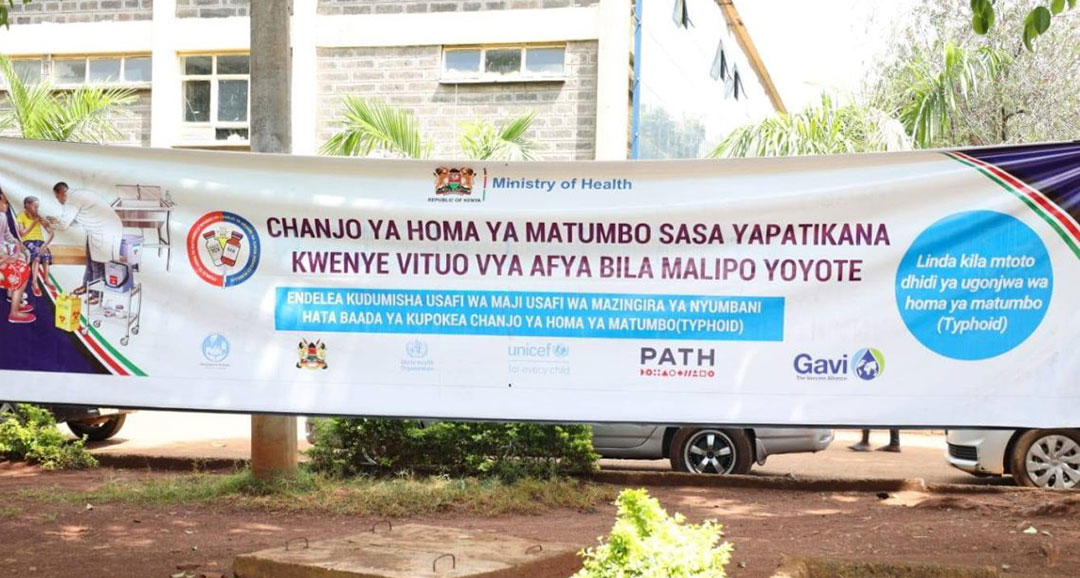
In July 2025, when Kenya launched the typhoid conjugate vaccine (TCV) at national level, Atieno’s son was among the 358,000 children in Kisumu County to receive a dose of the jab. “Life took a different turn,” she said.
Credit: County Government of Vihiga
She says the frequent hospital visits and long periods inside wards and away from work have now become a memory she is now learning to outlive. The vaccine not only seems to have offered her son’s immunity the boost it apparently needed, it’s also offered a dose of emotional and financial security.
“Nowadays, I can go to the market every day because I no longer spend days in the hospital or at home taking care of a sick child,” Atieno said.
Missed school days
In the bustling Luanda market in Vihiga County, Western Kenya, Jessica Ombonya, a cereal seller, relies on daily sales to feed her three children. She says persistent and costly typhoid outbreaks have often disrupted her income.
“Being in and out of the hospital forced me to close my business, and that meant losing money,” Ombonya told VaccinesWork. “Whenever typhoid struck, it meant that the little profit I made from selling cereals would go to buying medicine. When the profit was not enough, I would go into debt to settle hospital bills,’’ she says.
Like Atieno’s son, Ombonya’s children received a dose of TCV during last year’s introduction campaign.
“Since my children got the vaccine, I have not been to the hospital because of typhoid, and I no longer set aside money for emergency hospital visits, nor do I rely on loans to buy medicine,” says Ombonya.
She adds, “I can plan my business better. Before, I was always worried that any day my child could fall sick and everything would stop.”
Beyond preventing illness, the vaccine has ensured that all three of her children are in school when they are supposed to be. “The problem of missed school days due to typhoid is now gone. This vaccine has given me peace, and I can focus on my work and my family without fear,’’ Ombonya said.
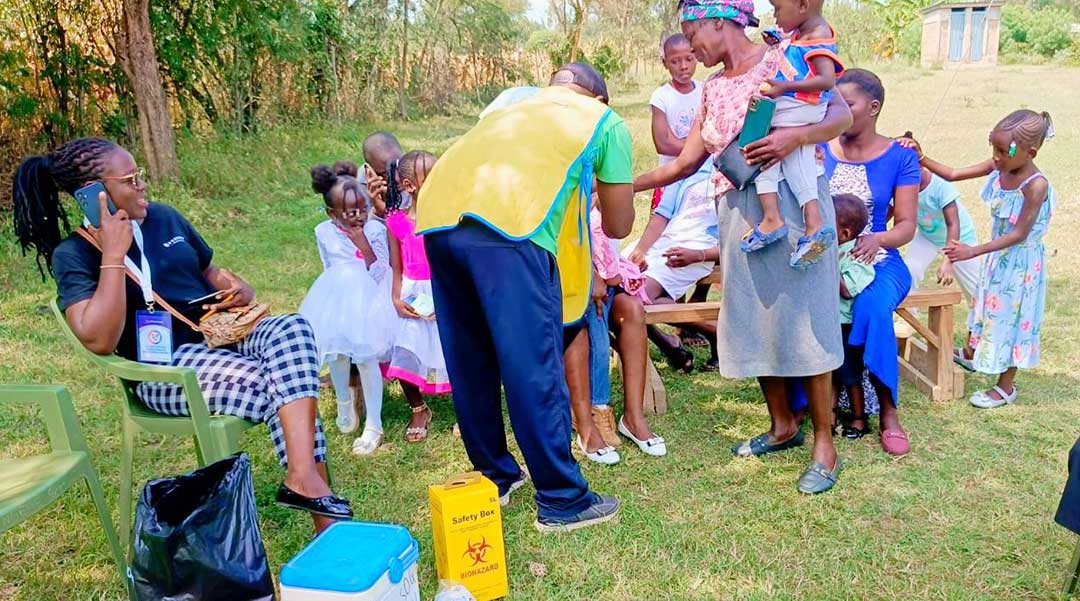
Edith Anjere, immunisation coordinator in Vihiga County, said the ten-day vaccination exercise, conducted in health facilities, schools, religious gatherings and all markets across the county from July 5 to July 14, 2025, saw a total of 208,327 children receive the TCV shot.
National campaign success
Across the country, 16.1 million children received the vaccine during that inaugural campaign, constituting 84% coverage. TCVs, which protect children for four or more years, are now officially part of Kenya’s routine immunisation schedule, and are available for free in public health facilities across Kenya.
Dr Rose Jalang’o, Head of Kenya’s National Vaccines and Immunisation Programme, says the TCVs are key in combating and reducing the risk of drug-resistant typhoid.
"Most of the time, the drug-resistant strain of typhoid requires hospital admission, which comes with a cost implication for families. This vaccine can help us deal with this," Dr Jalang’o explained.
Credit: County government of Kisumu
Data shows rising numbers of multidrug-resistant typhoid cases in Kenya.
According to Dr Jalang’o, hard-to-reach areas of Northern Kenya and conflict-prone zones, where families live highly mobile lives, registered low uptake of the vaccine. “We will maximise on our routine immunisation schedule as well as targeted campaigns in these areas to bridge the gap,” she explained.
CHPs play a lynchpin role
Community health promoters (CHPs) have played a central role in ensuring the campaign’s success.
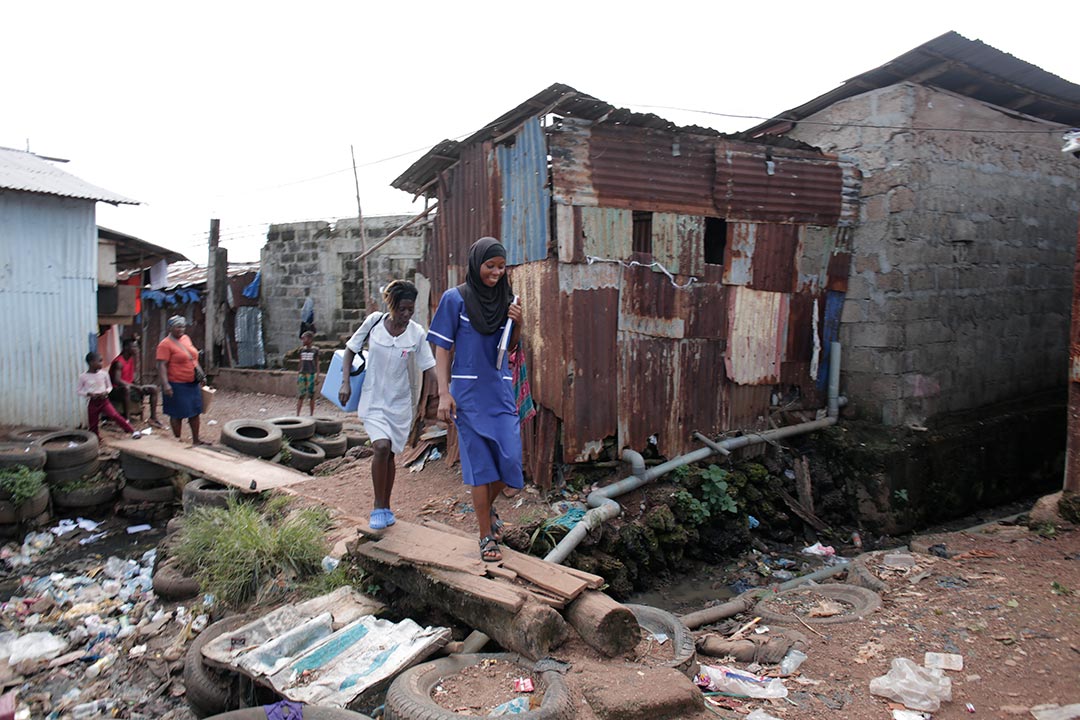
Paul Ochieng has been leading a group of CHPs in the Nyalenda informal settlement of Kisumu city, educating mothers on the importance of the vaccine.
Since the introduction of the typhoid vaccine, Ochieng notes that typhoid cases in the Nyalenda slums have been rare.
“Nyalenda has been a hotspot for typhoid because of limited access to WASH services. The typhoid vaccine comes in handy, especially during the rainy season when cases are common,” Ochieng told VaccinesWork.
He added, “We move from village to village, ensuring that no one is left behind. We also make announcements in churches, at funerals and during government meetings about the existence of the free vaccine.”
Since the introduction of the typhoid vaccine, Ochieng notes that typhoid cases in the Nyalenda slums have been rare.
Other CHPs, like Rose Akumu, have been taking a lead in demystifying fears and misconceptions about the typhoid vaccine in the Obunga informal settlement in Kisumu County.
“Some mothers were hesitant to allow their children to receive the vaccine over unfounded rumours about its safety. We have been telling them that the vaccine is safe and good for their children,” she said.
According to Oyolo, prior to the introduction of the TCV, Kisumu county used to record an average of between 12,000–13,000 cases of typhoid every year, but between July 2025 and March 2026, the county has recorded just 2,000 cases, signalling a significant drop.
In Vihiga County, Joan Amambia has been leading fellow CHPs in supporting immunisation outreaches and follow-ups in schools and churches, ensuring no child is left behind.
“We have been working closely with parents, teachers and religious leaders to ensure that we take the vaccine to the children in school or during church services,” said Amambia.
Absent outbreaks
Elijah Oyolo, county health promotion officer for Kisumu, told VaccinesWork that since the roll-out of the TCV, Kisumu has had very few recorded typhoid outbreaks, even during the rainy seasons of October–December 2025 and February–March 2026.
“Typhoid cases are common during the rainy seasons. But this period has been different despite the heavy flood we have witnessed. We have few outbreaks, and the cases have not led to hospital admissions,” says Oyolo.
According to Oyolo, prior to the introduction of the TCV, Kisumu county used to record an average of between 12,000–13,000 cases of typhoid every year, but between July 2025 and March 2026, the county has recorded just 2,000 cases, signalling a significant drop.
For mothers like Atieno and Ombonya, TCV is a timely health intervention that ensures they cannot only keep their children safe, but also run their businesses without the constant disruptions of illness.
“I now have my time and strength to focus on my business, knowing that my children are protected and safe,” says Atieno.
More from Jackson Okata