
Bundibugyo, the rare virus causing a deadly new Ebola outbreak, has no vaccine yet. Here’s what we know
Scientists are racing to work out whether existing Ebola vaccines could help, or whether a new one is needed.
- 22 May 2026
- 7 min read
- by Priya Joi
At a glance
- Bundibugyo virus, a cause of deadly Ebola disease last seen in a major outbreak more than a decade ago, is driving an outbreak in eastern DRC that has already crossed into Uganda; the virus can kill up to 50% of those it infects.
- On 17 May 2026, WHO declared the situation a public health emergency of international concern (PHEIC), which is its highest formal alert.
- There is no licensed vaccine or specific treatment for Bundibugyo virus. Existing Ebola vaccines target a different species, and scientists are now urgently assessing whether they could play any role.
The World Health Organization (WHO) has sounded the alarm about a new outbreak of Ebola in the Democratic Republic of the Congo (DRC) and Uganda.
WHO has confirmed that the disease is being caused by the rare Bundibugyo virus, which has a fatality rate of up to 40%, that is so little known, there are no vaccines or treatments for it.
WHO received the first alert about an “unknown illness with high mortality” on 5 May 2026 but it would take ten more days before the cause was confirmed, for two reasons: the virus is different to the Zaire or Sudan viruses, and so standard rapid field tests often miss it, but also because the outbreak happened in a conflict-affected vulnerable and fragile region where access to diagnostics is challenging.
On 17 May 2026, WHO Director-General Tedros Adhanom Ghebreyesus declared it a public health emergency of international concern (PHEIC), the highest level available under the International Health Regulations.
On Monday 18 May, there had been 528 suspected cases and 132 suspected deaths in the two countries, with 131 of these suspected deaths happening in DRC. WHO said, “There are significant uncertainties to the true number of infected persons and geographic spread associated with this event,” including “limited understanding of the epidemiological links with known or suspected cases.”
This uncertainty is what’s concerning experts. “The number of suspected cases reported before confirmation suggests transmission may have been ongoing for several weeks before the outbreak was formally recognized,” says Dr Daniela Manno, a clinical epidemiologist at the London School of Hygiene & Tropical Medicine.
On 19 May, WHO convened experts to discuss potential vaccine options and Gavi is working closely with WHO and CEPI to understand how currently licensed vaccines or other candidate vaccines could be leveraged in this response.
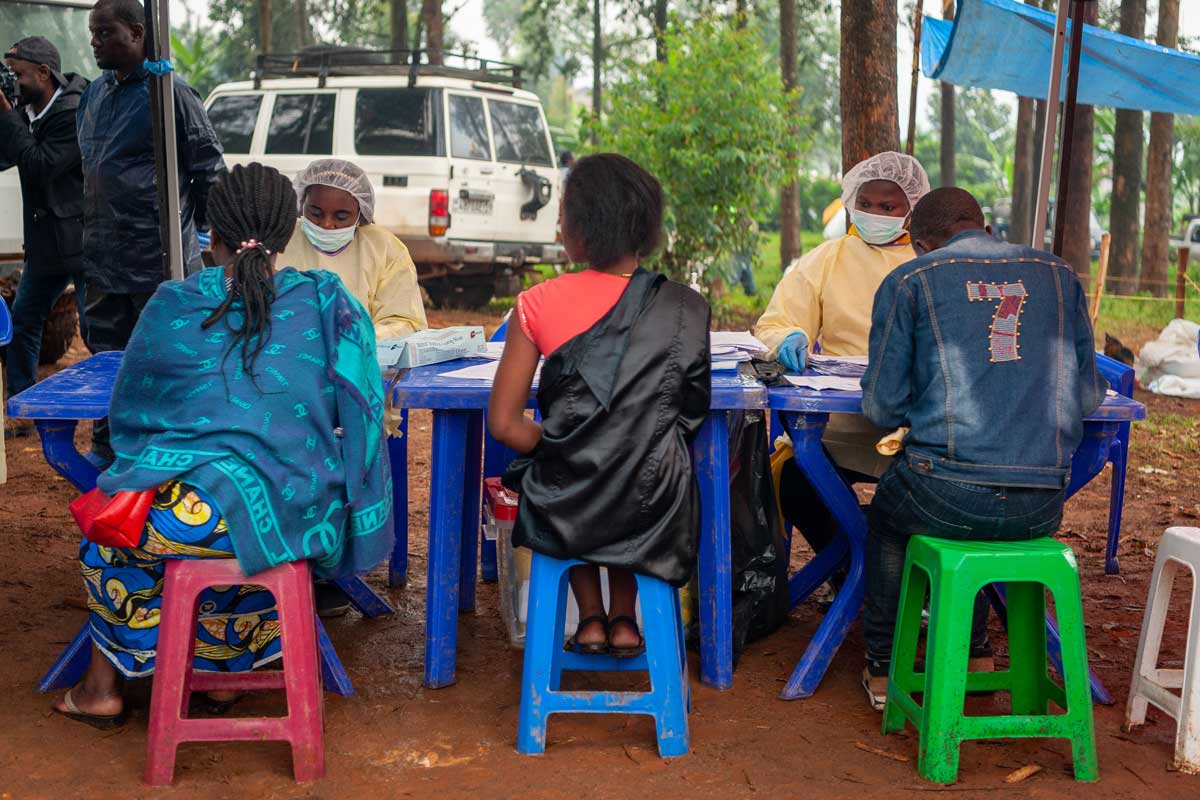
Until a vaccine can be rolled out, says Manno, the response will “rely heavily on classical public health measures such as rapid case detection, isolation, contact tracing, infection prevention and control, safe burials, and community engagement”.
What is Bundibugyo virus?
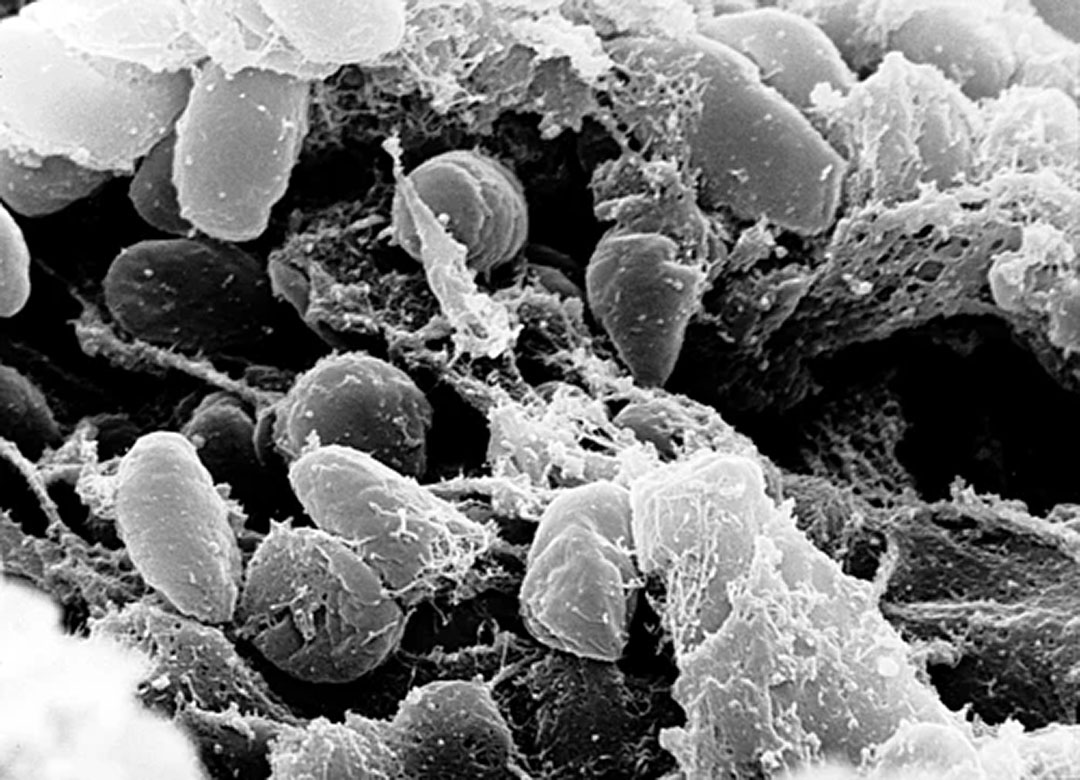
Bundibugyo is one of six known species of Orthoebolavirus, four of which are known to cause Ebola disease in humans: ebolavirus (formerly Zaire ebolavirus), Sudan virus, Tai Forest virus and Bundibugyo virus.
Bundibugyo was first identified in 2007, after an outbreak in the Bundibugyo District of western Uganda, on the border with the DRC. A second outbreak followed in DRC’s Province Orientale in 2012, with 59 cases and 34 deaths. The case fatality rates in the previous two outbreaks was between 30% and 50%.
Like other ebolaviruses, Bundibugyo virus is a zoonotic disease, with fruit bats thought to be the natural reservoir.
Once in humans, it spreads through direct contact with the blood, secretions, organs or other bodily fluids of infected people, and with surfaces and materials contaminated by those fluids. People become infectious once they develop symptoms; the incubation period ranges from 2 to 21 days.
Initial symptoms, including fever, fatigue, muscle pain, headache and sore throat, are non-specific and can be hard to distinguish from malaria or diseases that cause fever. More severe disease can cause gastrointestinal symptoms, organ dysfunction and haemorrhagic bleeding.
Delve deeper in this related content
Why this outbreak is particularly worrying
WHO has highlighted several factors making this outbreak especially hard to contain.
The epicentre, around the mining town of Mongbwalu in Ituri Province, is a high-traffic commercial hub, meaning that as infected people moved to Rwampara and Bunia in search of medical care, the virus moved with them. Ituri borders Uganda and South Sudan, raising the risk of further regional spread.
That risk is already materialising. By 15 May, two imported cases had been confirmed in Uganda’s densely populated capital, Kampala.
Ongoing conflict in Ituri is restricting the movement of surveillance teams, limiting the deployment of rapid response teams, and hindering the secure transport of laboratory samples. The province also hosts more than 270,000 displaced people, with 1.9 million in need of humanitarian assistance.
Prof Emma Thompson, Director of the MRC–University of Glasgow Centre for Virus Research, says: “Infections in healthcare workers are a serious warning sign in any filovirus outbreak, because they indicate unrecognised transmission in healthcare settings and gaps in infection prevention and control.”
A familiar virus, a different family
Two vaccines, Merck’s single-dose rVSV-ZEBOV and the two-dose Zabdeno/Mvabea regimen from Johnson & Johnson, are now licensed and used to combat the Zaire species of ebolavirus disease. Gavi, the Vaccine Alliance has supported the establishment of a global emergency stockpile that has already helped tackle Ebola outbreaks in the DRC.
Both, however, were developed specifically against Zaire. Bundibugyo virus is a close relative, but the two have different genetic material and different surface proteins, which means an immune response against one does not automatically protect against the other.
Currently, the vaccine pipeline for Bundibugyo virus disease includes two candidates highlighted by WHO:
- A candidate vaccine leveraging the rVSV platform (the same platform as Merck's vaccine) but targeted towards Bundibugyo ebolavirus. There are no doses of this candidate available for clinical trials and it’s estimated that producing doses for clinical trials could take six to nine months.
- A candidate vaccine leveraging the ChAdOx platform (used for licensed COVID-19 vaccines) and targeted towards Bundibugyo virus. Production of this vaccine is underway, with current estimated timelines at two to three months. However, there are no animal or human studies for this vaccine and no data on its use against Bundibugyo virus.
“Experimental non-human primate work suggests that rVSV-ZEBOV may provide partial heterologous protection against Bundibugyo virus, but this cannot be assumed to translate into reliable protection in people during an outbreak,” says Thompson.
“In plain terms, we do not currently have a proven, licensed, Bundibugyo-virus-specific vaccine available for outbreak control, and further urgent research is required.”
What Gavi is doing to speed up vaccines
Gavi is working with partners to identify concrete ways to support the response while protecting broader health services, including routine immunisation, in affected areas.
A central question is whether existing licensed Ebola vaccines, or candidate vaccines further back in the pipeline, could play any role against this distinct species.
The Gavi-funded global emergency stockpile of Ebola vaccines contains WHO-prequalified doses targeting ebolavirus, not Bundibugyo virus. Any use of those doses in the current outbreak would depend on a request from an affected country, on WHO guidance, and on a decision by the mechanism that manages the stockpile.
Gavi's CEO, Dr Sania Nishtar, has noted that around 2,000 doses of Ebola vaccine are already in the DRC, and could be drawn on if WHO experts decide there is a case for using them in a trial setting against Bundibugyo virus.
Gavi is exploring whether its First Response Fund, a financing mechanism designed to accelerate vaccine access during public health emergencies of international concern, could help speed development and delivery.
Some of those doses are already close to the outbreak. Gavi's CEO, Dr Sania Nishtar, has noted that around 2,000 doses of Ebola vaccine are already in the DRC, and could be drawn on if WHO experts decide there is a case for using them in a trial setting against Bundibugyo virus.
What happens now
WHO has called for intensified surveillance, contact tracing, and infection prevention and control in health facilities, alongside community engagement led by local, religious and traditional leaders.
It has urged neighbouring countries to strengthen preparedness, while warning against the closure of borders or restrictions on trade.
While the global health community has learned significant lessons from tackling previous Ebola outbreaks, Manno points out that: "Considerable advances have been made in Ebola surveillance, diagnostics, outbreak response systems, vaccines, and therapeutics over the past decade.
“However, preparedness remains uneven across different filoviruses, particularly for rarer Ebola-causing viruses such as Bundibugyo."
According to Prof Trudie Lang, Professor of Global Health Research, University of Oxford: “The immediate priorities are an urgent need for locally led and delivered community engagement effort to reduce transmission, strengthen trust and support early care-seeking and reporting.
“Second, laboratory systems and access to detection capabilities must be strengthened to enable faster case identification, more effective surveillance and improved outbreak monitoring.”
Lang adds: “This response also depends upon strong cooperation, transparent information sharing and interoperable systems so that the situation can be understood and managed effectively across local, national and regional levels.
“There is strong local expertise and significant regional capacity already engaged in the response. Africa CDC and WHO have moved swiftly and are highly active, and response coordination and collaboration are robust and underway.
“Building and connecting these existing strengths and systems will be essential to bringing the outbreak under control.”