
Meet the five infections responsible for almost one in eight cancers worldwide
New estimates suggest infections were responsible for 2.3 million cancer cases worldwide in 2024.
- 30 September 2026
- 5 min read
- by Linda Geddes
At a glance
A new analysis by the International Agency for Research on Cancer suggests that infections caused around 12% of all new cancers worldwide in 2024, amounting to roughly 2.3 million cases.
The vast majority of these cancers were caused by Helicobacter pylori, human papillomavirus (HPV), hepatitis B, Epstein-Barr virus (EBV) and hepatitis C.
More than three quarters of infection-related cancers occurred in low- and middle-income countries, where many people still lack access to effective prevention and treatment.
Infections caused around 12% of all new cancers worldwide in 2024, amounting to an estimated 2.3 million cases, according to an analysis by the International Agency for Research on Cancer (IARC).
Just five infections accounted for almost all of the estimated cases: Helicobacter pylori, human papillomavirus (HPV), hepatitis B, Epstein-Barr virus (EBV) and hepatitis C.
Many infection-related cancers are preventable through measures such as vaccination against HPV and hepatitis B, testing and treatment for H. pylori and viral hepatitis, or screening for HPV.
However, the report warned that access to these measures remains uneven. More than three quarters (77%) of infection-related cancers occurred in low- and middle-income countries, where financial, political and health-system barriers can limit access to prevention and treatment.
Eastern Asia had the greatest number of infection-related cancers, with an estimated 990,000 cases in 2024. This accounted for 42% of the global total and was largely driven by H. pylori and hepatitis B.
However, the burden was proportionally greatest in sub-Saharan Africa, where infections were responsible for around one in four new cancer cases, particularly HPV-related cancers.
“The findings underscore the major role that infection control can play in reducing the global cancer burden,” said study co-author Dr Harriet Rumgay of the IARC's Cancer Surveillance Branch. “Despite progress in vaccination and screening, infection-related cancers remain a major global challenge, with the burden falling disproportionately on populations in low- and middle-income countries.”
So, which infections are responsible for the greatest cancer burden and what can be done about them?
Helicobacter pylori
Topping the IARC’s list was H. pylori, a bacterium found in the lining of the stomach. It is usually acquired during childhood and can persist for decades if left untreated.
Although most people who are infected never develop cancer, it can cause persistent inflammation and other changes that increase the risk of stomach cancer.
According to the IARC analysis, the bacterium was responsible for an estimated 760,000 cancer cases worldwide in 2024, around 4% of all cancers diagnosed that year.
H. pylori can be treated with antibiotics, and studies suggest that doing so can reduce the incidence of stomach cancer by 36% and deaths from the disease by 22% in people who are infected with it.
However, so far, only a few countries have implemented population-level screen-and-treat programmes for the bacterium. Vaccines against H. pylori are also in development.
Human papillomavirus (HPV)
Close behind H. pylori, HPV was responsible for an estimated 750,000 cancer cases worldwide in 2024, around 4% of all new cancers.
HPV is extremely common, with around 80% of people thought to acquire at least one infection during their lifetime. Most infections clear by themselves, but persistent infection with certain high-risk types is responsible for almost all cases of cervical cancer, as well as a proportion of anal, penile, vaginal, vulval and throat cancers.
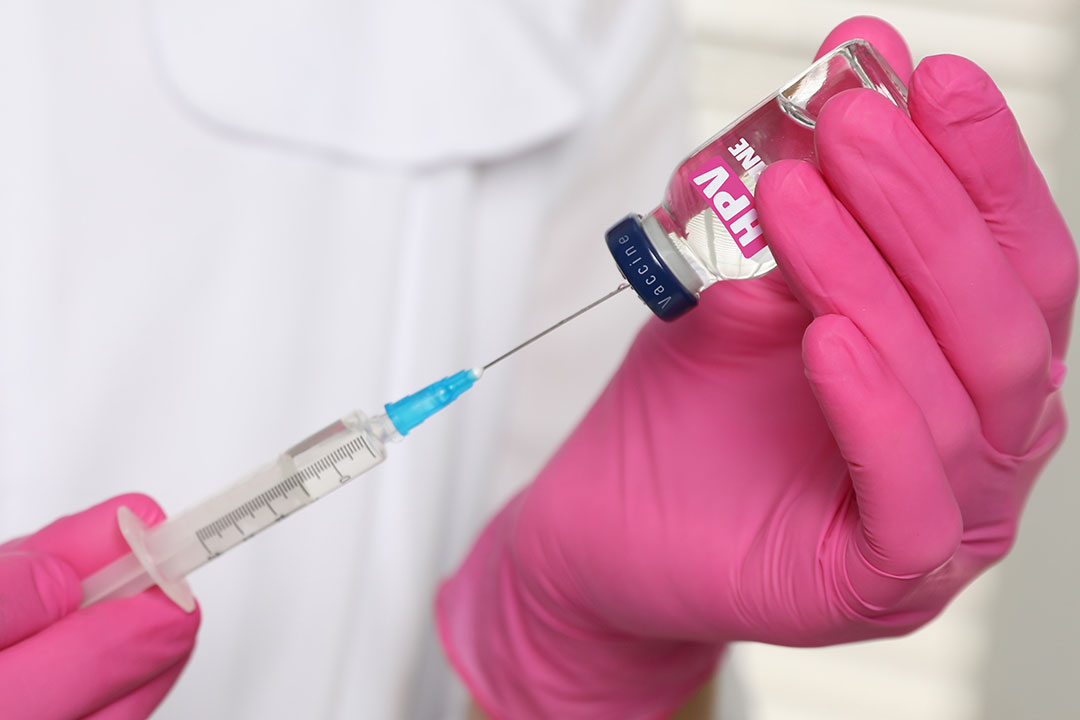
More than two decades of research has shown that HPV vaccines substantially reduce persistent HPV infections and precancerous cervical changes. Real-world studies are also now showing that HPV vaccination is reducing cervical cancer rates in countries that introduced it early on.
Interested in more articles like this?
Hepatitis B
Hepatitis B was responsible for an estimated 360,000 cancer cases worldwide in 2024, around 2% of all new cancers. The virus infects the liver and, if infection becomes chronic, it can cause inflammation and damage that may eventually lead to cirrhosis or liver cancer.
Hepatitis B can be prevented through vaccination. Because the risk of developing chronic hepatitis B is particularly high when infection occurs early in life, the World Health Organization recommends that all babies receive a first dose of hepatitis B vaccine within 24 hours of birth, followed by two or three further doses.
A complete course provides 98–100% protection against infection, which can last for decades and probably for life.
Epstein-Barr virus (EBV)
EBV was linked to an estimated 260,000 cancer cases in 2024, making it the fourth largest infectious cause of cancer globally. EBV is extremely common, infecting around 95% of people worldwide and remaining in the body for life.
Most infections cause few or no symptoms, although the virus can cause glandular fever if it is first encountered during adolescence or adulthood.
EBV can also contribute to the development of cancers including Burkitt lymphoma, Hodgkin lymphoma and nasopharyngeal cancer. The virus is also increasingly being linked to stomach cancer.
Although there is currently no licensed vaccine against EBV, several candidates are currently in development.
Hepatitis C
Hepatitis C was responsible for an estimated 160,000 cancer cases worldwide in 2024. Like hepatitis B, the virus infects the liver and can cause a persistent infection that may eventually lead to cirrhosis or liver cancer.
There is currently no vaccine against hepatitis C, although researchers are trying to develop one. However, a short course of antiviral drugs can cure more than 95% of infections and substantially reduce people's risk of developing liver cancer.
The problem is that hepatitis C can remain symptomless for many years, so many remain unaware that they are infected. Globally, access to diagnosis and treatment is also limited.
Other infectious causes of cancer
The IARC analysis included seven further infections known to cause cancer in humans. These included Kaposi sarcoma-associated herpesvirus (KSHV), which causes Kaposi sarcoma; human T-cell lymphotropic virus type 1 (HTLV-1), which can cause a type of leukaemia; and Merkel cell polyomavirus, which is linked to a rare form of skin cancer.
The list also included three parasitic worms: Schistosoma haematobium, which is linked to bladder cancer, and the liver flukes Opisthorchis viverrini and Clonorchis sinensis, which can cause bile duct cancer. HIV was also included because, although it doesn’t directly cause cancer, the immune suppression it causes increases the risk of cancers associated with other infections.
While these infections accounted for a relatively small share of the global total, some are more important in certain regions. For example, KSHV contributed to the particularly high burden of infection-related cancers in sub-Saharan Africa, alongside HPV and HIV.
More from Linda Geddes