
The blind Nigerian doctor leading kids out of blindness
Determined to shield children from experiencing the pain that comes with vision loss, Dr Chibueze Anugwom is taking vision screening into schools in Nigeria’s eastern region.
- 16 July 2026
- 6 min read
- by Eric Dumo
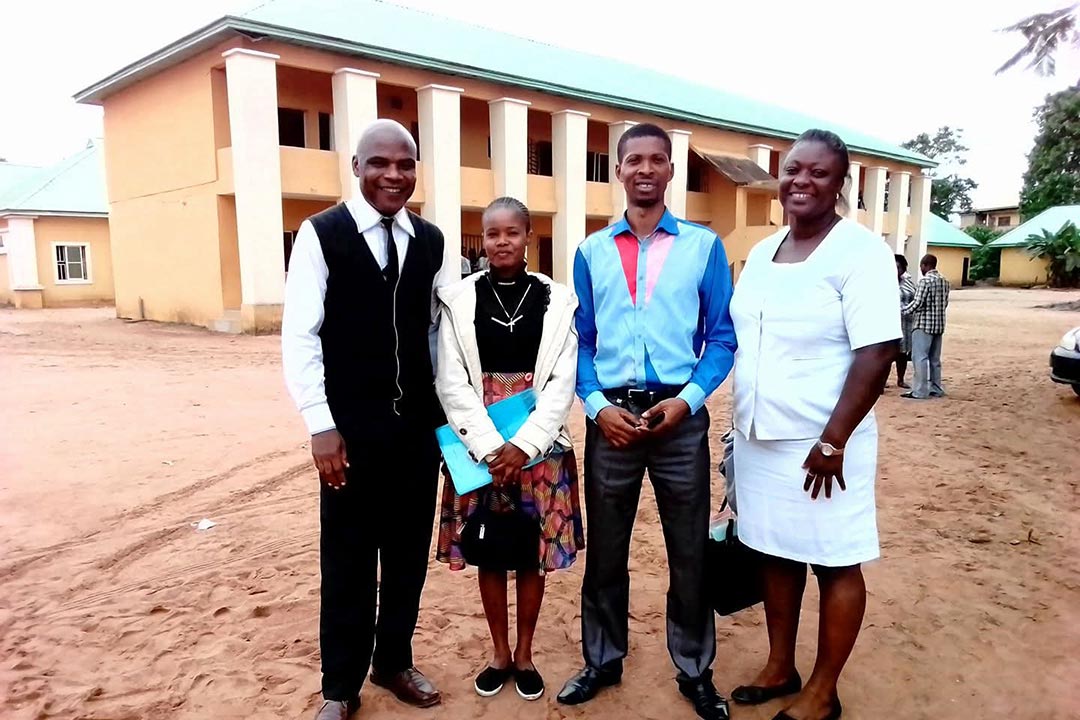
At a glance
- Childhood vision loss, in many cases a result of preventable infection, is a critical health challenge in Nigeria and across Africa.
- In Nigeria, just 4.4% of people access eye-care, meaning many children with poor vision have never been diagnosed, or offered interventions that could prevent them falling behind in education.
- That’s something Dr Chibueze Anugwom, who is blind himself, has set out to change. Through his organisation, the Retina Africa Foundation, he is bringing vision testing to school children across Imo State, and changing futures in the process.
Four years ago, Chidinma Uzochukwu, now an 18-year-old first-year pharmacy student at Abia State University, lived in a completely different world.
She was then a junior pupil at Akwakuma Girls Secondary School, Owerri, in Imo State, and struggling to make proper sense of lecture notes written on the blackboard. She suffered from undiagnosed degenerative myopia: near-sightedness that was getting worse with time. Her grades had nosedived, and her motivation had withered.
But things took a remarkable turn one morning when a team of medical volunteers from Retina Africa Foundation, led by Dr Chibueze Anugwom, visited Akwakuma Girls to conduct free visual and auditory impairment detection tests on pupils.
A proper diagnosis changed Uzochukwu’s story. “Free eye screening and corrective glasses from Dr Anugwom and his team changed everything.
“Without that diagnosis, my journey in life could have been entirely different from what it is today,” the 18-year-old said, flashing a warm grin.
Invisible blindness
According to NGO Sightsavers, more than 4.25 million Nigerians are blind or visually impaired, and yet only 4.4% of Nigerians access eyecare.
Health authorities across Nigeria are gradually ramping up efforts to tackle that gap.
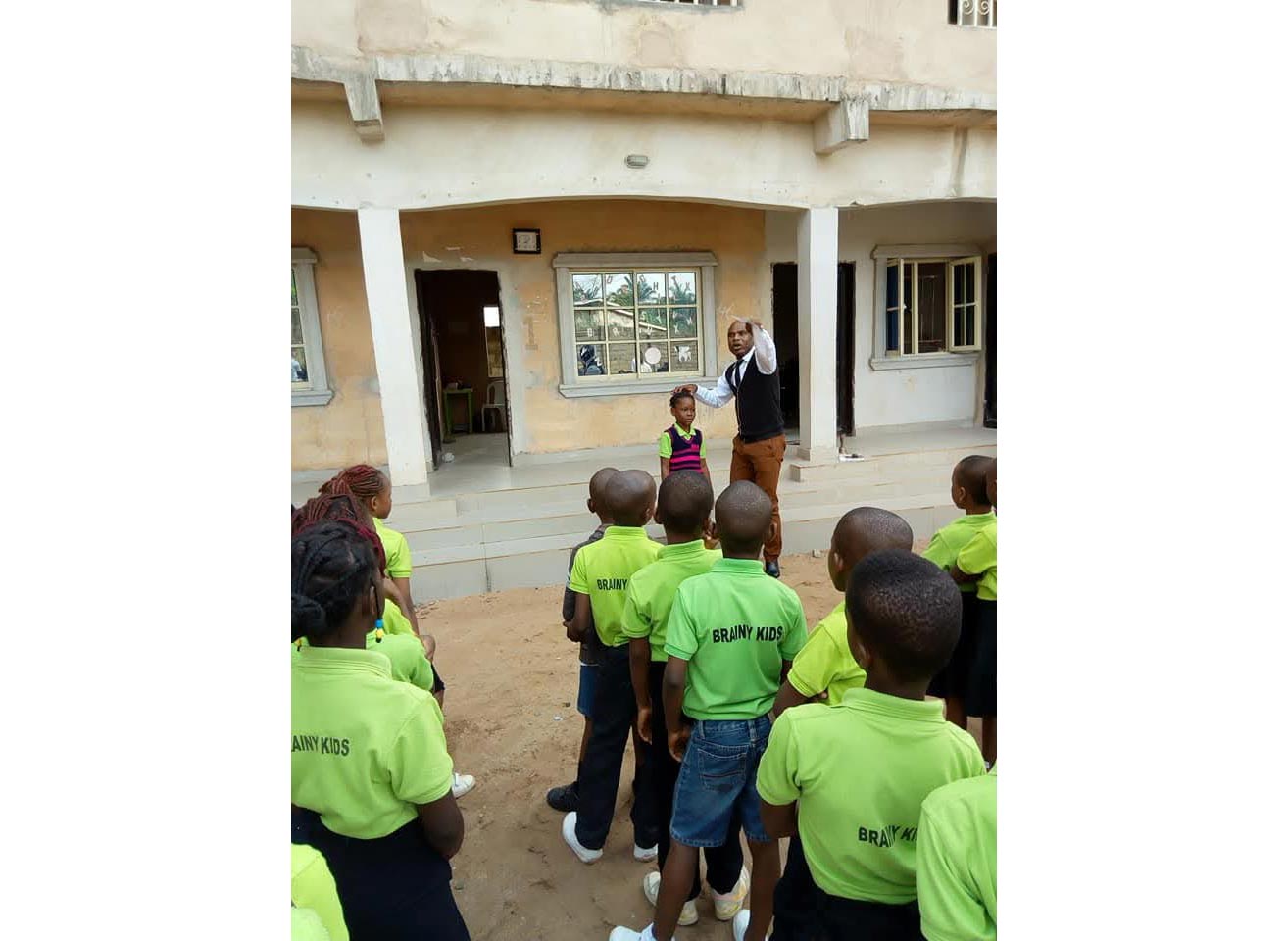
Credit: Eric Dumo
Identifying refractive errors like myopia, cataracts, corneal opacity, glaucoma, and retinopathy of prematurity as leading causes, the Nigerian National Blindness and Visual Impairment Survey found that 78% of cases among children in the country could be corrected with glasses.
A proportion of those cases of blindness could also have been prevented with vaccination. Corneal opacity and cataracts can be precipitated by measles and rubella respectively, with measles qualifying as the single leading cause of blindness in children in developing countries as recently as 20 years ago.
Rising vaccination coverage rates have changed those statistics for the better, but measles remains a risk to vision where immunisation rates are low. During a large-scale measles and rubella vaccination drive in Imo State earlier this year, authorities urged parents to turn out for the sake of their children’s eye health.
In May, the Imo State Ministry of Health has rolled out an eyecare campaign targeting 1.65 million people by 2029, and at the national level, the federal government in February expanded the Presidential Eye Health Initiative to reach an additional 1 million Nigerians across 21 states by the end of 2026 through the integration of eyecare into primary health care in the country.
These developments are coming not a moment too soon. Dupe Ademola-Popoola, Professor of Ophthalmology at the University of Ilorin, Kwara State, agrees that increased access to eye screening and treatment will save many Nigerian children from avoidable blindness and its often bleak effects.
“Childhood blindness steals both sight and the future. Prevention saves them both. It costs less to preserve a child’s sight than to rebuild a lost future,” she said.
No greater joy
It’s the same idea that drives Dr Anugwom, the medical doctor behind the Retina Africa Foundation.
Born sighted, 45-year-old Anugwom lost his vision shortly after qualifying as a medical doctor in 2011. The cause was retinitis pigmentosa, a degenerative condition that starts from birth as simple night blindness but progresses to complete blindness later in life. There is no cure.
He initially contemplated suicide, he says, but eventually found his way to acceptance. In 2016, inspired by his personal struggles and unwilling to allow children to experience the pain he had been through, Anugwom decided to dedicate his life to carrying out vision tests among schoolchildren to save them from blindness and hearing loss.
Have you read?
“The challenges I faced while growing up as a child until I became blind in 2011, two years after leaving medical school, shaped my journey into this mission.
“My parents were poor, and due to ignorance and lack of information, they did not have the knowledge that it would progress to blindness.
“I don’t want any child to pass through the pain I experienced, and that is why I am doing this,” Anugwom said.
“I feel fulfilled contributing to reducing preventable blindness among children in my little way. What I could not get while growing up, I am offering to them for free. There is no greater joy for me than this,” he concluded.
A bend in the road
Tochi Ibe, an 11-year-old pupil at Orlu Road Primary School, Owerri, is another of Anugwom’s success stories. Teachers feared the boy was intellectually challenged until the Retina Africa Foundation visited their school in June 2024.
“During screening, it was discovered that my son had a visual acuity of 5/60, meaning that he could not see beyond five metres,” Ebere, Ibe’s mother.
“After this discovery, the team provided a series of counselling sessions through a clinical psychologist before providing him with corrective glasses.
“Today, his performance in class and his physical and mental health have all improved significantly,” the woman added.
On the same occasion, ten-year-old Adanna Odiachi, another pupil of Orlu Road Primary School, was diagnosed with hypermetropia, a rare type of refractive error.
“My daughter was always punished by teachers for leaving her sitting position in the front to the back seat during classes because they didn’t know what she was dealing with, but assumed that she was being naughty.
“But after the diagnosis, and after she was provided with corrective glasses, everything about her improved, including her academics,” John, Odiachi’s father, disclosed.
5,000 children reached
Uzochukwu, Ibe, and Odiachi are only three out of over 5,000 current and former schoolchildren in Imo whose lives have been transformed through the work carried out by Anugwom’s foundation.
Adopting a three-pronged approach of screening, counselling, and referral to appropriate health facilities for treatment and rehabilitation, the team has helped detect and remedy previously undiagnosed and unmanaged eye conditions.
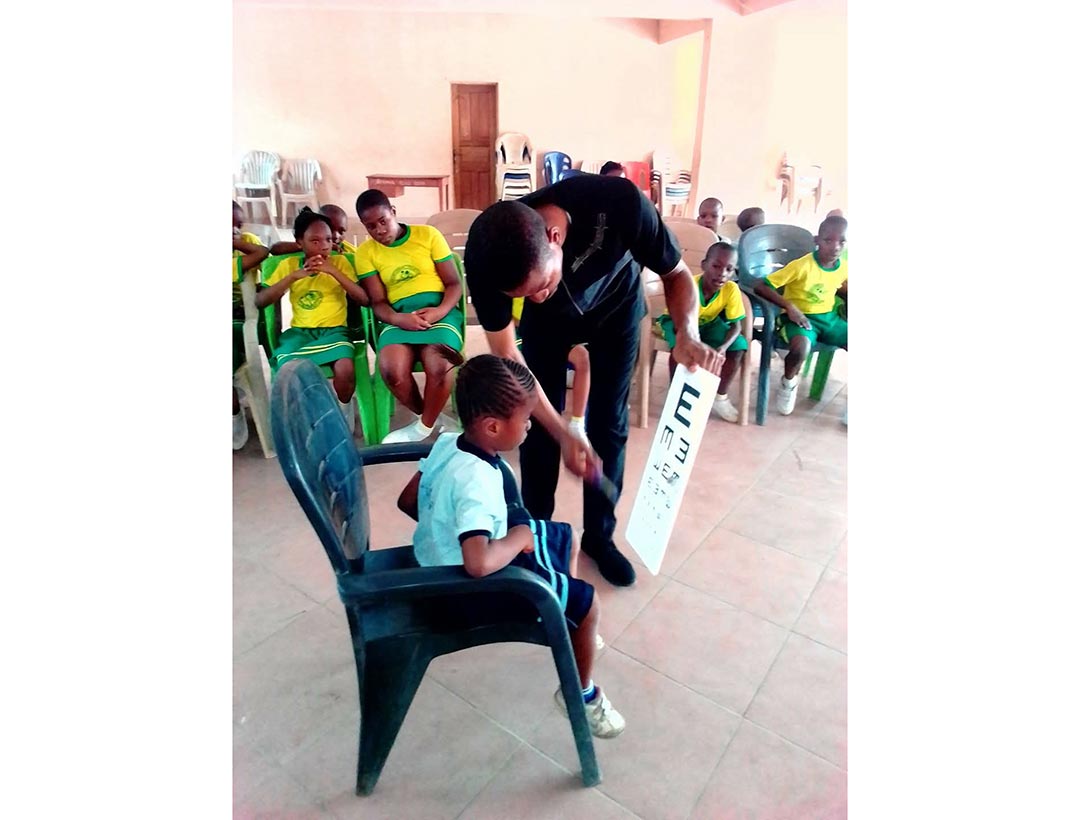
Credit: Eric Dumo
For Anugwom, it’s a passion project. “I fund this programme from my personal earnings, my wife’s laundry business, and little donations from friends and family members.
“But despite this lack of needed resources, the joy for me is receiving calls from parents about the significant improvements in the lives of their children because of the work we do.
“That, for me, is enough consolation and motivation to push on with this mission,” he said.
Interestingly, Dr Anugwom’s work is not limited to children alone – over 103 teachers in schools visited in recent times have also been screened for visual and auditory conditions while receiving training on how to detect these problems in pupils early.
Mrs Okoro, a senior teacher at Comprehensive Secondary School, Amakohia, Owerri, said Anugwom and his team had restored hope to many families in the city.
“Indeed, we noticed significant improvements in the students diagnosed for eye conditions and who received corrective glasses or other types of treatments.
“Many of them now handle classwork and assignments with renewed confidence and determination previously lacking,” she revealed.
More from Eric Dumo