
In Madagascar, a midwife delivers doses of hope in her home village
In remote Antsohihy, Midwife Germinah is playing a one-woman game of vaccine catch-up.
- 1 July 2026
- 7 min read
- by Luc Razafindrakoto , Guy Raveloson , Olivier Konan
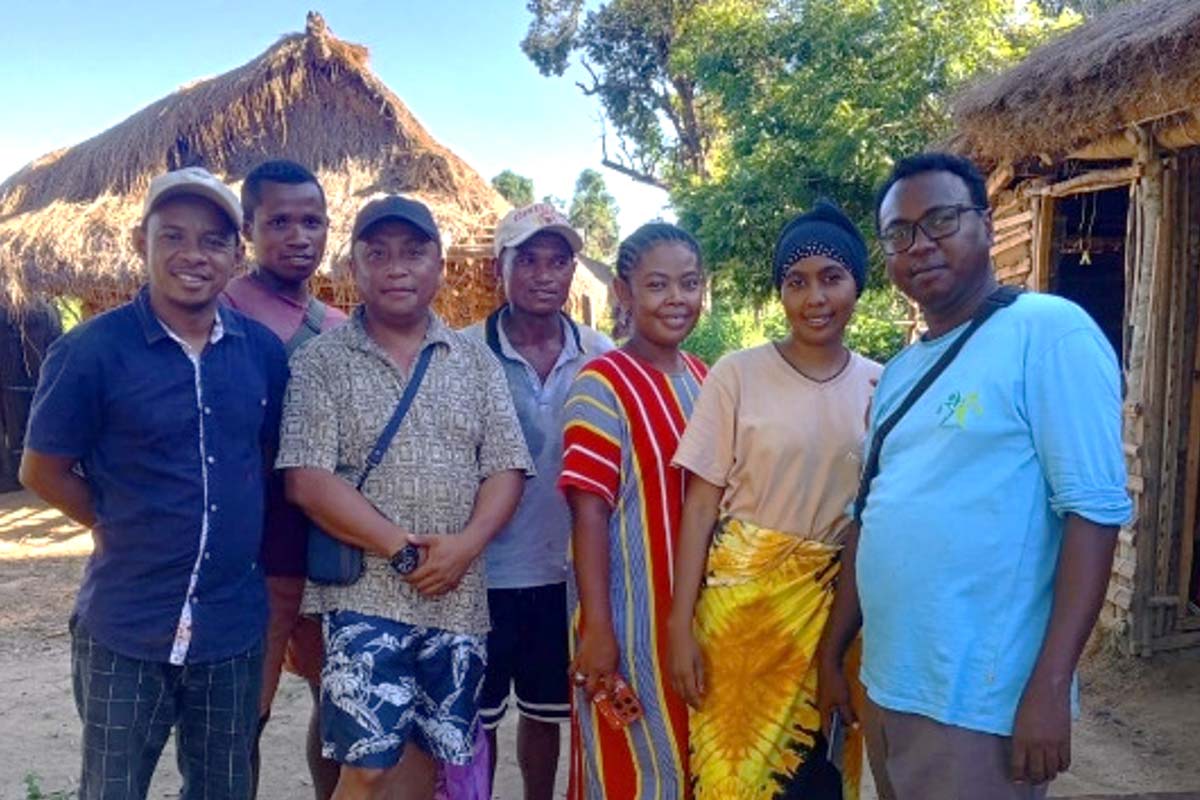
Antsohihy, a small community in the district of Ambatoboeny, Madagascar, is far away from just about anywhere.
The nearest community health centre – one of only two in the district – is 35 kilometres away. The area’s only form of motorised transport is motorcycle taxis, which charge 250,000 Malagasy Ariary (about US$ 60) for a one-way trip to that clinic, a sum far beyond reach of most local people.
For most families, travelling to the health centre on foot – a journey of four hours on a good day, and six when seasonal rains turn the unpaved road to mud – has been their only option.
To add to the logistical challenges, insecurity continues to rise in the area. Families who own livestock are regularly targeted by an armed group of cattle-rustlers. Despite the presence of a gendarmerie brigade, whole herds of animals are systematically stolen by the armed group.
Dr Azafindrakoto Jean Luc Hajanihaina, Project Manager of the VAKANA vaccination project, which is co-run by global CSO Jhpiego and local CSO Fikambanana Tanora Kristianina Miatrika Ny Ho Avy (more simply known as FTKMA), says, “This climate of violence discourages many households from venturing over long distances, for fear of crossing paths with their aggressors.”
Faced with these challenges, most families choose to stay home. As a result, for years, children in this fokontany – a local word for a small community like Antsohihy – had little access to healthcare, including vaccination.
In 2025, the VAKANA project conducted a household census across the five fokontany that fall under the Antsohihy health area.
It found that Antsohihy village had the highest concentration of unprotected children: 64 zero-dose children and 34 under-immunised children, aged from six weeks to 59 months.
The district health centre had set a monthly target of seven vaccinations for this fokontany. That target was rarely met.
“The majority of residents treat illness with medicinal leaves because they cannot reach the primary health care services. Few make the journey. Many children are either unvaccinated or fail to complete their vaccination schedule,” says Dr Razafindrakoto.
The midwife who delivered hope
Now in her early thirties, Andriarimalala Eliane Germinah was born in Antsohihy. After finishing secondary school, she left the village to train as a midwife, then spent nearly five years working as a volunteer at Urban Basic Health Centre in Mahajanga – the regional capital, hours away by road. The city offered what the village could not: colleagues, training opportunities and adequate medical supplies. But Germinah chose to come back.
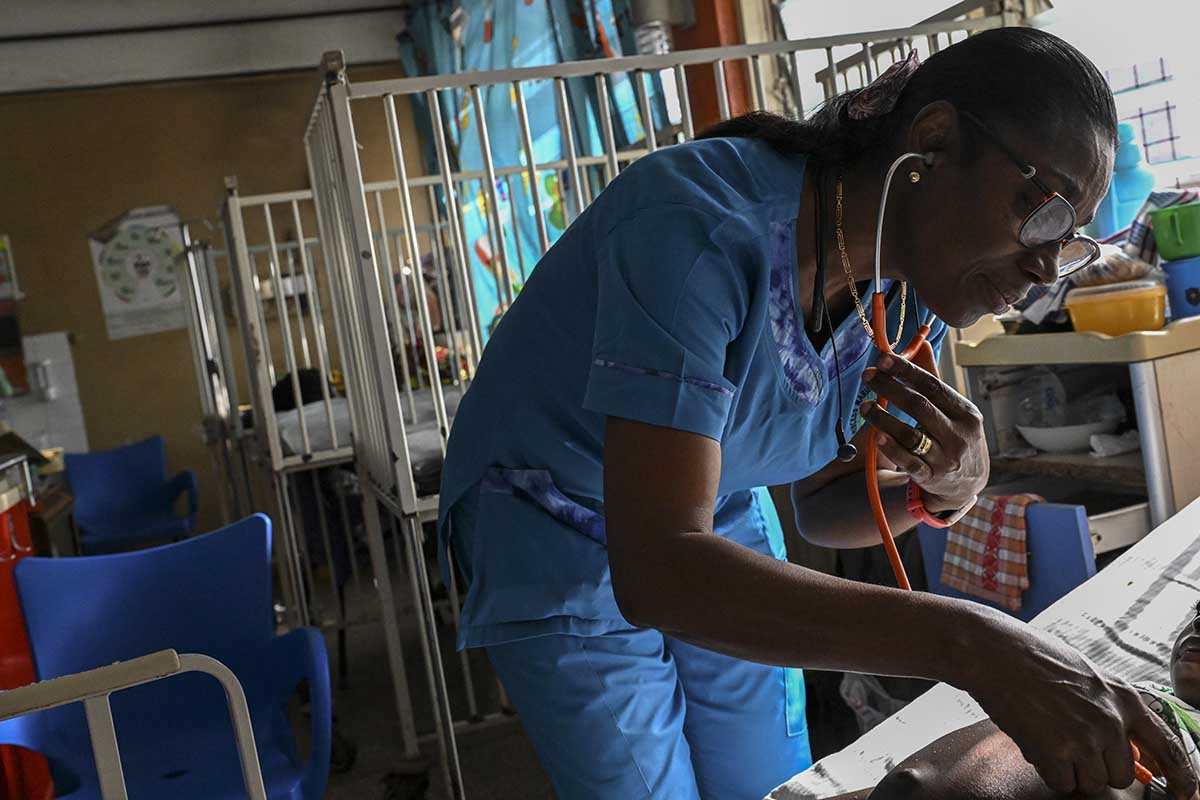
She returned in 2026 and opened Antsohihy’s first community health post. She holds no government post – she is a volunteer. “I chose to come back to my village to practise my profession, to devote myself to the service of my community,” Germinah says.
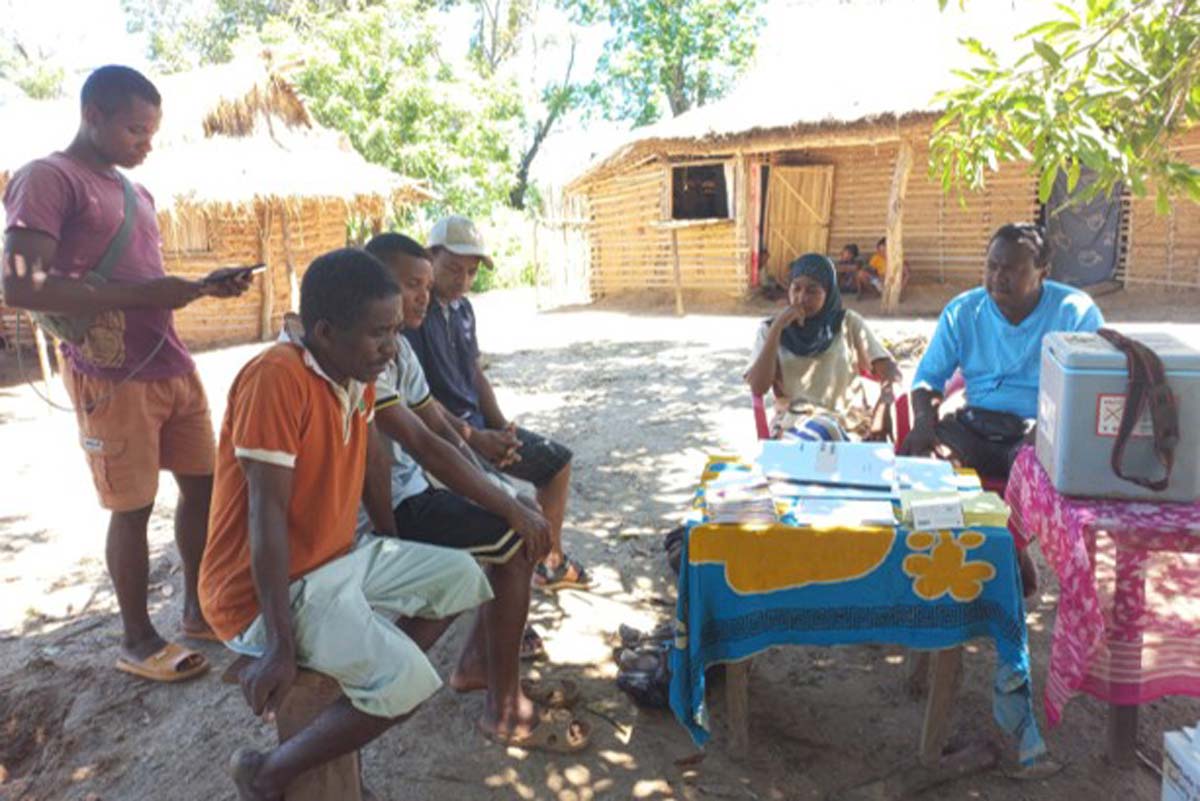
Each morning, Germinah opens the doors of the local health post to the women of the village.
While the women chat to each other under the porch, Germinah and community health worker Albert Razafimamonjy check the vaccination records of all the children invited to the vaccination clinic.
Antsohihy’s Chief Velomiary said “Having a healthcare practice in our own village feels like a gift.”
A system of collaboration
Germinah might be working alone in Antsohihy, but she has backup further afield.
The Urban Basic Health Centre 2 in Madirovalo, 516 km away from Antsohihy, oversees supervision, vaccine supply and technical guidance for Antsohihy’s community health post.
The Ambatoboeny departmental public health service, via the Urban Basic Health Centre 2 in Madirovalo, provides Germinah’s health post with both vaccines and technical supervision. Madirovalo Community health workers bring the vaccines to the village on foot in cold carriers ahead of vaccination days.
Two community health workers are assigned to the village. They are trained by the VAKANA project team on the vaccination schedule, how to find zero-dose and under-immunised children, the surveillance of vaccine-preventable diseases. They’re furnished with a clear roadmap and performance-based incentives.
“Vaccinate 10 zero-dose children, recover 15 under-immunised children, conduct 10 home visits per month, and maintain the monthly community register with rigour – that is their mission,” says Guy Raveloson, VAKANA Project Coordinator.
Albert Rasidimanana, one of the two community health workers in Antsohihy, says, “During my home visits, I identify zero-dose children by checking with the parents about the latest vaccines. I note those who have never been vaccinated and those who have not finished their schedule. The presence of the community health post changes a lot of things.”
He continues: “Children who have not completed their vaccination schedule are monitored thanks to infant cards. Among other things, the community registry also makes it possible to identify children who are late or absent during the sessions.”
To support community mobilisation and engagement in vaccination efforts, community leaders – village chiefs and religious figures – play a central role in outreach, lending their credibility and the trust they have from the community to encourage families to bring their children forward for vaccination.
On vaccination days – a date every family in the fokontany now knows in advance, thanks to the new system – Germinah receives children at the health post: she vaccinates them, follows up and maintains the registers.
The detail that makes the difference for Antsohihy is trust. Germinah is not an outsider, but a highly appreciated member of her community. She speaks the local language, knows the families, and she is a native of the village. “Seeing mothers trust me and come to me for help – that is my greatest satisfaction,” she says.
A shift of substance
At the inaugural vaccination session in Antsohihy, held in March 2026, 15 children were vaccinated at the community health post. Among them were six zero-dose children aged 12–59 months, three as-yet unvaccinated infants aged 0–11 months and two under-immunised children. These were all children who, without this session, were unlikely ever to have been reached.
A second session, two months later, in May 2026, vaccinated 27 children, including 16 zero-dose children and 11 under-immunised children.
These numbers remain modest, measured against the scale of need. But they represent a shift of substance: the community health post is a real alternative to a 35-kilometre journey that stands as the main barrier to accessing the community-based health centre.
“The journey was too far. Now, with Germinah in the village, my boy Ralazy has been vaccinated – without me having to spend a fortune,” says Ketaka Raketamalala.
“Having a healthcare worker in our own village is like having the community health centre come to us. Our children are vaccinated and followed up – without us having to travel far,” says Sahondra Razanamalala, mother of Ginot.
Chief Velomiary says the community health post run by Germinah reduces the geographical barriers to access to primary health care. "We support this initiative because it brings health closer to families,” he says.
Germinah's example has inspired others. More than 200 kilometres away, in the fokontany of Ankeliroy, the community has followed suit and built its own health post.
Have you read?
The way forward
Jean-Luc Hajanihaina, the VAKANA Project Manager, believes that three complementary mechanisms will guarantee the continuity of services in Antsohihy at the end of the VAKANA project in December 2026.
First, institutionalisation: the health post will gradually receive official recognition from the Urban Basic Health Centre 2 and the Ambatoboeny public health directorate.
Second, the continuation of joint supervision visits for vaccination and maternal and child health services, ensuring regular follow-up and technical support.
Thirdly, the active involvement of families and local leaders, which is essential to sustaining demand and adherence to vaccination services over the long term.
How is Gavi helping?
To help increase immunisation coverage in lower-income countries, Gavi has launched a series of opportunities for civil society organisations (CSOs) to deliver projects reaching zero-dose children and under-immunised communities via its CSO Fund Manager.
MannionDaniels, a global health and social development consultancy, working in a consortium with Oxford Policy Management (OPM), currently operates in this role, providing end-to-end grant management services.
VAKANA, in Madagascar, receives support from Gavi through this funding mechanism. VAKANA stands for ‘Vakiny Antoky Ny Aina,' Malagasy for “vaccination as the foundation of life”. Led by Jhpiego, VAKANA is run in close collaboration with a local Malagasy CSO FTKMA.
FTKMA stands for Fikambanana Tanora Kristianina Miatrika Ny Hoavy, which means Association of Young Christians for the Future. This local CSO supports social mobilisation and community awareness activities in close collaboration with the Ambatoboeni district administration.
More from Luc Razafindrakoto