
Could nasal vaccines replace syringes?
Evidence is emerging that nasal vaccines could be more effective than previously believed, boosting a crucial form of immunity hiding in plain sight.
- 5 May 2026
- 8 min read
- by Linda Geddes
For decades, scientists have tried to develop vaccines that could block infections where they so often begin: in the nose and airways. For many diseases this is where they enter the body, making it a key frontline against respiratory viruses and bacteria.
Unlike traditional injections, which train immune defences in the bloodstream, nasal vaccines aim to build protection directly at these entry points. This could potentially stop viruses before they take hold.
Despite this promise, their development has lagged behind conventional vaccines.
Part of the reason is practical: the immune responses they trigger are difficult to detect using standard blood tests, making it hard to tell whether they are working.
Now, a new study of a nasal flu vaccine is helping to change that.
Researchers, led by Shane Crotty at the La Jolla Institute for Immunology in California, used an approach that samples immune cells directly from the upper airway, allowing them to measure virus-specific responses in the nose.
When they used this method to compare immune responses to an existing nasal vaccine with those generated by a standard injected flu shot, they found a striking contrast: the injected vaccine produced strong responses in the blood, but little activity in the nose, while the nasal vaccine generated robust, long-lasting immune responses in the airway itself.
Why does immunity in the nose matter?
The nose and upper airways are the body’s first point of contact with many pathogens, from influenza to COVID-19.
Lined with thin, moist ‘mucosal’ tissue, these surfaces are constantly exposed to air and microbes.
To defend them, the immune system deploys specialised responses, including the secretion of an antibody called immunoglobulin A (IgA) into the mucus. IgA can intercept viruses before they infect cells, helping to clear them before you ever get sick.
Scientists have known since the 1960s that IgA responses are best triggered directly at mucosal surfaces, such as those lining the gut.
Studies comparing oral and injected polio vaccines found that only the oral version induced IgA in the intestine, said Prof Peter B. Ernst at the University of California, San Diego, who recently co-authored a review on nasal vaccines for respiratory infections.
Although both vaccines protect against polio because the virus must spread through the bloodstream to reach nerve cells, only the oral vaccine generates IgA at the site of entry, helping to block infection before it spreads.
The COVID-19 pandemic brought this into sharper focus: injected vaccines were highly effective at preventing severe disease, but less able to stop the virus from taking hold in the airways and spreading. Local immunity in the nose and upper airways could solve this problem.
How do nasal vaccines work?
The idea behind nasal vaccines is to trigger lasting immune responses, including the production of IgA, at these entry points.
“If you get exposed to a virus, those layers of immune protection would preferably be at the site of infection, not just in blood,” said Crotty.
Traditional vaccines are injected into the arm muscle, where specialised immune cells pick up the antigen and carry it to nearby lymph nodes. There, B and T cells recognise it and mount an immune response, generating antibodies and immune memory in the bloodstream.
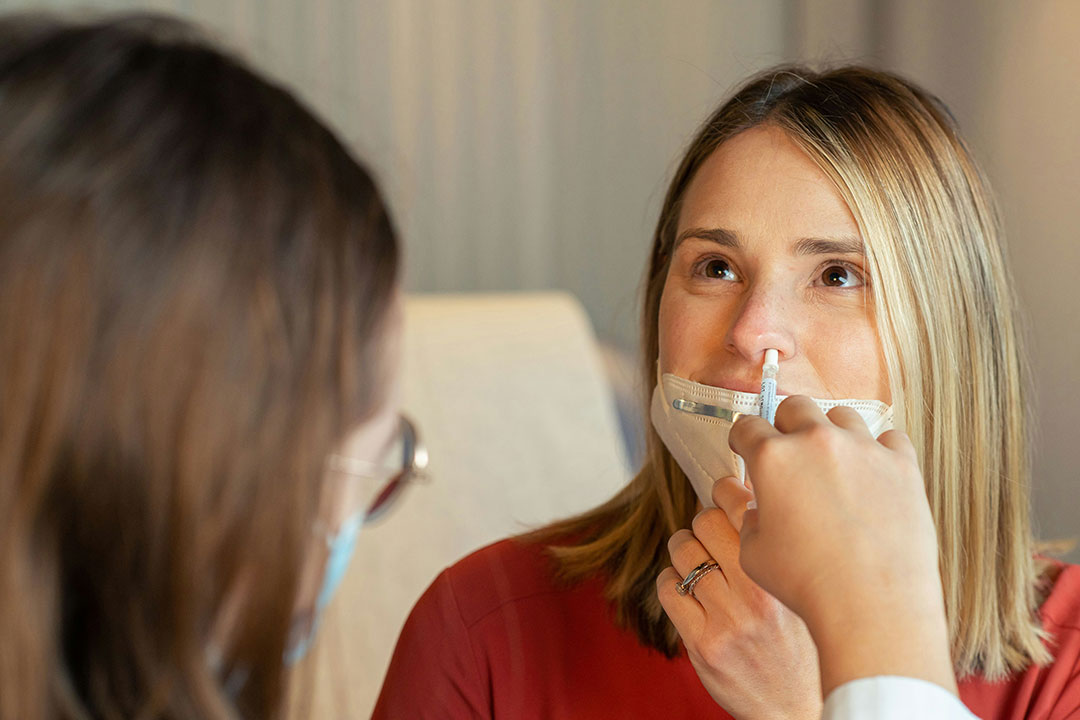
Nasal vaccines, by contrast, deliver a small amount of viral or bacterial material directly into the nose. Immune cells then transport the antigen to nearby immune tissues, such as the tonsils and adenoids, where B and T cells are activated.
But intranasal vaccines also aim to stimulate immune responses at the site of infection in the nose and upper airways, including IgA and resident immune cells that remain in place and can respond rapidly when a pathogen is encountered again.
By generating both local and systemic immunity, they may offer a more comprehensive line of defence, helping to stop infections before they take hold.
There could be other benefits, too. “Intranasal administration does not require a medical professional and has been recently approved for self-administration,” said Ernst.
“Some do not need cold storage, which facilitates supply chain issues when distributing vaccines in less economically developed countries, for example. Kids are also often anxious about needles, but less so about oral or intranasal vaccines.”
What infections could nasal vaccines help prevent?
Nasal vaccines are primarily being developed to protect against respiratory infections, such as influenza, COVID-19 and respiratory syncytial virus (RSV), which begin by infecting cells in the nose and upper airway before sometimes spreading deeper into the lungs.
Researchers are also exploring their use against bacterial pathogens that affect the lungs, such as Streptococcus pneumoniae and Haemophilus influenzae.
Mucosal tissues are found elsewhere in the body, including the gut, eyes and reproductive tract, and are connected as part of a broader immune network. Because of this, stimulating immunity at one site can sometimes trigger responses at others.
Have you read?
This has prompted researchers to explore nasal vaccines for diseases such as tuberculosis and HIV, which involve infection at mucosal surfaces in the lungs or reproductive tract.
Even so, it is unlikely that nasal vaccines will entirely replace injected vaccines even for respiratory pathogens. “I think many of us feel that a combination of systemic [injected] and mucosal immunisation may work best for respiratory pathogens that are more widely spread in the airway and/or enter the blood,” said Ernst.
They are also unlikely to replace systemic vaccines for diseases that spread through the bloodstream or affect multiple organs, where strong body-wide immune responses remain essential.
Why are so few nasal vaccines currently available?
A handful of nasal vaccines have been developed and brought to market, including the live attenuated influenza vaccine FluMist (known as Fluenz Tetra in Europe), which is available in several countries and widely used in children.
However, progress in developing them has been relatively slow. Part of the reason is historical: most early vaccines were delivered by injection and proved highly effective, shaping both scientific focus and funding priorities.
Mucosal immunity is also harder to study than blood, requiring specialised techniques and access to tissues that can be difficult to sample. “Typically, all immunologists study blood, but studying mucosal tissues historically only attracted those trained in the digestive tract or the airway,” said Ernst.
There are also technical challenges. The nasal environment is designed to keep foreign material out. Mucus and other defences can clear vaccines before they have time to work, and formulations must be carefully designed to be both effective and safe in a sensitive area close to the brain.
What exactly did the new study find?
Even though FluMist has been available for years, its effectiveness, particularly in adults, has often been questioned, in part because it generates little measurable immune response in the blood.
Using repeated samples from the upper airway and blood, the researchers tracked immune responses over time following vaccination with FluMist or an injected influenza vaccine.
They found that the latter triggered strong antibody responses in the blood, but there was little evidence of immune activity in the nose.
By contrast, the nasal vaccine generated a substantial population of virus-specific memory B cells in the upper airway that persisted for at least several months. These cells are thought to play an important role in mounting a rapid response if the virus is encountered again.
Crucially, these responses were largely invisible in blood samples, meaning they would have been missed using conventional methods.
What does this mean for nasal vaccines more broadly?
By showing that immune responses can be measured directly in the upper airway, the study provides researchers with a long-missing tool to evaluate nasal vaccines in humans.
Instead of relying on blood samples, which often show little or no response to these vaccines, scientists can now look at the tissues where protection is most likely to occur.
“We showed that we could directly measure immune responses to a nasal flu vaccine in the upper airways,” said Crotty. “I think this will really help development of future intranasal and mucosal vaccines, because one of the biggest challenges is that they don’t generate much of a measurable immune response in the blood.”
Being able to track immune responses in the airway could help researchers compare different candidates, refine formulations and identify the most promising vaccines before moving into larger, more expensive trials.
More broadly, the findings help explain why some existing nasal vaccines, such as FluMist, may have been underestimated. Although they can appear weak by conventional measures, they may in fact be generating strong, local immune responses that have simply gone undetected.
While it remains unclear exactly which of these responses are necessary for protection, the ability to measure them is a crucial step towards designing more effective vaccines that block pathogens at the front door.