
Following nomadic paths: on the road to hope in Mali
“We will go where the children are”: reaching thousands of children with vaccines using camels, innovation and culturally appropriate solutions.
- 8 April 2026
- 4 min read
- by Abdullah Mohamed , Olivier Konan
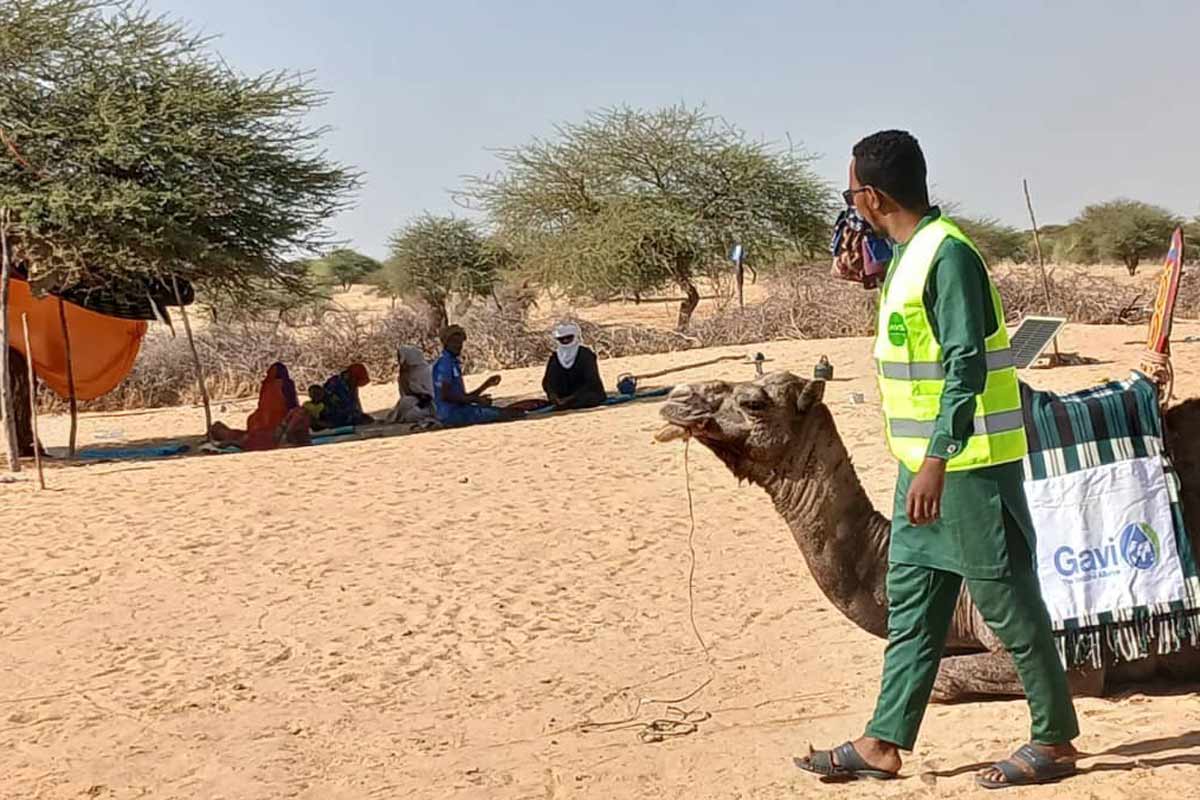
Dunes as far as the eye can see. A dry wind. A few low tents, herds of goats. In the Taoudenni region of northern Mali, nomadic pastoralist communities live in the rhythm of the seasons. They have to move regularly, depending on the availability of grass and water points. This way of life is their identity and their means of subsistence.
Children of the desert
This vast arid desert, located 750 km from Timbuktu, is near the Algerian border. Renowned for its ancient salt mines, Taoudenni is known as “the city of white gold’’.
The region is confronted with multiple and simultaneous conflicts, which cause massive population displacements, aggravating already endemic poverty. In this context, access to vaccination remains a challenge in any case, and the transient communities’ mobility means it is difficult to locate the children who need to be immunised.
Silent vulnerability
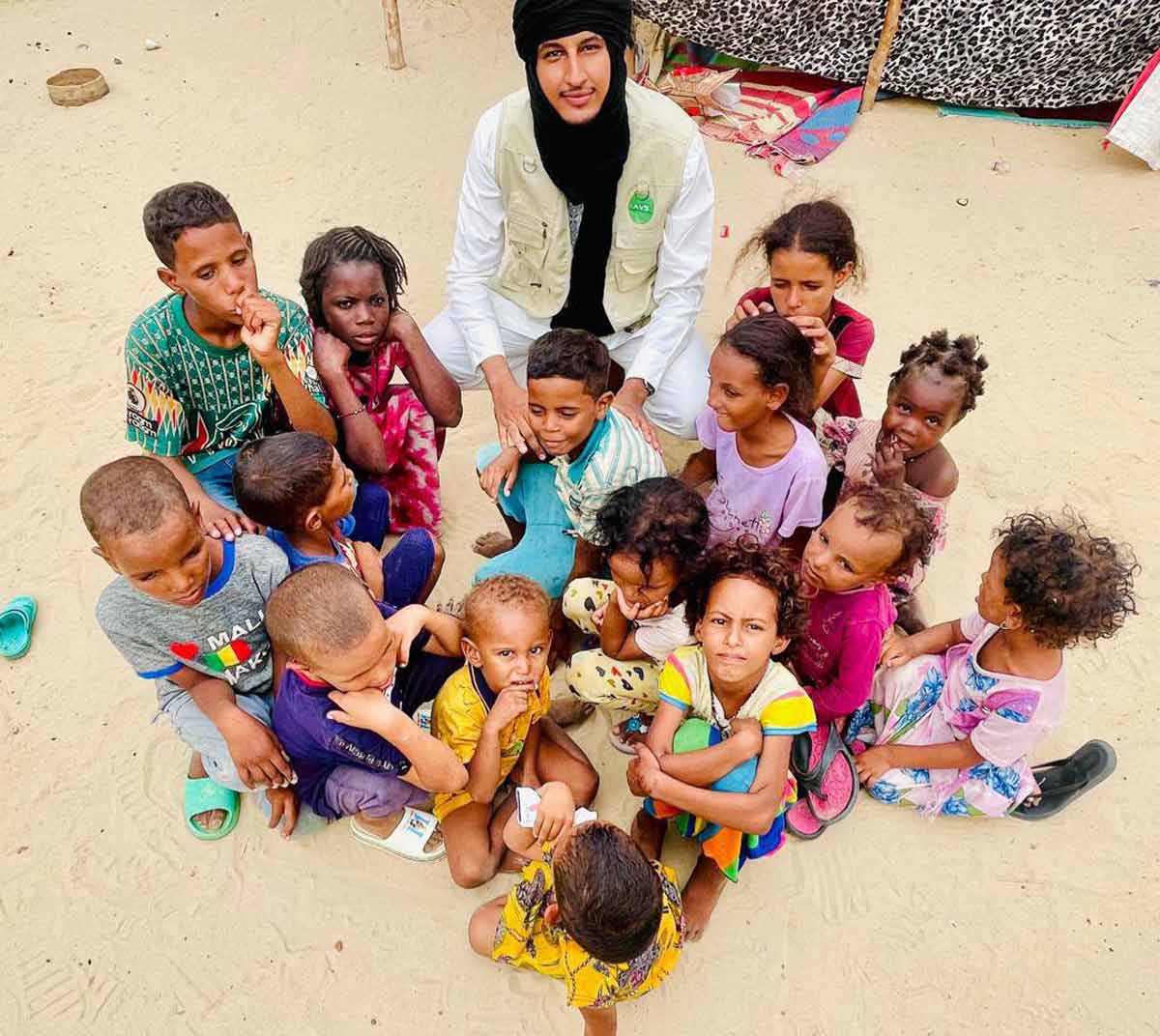
Hailing from the Berabiche, Tuareg, and Sonrhai Arab tribes, these highly mobile children have limited access to routine immunisation programmes, and remain disproportionately vulnerable to vaccine-preventable diseases.
According to the Demographic and Health Survey (EDSM-VII 2023–2024), 13% of children aged 12 to 23 months nationwide have not received any vaccines, including nomadic children. As a direct consequence, many nomadic children are not recorded in official health data.
A mobile approach adapted to the local context
In the heart of Tanezrouft, one of the most inhospitable parts of the Sahara, the Attama project, led by CSO Association Vivre au Sahel (AVS), is trialling an innovative strategy focused on mobile healthcare and community engagement. In the Tamasheq language, attama means ‘hope’. And to share out more hope, more equitably, vaccination sessions take place at popular gatherings, such as weekly markets, around community wells, transhumance corridors, and in AVS’s food distribution spaces.
For Mohamed Abdallah Ag Mohamed, the national coordinator of AVS, it is no longer up to the communities to adapt to the services, but to the services to adapt to the communities.
“We will go where the children are. It is not a question of waiting for them to come to health centres, but of reaching them where they live, move and survive,” he explained.
The lack of passable roads makes access to communities extremely difficult. Even 4x4 vehicles, designed for rough terrain, cannot travel on these sandy desert roads. Faced with this challenge, logistical solutions that are both innovative and culturally appropriate are needed.
AVS often uses two or three camels for transportation, to seek out and track zero-dose children, and children with whom the immunisation system has lost touch. Camels are also used to carry vaccine materials to the temporary camps of the most isolated nomads. This approach fits naturally into the local cultural landscape.
Have you read?
Catching up with those constantly on the move
One of the main challenges of mobile vaccination programmes is tracking zero-dose children seen for the first time, who are often difficult to locate for subsequent doses.
This is why the CSO AVS has set up a surveillance system shared with community relays in the districts of Al Ourch and Foum Elba in Taoudenni. These include mothers’ clubs and community liaisons to identify and refer under-immunised children for vaccination.
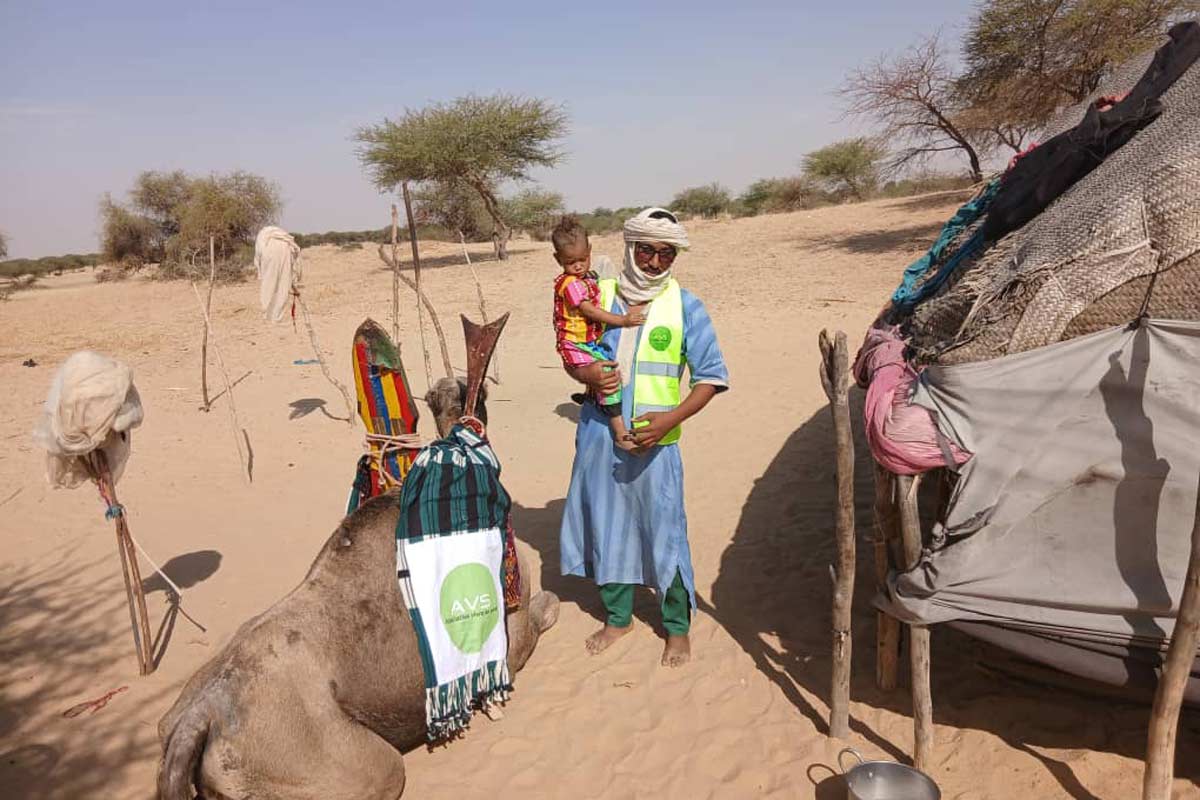
Since the launch of the Attama project, 6,531 children have received their first dose of the pentavalent vaccine. Among them, 511 were aged 12 to 23 months and had never been vaccinated before; the remaining children were aged 0 to 11 months.
An initiative to promote the mobility of nomads
This approach is based on simple and effective methods. It is based on listening, collaboration with local actors and the acceptance that mobility is not an obstacle.
Nomadic communities continue to move according to their needs. The vaccination services have also learned to move. By following nomads’ paths, vaccination services do not seek to change lifestyles, but instead, adapt to them.
How is Gavi helping?
L’Association Vivre au Sahel takes its name as its guide, striving to provide hope and ensure that no child in the Sahel is left behind.
AVS is committed to a resilient, united and sustainable Sahel, working to protect civilians in conflict zones, strengthen basic social services and guarantee every child fair access to vaccination.
Since May 2025, AVS has been implementing the Attama Project in Taoudenni governorate in Mali, with support from Gavi through the Gavi CSO funding mechanism. In this time, AVS has been able to reach more than 6,000 children across the Sahel with a first dose of the basic five-in-one pentavalent vaccine.
Gavi’s CSO funding mechanism, managed by MannionDaniels, channels support to partner organisations in 14 countries, with the aim of reaching children in under-immunised communities.
More from Abdullah Mohamed