
Ghana is on the path to eliminating malaria
Malaria control tools are becoming both more numerous and more effective, and that’s showing up in Ghana’s plummeting mortality rates.
- 14 October 2026
- 6 min read
- by Claudia Lacave
At a glance
Between 2011 and 2025, Ghana has seen a 98% drop in malaria fatalities, and Dr Nana Yaw Peprah, Deputy Head of the National Malaria Eradication Programme, says elimination is “within reach”.
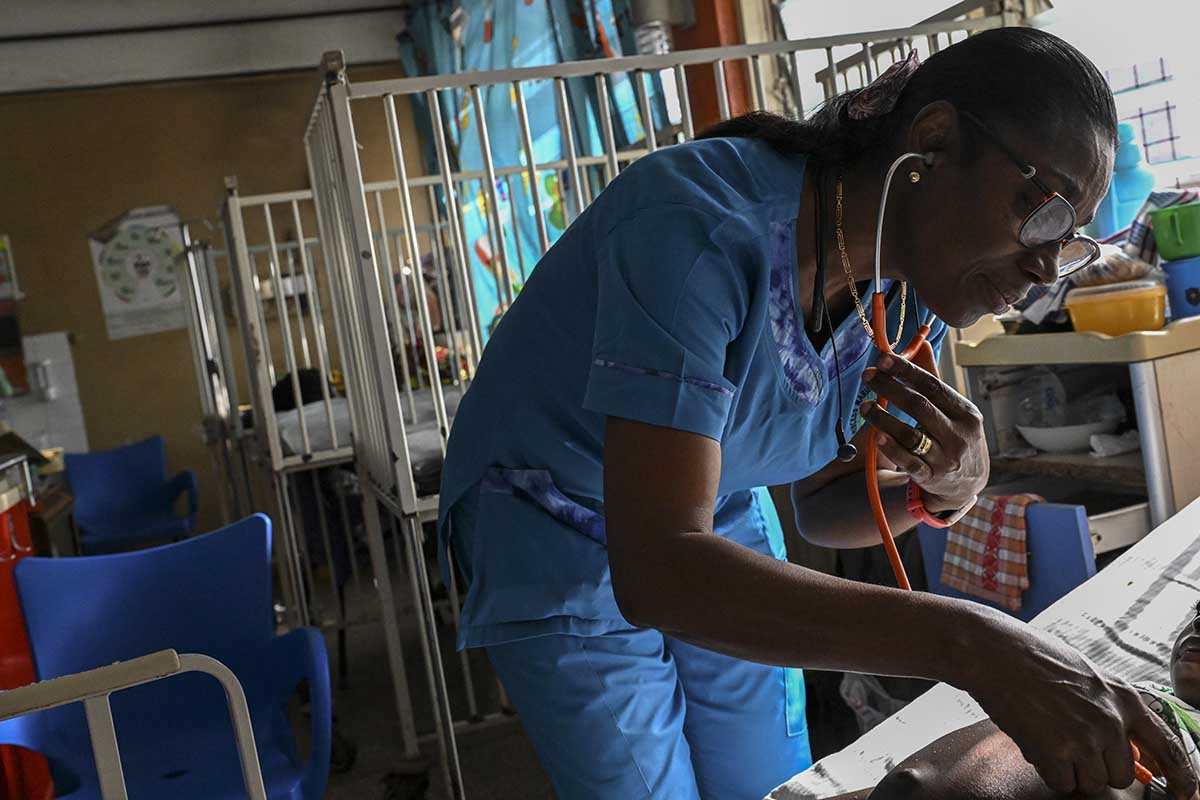
Dr Elisabeth Tabitha Abbew has seen watched the change from her post at the head of the infectious diseases department at Cape Coast Teaching Hospital, which hasn’t recorded a single malaria death in two years.
Medical professionals agree: it’s the fact that Ghana is deploying a combination of all the available anti-malarial interventions, from vaccines to preventive meds, mosquito nets and therapeutic drugs that are saving all those lives.
According to statistics released by the Ghana Health Services, only 52 people in the country are thought to have died from malaria in 2025.
The country’s reduction in malaria mortality over the last 15 years has been dramatic. Thanks to the confirmed effectiveness of the malaria vaccine, rolling out in Ghana since 2019, and a range of other innovative tools, the country is now on a track towards elimination – the point at which a country records no new infections of the disease.
In April, Dr Nana Yaw Peprah, Deputy Head of the National Malaria Eradication Programme (NMEP), told members of the press that a malaria-free Ghana was “very possible” and “within reach” .
Dr Elisabeth Tabitha Abbew, head of the infectious diseases department at Cape Coast Teaching Hospital in western Ghana, has had a glimpse of this future. “In the last two years, we haven’t identified a single case where we could say: this person died of malaria,” she notes. Because her hospital is a tertiary care institution, Dr Abbew has typically seen patients in the most dangerous stages of the disease. While several of the patients she has lost were found to have been found to be infected with Plasmodium falciparum, the deadliest of the malaria parasites, at the point of death, malaria has not been any patient’s primary cause of death for two years.
After 12 years in the field, the doctor is optimistic. Ghana has already reduced the number of fatalities by 98% between 2011 and 2025, and hopes to drop below a maximum of 15 deaths per year by 2028, as well as achieving elimination in 21 low-burden districts of the capital, Accra.
Dr Emmanuel Boateng, head of diagnostics and treatment at the NMEP, explains: “We are realistic about the impossibility of eliminating the disease across the entire country at the same time. Our approach is elimination by district, and the goal is to ensure that we achieve zero malaria in Accra by 2028.”
In addition to traditional tools such as insecticide-treated mosquito nets, insecticide spraying and preventive drug treatment campaigns, Ghana has added several effective health innovations in recent years to the fight against malaria, including new anti-malarial vaccines.
Towards widespread vaccination coverage
A 13% decrease in mortality among children eligible for three RTS,S vaccine doses, despite moderate uptake of three doses, and low uptake of the fourth: these were the findings of a study published in The Lancet in May 2026, which analysed vaccine impact across a four-year, three-country pilot.
Since 2019, at least 993 deaths have been averted in Ghana, Kenya and Malawi, the three countries involved in that pilot. Hospitalisations, meantime, decreased by 22%. But all health professionals are keen to emphasise: the key to success is a mix of all the available interventions.
“The [World Health Organization] classifies insecticide-treated bed-nets as one of the most effective preventive interventions against malaria,” explains Dr Boateng. “But over time, their use has stagnated, so we need new interventions. For example, when the pilot malaria vaccine programme was evaluated, we found that the vaccines reached those who were not using bed-nets.”
Today, more than 130 out of 216 constituencies nationwide are receiving the vaccine, and approximately 4.8 million children were protected in 2023. The vaccine roll-out has formed part of a joint implementation of several interventions. The Ghana Health Service (GHS) trained health professionals to answer questions confidently and journalists and broadcasters to provide factual coverage of the vaccination campaign and counter conspiracy theories. Authorities hosted interactive programmes with the public and mobilised teams to identify and debunk misinformation on social media and in the media. In some areas included in the pilot programme from the outset, confirmed cases of malaria in children under five decreased by 45% between 2019 and 2024.
Still, completing the four-dose malaria vaccine protocol remains a challenge. Children visit clinics less frequently as they get older, and only 70% of patients have received the fourth dose by 18 months of age.
Elimination is not yet a done deal
In the international context of drastic cuts in development aid, Ghana’s health sector faces difficult decisions. “I’m looking two or three years ahead. What will happen to all the tools against malaria? Will people say that because we’ve made progress, we should abandon some of them? But then, if we abandon one, what will happen?” asks Dr Abbew. Determined to improve the health of its citizens, Ghana continues to implement innovative interventions.
In early 2026, the government added Coartem Baby to its range of treatments, the first antimalarial drug specifically formulated for newborns and infants weighing between two and five kilograms. This artemether and lumefantrine-based medication, which received national approval in February 2026 and WHO prequalification on 24 April 2026, fills a major therapeutic gap for infants under six months old. It’s the first dedicated medication for this vulnerable age-group, among whom the infection rate can reach 18.4%.
In some areas included in the pilot programme from the outset, confirmed cases of malaria in children under five decreased by 45% between 2019 and 2024.
As a result, doctors were resorting to reduced-dose artemisinin-based combination therapies (ACTs), despite the risk of dosage errors. Dr Boateng explains: “Because the benefits outweigh the risks, we continue to administer these ACTs at a dose of one milligram per kilogram of body weight, exactly as for children weighing 4.5 or 5 kg and over. And of course, because of this, it is very difficult for you to get accurate dosages.”
Still, despite promising new tools and this year’s encouraging new data, achieving elimination requires increased vigilance in the coming years. Progress in the Accra metropolitan area, for example, is falling short of government expectations: in 2024, only three of the twenty-one districts had reached their target, and in 2025, only one area achieved it. Two preventive treatment campaigns – both with prophylactic drugs, rather than vaccines – had to be delayed due to a lack of funding.
But within the government, there is hope. “The fight against malaria is everyone’s business. It starts with me, it starts with you,” concludes Dr Boateng, appealing for all available support.