
Lancet: climate change should be treated as a global health emergency
Climate change’s impact on our health is becoming more and more evident. Here are six key takeaways from the Lancet’s latest Countdown report on climate change.
- 28 October 2026
- 7 min read
- by Priya Joi
At a glance
- The tenth annual Lancet Countdown report, released today, says that in 2023 alone, heat was linked to a record 710,000 deaths, over 70% of them linked to human-caused climate change.
- There has been some progress: clean energy investment reached a record US$ 2.1 trillion in 2025 – 82% more than the investment in fossil fuels – but more needs to be done.
- The report’s authors are calling for climate change to be declared a global health emergency, and for health to be placed at the centre of every climate decision, from emissions reductions to funding priorities.
“A decade after the Paris Agreement, our findings are unambiguous: the health harms of climate change are growing faster than the world’s response to them, and in many cases even accelerating,” says Professor Marina Romanello, Executive Director of the Lancet Countdown, based at University College London.
That is the verdict of the tenth annual Lancet Countdown report, published today. Produced by 146 researchers from more than 100 institutions in collaboration with the World Health Organization (WHO) and Wellcome, it tracks 54 indicators of how climate change is affecting our health.
Between 2016 and 2023, heat was linked to an average of 540,800 deaths a year, 68% of them caused by climate change, up from 55% in 2006–2015. In 2023 alone, heat was linked to a record 710,000 deaths, more than malaria or HIV. More than half the world’s land (51.8%) was hit by extreme drought for at least a month in 2025, the second-worst year on record.
There has been real progress in clean energy, health system readiness and health-protective regulation, Romanello says. “However, progress has been too slow, too small, and isn’t reaching those who need it most.”
1. Climate change is a health emergency, just not the kind our systems are built for
The report asks WHO and the UN to make full use of existing tools, such as the International Health Regulations, to recognise, prepare for and respond to health emergencies driven by climate change. But it also calls for a new WHO instrument to formally recognise climate change itself as a global health emergency.
Currently, WHO’s highest level of health alert is to declare a Public Health Emergency of International Concern (PHEIC), however this is designed to respond to acute or short-term emergencies such as Ebola.
As report co-author Jennifer Israelsson, Institute for Global Health, University College London, London, UK, told VaccinesWork, “we are also calling for a similar tool to be established, but with a focus on long-term actions and building resilience.”
Such a tool would bring the coordination of an emergency response – joining up government agencies, streamlining how resources are allocated and sharing data quickly – “but taking a long view rather than dealing with one emergency after the other.”
2. Political engagement is going into reverse
After years of growing attention, engagement with climate change and health is falling. In 2021, 65.9% of countries mentioned the link in their UN General Debate speeches; by 2025, that had dropped to 26.3%. The share of companies discussing it in their UN Global Compact reports fell from 58% in 2023 to 37% in 2025.
Asked whether lobbying and disinformation, competing crises or aid cuts explain the drop, Israelsson told VaccinesWork: “Probably all of the above! The downplaying of the risks from climate change from lobbyists, the continuous stream of crises, combined with the view that climate change is mainly in the future and not acutely happening now are probably all part of the reasoning.”
“To shift the dial, I think we need a broad understanding that climate change is having not just direct health impacts,” she says. She adds that it is increasingly disrupting access to care during extreme events, affecting livelihoods as extreme heat reduces work productivity, and reducing food security through more widespread droughts and heatwaves.
The report estimates that an additional 127.9 million people experienced moderate or severe food insecurity in 2024.
3. Too much money is still subsidising fossil fuels
Official development assistance from the 17 largest donors is projected to fall by more than US$ 50 billion between 2023 and 2026, about a quarter of the total.
Health adaptation finance already falls short: in 2024, only US$ 1.1 billion in international finance was committed towards the US$ 3.3 billion a year that 48 developing countries say they need – and the report notes that these needs are probably underreported.
Yet in 2024, the 87 countries analysed spent a net US$ 808 billion subsidising fossil fuels, and 10 of them spent more on these subsidies than on their health systems.
“As we show in this year’s report, many countries are still spending large sums of money subsidising fossil fuels, which could instead be invested in health-benefiting actions, such as transitioning to a low-cost, renewable energy system,” says Israelsson.
Because countries differ so much in their capacity to act, she says, the recommendations focus on global changes: establishing climate change and health data as a global public good, prioritising a just and equitable reduction in greenhouse gas emissions and providing more finance as grants rather than loans, “to not further add to the debt burden in vulnerable countries”.
4. Progress is real, but unevenly shared
There is good news. The transition to cleaner energy prevented an estimated 400,000 deaths in 2023 compared with 2016, through improved indoor air quality.
Global investment in clean energy reached a record US$ 2.1 trillion in 2025. As of 2025, 56 WHO Member States reported having developed a Health National Adaptation Plan, up from 14 in 2015.
Israelsson says it is important to talk about these achievements. “It is certainly important to highlight all positive examples and achievements to date to support engagement with the climate-health agenda,” she says.
But she cautions against complacency. The gains need to be set against how much remains to be done, she says, and “continue to flag that it is mainly wealthy countries that have benefitted so far, to not risk sending the message that we have done enough”.
Renewables supplied 14.6% of electricity in very high HDI countries in 2023, but just 2.9% in low HDI countries.
Have you read?
5. The disease map is being redrawn
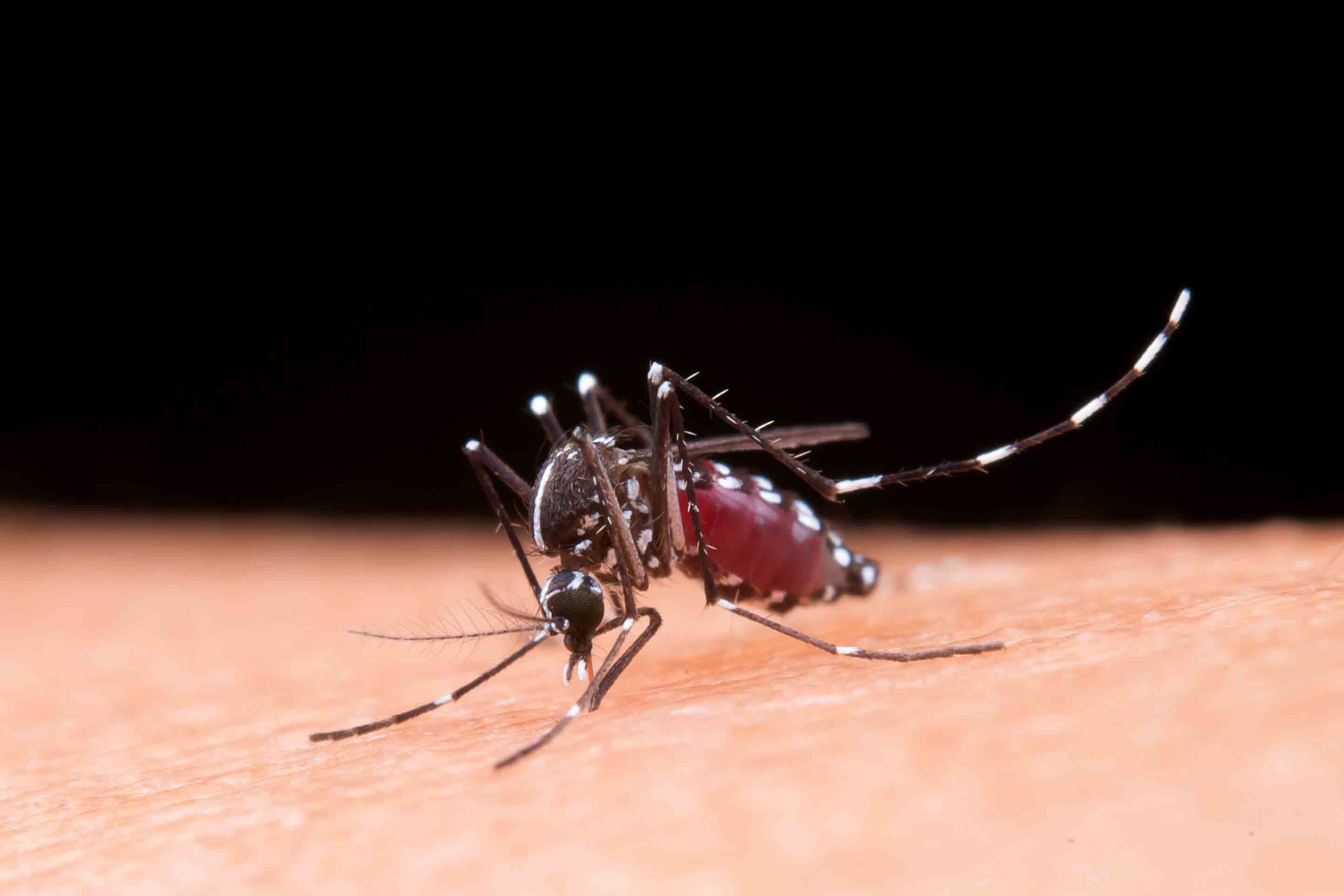
Rising temperatures and shifting rainfall are changing where infectious diseases can spread. The climate’s suitability for dengue transmission by the Aedes aegypti mosquito has grown faster in the past decade than in the decade before, and 2024 brought a record 14.4 million dengue cases.
The picture for malaria is more mixed. Some tropical areas are becoming too hot for transmission, but highland areas are becoming more suitable, with suitability for Plasmodium falciparum up 12.88% in highland areas of WHO’s African Region between 1981–90 and 2015–25.
The report notes that new areas becoming suitable for malaria transmission expose unprepared populations and health systems.
With malaria vaccines now in use and growing attention to climate’s role in dengue, should roll-out plans consider where transmission is heading, not just where it is today?
“Our data highlights countries that historically have not had a climate suitable for disease-transmitting vectors, but that are now becoming suitable for the vectors to establish,” says Israelsson. Climate is only part of the story, she notes, but it gives an idea of where cases could appear in health systems unused to these risks.
“The key thing for countries that currently don’t have these diseases, but could in the future, is to establish surveillance systems to ensure any future cases will be picked up and acted on.”
6. Being prepared saves lives
The report finds that early warning systems are already limiting the impacts of climate hazards.
Comparing 2016–25 with 2006–15, the increase in the number of people affected each year by storms and floods was 8.6% lower in countries with health early warning systems than in those without.
Of the 145 countries that responded to WHO’s survey, 75 have at least one climate-informed health early warning system, including 46 for mosquito-borne diseases and 36 for waterborne diseases.
The share of the world’s land exposed to very extreme rainfall rose from 14.8% in 2006–2015 to 17.2% in 2016–2025, and extreme rainfall can increase flooding, worsen water quality and raise the risk of waterborne disease.
Meanwhile, a severe El Niño threatens to compound the impacts of climate change.
A decade on from Paris, the authors conclude that the world is at a crossroads. The path we choose now could have major consequences.