
In Ghana, a divided town turns out for HPV vaccination
In northern Ghana, a long-running conflict has made access to healthcare in the town of Bawku increasingly difficult, but that hasn’t stopped health services from successfully rolling out the area’s first human papillomavirus (HPV) vaccination campaign.
- 16 December 2025
- 9 min read
- by Claudia Lacave
At a glance
- The traditional chieftaincy of Bawku in northern Ghana has been contested for 70 years. Amid an influx of more sophisticated arms, however, the conflict between the rival Kusasi and Mamprusi is only growing more deadly.
- Conflict has caused health services to suffer, but the local health directorate has negotiated a delicate and all-important neutrality, making it now one of the few actors, civilian or military, that can communicate with both sides.
- The health system’s privileged position proved pivotal to the district’s first human papillomavirus (HPV) vaccination campaign in October, during which all of the municipality’s eligible girls – both Kusasi and Mamprusi – turned out for a dose of the cervical-cancer blocking jab.
While Dr Stephen Amoak is busy organising the transfer of medical supplies from his office at the Bawku Health Directorate, located in Kusasi-controlled territory, to the district’s referral hospital in Mamprusi-controlled areas, his phone rings. The brief exchange refers to supplies delivered a week earlier, and to an idea he has had to encourage cooperation between the two communities. When he hangs up, he looks concerned.
“Why would we need the army to transport medical supplies?” he asks. “Are you suggesting the Kusasi would block medical equipment from reaching the Mamprusi? I am neutral in this conflict, and in my experience no one has ever stopped me from sending medical or logistical supplies wherever they are needed.”
For the past year, Mamprusi residents have been unable to leave their central neighbourhoods without a military escort. Kusasi residents are barred from entering those areas, while other ethnic groups – including the Mossi, Hausa and Bissa – move with extreme caution. Yet the white pickup truck of the Health Services travels freely.
The Kusasi and Mamprusi have contested the area’s traditional chieftaincy for more than 70 years, but political shifts over the past four years have reignited tensions on a new scale, fuelled by the spread of increasingly sophisticated firearms. What were once sporadic, targeted clashes have become monthly – sometimes weekly. According to Ghanaian security sources, at least 260 people have been killed by gunfire since 2021.

For the past year, Mamprusi residents have been unable to leave their central neighbourhoods without a military escort. Kusasi residents are barred from entering those areas, while other ethnic groups – including the Mossi, Hausa and Bissa – move with extreme caution. Yet the white pickup truck of the Health Services travels freely. By keeping its distance from security forces and protecting its civilian status, the institution has become one of the few actors able to communicate with both sides.
A few months earlier, Dr Amoak had already achieved a delicate breakthrough: organising a similar delivery involving both communities. With the support of Bawku’s mayor, Isaac Azunaba, and through sustained engagement with local leaders, he arranged for a hospital vehicle – driven by a Mamprusi driver and without military escort – to be loaded by Kusasi youths.
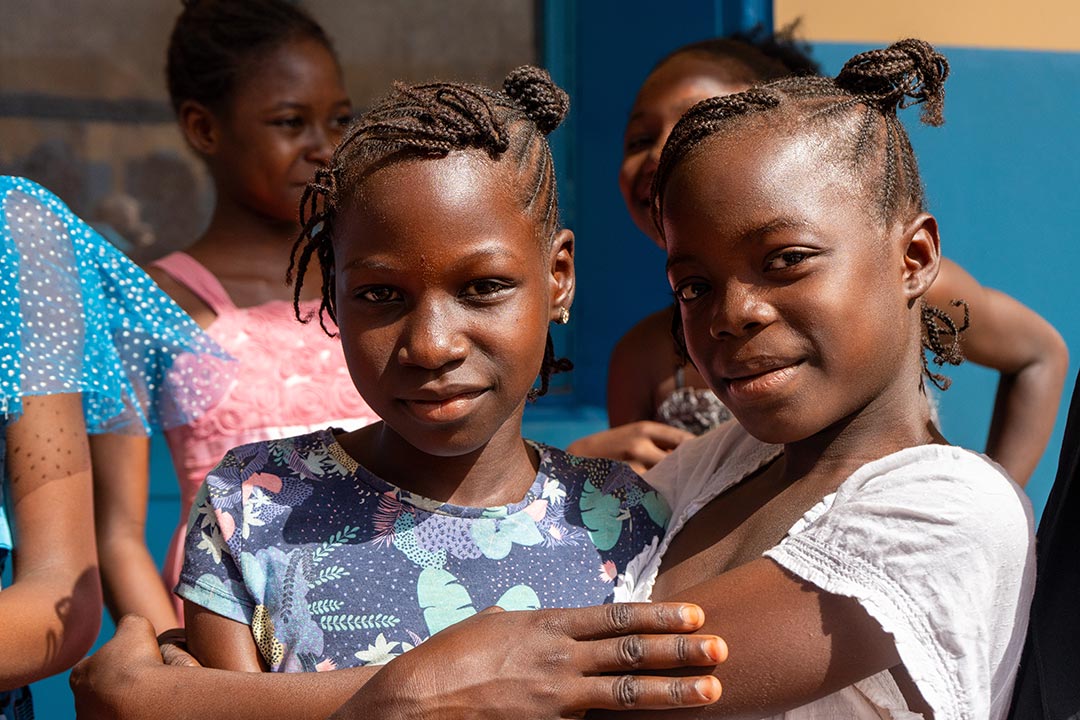
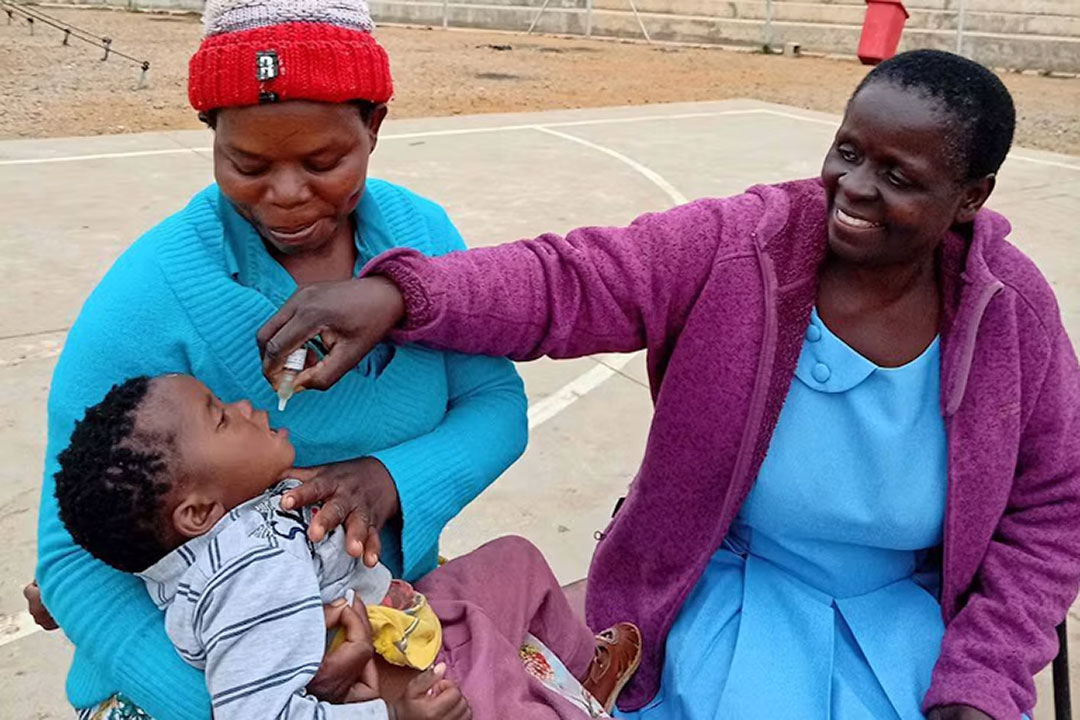
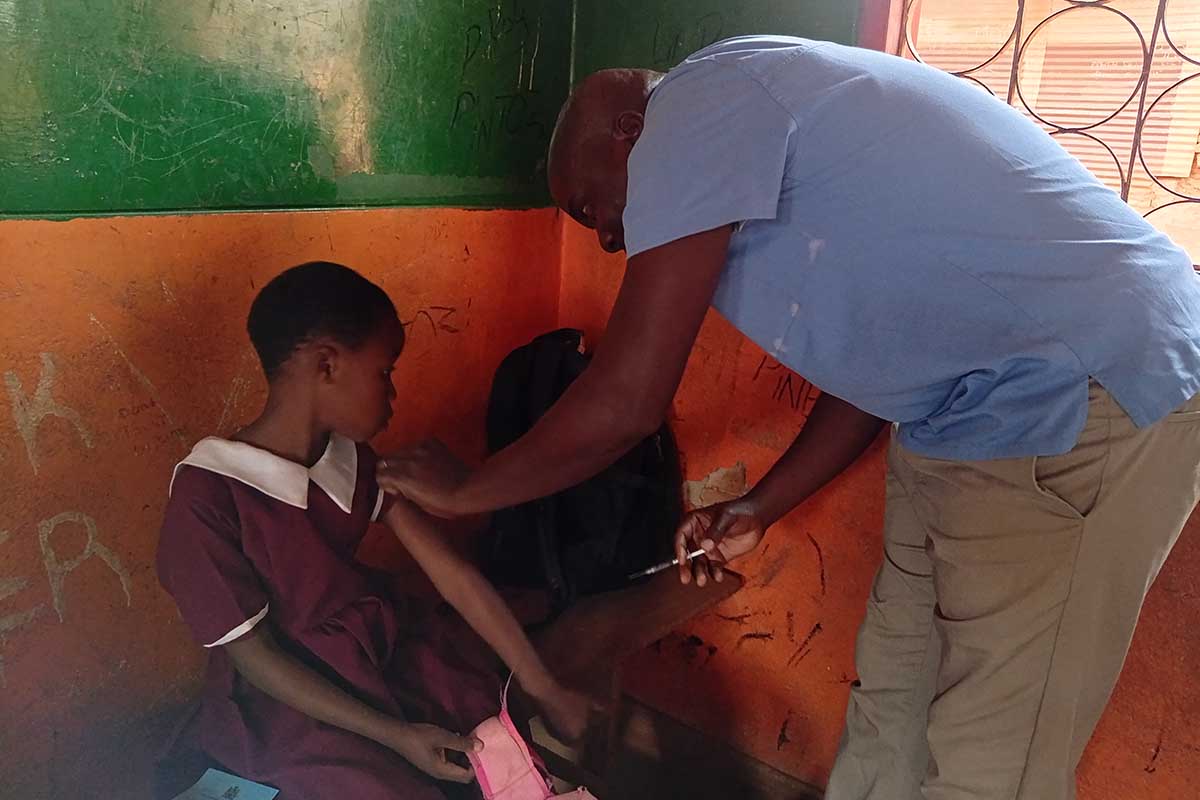
This privileged position attained by the health services, combined with a range of adaptive measures, proved decisive during the district’s first human papillomavirus (HPV) vaccination campaign, launched in early October. All 8,690 girls aged 9 to 14 in the municipality received their first dose – representing 100.9% coverage, due to population movements and revised estimates – protecting them against a virus that can cause several cancers, including the vast majority of cervical cancers. The operation coincided with a temporary lull in tensions, even as the conflict continues to severely disrupt access to healthcare and routine immunisation.

Delivering care door-to-door in Mamprusi areas
The pickup truck leaves the tarmac of the main road and enters Patelmi, a Mamprusi neighbourhood dotted with food stalls and small shops. Onlookers keep a close watch: every vehicle passing through town is scrutinised, identified and assessed for its perceived allegiance. Conversation inside the vehicle fades as the medical team becomes increasingly alert. This is one of the conflict’s flashpoints.
Hamidu Hikmatu, the nurse in charge of the local Community-based Health Planning and Services (CHPS) centre, turns her head and points to an armoured military vehicle parked under a tree. “They’re here,” she says. “That’s a good thing. We don’t go there when they’re not.”
Have you read?
Ahead stands a single-storey red building amid dry grass and sparse woodland. Nearby, another armoured jeep is parked. What stands out is a makeshift military outpost of stacked sandbags guarded by two heavily armed soldiers. The Patelmi CHPS centre was taken over by the army in early 2025, a year after patients stopped coming.
To maintain access to services – mainly for pregnant women and young children – Hamidu now relies entirely on home visits or group consultations held under a tree. “I always carry the vaccines in my cold box, along with the registers, syringes and cotton wool,” she explains. “I also bring a small weighing scale that I can hang inside people’s homes.” She believes vaccination coverage has declined, but with many residents displaced, follow-up has become increasingly difficult.

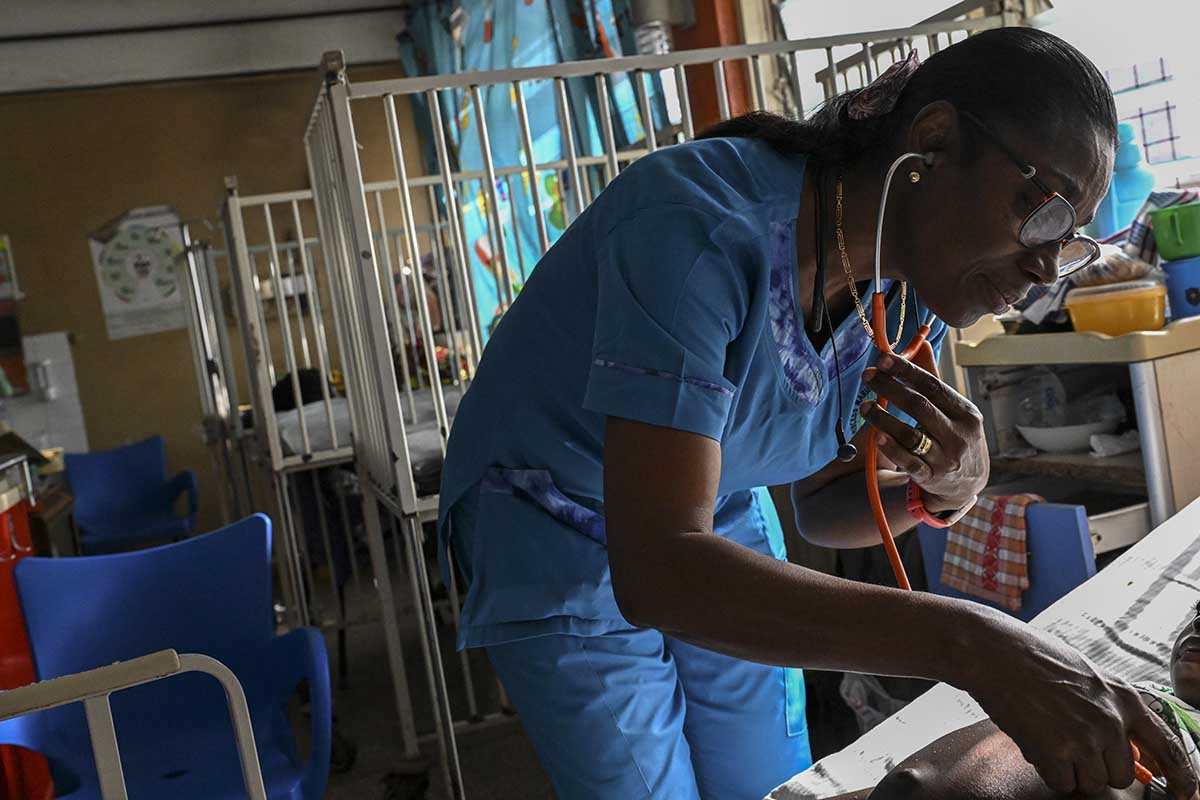
As reaching patients and covering long distances has become routine for health workers in Bawku, some services have been scaled back. Where there were once examination tables, stethoscopes and growth charts, the building now contains protective gear and cooking stoves for the soldiers living there. Residents must travel to the Presbyterian Hospital – the district’s referral facility – to see a midwife or receive medical care.
Reassigning the remaining staff
Hikmatu has also seen her workload increase. “Because of the conflict, no one is being posted here anymore. When a nurse is assigned to Bawku, she refuses to come. So for now, I work alone.”
Before the conflict escalated, the Presbyterian Hospital was thriving, employing more doctors than the regional hospital and serving a cross-border population from Ghana, Togo and Burkina Faso. Over the past four years, more than 100 health workers have left Bawku, says Dr Amoak, who at one point remained the hospital’s only practising doctor for an entire year. “That meant more work for fewer staff, and burnout increased.”
The exodus has also affected patients: annual visits have fallen from more than 100,000 before 2021 to around 40,000 today, pushing health services into financial difficulty. The institution has had to take on debt to supply its clinics, though the regional medical stores and local fuel stations have shown flexibility.
The situation becomes even more complex when those who remain – both staff and patients – cannot cross into areas controlled by the other ethnic group. Kusasi doctors have had to stop working at the Presbyterian Hospital, and Mamprusi staff face similar restrictions in the city centre.
“We are facing a crisis where some of our employees cannot reach the district hospital, and a large part of the population cannot access it either,” Dr Amoak explains. “What do we do for these people?” Following the reasoning of his predecessors, he decided to partner with private clinics – notably Vineyard Clinic and Quality Medical Centre in Kusasi areas – allowing public health workers to remain in Bawku rather than being redeployed elsewhere. Public-sector staff working in private facilities remains rare in Ghana.
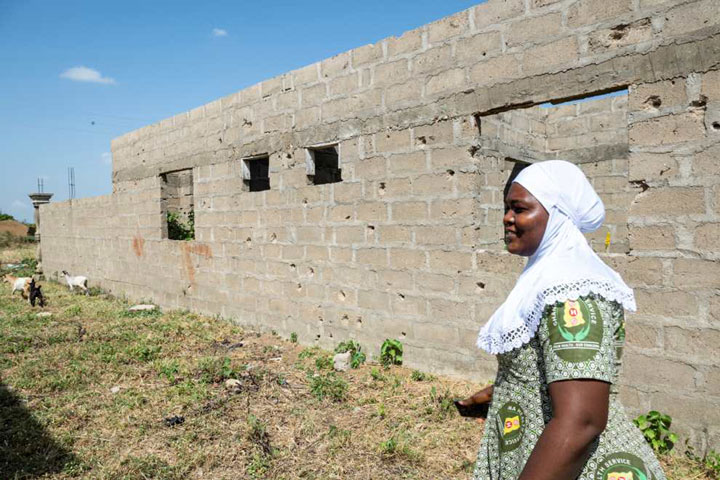
This redeployment has gone hand in hand with task-shifting. Some staff have been trained to cover multiple roles to compensate for shortages. At the urban community health centre in the west of the town, for instance, a nurse also manages medical records. The small clinic, located just metres from the buffer zone between the two territories, has repeatedly been caught in crossfire, with bullets passing through its windows.
Two vehicles for all deliveries
“One evening around 7pm, a pregnant woman called, and the midwives told her to come in,” recalls Miriam Anamjongya, the centre’s sole vaccination officer. “They were bringing her inside when gunfire started. They had to lie on the ground outside. Her husband eventually took her to a private clinic.”
Since the conflict began, reaching patients has become increasingly difficult. “Healthcare delivery has become much harder because our main mode of transport used to be motorbikes, and they have been banned for several years now,” she explains. The ban, imposed by security forces to restrict the movement of armed groups, has gradually led to the use of electric scooters. But at around 7,000 Ghanaian cedis (US$ 609), they remain unaffordable for most. “So, most of the time, you walk,” she says. “That means many community visits are simply impossible because of the distance.”

This is where the Health Services’ white pickup truck becomes indispensable. Dr Amoak has had to rely on the institution’s two vehicles to replace the dozens of motorbikes once used – both for outreach visits and for delivering medicines. “Before 2021, we could purchase supplies and the regional medical stores would deliver them through the last-mile distribution programme,” he explains. “Now they are afraid to come to Bawku because of the insecurity.”
By reorganising vehicle schedules, Dr Amoak has managed to keep local health centres supplied – a measure that proved crucial for the HPV vaccination campaign. “Throughout the campaign, I had to make sure the pickup did nothing else,” he says. “I used it to collect vaccines from Bolgatanga, the regional capital, an hour and a half away.”
Schools were also used as meeting points with adolescent girls. But for vaccination officer Miriam Anamjongya, timing was the decisive factor. “During [the HPV campaign], the town was relatively stable, which allowed us to reach everyone,” she says. “But some vaccination activities last several days. One day everything goes smoothly, and the next day tensions flare up and you can’t meet your targets.”
Despite depleted teams working under constant strain, health workers in Bawku continue to meet some of their objectives. With additional financial support – particularly to purchase vehicles – they believe they could reach far more patients.
This article has been translated from the French. Read the original here