
How a 30-minute test could help contain measles outbreaks
Senegal is preparing to become among the first countries to roll out a rapid measles test, potentially speeding up outbreak detection and response.
- 21 October 2026
- 6 min read
- by Linda Geddes
At a glance
- A rapid diagnostic test for measles has become the first to be endorsed by the World Health Organization for use in disease surveillance, paving its way for roll-out in the coming months.
- Like standard laboratory tests for measles, it is designed to detect measles-specific immunoglobulin M (IgM) antibodies that appear in the blood soon after infection, enabling probable measles cases to be identified sooner.
- By enabling faster and more convenient testing for suspected measles cases, the test has the potential to transform measles surveillance, particularly in remote, fragile and emergency settings where access to laboratory testing is limited.
You might assume that measles would be easy to diagnose.
But while the disease often produces a characteristic rash, this can be confused with those caused by several other infections. Earlier symptoms such as fever, cough and runny nose also overlap with those of many other illnesses.
Because of this, suspected cases usually need to be confirmed by laboratory testing – a process that can take days or even weeks, particularly in remote or conflict-affected areas.
Such delays can make it harder for health authorities to establish if an outbreak is under way and mount a rapid response.
Now, a new generation of rapid diagnostic tests could help change that. In August 2026, the World Health Organization (WHO) issued its interim guidance on introducing rapid tests for measles surveillance, following an evaluation in which one product, the SURUA Measles IgM Rapid Diagnostic Test, became the first to be endorsed by WHO for use in disease surveillance.
Senegal is expected to begin rolling out the test in the coming months.
“By enabling fast, affordable case confirmation closer to where people live, the test has the potential to transform measles surveillance, especially in remote, fragile and emergency settings where laboratory access is limited, and accelerate efforts towards measles elimination,” said Dr Kate O'Brien, Director of the Department of Immunization, Vaccines and Biologicals at WHO.
How do rapid diagnostic tests for measles work?
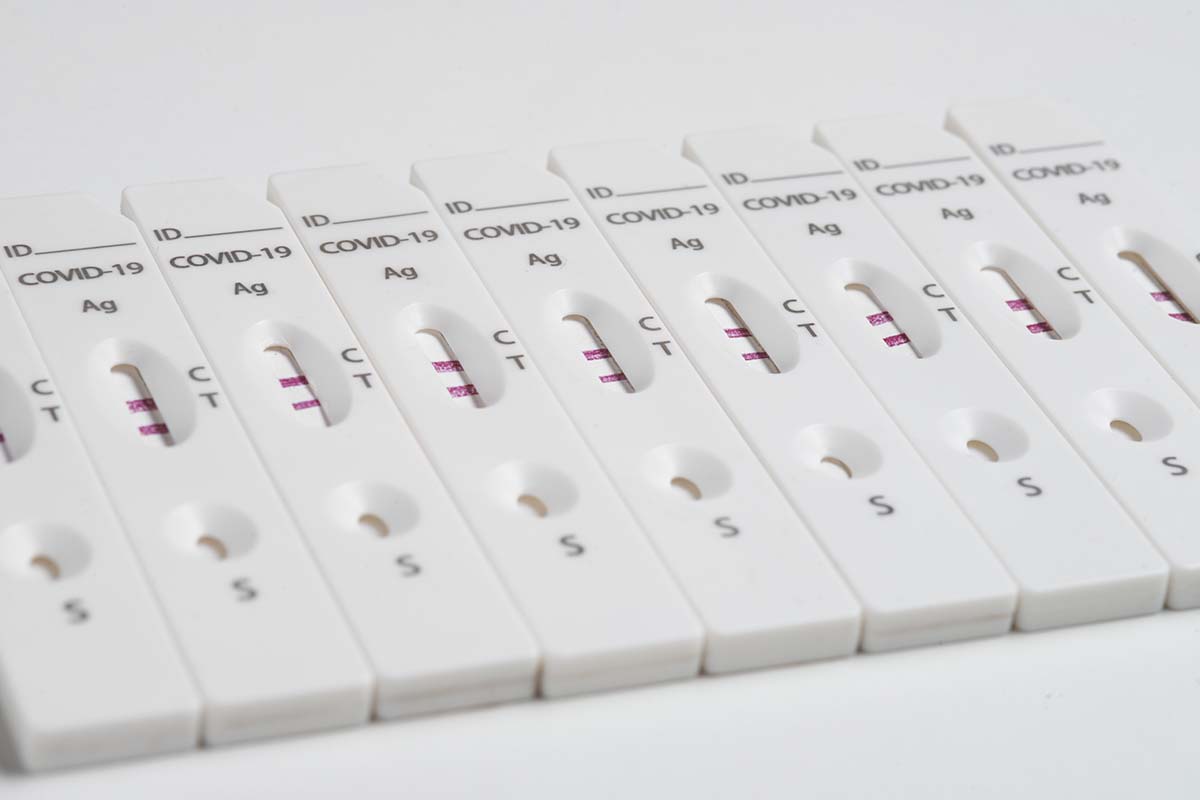
Similar in principle to the lateral flow tests that were widely used during the COVID-19 pandemic (though detecting antibodies against the measles virus rather than the virus itself), the SURUA test can indicate in under 30 minutes whether someone is likely to have measles.
The idea is to complement, rather than replace existing laboratory tests. These are usually performed at national or regional reference labs and look for measles-specific immunoglobulin M (IgM) antibodies in blood serum, which appear soon after infection and typically become undetectable within six to eight weeks.
Although laboratory tests are highly sensitive and specific, transport delays, cold chain requirements and limited laboratory infrastructure outside major cities can mean it takes weeks to return a result in some settings. Suspected cases can often go untested.
The rapid tests are designed to detect the same IgM antibodies, but can be performed closer to where a suspected case is identified, using either serum or a small sample of capillary blood from a finger prick. The WHO evaluation used serum from blood samples taken from a vein.
The tests require no electricity and can be performed at room temperature with minimal technical training, making them particularly useful in remote or hard-to-reach-areas.
To perform the test, a small sample is mixed with a buffer solution and loaded onto a strip in the test cartridge. As the liquid moves along the strip, measles-specific IgM antibodies in the sample bind to reagents in the test, triggering the appearance of a visible coloured line if they are present. The appearance of a separate control line confirms that the test is working properly.
While the idea of rapid measles testing is to quickly distinguish between suspected and probable measles cases, it is likely that all positive tests will be sent to a laboratory to double-check their accuracy following the initial roll-out.
Positive tests can also be dried and shipped at room temperature to a national laboratory, where scientists can extract genetic material (RNA) from the virus, helping health authorities to track different measles strains and how they are spreading.
How was the SURUA test developed?
The technology behind the SURUA test has been more than a decade in the making. Researchers at the UK Health Security Agency (formerly Public Health England) first developed a rapid test for measles IgM antibodies in 2011.
With support from the Gates Foundation and Médecins Sans Frontières (MSF Foundation), this prototype was redesigned and tested in various countries. The technology was subsequently transferred through a series of partnerships, culminating in Senegal’s Institute Pasteur de Dakar and its manufacturing arm DIATROPIX completing its development.
The finished test was then independently evaluated alongside two other measles IgM rapid tests as part of a WHO-commissioned assessment, although only the SURUA test met WHO’s acceptance criteria. Separate studies have since evaluated the test using capillary blood from a finger prick, with results expected to be published soon. There are also ongoing studies on the use of saliva samples to test for measles.
Have you read?
Where will the SURUA measles test be deployed and when?
Senegal is preparing to become the first country to introduce the test with support from Gavi, with first roll-outs expected to begin in the coming months.
Other countries, including Chad, are expected to follow, with up to 500,000 tests deployed each year once the programme is up and running.
“Improving the effectiveness of vaccinations, strengthening outbreak response and investing in local manufacturing are central tenets to the Gavi Leap and our efforts to build our work around the needs of countries,” said An Vermeersch, Gavi’s Chief Vaccine Programmes & Markets Officer.
“By investing in local manufacturing capacity, we are not only helping to protect communities now, we are also putting in place systems that are better able to help prevent outbreaks from happening again in the future.”
Are rapid diagnostic tests for other infectious diseases on the cards?
The introduction of rapid measles testing is part of a broader effort to bring disease surveillance and testing closer to communities, helping to ensure efficient and effective targeted vaccination campaigns and timely response to outbreaks.
Gavi has already supported the introduction of rapid tests for cholera in countries at high risk of outbreaks, while a rapid test for yellow fever is also being used for disease surveillance within laboratories.
Its investment in the measles test forms part of a US$ 43 million funding package approved by Gavi’s Board in 2025 to improve access to diagnostic testing for a range of vaccine preventable diseases. Rapid tests for rubella are currently being assessed. Efforts to support availability and access to validated tests for meningococcal meningitis and typhoid were paused in December 2025 due to product development challenges and funding constraints.
More from Linda Geddes