
How Kenyan clerics are converting faith into vaccine confidence
“Faith is how we care for our bodies and our communities”: for these Islamic scholars, supporting immunisation means offering an Islamic interpretation of public health policy.
- 7 May 2026
- 6 min read
- by Gitonga Njeru
At a glance
- In Nairobi’s Muslim-majority Eastleigh neighbourhood, faith leaders are making the Islamic case for vaccination.
- The principle of hifz al-nafs – the preservation of life – underpins Sheikh Jamaludin Osman’s stance when he counsels worried congregants and explains the vaccination pamphlets stacked between religious literature on his desk.
- Community health workers say local people are more open to conversations about immunisation once they’ve heard the subject broached in the khutbah, or sermon.
As worshippers streamed out of downtown Nairobi’s Jamia Mosque, Sheikh Jamaludin Osman lingered behind, to talk to a few young mothers.
“In Islam, we are taught to protect life,” he told them. “Vaccination is part of that responsibility. Protecting life values are in the Quran.”
Osman is one of many Muslim faith leaders in Kenya who, in pursuit of the Islamic principle of hifz al-nafs, the preservation of life, has stepped into allegiance with the health system.
“We, as Muslims, have to give back to the community. The preservation of life is part of our teachings,” he told VaccinesWork.
Interpreters of health policy
For many families in Muslim communities, particularly in urban informal settlements and northern counties, the religious rationale is as existential and important as the science behind vaccination.
Health officials, meanwhile, recognise that trust is not built solely through data or policy. It is built through voices that communities already respect. “When religious leaders speak, people listen. They translate medical information into something culturally and spiritually meaningful,” said Dr Irene Njeri Muchoki, Chief Officer Medical Services with Nairobi County.
Data released annually by the World Health Organization and UNICEF reveals that Kenya reached 91% of eligible children with basic vaccines in 2024. The vulnerable remainder tend to be concentrated in geographic and social pockets.
In some Muslim-majority regions, historical mistrust, logistical challenges and perceptions of vaccines as foreign interventions have contributed to lower rates. Noting that faith and geography tend to have a heavy overlap in Kenya, with the Muslim minority clustered to the country’s north, one 2021 study found that in general, full immunisation rates among Kenyan Muslim children were 9% lower than their Christian counterparts, and 7% lower than children whose families identified as having no religion.
Even in the cosmopolitan capital, it’s clearly meaningful when faith leaders like Osman are able to step in as active interpreters of public health policy.
Inside his modest office adjacent to the mosque, Osman keeps a stack of vaccination pamphlets alongside religious texts. He regularly collaborates with community health promoters (CHPs). He often invites them to speak after prayers, and works together with them to incorporate health messages into his sermons.
Open doors
Grassroots health workers, meanwhile, report that their work becomes easier when reinforced by religious authority.
“Before, we would go door to door, and some parents would refuse,” said Wanjiku Rukia, a community health promoter in in downtown Nairobi. “Now, when the Sheikh has already spoken about vaccines during khutbah (sermon), the conversation changes.
“People are more open nowadays. They ask questions instead of closing the door,” said Rukia.
A natural allegiance
The collaboration between Osman and workers like Rukia is supported by Kenya’s National Vaccines and Immunisation Programme (NVIP), which has increasingly engaged religious leaders as key partners.
Workshops and training sessions bring together sheikhs, imams, scholars and health professionals. They discuss both the science of vaccines, and their compatibility with Islamic teachings.
Sheikh Abdullahi Musa, an Islamic scholar based in Nairobi’s Muslim-majority Eastleigh neighbourhood, has participated in these forums, and says the concept of hifz al-nafs is central to his message.
Faith leaders are not simply given scripts; they are engaged in dialogue, allowing them to interpret and communicate in ways that resonate with their congregations.
“In Islam, preserving life is one of the highest objectives of the law,” he explains. “Anything that protects life, prevents harm and promotes well-being is encouraged. Vaccination fits clearly within this framework.”
He notes that misconceptions often arise not from doctrine, but from lack of information and awareness. “When people understand that vaccines do not contradict their faith, but rather fulfil it, their perspective changes,” he added.
Fatuma Noor is one of those people. She recalls hesitating when her first child was due for routine immunisations. “I was unsure. I heard different things from different people,” she explained.
Have you read?
It was after a sermon by her local imam that she reconsidered. “He explained that protecting children is part of our duty as parents and Muslims. That gave me confidence and boosted my self-esteem [as] I much needed,” she said. All four of her children are fully immunised, she reports.
Not a coincidence
While disaggregated data from Muslim-predominant enclaves were unavailable, health officials anecdotally report that stories like Fatuma Noor’s are becoming more common.
Anecdotal evidence from clinics and outreach programmes also indicates improved vaccine acceptance in areas where faith leaders are actively engaged.
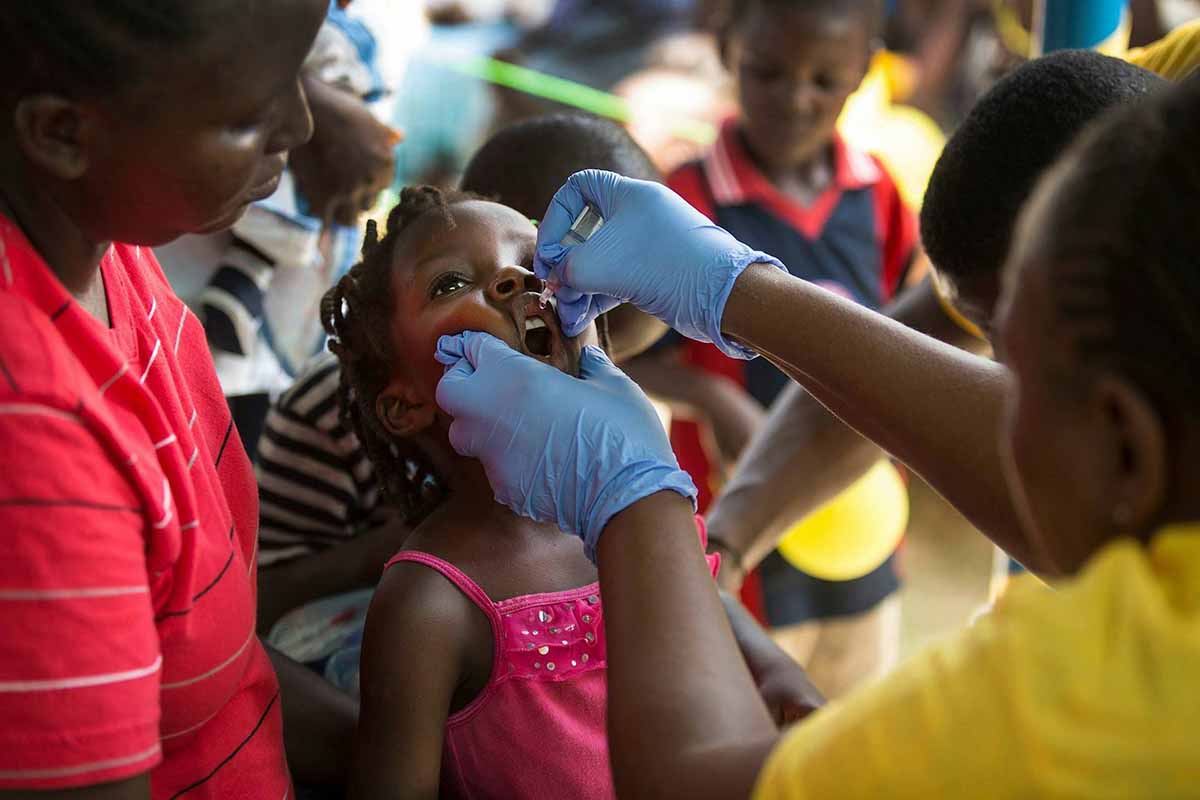
Dr Muchoki points to recent outreach campaigns in Nairobi’s informal settlements, where collaboration with religious leaders coincided with increased turnout at vaccination sites. “We saw more mothers bringing their children in, especially during integrated health days,” she said.
“It’s not just coincidence. It’s trust,” she added.
That trust is carefully cultivated. Public health messaging avoids taking on a confrontational or dismissive tones, and instead privileges working through existing community structures. Faith leaders are not simply given scripts; they are engaged in dialogue, allowing them to interpret and communicate in ways that resonate with their congregations.
“There must be respect on both sides,” said Sheikh Osman. “Health officials respect our role, and we respect their expertise. Together, we serve the same goal: protecting our people,” said Sheikh Osman.
Un-alien
The Nairobi clerics we spoke to reported that one of the interpretative challenges they’ve encountered in their communities has been the perception of vaccines as ‘foreign’, and by extension, untrustworthy.
“People used to think vaccines came from outside and were not meant for us. But I explain that what protects you is not foreign. It is your own body responding. The vaccine only helps your body prepare,” Sheikh Usman told us, in a practised speaker’s confident tones.
“What remains in the body is your own protection,” Sheikh Musa explained during a different conversation. “It is not something alien staying inside you. It is your own system becoming stronger.”
This message has particular resonance in communities where scepticism toward external interventions has historical roots. By anchoring the argument for vaccination within both faith and biology, leaders create a bridge between two forms of knowledge that occasionally seem divergent.
Challenges remain. Access to healthcare services, especially in remote areas, continues to limit coverage. Misinformation still circulates in subtle ways.
And sustaining engagement requires ongoing effort and resources. Yet the model emerging in places like Eastleigh offers a glimpse of what is possible when public health strategies are grounded in local realities.
As the afternoon call to prayer echoes through the streets, Sheikh Osman prepares for another gathering. Among the topics he plans to address is an upcoming immunisation drive in nearby Huruma Estate.
“This is part of our responsibility. Faith is not only about worship. It is also about how we care for our bodies and our communities.”
For the mothers who will approach him after prayers, seeking reassurance and guidance, that message carries weight. It is not just about vaccines. It is about trust built at the intersection of belief and science, and carried forward one conversation at a time.
More from Gitonga Njeru