
How was rinderpest eradicated?
The only virus besides smallpox that we’ve succeeded at eradicating was rinderpest, a pathogen that once killed 90% of the cattle on the African continent in a single decade.
- 24 September 2026
- 17 min read
- by Maya Prabhu
At a glance
- When rinderpest, also called “cattle-plague,” was declared eradicated in 2011, it became only the second virus after smallpox to have been officially wiped off the face of the planet
- By then, a decades-long offensive against the disease had pushed it out of public consciousness – but once upon a time, it wiped out the wealth of kingdoms in just weeks, rattled ways of life, threatened whole cultures
- Today, the pathogen exists just in carefully guarded laboratory samples. Should it ever escape, experts warn, it would be loosed again on a completely vulnerable planet.
The world’s last-ever brush with rinderpest happened in 2001, in Kenya.
It was an uncharacteristically tepid final outbreak of a disease that, at full gas, was powerful enough to wipe out the wealth of kingdoms in weeks.
Still, years of confirmatory surveillance needed to elapse until rinderpest could officially enter the annals as the second disease after smallpox to have been definitively eradicated. The long offensive against the disease had been chaptered by switchbacks and frustrations.
Rinderpest’s last stand had been made on vast, sparse pasturelands in the sorts of places that were difficult to get to in good times and impassable when the weather turned or a ceasefire broke. In these conditions, overconfidence would be costly.
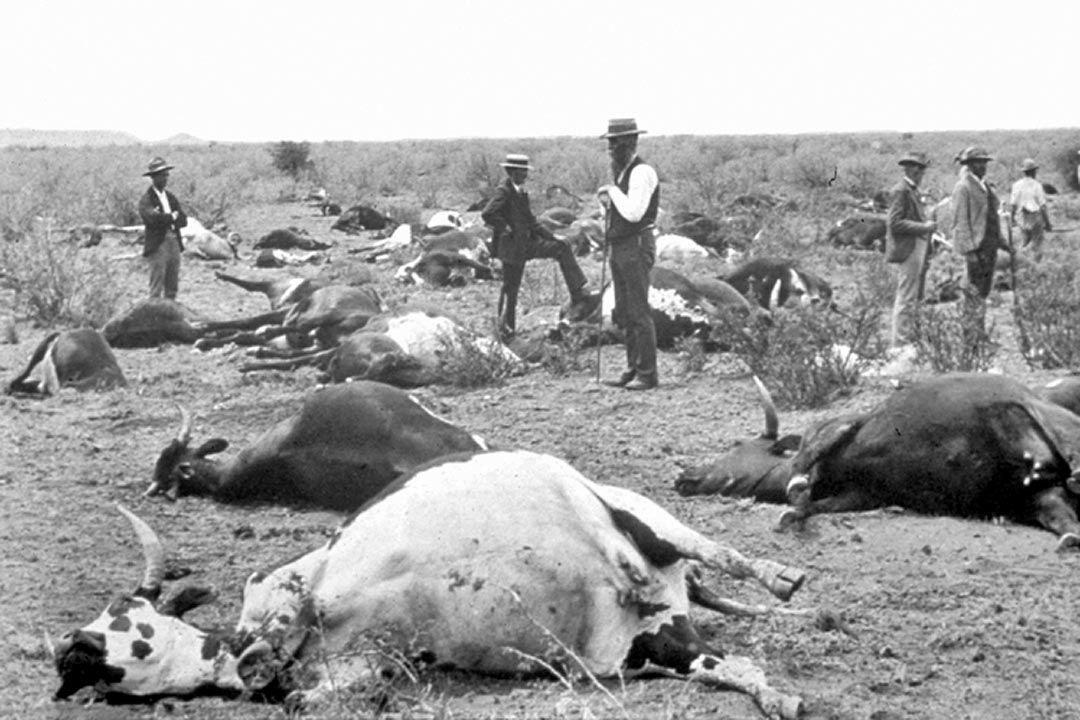
The scale and speed of the dying seemed total and surreal. An old Ethiopian man called Alaqa Lamma Hayda would later recount [...] that he had gone to bed ill in January 1888, and risen three days later to find that “all the cattle were dead.”
In May 2011, bureaucrat-scientists of the Office International des Epizooties (OIE) and UN Food and Agriculture Organisation (FAO) and veterinary officers from diverse corners of the world finally gathered in a conference hall in Paris to call it. The virus was dead. It lived on only in laboratory samples.
Even those were enough to cause disquiet: the officials’ words of relief were tempered with concern. If the pathogen escaped into a once-more immune-naïve world, terrible things would follow. The proof of that lay in the past.
Invasion
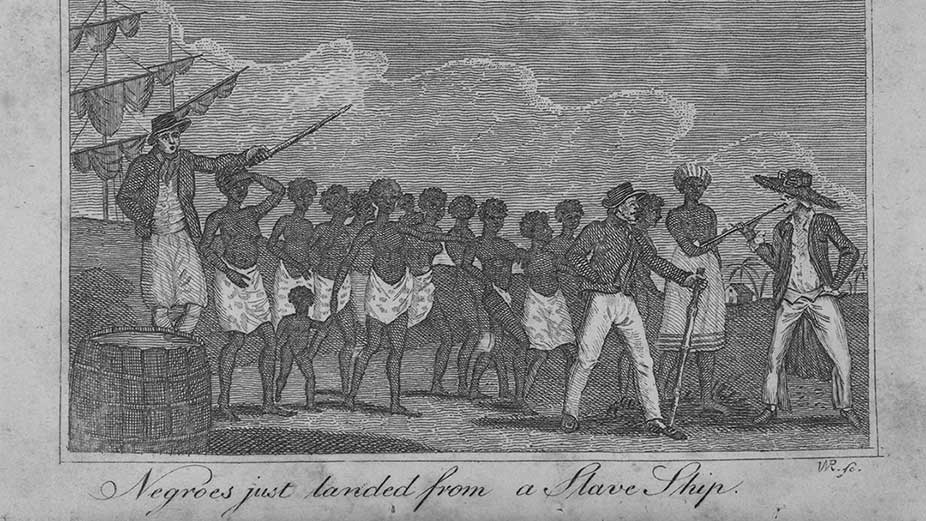
In 1887, an Italian ship docked at the Red Sea port of Massawa, just north of where the horn of Africa prongs out towards the Gulf of Aden. Italian troops were moving against the Ethiopian Empire1, and the ship imported cattle from India, to replenish the army’s beef stocks.The cattle, in turn, imported a viral stowaway.
Rinderpest was familiar in Asia and Europe, but had never previously made it to sub-Saharan Africa, which was protected by seas, oceans and the pathogenic firebreak of the desert to the north. Now ashore, the virus was loosed on a continent’s worth of immune-naïve livestock.
Some Ethiopian writers described the epidemic that followed as an invasion within an invasion. There is no evidence that the Italian would-be colonisers smuggled in the disease on purpose, but the destruction it mounted was so vast and so cruel that it is easy to understand why its victims cast around for a culprit.
A plague of cow measles
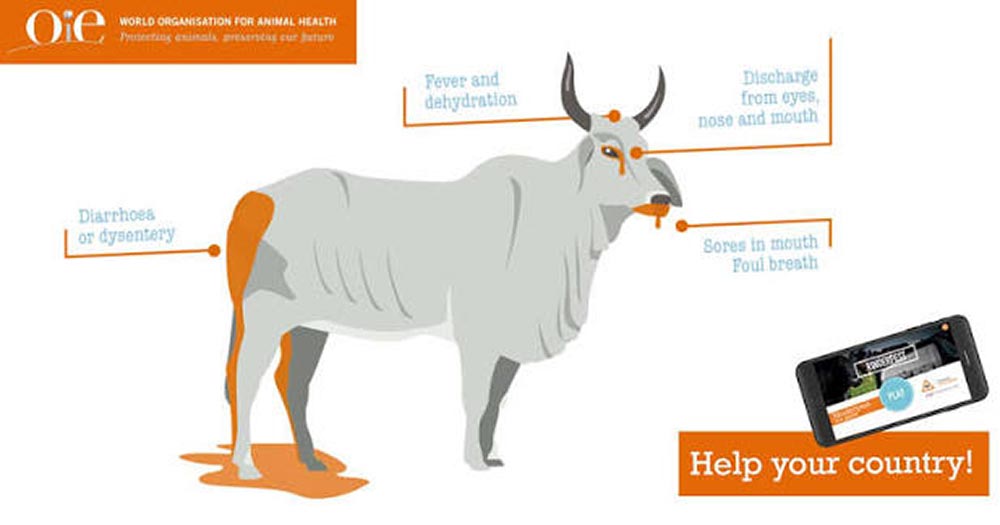
Rinderpest is a morbillivirus, close relative of measles. Like other members of this viral family, it moves fast, attacking the immune system and mucosal surfaces lining the airways, digestive tract and eyes. Within days the local cattle began to run fevers and cry2.
The discharge streaming from their eyes and noses turned a curdled yellow as it mixed with a built-up scurf of dying cells. Painful, necrotic lesions appeared on their tongues, gums and inner cheeks. The animal stopped eating, hung listless. Soon they expelled great volumes of fetid diarrhoea, thin-textured, but dark and bloody and foul.
Within a week or two, previously healthy oxen and cows lay dying from dehydration, starvation or secondary infections.
The scale and speed of the dying seemed total and surreal. An old Ethiopian man called Alaqa Lamma Hayda would later recount to the historian Richard Pankhurst that he had gone to bed ill in January 1888, and risen three days later to find that “all the cattle were dead.”
The handful that did survive were weakened creatures, vulnerable to secondary bacterial and viral infections. Cows that had been pregnant aborted. The cattle-keeper who didn’t lose his entire herd was left with almost nothing – a few empty, fragile cows. A year ahead without milk or meat.
Continent-wide catastrophe
Ox-wagon trails criss-crossing the African interior made perfect viral highways. Rinderpest spread southwards and then west. By 1889 it had reached Lake Turkana in northern Kenya. Within five years of making landfall on the Red Sea, rinderpest arrived in Dakar on the Atlantic coast.
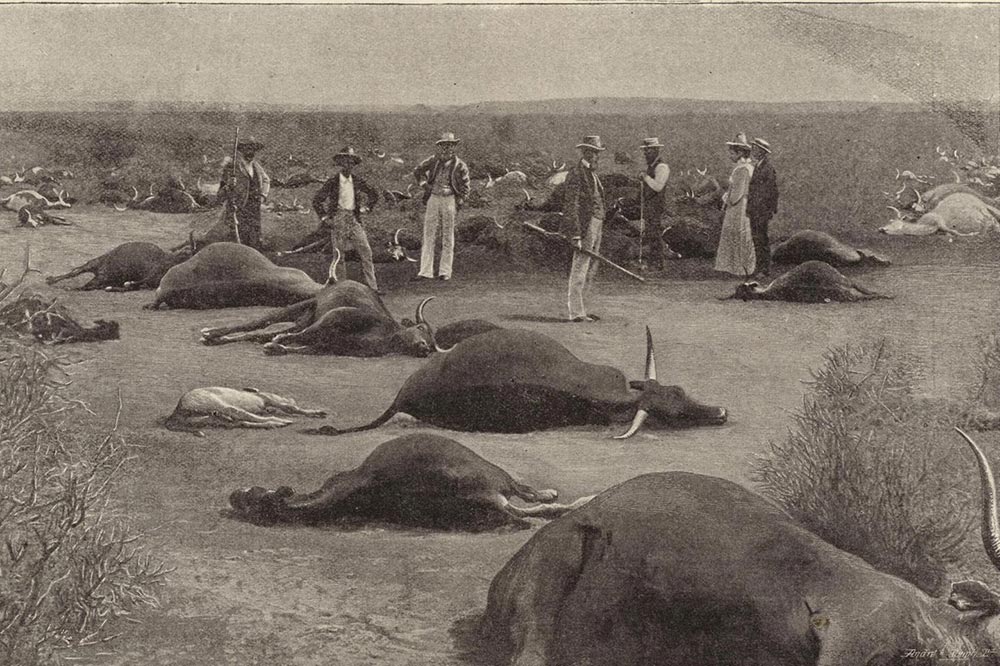
A traveller on the caravan routes of northern Kenya in 1890 noted that not just the cattle, but “nearly all the buffalo and eland are gone.” A Maasai elder remembered seeing the Engaruka basin, further south, so thick with the corpses of cattle that “the vultures had forgotten how to fly.”
The southern tip of Africa had longest to prepare. The Cape Colony government invested heavily in containment, spending between £600,000 and £1 sterling (about a tenth of the administration’s annual budget) to fence off the south side of the Orange River. It bought them four short months.
Before 1897 was out, an estimated 80–90%4 of all the cattle on the African sub-continent had been killed. Great populations of wild buffalo, wildebeest, giraffe and certain antelopes had been wiped out too.
The human toll
Those were just the primary victims. The secondary victims were human, and unlike their cows and oxen, they had to try to live on in the strange impoverished world the rinderpest left behind.
Historian Pule Phoofolo5 writes, “What made the rinderpest crisis even more ominous than the European cholera […] was the nature of the disease. While cholera attacked people, who died and left their property behind, the rinderpest spared the people to watch with utter shock and suspicion as their most valued means of livelihood perished dramatically.”
In 1954, India pinned the target to the wall and launched its National Rinderpest Eradication Programme. Within five years the rate of infection had fallen from 2,000 per million to 7 per million head of cattle.
Cattle weren’t just milk and beef, they provided transport, ploughed fields and fertilised crops. Their hides made cloaks, shoes and sleeping mats. In many cultures, they were an intergenerational store of wealth. “A bride’s dowry was paid in cattle, so cattle were the ticket into the next generation,” Phoofolo writes.
Cattle were woven into language and cultural life, featuring in regional idioms and rites of passage. In the Transkeian territories, for instance, boys left their families’ homes to sleep in communal quarters by the community’s kraal, tending cattle as they grew into men.6
They also offered a slender buffer against the extractive colonial economy. When colonial overlords in present-day South Africa banned firewood collection by “natives”, dried cow dung fuelled fires for warmth and cooking. The farming, herding and transport work cattle enabled allowed many African men to withhold their labour from exploitative colonial enterprise.
For years, the administrators and capitalists running the southern African colonies had complained of labour shortages. For them, rinderpest was a boon: in the Transvaal, J.H Johns, manager of the Fereira Gold Mining Company and President of the Mine Managers’ Association, urged colleagues to drop wages and extend hours, reasoning, “the natives have to work because they cannot obtain food otherwise.”
By then, famine had already killed millions further north. In Ethiopia, the collision of rinderpest with a bad drought and a locust invasion precipitated crushing food shortages.7 By 1892, some sources estimate that as much as one-third of the population of Ethiopia had died of starvation and desperation.8
Like in Ethiopia, where contemporary sources record that farmers were “too demoralised” to hoe their fields after the loss of their ploughing oxen, the psychological trauma of the rinderpest calamity deepened the hunger crisis in regions further south.
Writes Phoofolo, “as universally observed throughout the entire region, the compelling trend was towards passive fatalism manifested in alcoholism, debauchery and conviviality.” In parts of southern Africa, disproportionate quantities of the grain harvest of 1897 were brewed into alcohol, nutritionless but anaesthetic: a prescription for a barren, and possibly brief, new reality.
The scramble for a rinderpest vaccine
Fatalism and suspicion are bad preconditions for the roll-out of a new, unfamiliar prophylactic.
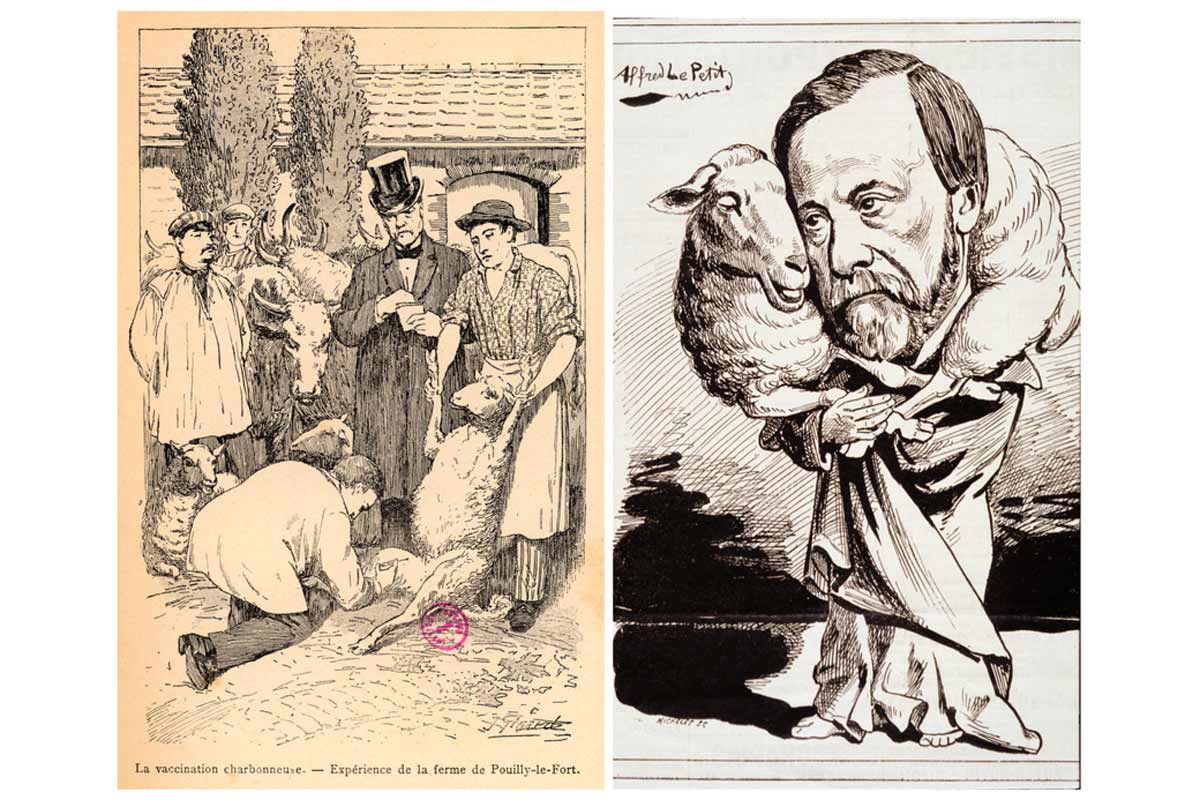
At the tail end of the virus’s sweep across southern Africa, the German bacteriologist Robert Koch found a rudimentary vaccine.9 Already famous for his work on anthrax, tuberculosis and cholera, he arrived in Cape Town in December 1896, with a commission10 to study rinderpest and, if possible, produce a functional preventive.
He was not the first to try. Rinderpest had plagued Europe for centuries, inspiring everything from the first modern veterinary school at Lyon in 1762 to Russian experiments in rinderpest variolation in the early 19th century. But until the 20th century, it was cordons, culling and surveillance that kept the disease in uneasy check.
A rinderpest expert [...] wrote that he would “never forget a yak in the early stages of the disease, staring with congested and lachrymating eyes, held on a halter by its owner, also with tears running down his face, knowing that he would almost certainly lose his animal.”
These measures proved less effective in southern Africa, where the colonially-directed slaughter of herds suspected to be infected was unsurprisingly not well received. Trust in sanitary regulations was further eroded by the undisguised racism of the measures: black cattle owners were dipped in carbolic acid together with their herds, where white cattlemen never were. Resistance and revolts followed.
So, when Koch announced in 1897 that the injection of bile from sick animals could protect healthy ones from infection, cattle-keepers were wary.
“The suspicion that their cattle were being deliberately poisoned spread on the flanks of the rinderpest itself,” Phoofulo writes.
Gradually though, resistance eased. By the close of the 19th century, some two million cattle had been inoculated with either the Koch method, or a modified version that involved injecting antibodies from recovered animals alongside live virus in the form of infected blood.
These early vaccines appeared to be effective. Field trials in Matabeleland and the Cape Colony in 1898 reported mortality rates of just 1%–1.4% among vaccinated cattle.11
But by then, the virus had already burned through most immune-susceptible hosts on the African subcontinent. Before the great African rinderpest wildfire could be extinguished by scientific intervention, it had substantially burnt itself out.
R&D: a global hunt for the Goldilocks vaccine
Unimpeded, epidemic rinderpest was destined to return cyclically. After all, milk cattle produce about a calf a year: it wouldn’t take long to replenish the stocks of the un-immune.
While the first generation of vaccines helped establish a measure of control, they were too crude and cumbersome to provide the protection the continent and the world would ultimately need.
Koch himself warned that his vaccine ought not be used in populations not already under direct threat of rinderpest. There were instances of healthy herds catching the sickness from the inoculation itself. The serum-virus vaccines were better, though still produced occasional fatalities. Worse, they were unwieldy: the inoculation method was complicated, and the infected blood lost potency easily.
Research for a better method – a safer vaccine and one that could be stored, could travel, and be administered reliably – continued.
Credit: GEO
In Korea, a scientist called Chiharu Kakizaki produced the first inactivated (that is, killed) rinderpest vaccine in 1914. By the 1920s, an improved version of it was successfully protecting cattle there and in China. Other inactivated vaccines rolled out in Iran, the Philippines, Sri Lanka, Tanzania and Afghanistan in the early-middle decades of the 20th century. They worked, but they were expensive.
Enter the goat-passaged live-attenuated vaccine. Building on some research by Koch, a scientist called J.T. Edwards working at Mukteswar in India passed the virus through series of goats – not its natural host – in a bid to weaken it. Passed back into cattle, the goat-weakened virus functioned as a vaccine even without a simultaneous injection of costly serum.
Scaling up, hitting the wall
Versions of the vaccine were put to use across India, with success. But rates of circulating rinderpest on the subcontinent were off the charts, and vaccine supply had no hope of meeting the need.
In 1951, the then just five-year-old Food and Agriculture Organisation of the United Nations sent its vaccine-production expert, R. Daubney, to India to help figure out how to produce a freeze-dried version of the Mukteswar goat-attenuated vaccine at scale. A pilot roll-out showed that 25 million doses could be produced and administered each year. Eradication began to seem possible.12
The virus, after all, was a good candidate on its face. It was species-limited, produced life-long immunity in survivors, and was too fragile to survive long in the environment.
In 1954, India pinned the target to the wall and launched its National Rinderpest Eradication Programme. Within five years the rate of infection had fallen from 2,000 per million to 7 per million head of cattle.13
[Rinderpest eradication] was fastidious and increasingly invisible work. Year by year, gaps were patched, outbreaks corralled with vaccines, and the virus’s dominion reduced by inches.
But when they rolled out in Africa, researchers discovered that Indian-style goat vaccines worked better in humped Indian cattle than in non-humped cattle. So it wasn’t until the 1960s, and the development of UK scientist Walter Plowright’s tissue-culture vaccine, that veterinarians could begin to dream of worldwide eradication – that is, the definitive death of the cattle plague.14
Big plans fall short
Plowright’s vaccine – formally the Tissue-Culture Rinderpest Vaccine or TCRV – was also live-attenuated, but weakened by passage through cattle kidney cells instead of goats. It was a dream jab: a single dose produced immunity, no adverse events were ever recorded, and it was cheap.15
Less than a century after rinderpest’s catastrophic entry onto the continent, Africa now had the technology it needed to take the world’s first stab at regionally-coordinated rinderpest eradication.
In Kano, Nigeria, in 1960, the heads of veterinary services from African countries pledged membership of a joint project, called (thrillingly) Joint Project 15 (JP15). The Organization of African Unity oversaw the work, while many aid programmes, prominent among them USAID, paid into the US$ 50 million budget.
The plan was for each of the 22 countries involved to vaccinate all cattle of any age for three years, thereafter stepping down to vaccinating calves only.16
Early success turned out to have a sting in the tail. Where 17 of the 22 countries had seen active transmission of rinderpest in 1962, by 1979, just Sudan admitted to still having the disease.
But as clinical disease became all but invisible, complacency set in, as it so often has in human vaccination efforts. Surveillance and disease reporting dropped off in some places, and so did immunisation of young animals. JP15 wrapped up in 1975, leaving embers of disease still burning in both west and east Africa, ready to both catch flame and throw sparks.17
The inevitable happened. In 1982, rinderpest was back, spreading from Mali to Burkina Faso, to Niger, Nigeria and Sudan. Between March and July 1983, Nigeria alone saw 950 outbreaks, affecting half of the national herd.18 Direct losses for the 1980–1984 period were estimated to hit US$ 500 million, with a US$ 1 billion indirect hit to the economy.19
In the late 1980s, as if to mark the centenary of the first great African cattle plague, an epidemic cropped up on the Ethiopia-Sudan border and spread across the north of Ethiopia. Outbreaks in this region continued to spring up through the first half of the 1990s.
Meantime, inadequate oversight20 was also hamstringing progress on the Indian subcontinent. In 2011, M Rajasekhar of the Indian Council of Agricultural Research told an interviewer: “We had been vaccinating for more than 55 years and the number of vaccinations we had done was more than the world bovine population. But the disease was still there because the vaccine was not monitored and vaccination was not monitored.”
A 1994–1995 epidemic in Pakistan killed 40,000 cattle and yaks in a poor and fragile part of the country. A rinderpest expert from the UK who visited the affected region later wrote that he would “never forget a yak in the early stages of the disease, staring with congested and lachrymating eyes, held on a halter by its owner, also with tears running down his face, knowing that he would almost certainly lose his animal.”21
All together now
That outbreak would prove to be the world’s last big one. The 1980s resurgences had made it clear a new, cooperative structure was needed. Meaningful relief depended, clearly, on every last glimmer of disease being doused – and that, in turn would require collective confidence that every spark and ember was known, and tracked, until it died.
In this new phase, community-based animal health workers – grassroots vaccinators and disease-testers – bolstered the ranks of trained veterinarians manning a vast frontline. Behind them stood ambitious national programmes, and behind them, systematising a renewed resolution to cooperate, a series of regional and continental programmes.22 The European Union stepped up as a major funder of the final sprint.
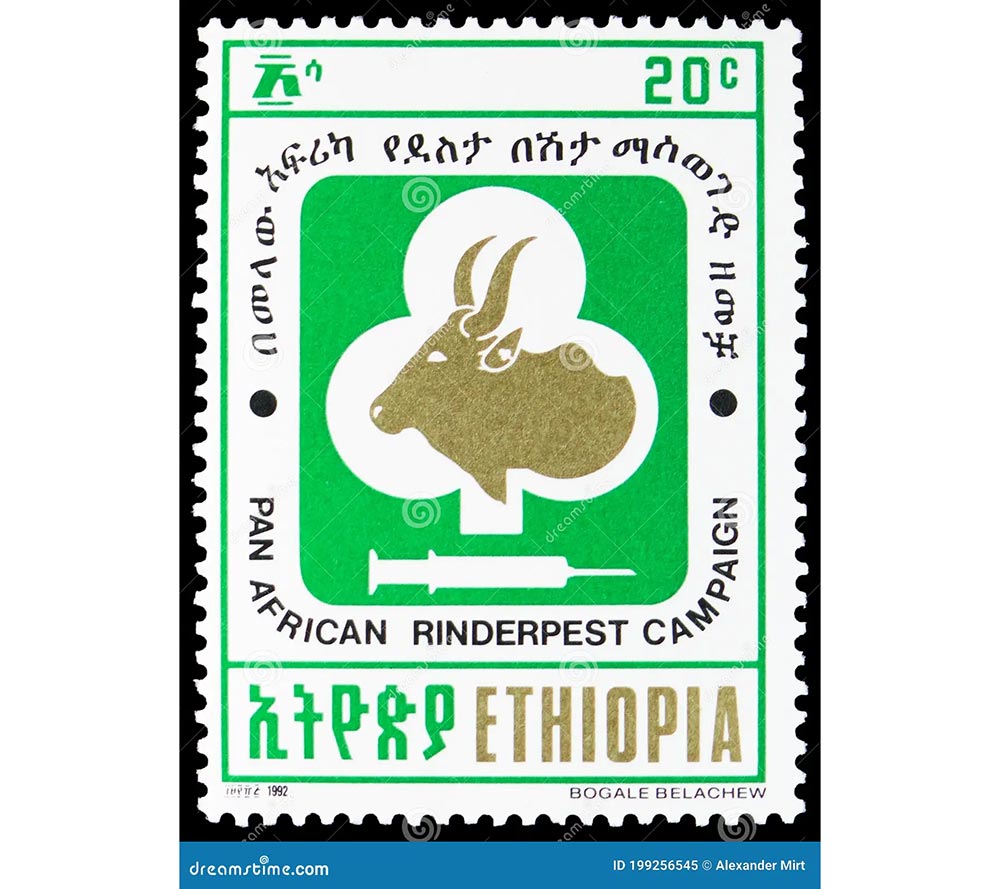
In 1994, the first global-level eradication programme – predictably called the Global Rinderpest Eradication Programme (GREP) – was launched as part of the FAO.
It had a defined target – the end of rinderpest by 2010 – and a defined roadmap in the form of partner OIE’s “pathway” to accredited, national-level freedom of disease. That pathway helped institutionalise political will, that naturally rather fickle resource, by allowing countries to govern and monitor their own progress, while remaining collectively accountable.
That, in turn, meant countries could step up their vaccination programmes, and, when the time came, step them down in the knowledge their neighbours were doing their bit to prevent reintroduction.
Still, as FAO scientist JR Crowther wrote in 1997, convincing countries who had reached zero disease to stop vaccinating and pick up post-vaccination surveillance methods sometimes proved a challenge.
GREP was also there to lend a technical hand where it was most needed. Experience had shown that even with an excellent vaccine – by now updated to be thermostable for two weeks in 45°C weather, and able to be produced, due to tech-transfer agreements, on the African continent itself – eradication wasn’t going to be a straight sprint.
Ending with a whimper
Instead, it was fastidious and increasingly invisible work. Year by year, gaps were patched, outbreaks corralled with vaccines, and the virus’s dominion reduced by inches.
By the time bureaucrats and veterinarians met in Paris in 2011 to declare the virus eradicated, not many herders were still alive to recall the destruction it had wreaked on both livestock herds and ways of life.
When news cameras found the wrinkled few who could still describe the crying cattle, the great losses, they officially spoke from the past. It was over: no more need to vaccinate. No more need to worry.
Unless, of course, the virus escapes.