
Scrutiny or public spectacle? How Louis Pasteur put the anthrax vaccine on trial
What an 1881 anthrax vaccine trial can teach us about building, and earning, trust in new health technologies.
- 8 July 2026
- 5 min read
- by Maya Prabhu
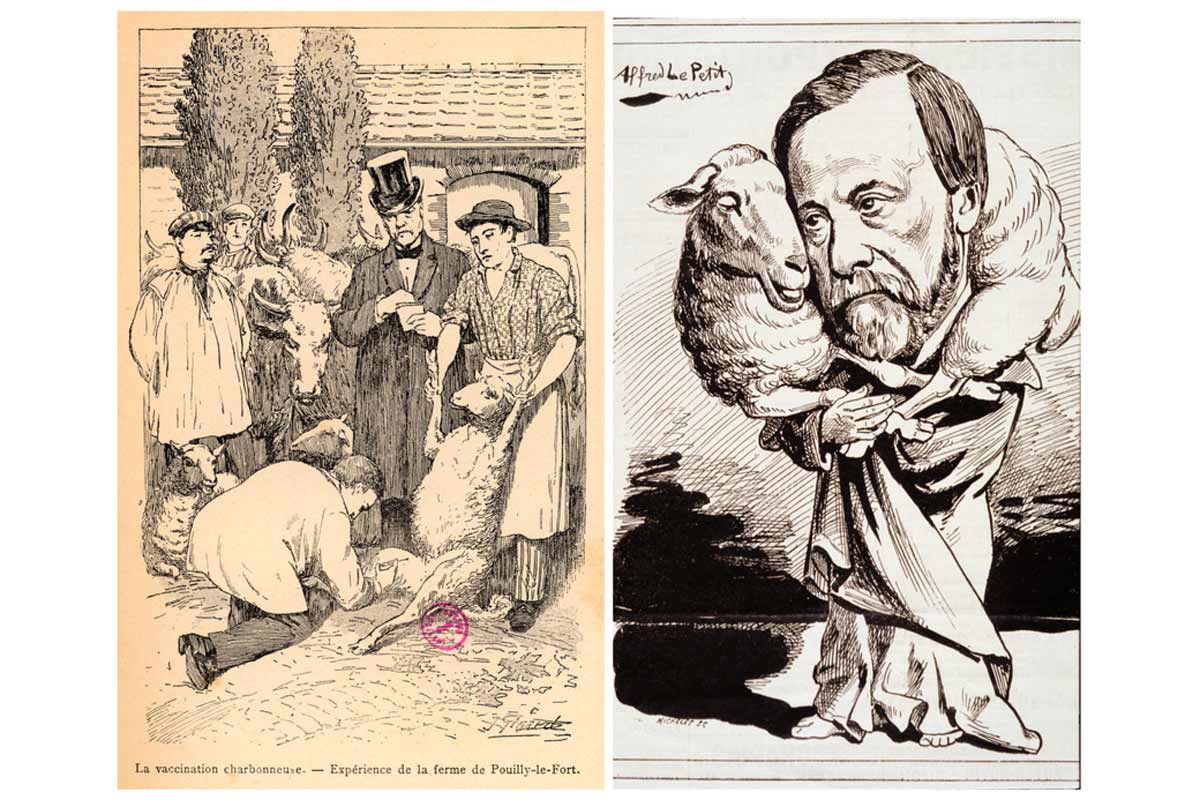
In May 1881, a farm in Pouilly-le-Fort, near Paris, became the venue for an unprecedented spectacle of science: the public trial of a novel vaccine candidate.
Back then even the concept of a “novel vaccine” was novel.
Nearly a century had passed since the discovery of the original vaccine, vaccinia, a naturally occurring cow virus that Edward Jenner had proven was capable of safely protecting people against deadly smallpox.
But the suggestion that vaccines could be created deliberately, in a laboratory, had barely broken ground.
Louis Pasteur, epoch-defining genius of microbiology, was both convinced and out on a limb. And now he was out of the laboratory, out in the open, loading his big idea into a syringe as nervous barnyard animals and a large human audience looked on.
Pasteur and his collaborators had been working on the anthrax bacterium for a couple of years.
The goal was attenuation: the weakening of the pathogen to the point that it could induce a protective immune response, without causing disease.
Pasteur and an assistant had managed it for the first time in 1879, by accident, by leaving a culture of the bacterium that caused chicken cholera exposed to air. The same method didn’t cut it with anthrax, an extremely deadly disease of livestock then widespread in Europe.
"While the trial did not undergo the rigours of peer review that modern trials are subjected to today, the impact of the trial on farming was immense."
Pasteur and his collaborators Charles Chamberland and Emile Roux experimented, and found they could cause a loss of virulence in anthrax bacteria by exposing them simultaneously to heat and atmospheric oxygen as they grew.
The audience assumed it was this live-attenuated vaccine in the syringe. The fact that it was actually a different vaccine – a “killed” or chemically inactivated vaccine, pioneered by rival scientist Jean-Joseph Henri Toussaint and improved, secretly, by Pasteur’s team – only emerged when Pasteur’s private notebooks were published in the 1970s.
In light of this bit of scientific sleight of hand, it might seem odd to consider the Pouilly-le-Fort trial as an object lesson on the value of public scrutiny in vaccine development. But that’s exactly what epidemiologists Cassandra Freitas and James A Hanley do, compellingly, in an account published in the European Journal of Epidemiology earlier this year.
The doubters were at the table
A trial protocol had been handed in for approval by the Agricultural Society of Melun, a town near Pouilly-le-Fort, in April, which meant the methods by which the vaccine would be assessed were available for critique. But in fact, the very origin of the trial was a challenge from a critic.
Hippolyte Rossignol, veterinarian and owner of the Pouilly-le-Fort farm, didn’t believe in Pasteur’s germ theory of disease, and therefore also didn’t believe in his idea of vaccine design.
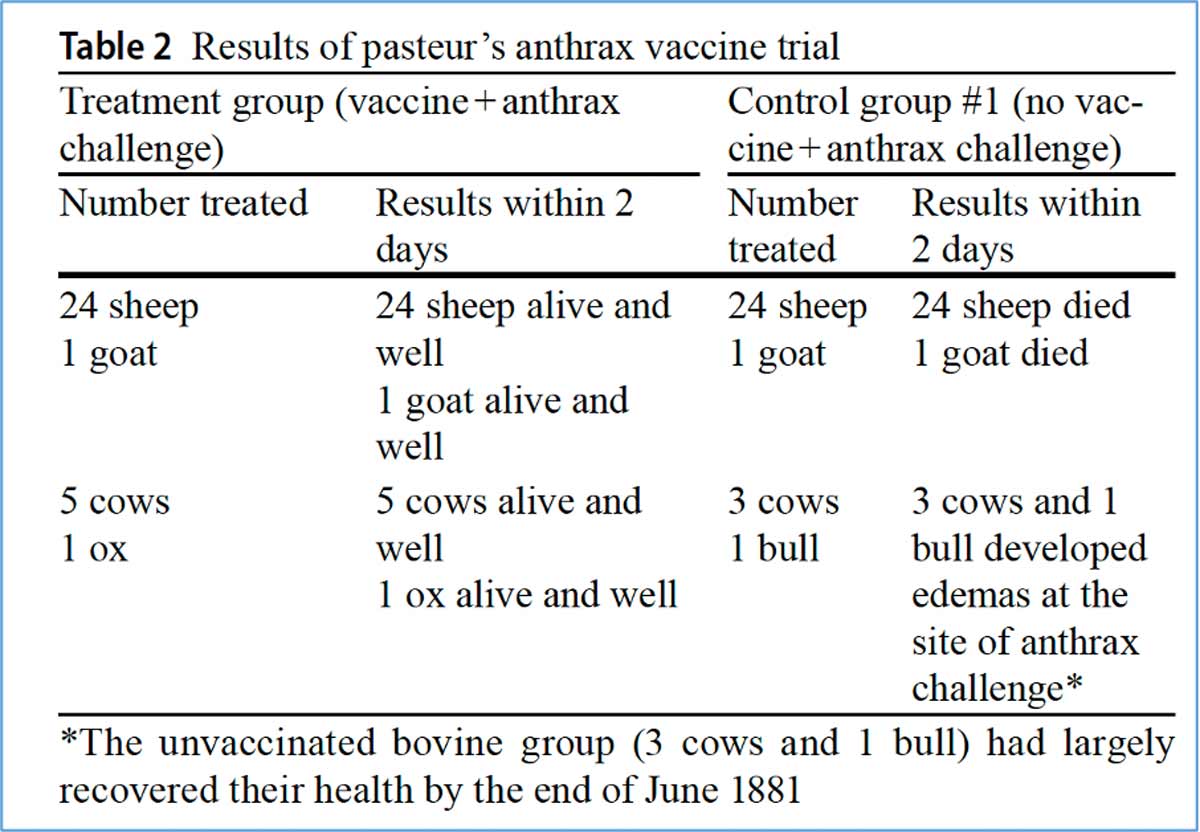
Rossignol didn’t just provide the venue, he selected the 58 sheep, 2 goats, 8 cows, one ox and one bull for the experiment, making sure none had so far been exposed to anthrax. He also conducted the experimental observation of the animals during and after inoculation with both doses of vaccine and, at the end of the month, with the virulent virus to test immunity.
His involvement meant that scepticism had a place of honour at the table. In design and execution, the trial needed to satisfy the people betting against the vaccine as much as it did Pasteur.
Submitting to sceptical scrutiny was not only the proper way to guard against experimental bias, it was also good science communication: transparency meant eventual success would be harder for doubters to dismiss or diminish the results.
Playing to a lay audience
On the first day of the trial, 5 May 1881, spectators gathered in their hundreds. They included politicians, journalists, farmers, military physicians, local doctors and veterinarians.
When Pasteur addressed the crowd after the day’s procedures were complete, he used “a lay and familiar tone”, Freitas and Hanley write. “Pasteur charmed his audience and managed to convey the potential impact of the trial.”
Not a famously humble man, Pasteur enjoyed the attention. But he also appears to have understood that both the processes and results of science can, and should, be communicated plainly, in terms that lay audiences can understand.
Inviting the press
Making the trial accessible to the public guaranteed that its eventual success became an international media event.
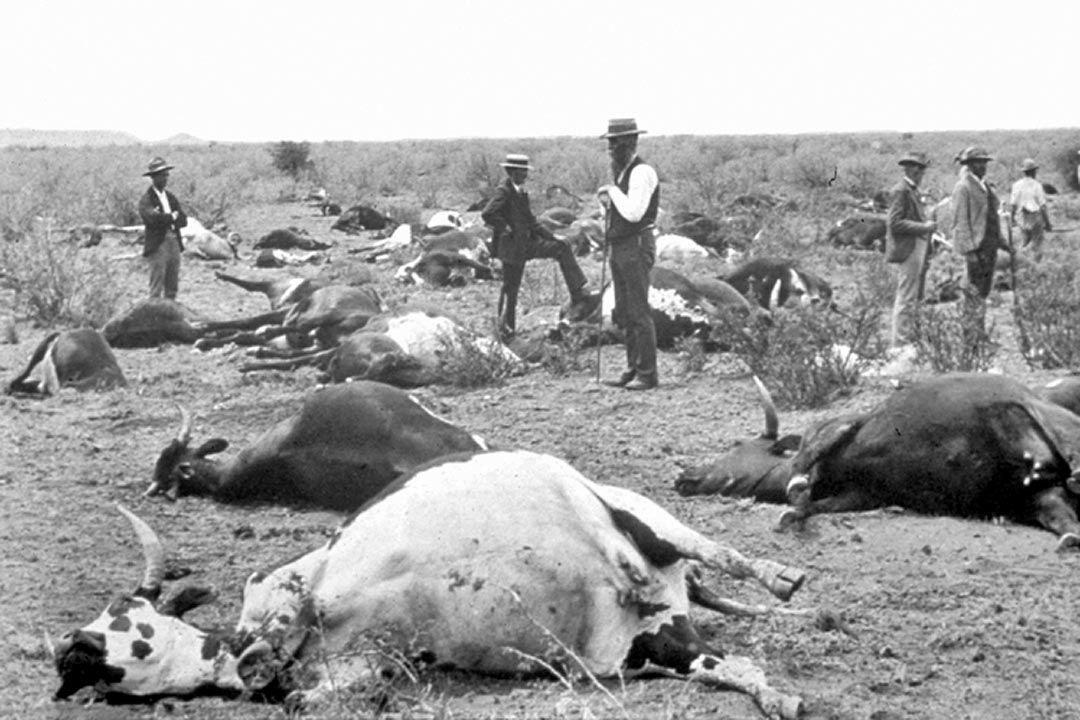
On 2 June, Pasteur received a telegram from Rossignol confirming his success: the animals who had been vaccinated before being exposed to anthrax were all alive and healthy.
The unvaccinated goats and sheep, on the other hand, had all died after exposure to the disease, while the unvaccinated cattle had survived, but with large swellings at the site of exposure.
Freitas and Hanley map the relatively rapid spread of that news in France and beyond.
Within a few days, it had been reported in Edinburgh and Birmingham. The success of the anthrax vaccine was written up in North American papers in August and September.
Public awareness of the vaccine paved the way for it to make a difference. “While the trial did not undergo the rigours of peer review that modern trials are subjected to today, the impact of the trial on farming was immense,” write Freitas and Hanley.
Within weeks, Pasteur and his team had vaccinated tens of thousands of sheep, cattle and horses. By 1894, an estimated 3.4 million animals had been vaccinated, and anthrax mortality plummeted in France.
Ego vs. integrity
The vaccine was a triumph because it worked. The trial was a triumph in large part because it embraced transparency. The great irony was that the vaccine on trial (and subsequently mass-produced) was an impostor.
“In the years following the massive success of the Pouilly-le-Fort trial, Pasteur was careful never to explicitly describe how the anthrax vaccine used at the trial was prepared, never mentioning his use of chemical inactivation,” the authors write.
Toussaint had actually never managed to get his chemically inactivated vaccine to produce consistent results. It was Pasteur’s collaborator, Charles Chamberland, who cracked the formula.
But even though Pasteur’s laboratory deserved the credit for making the inactivated vaccine work, Pasteur apparently wanted to be first.
Science deserves an audience, but good science needs checks and guarantees. Today, researchers are required to hand over their notebooks as part of the trial process, rather than squirrelling them away for posterity to dig through for evidence of ego-driven R&D skulduggery.