
The world has spent centuries forgetting the African history of immunisation
Historian Dr Elise Mitchell re-examines the early history of smallpox inoculation on both ends of the Atlantic slave trade.
- 4 September 2026
- 10 min read
- by Maya Prabhu
At a glance
- West African societies practised inoculation – a precursor to vaccination that deliberately provoked immunity to smallpox by managed exposure to the virus – long before Europeans had ever heard of it, and brought that knowledge with them when slavers transported them to America.
- Yet the African early history of immunisation is little known today. Historian Dr Elise Mitchell explains that it was “forgotten” amid the hardening of racial ideologies in the 19th century.
- Dr Mitchell’s research reveals that rediscovering those stories can teach us valuable lessons about the very nature and meaning of immunisation.
On many separate occasions in the early 1700s, an enslaved West African person in America told a white person how to prevent smallpox.
Here is one of several surviving accounts of such an exchange, written down by Cotton Mather, a Puritan minister from New England:
“I have since mett with a considerable Number of these Africans, who all agree in One story: That in their Country grandy-many dye of the Small-Pox; But now they learn This Way: People take Juice of Small-Pox; and Cutty-skin, and Putt in a Drop; then by’nd by a little Sicky, sicky: then very few little things like Small-Pox: and nobody dy of it; and no body have Small-Pox any more.”
Two centuries earlier, smallpox had arrived in the Americas with the European colonists. It tore through the un-immune populations it encountered there, causing death at epochal scale.
By the 1700s, the risk had levelled off, but the virus was an indiscriminate and still prolific killer, ending the lives of grandy-many European, African, and Indigenous folk each year.
People who survived it once were safe forever, that much was clear. But as outbreak fatality rates ranged from 30–100% in the pre-vaccination period, the natural route to smallpox immunity was a poor bet.
Inoculation, the process described by the Africans who spoke to Mather, offered to tilt the odds.
Still risky by comparison to modern vaccination, deliberate infection with a tiny dose of contagious matter from a smallpox lesion (“Cutty-skin, and Putt in a Drop”) nevertheless tended to produce milder, survivable symptoms (by’nd by a little Sicky, sicky), while still provoking full-scale immunity.
If enough people were inoculated, herd immunity was achieved, and a community was safe (“and no body have Small-Pox anymore”).
Ideological amnesia
West Africans described it as an ancient and widespread custom, practised since “time immemorial”, but smallpox inoculation was still unfamiliar to European societies on both sides of the Atlantic.
It was only in the 1720s that Lady Mary Wortley Montagu, who had been exposed to the same “folk practice” in the Ottoman Empire, began to promote the measure for the first time in England.
By both routes of import, inoculation gained ground among Europeans in the Old World and New until the threshold of the 19th century, when vaccination – a safer method of immunisation that used cowpox viral matter instead of smallpox – began to pick up in its place.
And though evidence of West Africans’ contributions to the history of immunisation persists in the obviously biased paper-trail left by slave-holding America, historian Dr Elise Mitchell writes that “generations of scholars have been surprised that Africans possessed knowledge of inoculation.”
In a recent interview, I asked her how we forgot. “In the 18th century, there were a lot of medical practitioners and sort of travel writers who were willing to acknowledge that West Africans and enslaved Africans practiced inoculation,” Dr Mitchell explained.
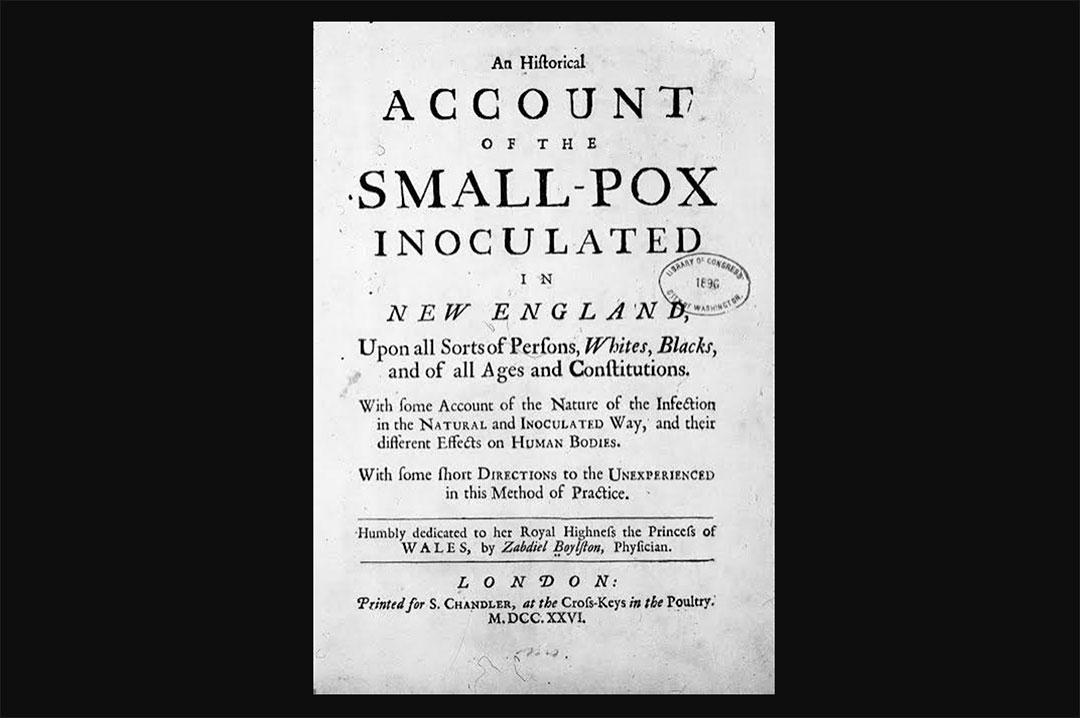
She noted that early promotional materials for inoculation even leaned on its use among “backwards” Africans to soothe anxieties.
“But as we moved into the 19th century, with the hardening of racial ideologies, the story of Africans, enslaved or free West Africans living in West Africa and practising inoculation, began to fall out of the discussions of the history of smallpox and the history of inoculation – and I think that the erasure of that history occurs at the same time that we see a hardening of racial ideologies and retrenchment of racism.
“I think we still live in a society that is beholden to elements of those ideologies, and I think that the persistence of certain kinds of racism, but also the persistence of just the production of ignorance around this idea, is something we’re still living with today. But I also think the ways in which we’re pushing against that is why work like mine can exist.”
Slavery changed what inoculation meant
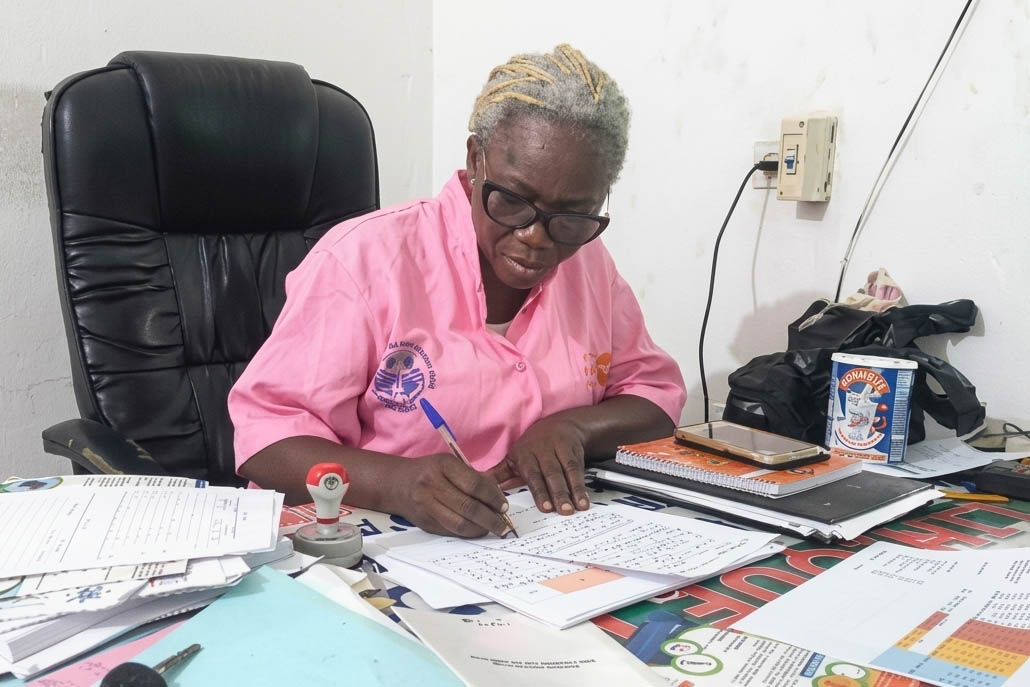
Dr Mitchell’s work – she’s an assistant professor of history at Swarthmore College, studying slavery and the body – has resulted in the recent publication of a journal article that pieces together a picture of the ways that contact with slavery in the early modern Atlantic world, changed the meaning of inoculation.
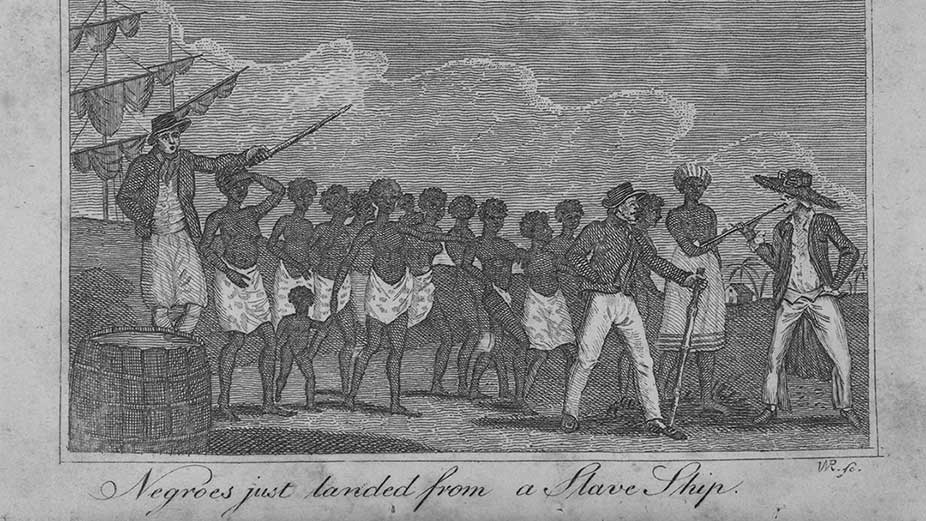
Smallpox ran riot along slave-trade routes, decimating slave-ship ‘cargo’, imperilling profits. Inoculation made business sense, and so as early as the 1720s, the Royal African Company were forcibly immunising enslaved Africans.
By the late 1760s, inoculation was gaining popularity among large-scale slave owners in Saint Domingue and demand was high enough that a French doctor called Joubert de la Motte could afford to offer guaranteed reimbursement to slave owners if inoculation resulted in the death of an enslaved person.
Technically speaking, the practice may have been modified as it passed into European hands, but Dr Mitchell suggests inoculation is unlikely to have changed substantially in procedural terms.
What changed was its intention and, as a function of that, the quality of the protection it offered. Where it was once a practice that produced communal safety among kin-groups, a structurally mutual act of care, in the hands of slavers preparing for departure from West Africa for the Americas, it “inscribed commodification on the bodies of the enslaved”.
It set the stage for their permanent uprooting from those kin-groups, facilitated their loss of freedom and made them easier to keep alive for longer in inhumane conditions.
As in African hands, in European hands a successful inoculation protected the body from smallpox. But given that each inoculation carried a non-insignificant risk of death, protection of the individual was arguably always semi-incidental to a higher-level principal purpose.
Have you read?
In West African societies, that chief function had been the preservation of a community group, of relationships and even ways of living. Under slavery, inoculation underwrote slavers’ profits.
“That’s a point I try to make very carefully because I don’t want anyone to come away from the research thinking: ‘Oh, well, you’re saying that inoculations are bad.’ No: immunisation is a net good. We should do it, but the conditions under which it’s performed also matter,” Dr Mitchell said.
“Re-remembering”: immunity, like disease, is a shared condition
That’s more than an ethical observation.
How a person or group thinks of disease and health influences decisions about who gets immunised and when.
That means the cultural meaning of immunisation informs what could, in awkwardly retrofitted terms, be described as ‘public health strategy’, though Dr Mitchell notes that medical anthropologists and historians of Africa tend to talk about a concept of ‘public healing’ to mark a distinction from western logics of public health.
“For Western Europeans, most medical historians agree, the idea of how you intervene in terms of health is always at the level of the individual body, and that disease is something that is contained within that body,” she explained.
“Why I think [West Africans] were practising inoculation in the first place was that they had an understanding that disease is a communal form of suffering, not necessarily contained to an individual’s body. That’s something that Western Europeans totally don’t understand in the early modern period.”
There are clues in a 1721 source she cites, a document produced by a different Puritan minister called Benjamin Coleman to record a conversation with a person he identifies only as a “poor Negro”.
“he told me, That he liv’d in a great Town in his own Country, and when the Small-Pox came into it they did what they could to prevent the spreading of it; that Families that were first visited usually died among them; but when the sickness got into five or six houses, so that the People began to despair of being able to stop it, then all who had not had it went presently & receiv’d it in the way of Inoculation … a whole place takes it in a Week & are well in a Week.”
In this “great Town”, immunisation was not an individual choice, not a decision weighed by worried parents, but a collective resolution to meet a collective, existential threat.
It’s worth considering that this approach would have mitigated the risk from unsuccessful inoculations: if an inoculation didn’t ‘take’, that unimmunised person would have been protected by herd immunity. If an inoculation produced a full-scale, deadly smallpox infection, that contagion would have had a hard time spreading in a universally inoculated group.
Reclaiming immunity for humanity
Sometimes, the same source suggests, a town’s inoculation session would receive a visitor: an outsider, a young man from a different place not currently grappling with an epidemic, who sought immunity in order to enlarge his world.
Once inoculated, he could travel and trade without fear that he would die on the road, or carry the sickness home with him.
The difference between this experience of inoculation and a pre-departure jab on the slavers’ docks couldn’t be starker: one procedure liberated a person, and the other helped turn him into another person’s chattel.
But Dr Mitchell points out that even inoculation of Europeans by Europeans tended to function as insurance of capital, by dint of the fact that European society was organised around the protection of individual property.
“If you’re a free white person, and you’re preserving the lives of your individual children, you’re preserving your lineage of heirs. You’re preserving property within your family,” she explained.
If the bottom line for European society in America had been to preserve society from epidemic disease, a logical first step would have been stopping the slave trade, which fuelled the spread of smallpox. Instead, the bottom line was simply the bottom line.
But Mitchell describes another fascinating role for inoculation in this period, in which immunity from smallpox served to underwrite neither liberty nor property.
There is evidence that enslaved people, already alienated from their homes and relationships and kinship groups, their languages and cultures, who neither had liberty nor property, practised inoculation on each other.
In the Quartier du Borgne of Saint Domingue, sometime in the early or mid-eighteenth century, an enslaved African man inoculated seven enslaved children and one little girl of uncertain free or enslaved status, using smallpox matter from an unidentified patient.
All eight inoculations took successfully. One of those little girls grew up to relate the story to Charles Arthaud, who wrote it down in a 1774 pamphlet promoting inoculation.
“It is tempting to imagine that these practices continued in the Americas as they were performed in West Africa,” Dr Mitchell writes, “but the social, geographic and by extension spiritual and political conditions of enslavement would have transformed them.”
Instead, she writes, inoculation in these conditions took on “new significances”. She argues, for instance, that an enslaved mother’s demand for “some gratuity” when her child was used to provide the material for inoculation forced an enslaver to recognise that her child “belonged” – in a sense that their economic condition refuted – to her.
Since I spoke to Dr Mitchell, I’ve found myself returning again and again to the radically humane figure of the enslaved immuniser, holding some pointed or bladed instrument, passing physical safety to a group of uprooted, bought-and-sold children.
In his hands, immunisation was an assertion: that the futures of the children, their freedom from suffering, were about more than someone else’s profit margin; were somehow, still, their own.